No big budget. No marketing team. No blog. Just 17 months of showing up.
202.21%
Growth in organic traffic
453.54%
More keywords on page one
293.12%
Expansion in total keywords
‘Being small and niche isn’t a disadvantage in SEO. It’s a focus. And focus, done consistently, wins’.
L;
D
R
- Industry: Technology/SaaS
- Location: Santa Clara, California
- Founder: Solveig Kjartansdottir (sole employee)
- Product: Group scheduling via shareable polls — no guest login required
- Free for up to 20 guests, completely ad-free
- Built for everyday people: book clubs, family reunions, dinner plans, game nights, team syncs
WhenAvailable exists because Solveig felt the frustration herself. Finding a time that works for a group shouldn’t require five email threads and a spreadsheet. She built the simplest possible group scheduling solution: create a poll, share a link, let people vote. That’s it.
This isn’t a VC-backed startup with a growth team. It’s a one-person company serving a very specific, very human need. And that focus and specificity turned out to be exactly what SEO rewards.
L;
D
R
Our SEO strategy was to:
- Grow organic traffic through content that targets real user searches
- Expand keyword visibility across group scheduling and event planning queries
- Improve domain authority to support long-term rankings through our SEO services
- Create a blog from scratch that earns trust with both readers and search engines
- Build a content structure that compounds over time, with each post making the next one easier to rank
When Solveig came to us, she had a clear product and no organic presence. The goal wasn’t to go viral or become an overnight SEO success story. It was simpler than that: get the right people to find WhenAvailable when they’re searching for a solution to their scheduling problem and do it in a way that lasts.
L;
D
R
- No blog content when we started, so nothing for search engines to crawl
- Ranking for only 946 keywords, mostly branded terms
- Just 117 keywords were appearing on page one of Google
- Organic traffic of only 3,020 visits per month
- Domain rating of 38, which shows low authority and low trust signals
- 268 referring domains and a limited backlink profile
The product itself was great, but the blog had no content, and it didn’t capture user demand. It failed to reach people who were actively searching for group scheduling and polling solutions. Users could only find WhenAvailable if they already knew its name.
There was no big budget to throw at the problem or a content team to spin up SEO-friendly content. Just a founder willing to be patient and stay consistent. Our job was to build an SEO foundation from scratch and grow it steadily, the right way.
L;
D
R
With a small budget and no existing content to build on, every decision had to count. Search engine optimisation isn’t a set-it-and-forget-it strategy, as it requires consistent effort and a clear direction. Here’s what that looked like over 17 months, and what the gist of this small business SEO case study is.
- Mapped keyword clusters around group scheduling, polls, and event planning
- Prioritised short and long-tail keywords with clear user intent and attainable rankings
- Built a keyword map to prevent content from competing against itself
- Focused on informational, navigational, and transactional intent and not just volume
Before delivering our content writing services, we mapped out what people are actually searching for. WhenAvailable’s users aren’t searching for ‘enterprise scheduling software’, instead, they’re searching for ‘how to plan a family reunion’ or ‘doodle alternatives’. That distinction shaped everything.
- 17 blog posts published across 17 months — one per month, every month
- Covered real use cases: book clubs, family reunions, team meetings, online coaching
- Created how-to guides, comparison posts, listicles, and alternative roundups
- Each post was structured with clear headings, concise answers, and optimised metadata
- Published keyword-optimised content targeting group scheduling, event planning, and scheduling tool searches
WhenAvailable’s users aren’t just office teams scheduling standups. They’re friends planning dinner, families coordinating a reunion, and book clubs finding their next date. The content reflected that. Google rewards content that demonstrates real experience and genuine usefulness, and that’s exactly what we built, as you’ll see throughout this SEO case study.
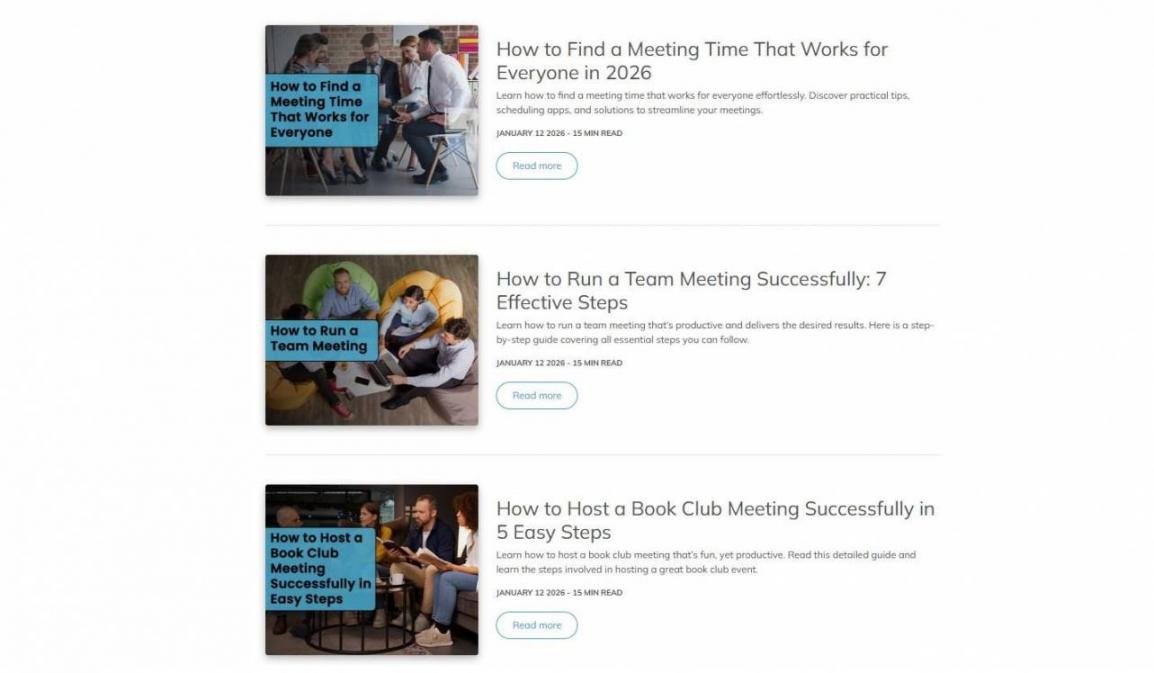
Blog content created for WhenAvailable — Image via WhenAvailable
- Optimised title tags, meta descriptions, and header tags for every key page
- Ensured all pages were mobile-responsive and fast-loading
- Implemented schema markup for richer search snippets
- Optimized keywords throughout and used primary and secondary terms naturally
Good content on a poorly optimised page is a wasted opportunity. We worked through every technical element to make sure search engines could find, understand, and rank each page. Schema markup helped Google surface richer results, which directly improves click-through rates.
- Organised content into silos, where we linked related topics to each other
- Used keyword-rich anchor text to signal relevance to search engines
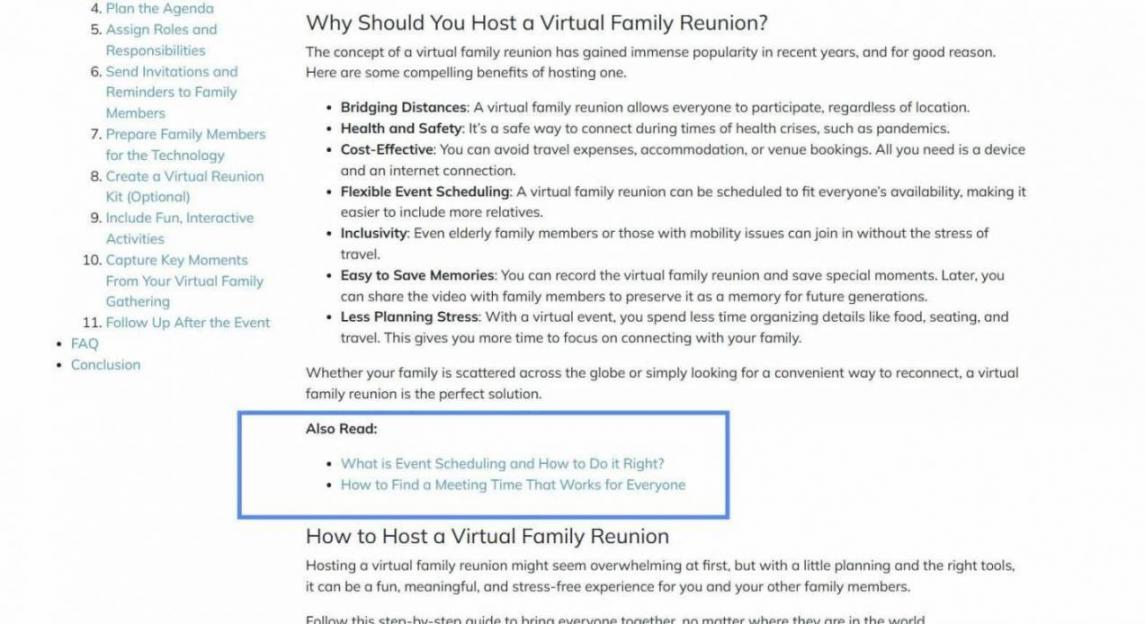
- Added ‘Also Read’ sections to every post for better user engagement
- Regularly reviewed and updated links as new content was published
Internal linking isn’t just about navigation, as it tells Google which pages matter and how topics relate to each other. A well-linked site builds topical authority faster. Each new post we published made the existing ones stronger.
- Conducted regular SEO audits to identify gaps and ranking opportunities
- Updated existing posts with new data, better formatting, and improved keywords
- Monitored rankings monthly to catch drops early and capitalise on gains
- Stayed on top of Google algorithm updates throughout the engagement
- Delivered 9 SEO backlinks every month, consistently, without fail
We’ve seen Google update its algorithms countless times. Staying current isn’t optional; it’s the job. Refreshing old content was one of the highest-ROI activities in this engagement. Pages we published in month one were still ranking 12 months later because we kept improving them.
So, what results did we deliver?
The next section of the SEO case study will explain that, so keep reading.
L;
D
R
These aren’t overnight numbers. No viral moments, no big paid push. Just steady, compounding growth from November 2024 to April 2026, as you’ll see in this section of the SEO case study.
| Metric | Nov 2024 | Apr 2026 |
|---|---|---|
| Organic Traffic | 3,020/mo | 9,127/mo (+202.21%) |
| Total Ranking Keywords | 946 | 3,719 (+293.12%) |
| Page One Keywords | 117 | 648 (+453.54%) |
| Domain Rating | 38 | 51 |
| Referring Domains | 268 | 853 |
| Blog Posts Published | 0 | 17 (one per month) |
| Monthly Backlinks Delivered | 0 | 9 per month, every month |
Organic Traffic Growth
- Started at 3,020 monthly organic visits in November 2024
- Grew to 9,127 monthly visits by April 2026, which is a 202.21% increase
- Growth was consistent month-on-month and not a one-off spike
- Driven by ranking gains across intent-based group scheduling queries
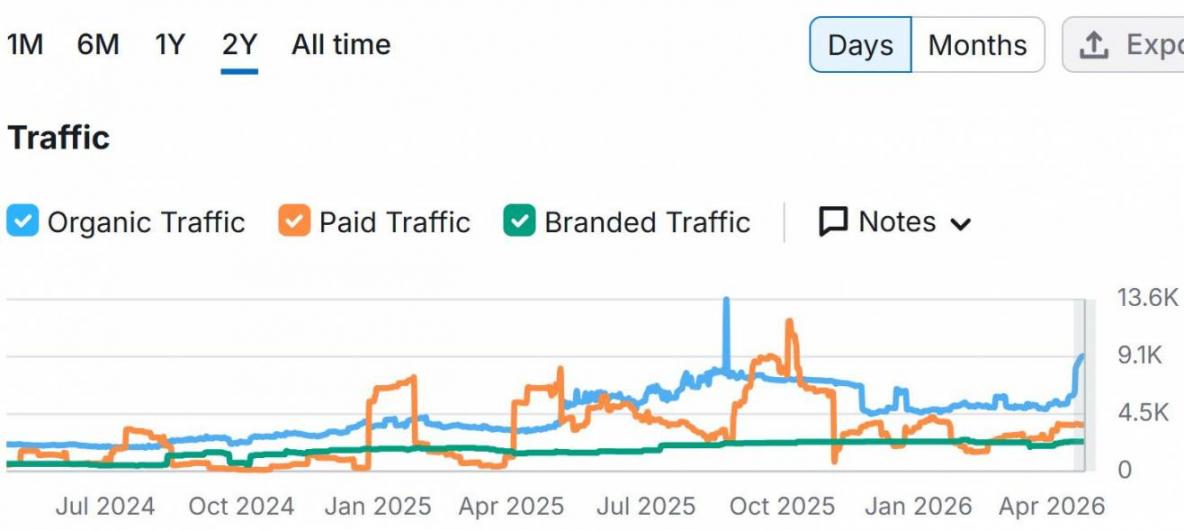
Organic Traffic Growth via Semrush (November 2024 – April 2026)
Keyword Visibility
- Expanded from 946 keywords to 3,719, which is a 293.12% increase
- Site now ranks across a wide range of non-branded group scheduling queries
- Users can find WhenAvailable without knowing its name
- 71.42% of blog posts ranking on page one
- 83.33% of listicle posts ranking on page one
- 100% of comparison posts ranking on page one
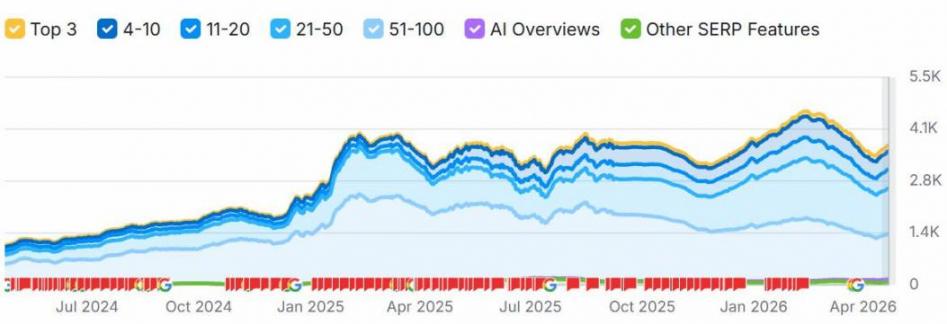
Organic Keyword Growth via Semrush (November 2024 – April 2026)
Page One Rankings
- Page one keywords jumped from 117 to 648, which is a 453.54% increase
- First-page rankings drive the vast majority of organic clicks
- WhenAvailable now ranks page one for ‘Doodle alternatives’, ‘WhenIsGood alternatives’, ‘When2meet alternatives’ and more
- Ranking against well-established tools in its niche, purely through content, is a SEO success story in itself
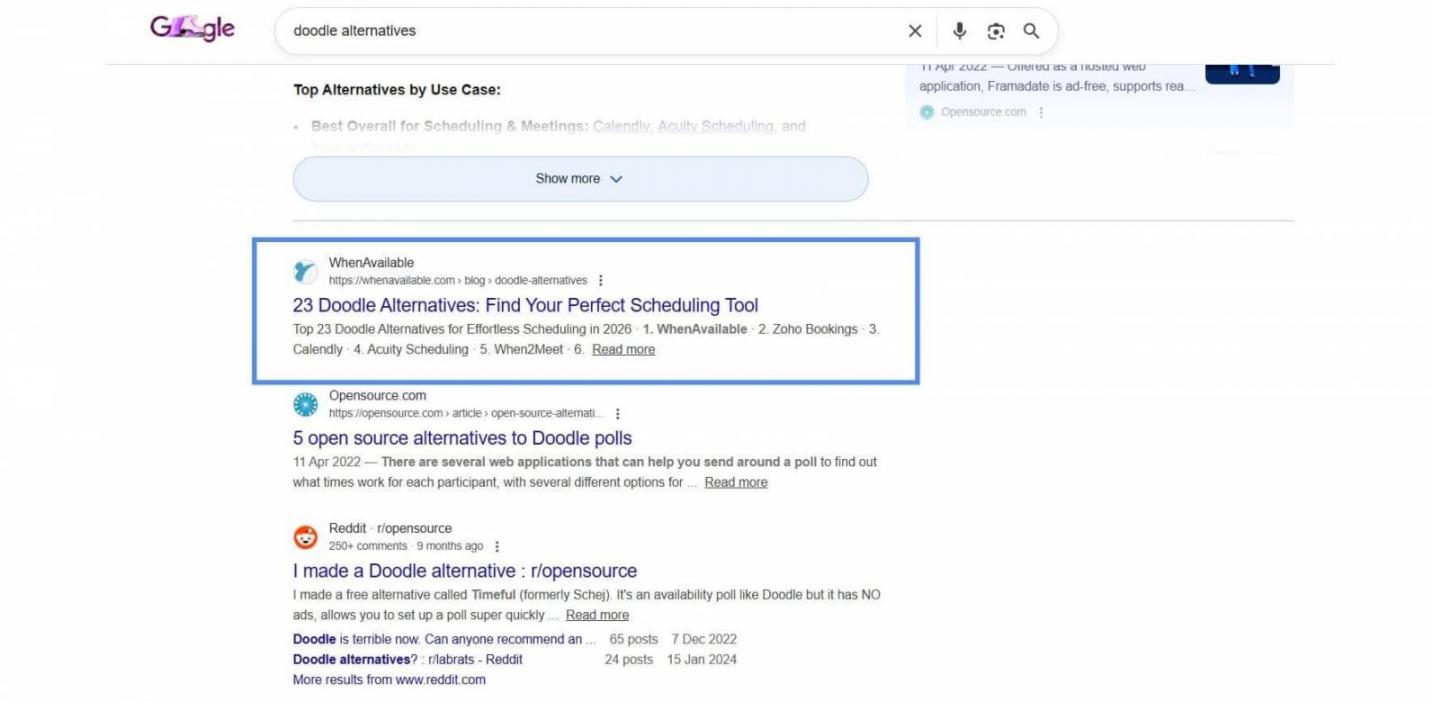
WhenAvailable ranking page one for ‘doodle alternatives’ — Image via Google
Domain Authority and Backlinks
- Domain rating grew from 38 to 51
- Referring domains grew from 268 to 853
- 9 high-quality backlinks delivered every single month, without any gaps
- High-quality content naturally attracted organic mentions and inbound link requests
- WhenAvailable now receives inbound requests from other sites asking to be linked from the blog, which is a clear sign of growing authority
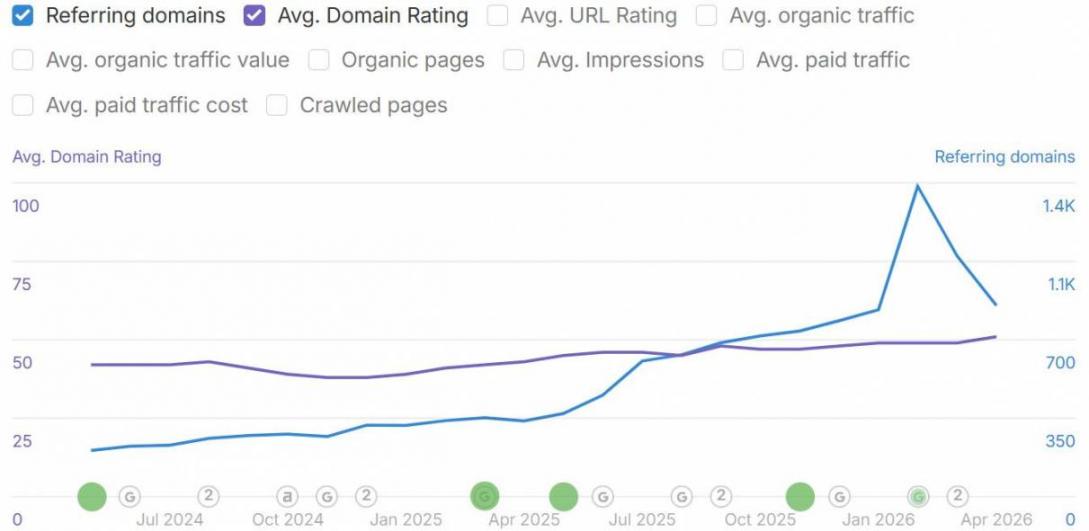
Domain Rating and Referring Domains via Ahrefs (November 2024 – April 2026)
“We’re moving in the right direction. The numbers are looking good! Thank you for all your work on the backlinks and blog posts. It’s very much appreciated”.
L;
D
R
Q1. Can SEO actually work if I have a tiny budget?
A. Yes, this WhenAvailable SEO case study is proof. A small budget means you have to be more deliberate, not that you can’t compete. Consistency matters more than spending. WhenAvailable earned 9 backlinks and published one blog post every single month for 17 months. That discipline, sustained over time, is what drives compounding results, as you saw in this SEO case .
Q2. My product is small and niche — can I realistically compete in search?
A. Being niche is actually an advantage, as you probably saw in this SEO case study. You’re not trying to rank for everything, but targeting the specific searches your specific audience makes. A focused product with focused, well-optimised content will outperform a broad one with scattered content every time.
Q3. I don’t have a blog yet — is it too late to start?
A. Not at all. WhenAvailable had no blog content when we started, as evidenced by this small business SEO case study. That’s a clean slate, with no bad content to undo, no keyword issues to fix. Starting from nothing means you build it right from the beginning. The first post went live in November 2024. By April 2026, 17 posts were live and ranking.
Q4. What are the core stages of an SEO growth strategy?
A. Keyword research to find what your audience is actually searching for → content creation with adequate keyword optimisation throughout → on-page optimisation of titles, headers, and metadata → authority building through earned backlinks → ongoing performance monitoring and content refreshes. None of these stages ends; they run continuously.
Q5. How do you know if SEO is working?
A. Look for steady improvements in organic traffic, keyword rankings, and page-one visibility over time. Other signs: new pages gaining traction without paid promotion, referring domains increasing, and users finding you through general searches rather than just your brand name. For WhenAvailable, all of these moved in the right direction, month after month, which is what led us to create this SaaS SEO case study.
Q6. Is SEO still worth it with AI changing search?
A. Yes. Search engines still reward relevance, usefulness, and authority, as evidenced by this SaaS SEO case study. If anything, AI raises the bar for low-quality content while giving genuinely helpful, well-structured content a bigger advantage. WhenAvailable now appears in AI Overviews for relevant queries, which is a direct result of content quality and keyword optimisation.
Q7. How long does it realistically take to see any movement?
A. Honest answer: 3-6 months before meaningful rankings, 6-12 months before traffic compounds noticeably. WhenAvailable saw its first significant keyword gains around month 3-4, and traffic started compounding from month 6 onwards. Patience is not optional in SEO, but the results, when they come, don’t disappear overnight either.
L;
D
R
- Organic growth doesn’t require a big team or a big budget, as it just requires consistency
- A niche product is not a disadvantage, but a focus, and focus wins in SEO
- Starting from zero is fine. Building it right from the start is what matters
- Content that earns links, SEO rankings, and trust compounds over time, while ads stop delivering results the moment you stop paying
The product itself was great, but its blog had no content, and it didn’t capture user demand. Fourteen months in, organic traffic had more than tripled, 648 SEO keywords were ranking on page one, and other websites were reaching out to be linked from WhenAvailable’s content.
That kind of growth compounds. It strengthens rankings, expands reach, and makes every future post easier to discover.
If you have a product people are searching for, and you’re willing to stay consistent, it works, and this SEO case study is proof.
Want to get similar results from SEO for SaaS companies?
Leverage Attrock’s SEO services and content marketing services to boost your SERP rankings.
‘Being small and niche isn’t a disadvantage in SEO. It’s a focus. And focus, done consistently, wins’.