The Generative Engine Optimization Agency That Publishes Its Own Numbers
Generative engines do not rank pages. They pick a handful of sources, synthesise an answer, and name whoever those sources named. We get you into that set, engine by engine, and show the count every month.
- ChatGPT, Perplexity, Gemini, AI Mode, AI Overviews
- Measured against three competitors you name
- Every statistic carries a dated source
We run generative engine optimization on our own domain before we sell it. Attrock’s own site holds 217 citations across AI platforms, spanning 97 distinct pages. The counts below are pulled from Ahrefs, not quoted from a deck, and they move.
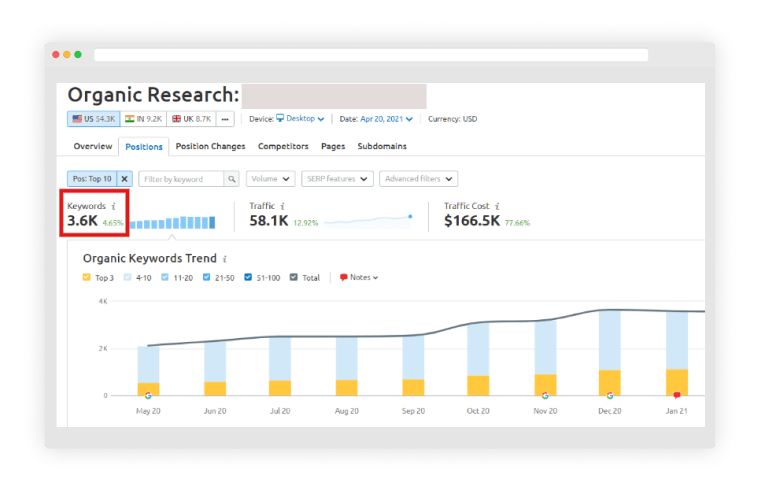
A headline client outcome: metric, window, client or category.
What Is a Generative Engine Optimization Agency?
- One ranked URL on one results page
- A click the user still has to make
- Google, and only Google
- Traffic as the unit of success
- Retrieves five to fifteen sources per answer
- Names whoever those sources name
- Behaves differently on every engine
- Citation as the unit of success
Why GEO Is a Different Job From Search
The Engine Picks the Sources, Not the User
A person scanning ten links chooses. A generative engine retrieves a small set and never shows the rest. Absent from the set means absent from the answer.
Every Engine Retrieves Differently
Perplexity leans on live web search. ChatGPT blends training data with browsing. Google AI Mode draws on its own index. One tactic does not cover four engines.
Third-Party Mentions Carry the Signal
In Ahrefs’ study of 75,000 brands, branded web mentions had the strongest correlation with brand mentions in Google AI Overviews (Spearman 0.664), roughly three times the correlation of backlink count (0.218). Ahrefs notes correlation is not causation. (Ahrefs, 2025)
The Index Itself Is Still Moving
Google AI Overviews and AI Mode did not appear in Ahrefs’ citation index before roughly spring 2026, which means any AI-citation growth figure spanning that boundary is partly measuring index coverage rather than performance.
GEO, AEO and AI Visibility: Three Names, One Programme
GEO names the work after the engines. AEO names it after the answer. AI visibility is what your board asks about. We use all three because buyers do, and because the SERPs for each are different.
What This Is Not
Crawlability, rendering and authority still matter. An engine cannot retrieve what it cannot read. They are the floor of GEO, not the ceiling.
Who Usually Comes to Us
A result from this service line: metric moved, window, client or category.
Why Generative Engine Optimization Cannot Wait
Organic Search Is Forecast to Halve
Gartner predicts organic search traffic will decrease by 50% by 2028 due to disintermediation by answer engines. (Gartner, 2026)
A forecast, not a measurement. 2028, not 2026. · C1b
And the Click Is Already Going
In the first four months of 2026, 68.01% of Google searches ended without a click, up from 60.45% in 2024. (SparkToro / Similarweb, 2026)
US, browser-based. Excludes the Google mobile app. · C7
What a Missing GEO Programme Costs You
None of this shows up in a rankings report, which is why most teams find out late.
What Buyers Ask a GEO Agency First
"Is GEO Actually Different From AEO, or Is This Vocabulary?"
Mostly vocabulary, and we will not pretend otherwise. The on-page work is close to identical.
Where GEO earns its own name is the per-engine layer. Perplexity, ChatGPT, Gemini and Google AI Mode retrieve from different indexes and weight sources differently. A single baseline hides that.
We report each engine in its own column so you can see which one moved.
"Can You Guarantee We Will Be Cited?"
No. Model updates change outputs with no change on your side, and any agency guaranteeing a citation is misrepresenting how these systems work.
What we commit to is method. A measured baseline before we start, a frozen prompt set you sign off, and monthly reporting against three named competitors.
If everyone rises together, we tell you it was a model update.
"Which Engines Actually Matter for Us?"
Fewer than the list suggests, and the baseline tells you which.
Google AI Mode and AI Overviews carry most of the measurable volume today. Perplexity matters for technical and research-heavy buyers. ChatGPT citation data is thin in every index we have access to.
We say that plainly rather than implying parity across engines.
"How Long Before We See Movement?"
Honest answer: it depends on where the gap is, and we know that after the baseline, not before.
Extractability gaps move in weeks. Retrieval-set gaps, where the engine is quoting sources you are not on, move in months because they depend on third parties publishing.
We will tell you which one you have before you commit.
"We Already Have an SEO Agency. Do We Fire Them?"
No, and be careful of anyone who says yes. This sits on top of what they do.
They keep rankings, crawl health and links. We take per-engine measurement, retrieval-set work and citation earning, and we report separately so neither of us can claim the other’s win.
We will talk to them directly if that is easier.
Our Five-Step Generative Engine Optimization Process
Baseline: Every Engine in Its Own Column
Share of voice and prompt coverage across ChatGPT, Perplexity, Gemini and Google AI, against three competitors you name. Each engine reported separately, because they retrieve differently.
Prompt Universe: One Set, Frozen
100 to 150 prompts spanning everyone who touches the decision, signed off before work begins. Frozen means we cannot move the goalposts later, and neither can a model update.
Retrieval-Set Mapping: Who the Engine Actually Quotes
For every prompt, the domains and pages each engine cited. This is the target list. It is nearly always dominated by sources that are not yours.
Make Owned Pages Retrievable, Then Earn the Rest
Question-shaped headings, sourced claims, real tables, a render check. Then placements on the roundups, review sites and communities your prompts already cite.
Re-Measure Against the Frozen Baseline
Same prompts, same engines, same competitors, same scoring version. Where a number is soft, we say so rather than rounding it into a headline.
What these steps produced: baseline figure, re-measured figure, window.
What’s Included in a GEO Engagement
Per-Engine Share of Voice
Prompt coverage and share of voice for each engine separately, against three named competitors, on a frozen prompt set.
Retrieval-Set Mapping
Which domains and pages each engine actually cites for your prompts, ranked by frequency. The target list for everything else.
Retrievable Page Rebuilds
The category, comparison and answer pages engines would quote, rebuilt so a clean passage can be lifted whole.
Render, Robots and AI-Crawler Audit
Server-side rendering, crawler access rules and the errors your site serves to GPTBot, PerplexityBot and Google-Extended.
Citation Earning on Cited Domains
Placements on the roundups, review sites and communities already in your retrieval set. The half most agencies leave undone.
Method-Stated Monthly Reporting
Per-engine movement, model-update flags, live assistant fetches from your logs and Search Console AI impressions.
Us vs In-House vs a Generalist Agency vs a GEO Tool
| Attrock | In-house team | Generalist SEO agency | A GEO tool | |
|---|---|---|---|---|
| Reports each engine separately | Yes, own column per engine | Yes, with the tooling budget | Rarely | Yes, if configured |
| Maps the retrieval set per prompt | Yes, ranked by frequency | Possible, if they measure | Usually keyword-led | Yes, reporting only |
| Earns third-party citations | Yes, from your cited-domain list | Rarely; needs relationships | Link-building, not citation-led | No |
| Separates a model update from a gain | Yes, same frozen version | Yes, with discipline | Rarely | Depends on the vendor |
| Product and category knowledge | We learn yours; that takes time | Unbeatable | Shallow across verticals | , |
| Cost shape | Monthly retainer, cancellable | Salary, tooling and ramp | Lower retainer | Licence, plus your time |
| Where it breaks | Wrong fit if engines haven’t reached you | Breaks when the person leaves | Breaks at the citation layer | Breaks with nobody to act on it |
We don’t name rival agencies here. That tells you about our marketing, not your decision.
What We’ve Actually Moved
WhenAvailable’s AI citations grew from 32 to 305 between February and August 2026.
For WhenAvailable we published one blog post a month and earned nine brand mentions a month, every month, for 17 months.
WhenAvailable’s organic traffic grew from 3,020 to 9,127 monthly visits over 17 months, a 202% increase.
WhenAvailable went from 117 to 648 page-one keywords, a 453% increase, over 17 months.
One GEO Engagement Still in Measurement
Prompt coverage and share of voice, quarter over quarter, against three named competitors.
Per-engine prompt coverage and share of voice, quarter over quarter
A quarter-over-quarter prompt-coverage and share-of-voice result, measured against three named competitors.
Empty on purpose. Better an empty slot than a number we cannot source.
You’re Not Hiring a Freelancer. You’re Hiring a Team.
One person stays accountable end to end: Gaurav Sharma, who founded Attrock.
How Much Does a Generative Engine Optimization Agency Cost?
One Programme, Scoped to Your Baseline
All three workstreams, every retainer. The baseline sets the split, not a package name.
Measure
- Per-engine baseline across four engines
- Frozen prompt set with a cited ID
- Share of voice against three named competitors
- Retrieval-set map per prompt
- Monthly re-measure on the same version
Fix
- Category and comparison pages rebuilt as tables
- Question headings with front-loaded answers
- Sourced, dated claims on every statistic
- Render, robots and AI-crawler audit
- Structured data hygiene
Earn & Prove
- Your cited-domain list, per engine
- Roundups, review sites and communities
- Server-log fetch monitoring for AI crawlers
- Search Console AI impression tracking
- Attribution on your enquiry form
- How many engines carry volume in your category
- Pages needing structural rewrites
- How crowded your prompt space is
- Existing coverage on domains engines already cite
- Products, markets and languages
- Whether your site renders server-side
Clean rendering and strong third-party coverage sits at the light end. Zero on both sits at the heavy end. The free score tells us which you are.
Time from start to first measurable citation gain, and the scope behind it.
Where Generative Engine Optimization Sits in What We Do
Generative Engine Optimization Agency: FAQs
What Does a Generative Engine Optimization Agency Actually Do?
Three things, in order. It measures which prompts in your category name you, per engine, and which name a rival. It rebuilds the owned pages an engine would quote.
Then it earns mentions on the third-party sources those engines already cite. Most of a generated answer is assembled from sites that are not yours.
The order matters. Skipping the measurement step means you cannot tell a real gain from a model update three months later.
How Is GEO Different From SEO?
SEO earns a position on a results page a person scans. GEO earns a place in the small set of sources an engine retrieves before it writes an answer nobody scans.
The foundations overlap. Crawlability, authority and clear structure matter to both.
The unit of success is different. A ranking is a position. A citation is inclusion in a synthesis, and the engine chooses without showing its work.
How Is GEO Different From AEO?
In practice, barely. AEO names the discipline after the answer and GEO names it after the engines. The on-page work is nearly identical.
Where GEO earns its own name is the per-engine layer. Perplexity, ChatGPT, Gemini and Google AI Mode retrieve from different indexes and weight sources differently.
We report each engine separately so you can see which one moved, rather than hiding the difference inside one blended number.
How Do You Choose a Generative Engine Optimization Agency?
Judge on four things rather than a published list. Does the agency show its own AI citation numbers, dated? Does it report each engine separately?
Does it measure share of voice against competitors you name? And does it say which of its tactics are proven versus reasoned?
We tore down eight ranking AEO and GEO agency landing pages. Not one used a comparison table, only one handled buyer objections in the open, two published pricing, and none named a practitioner.
Which Engines Does GEO Cover?
ChatGPT, Perplexity, Gemini, Google AI Mode and Google AI Overviews, each baselined and reported in its own column.
They are not equal. Google surfaces carry most measurable citation volume today. Perplexity matters for research-heavy buyers. ChatGPT citation data is thin in every index we can access.
We say which engines matter for your category after the baseline rather than promising all of them.
Can You Guarantee Citations in AI Answers?
No, and neither can anyone else. Model updates change outputs with no change on your side.
What we commit to is method. A measured baseline before we start, a frozen prompt set you sign off, and monthly reporting against three named competitors.
If your coverage rises while theirs falls, that is the work. If everyone rises together, we tell you it was a model update.
How Long Does Generative Engine Optimization Take to Show Results?
It depends on where your gap is, and we know that after the baseline rather than before.
Extractability gaps, where engines can find your pages but cannot cleanly quote them, move in weeks. Retrieval-set gaps, where engines quote sources you are not on, move in months.
The second kind depends on third parties publishing, which no agency controls. We tell you which gap you have before you commit.
Do We Still Need Classic SEO Underneath GEO?
Yes, and this is where most GEO pitches are dishonest. A page an engine cannot crawl or render will never be retrieved, however well written it is.
Crawlability and authority are the floor. What changed is what you measure on top of them.
A rankings-only report shows green while pipeline softens, because the research moved into an answer box that report cannot see.
Is Your Own AI-Citation Data Reliable?
Partly, and we publish the caveat. Google AI Overviews and AI Mode did not appear in the citation index we use before roughly spring 2026.
Any growth figure spanning that boundary is partly measuring index coverage rather than performance. We disclose this on every page that carries a citation number.
Our own counts are re-pulled before every use and dated, because they move.
See Which Engines Name You
The free score shows which buyer questions already name you, per engine, which name a competitor, and which name nobody at all. No contract, and no call required to see it.