AI Visibility for MarTech: Win the Category Name Before the Shortlist
Marketers are the heaviest AI users of any buyer group. They ask an assistant to name the best tool in a category you may not even own the label for. We measure that, then fix it.
- MarTech vendors, US and global
- Measured against three competitors you name
- Every statistic carries a dated source
We run this programme on our own domain before we sell it to a martech company. Attrock’s own site holds 217 citations across AI platforms, spanning 97 distinct pages. Ten years of programme delivery underneath it, and the citation data measured on top.
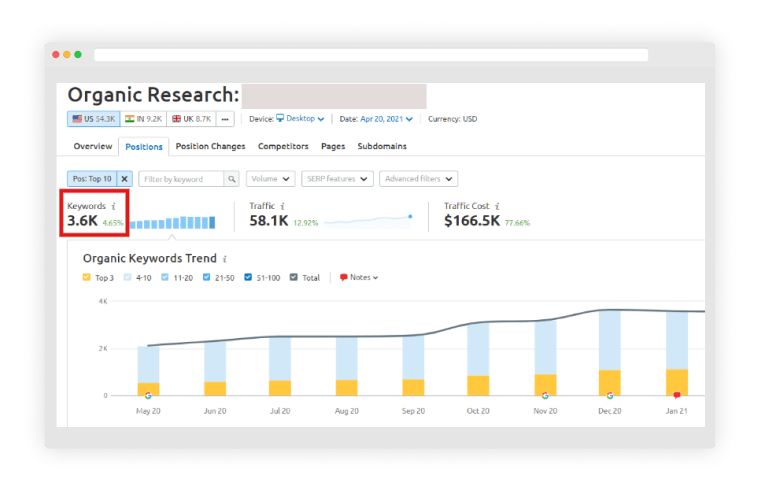
A headline client outcome: metric, window, client or category.
What Is AI Visibility for MarTech?
- A position on a results page
- A click you still have to earn
- Traffic reported as one number
- Value only when a results page is shown
- Three platforms, named
- Yours among them, or a rival’s
- A category definition you did not write
- Often no results page at all
Why MarTech Is Different From Every Other Vertical
Your Buyer Is the Most AI-Native There Is
Marketers adopted assistants before almost anyone. They will run the prompt about your category before they run the search.
The Category Label Is Contested
CDP, CDW, composable, engagement platform. Assistants pick one definition and a set of vendors to match it.
Review Grids Answer Before You Do
G2 and Capterra category pages are the most quoted sources in martech answers. Your homepage rarely competes with them.
AEO, GEO and AI Visibility for MarTech: One Job, Three Names
AEO names the discipline after the answer. GEO names it after the engines. AI visibility is what your board actually asks about. Same work, three labels.
What This Is Not
Crawlability, authority and rankings still matter. They are what make citation possible at all, the floor now, not the ceiling.
Who Usually Comes to Us
A result from this vertical: metric moved, window, client or category.
Why MarTech Feels This First
Your Buyers Are Already Doing This
94% of business buyers report using AI in their buying process. (Forrester, Buyers’ Journey Survey 2025)
B2B buyers. Sample and geography undisclosed. · C3
And the Click Is Going Anyway
In the first four months of 2026, 68.01% of Google searches ended without a click, up from 60.45% in 2024. (SparkToro / Similarweb, 2026)
US, browser-based. Excludes the Google mobile app. · C7
What This Costs a MarTech Company Specifically
None of this shows up in a rankings report, which is why most martech teams find out late.
What MarTech Leaders Ask Us First
"We Do This In-House. What Would You Actually Add?"
Possibly nothing, and marketing teams are the group most likely to hear that from us.
What we add is a frozen baseline and the hands to act on it. Most in-house teams can measure prompt coverage once. Far fewer re-measure on the same version every month while also rewriting the pages.
If you have both, buy the tool and skip us.
"Which Category Name Should We Even Target?"
Whichever one assistants already use, which is often not the one your positioning deck uses.
We measure coverage across every competing label before recommending one. Chasing a label the engines have not adopted is the most expensive mistake in this vertical.
The baseline settles that argument with data rather than opinion.
"Can You Guarantee We’ll Be in the Shortlist?"
No. Model updates change outputs with no change on your side, and any agency guaranteeing a citation is misrepresenting how these systems work.
What we commit to is method. A measured baseline before we start, a frozen prompt set you sign off, and monthly reporting against three named competitors.
If everyone rises together, we tell you it was a model update.
"Our G2 Presence Is Weak. Is That the Real Problem?"
Often, yes, and we will say so before you sign rather than after three months of page rewrites.
Review grids are the most quoted source in martech answers. If your category page there is thin, no amount of on-site work closes the gap.
That fix is operational before it is editorial.
Our Five-Step AI Visibility Process for MarTech
Baseline: Where AI Names You Today
Share of voice and prompt coverage across ChatGPT, Perplexity, Gemini and Google AI, against three competitors you name. Classic rankings captured too, in their own column.
Prompt Universe: One Set Per Buying Role
100 to 150 frozen prompts spanning everyone who touches the decision. The practitioner comparing options. The manager building a case. The executive checking whether anyone has heard of you.
Make the Pages Extractable
Question-shaped headings with the answer beneath. Comparison tables where a comparison is asked for. Sourced, dated claims. Plus the render check, because a JavaScript-only page is invisible to most AI crawlers.
Earn the Sources a MarTech Answer Quotes
In martech that means review grids, analyst mentions and the community threads that already rank. We pull your cited-domain list and get you covered there.
Re-Measure Against the Frozen Baseline
Same prompt set, same engines, same competitors, same scoring version. Where a number is soft, we say so rather than rounding it into a headline.
What these steps produced: baseline figure, re-measured figure, window.
What’s Included for a MarTech Engagement
Prompt Coverage Across Category Labels
Share of voice per engine, against three named competitors, measured across every competing name for your category.
Page-Level Citability Scoring
Every priority URL scored across six weighted dimensions, with a ranked fix list and points per fix.
Category, Comparison and Integration Pages
The "best X" and "A vs B" pages where martech shortlists form, rewritten as tables an engine can lift.
Render and Crawler Audit
Server-side rendering, robots rules and the errors your marketing site serves to AI crawlers.
Review Grids, Analysts, Communities
The third-party sources a martech answer quotes, targeted at the domains your prompt set already cites.
Attribution for a B2B Funnel
Citation share, live assistant fetches from your logs, Search Console AI impressions, and self-reported attribution on your demo form.
Us vs In-House vs a Generalist Agency vs Doing Nothing
| Attrock | In-house team | Generalist SEO agency | Doing nothing | |
|---|---|---|---|---|
| Reports citations separately from rankings | Yes, two columns always | Yes, with the tooling budget | Rarely | No |
| Measures coverage across competing category names | Yes, frozen and split by role | Best-placed, if they measure | Usually keyword-led | No |
| Fixes the render problem | Yes, checked in week one | Yes, against the roadmap | Often out of scope | No |
| Earns review-grid and analyst coverage | Yes, from your cited-domain list | Rarely; needs relationships | Link-building, not citation-led | No |
| Product and category knowledge | We learn yours; that takes time | Unbeatable | Shallow across many verticals | , |
| Cost shape | Monthly retainer, cancellable | Salary, tooling and ramp | Lower retainer | Zero, until it isn’t |
| Where it breaks | Wrong fit if assistants haven’t reached you | Breaks when the person leaves | Breaks at the citation layer | Breaks silently, once a rival is the default |
We don’t name rival agencies here. That tells you about our marketing, not your decision.
What We’ve Actually Moved
WhenAvailable’s AI citations grew from 32 to 305 between February and August 2026.
For WhenAvailable we published one blog post a month and earned nine brand mentions a month, every month, for 17 months.
WhenAvailable’s organic traffic grew from 3,020 to 9,127 monthly visits over 17 months, a 202% increase.
WhenAvailable went from 117 to 648 page-one keywords, a 453% increase, over 17 months.
One MarTech Engagement Still in Measurement
Prompt coverage and share of voice, quarter over quarter, against three named competitors.
Empty on purpose. Better an empty slot than a number we cannot source.
You’re Not Hiring a Freelancer. You’re Hiring a Team.
One person stays accountable end to end: Gaurav Sharma, who founded Attrock.
How Much Does AI Visibility for MarTech Cost?
One Programme, Scoped to Your Goals
All three workstreams, every retainer. Your baseline sets the split, not a package name.
Measure
- Baseline across four AI engines
- Frozen prompt set, split by buying role
- Share of voice against three named competitors
- Page-level citability scoring
- Monthly re-measure on the same version
Fix
- Comparison pages rewritten as real tables
- Question headings with front-loaded answers
- Sourced, dated claims
- Render, robots and AI-crawler audit
- Structured data hygiene
Earn & Prove
- Your actual cited-domain list, pulled first
- Review grids, analysts and communities
- Server-log fetch monitoring
- GA4 channel and segment build-out
- Attribution on your enquiry form
- Comparison pages needing rewrites
- How many category labels are in play
- How crowded your prompt space is
- Existing review-grid and analyst coverage
- Products, markets and languages
- Whether your site renders server-side
Clean rendering and a strong review-grid presence sits at the light end. Zero on both sits at the heavy end. The free score tells us which you are.
Time from start to first measurable citation gain, and the scope behind it.
Where AI Visibility for MarTech Sits in What We Do
AI Visibility for MarTech: FAQs
How Do You Choose an AI Visibility Agency for MarTech?
Judge on four things rather than a published list. Does the agency show its own AI citation numbers, dated? Does it measure share of voice against competitors you name?
Does it separate AI-visibility results from classic search results? And does it tell you which of its tactics are proven versus reasoned?
Your team will spot a repackaged SEO retainer faster than most buyers, so ask all four early.
Which Category Name Should We Optimise For?
The one assistants already use, which is frequently not the one in your positioning deck. We measure coverage across every competing label first.
That baseline settles an argument that otherwise runs on opinion for months.
Chasing a label the engines have not adopted is the most expensive mistake available in this vertical.
Is This AEO, GEO or AI Visibility?
One program, three labels. AEO names the discipline after the answer. GEO names the same work after the engines.
AI visibility is the outcome both are chasing, and the word your board will use.
Agencies selling AEO as a standalone product are usually selling the on-page half and leaving the off-site half undone.
How Much Does Our G2 Presence Matter?
A great deal, and more than your own site in most martech answers. Review grids are among the most quoted sources engines reach for.
If your category page there is thin, on-site work alone will not close the gap.
We measure which sources your prompts actually cite before recommending where the budget goes.
Do We Still Need Classic SEO Underneath This?
Yes, and this is where most AEO pitches are dishonest. A page an engine cannot crawl or render will never be quoted, however well written it is.
Crawlability and authority are the floor. What changed is what you measure on top of them.
A rankings-only report shows green while pipeline softens, because the research moved somewhere that report cannot see.
Do You Run AI Visibility for MarTech Outside the US?
Yes. Our clients span more than fifteen countries, and the team works from the US, India, Kenya, Cyprus and France.
Prompt sets are built per market, because the questions marketers ask differ by region.
So do the sources engines quote, which changes where the off-site budget goes.
See Which Prompts Name Your Platform
The free score shows which category questions already name you, which name a competitor instead, and which name nobody at all. No contract, and no call required to see it.