Ecommerce CRM software helps online businesses manage customer data and track buyer behavior. By centralizing customer information, a CRM gives teams better visibility into how shoppers interact with their store.
Many ecommerce teams rely on CRM tools to replace disconnected systems used for marketing, sales, and customer support. HubSpot CRM, for example, provides flexible automation workflow, integrated Marketing and Sales Hubs, and native integrations in one platform. With this, businesses can unify customer data, align marketing and sales teams, and make faster, data-driven decisions.
Several other tools also serve different business sizes, budgets, and operational needs. In this post, we review the best ecommerce CRM software and explain how HubSpot compares to other platforms. You’ll also learn what to look for in a CRM so you can choose the right platform for your online store.
Disclaimer: This content contains some affiliate links for which we will earn a commission (at no additional cost to you). This is to ensure that we can keep creating free content for you.
How We Chose the Best Ecommerce CRM Software Solutions
We compared the best ecommerce CRM tools based on how well they support day-to-day operations and growth for businesses. Below are the key criteria we used to evaluate each platform:
- Customer Data Management: We prioritized ecommerce CRM tools that centralize customer profiles in one place. This includes those that track customer interactions, purchases, and engagement history clearly.
- Analytics and Reporting: We focused on ecommerce tools with real-time dashboards, customizable reports, and customer behavior tracking. Strong reporting helps brands identify trends, gaps, and opportunities to improve marketing and sales strategies.
- Scalability and Flexibility: The best ecommerce CRM software should grow with your business without adding unnecessary complexity. We considered tools that support multi-user collaboration and workflow customization to fit different business sizes and strategies.
- Ease of Use and Adoption: Even the most powerful ecommerce CRM software can be ineffective if teams struggle to use it. We assessed the onboarding experience, user interface, mobile accessibility, and overall usability of the tools.
- Ecommerce Platform Integrations: The best ecommerce CRM solutions integrate with stores, payment or billing tools, and third-party apps. Smooth integrations reduce data silos and ensure that information is updated in real time across systems.
- AI Functionality: AI-powered CRMs can analyze customer behavior and support smarter marketing decisions with less manual effort. Based on this, we considered ecommerce CRM tools that include integrated AI features to support automation and personalization.
Top ecommerce CRM software brings customer data into one place, automates key workflows, and integrates smoothly with leading ecommerce platforms.
7 Best Ecommerce CRM Tools: A Review of HubSpot and Others
In this section, we provide a detailed review of the best ecommerce CRM tools. Each review covers key features, pricing, strengths, and limitations to help you evaluate each platform effectively.
1. HubSpot CRM
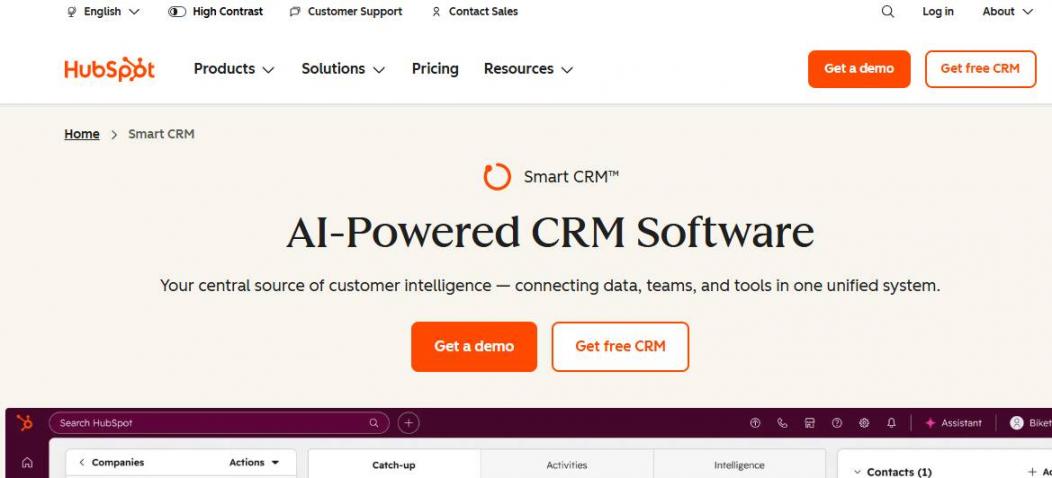
Image via HubSpot
HubSpot CRM is the best ecommerce CRM platform for unifying customer data, as reported by 83% of HubSpot users. It brings customer data, sales activity, and communication history into one easy-to-use platform.
With HubSpot CRM, ecommerce teams can manage deals and sales funnels more effectively. Users can create custom deal stages that match their sales process.
The visual pipeline makes it easy to track progress and spot stalled deals. Teams can also assign tasks and set reminders directly within the CRM platform. This ensures follow-ups do not fall through the cracks.
Reporting and dashboards are another major advantage that positions HubSpot as a top ecommerce CRM. The platform provides built-in reports for sales, marketing, and customer service data. Teams can view performance metrics in one shared dashboard. This creates a single source of truth for decision-making.
Even better, AI features are well integrated into HubSpot CRM, which helps automate routine tasks and surface insights. This includes HubSpot's AI Assistant, Breeze, which helps users research companies and summarize CRM records. It also includes AI content tools that support faster email and content marketing.
Together, these tools reduce manual work for ecommerce teams while improving response times and personalization. In fact, 90% of marketers report increased personalization when using HubSpot.
Key Features
- Centralized customer profile and contact management
- Visual sales pipeline and deal stage tracking
- Unified activity timeline for emails, calls, and notes
- Customizable reporting dashboards and analytics
- CRM data import from existing platforms
- Integrated CRM, Sales Hub, and Marketing Hub platform for unified customer data
- 2000+ native and third-party app integrations via HubSpot Marketplace
Pros
- Free CRM with up to 2 users
- Provides a unified customer data view
- HubSpot offers strong AI-powered CRM capabilities among the best ecommerce CRM tools
- Scales well with business growth
Cons
- Limited customization on the free plan
- Costs can increase as teams scale usage
Pricing
- Free
- Starter: $15/month per seat
- Professional: $50/month per seat
- Enterprise: $75/month per seat
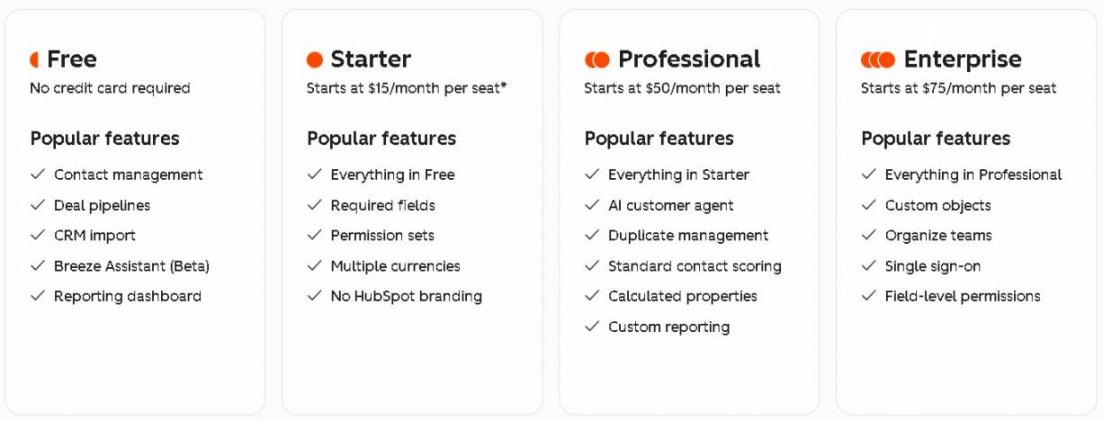
Image via HubSpot
Pro Tip: Use HubSpot’s AI-powered assistant together with automated tasks to prioritize follow-ups for high-value ecommerce leads.
2. Salesforce CRM
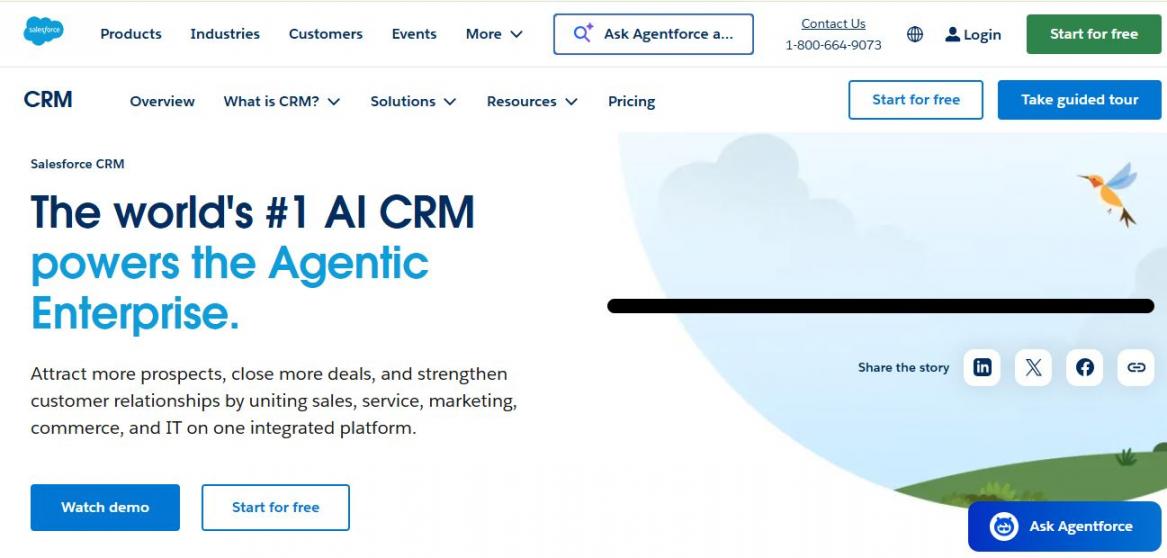
Image via Salesforce
Salesforce CRM is built to help businesses of different types manage customer relationships on one connected platform. It is a well-known ecommerce CRM platform that uses AI to help teams work more efficiently.
Its agentic AI feature helps automate routine tasks and guide next steps. It also helps surface insights from large amounts of customer data. These insights help teams prioritize actions and respond faster.
As one of the best ecommerce CRM tools for complex operations, Salesforce supports businesses across many industries. It offers CRM solutions built for retail, healthcare, public sector, and technology companies. With this, businesses can easily set up workflows tailored to their needs.
Key Features
- Unified customer data view across sales, service, marketing, and commerce
- AI-powered insights and agentic automation across CRM workflows
- Sales pipeline, lead management, and revenue forecasting tools
- Marketing campaign management with AI-driven personalization
- Industry-specific customer relationship management solutions and workflows
- App and data integrations through AppExchange and MuleSoft
Pros
- It connects all customer-facing teams on one platform
- Strong AI capabilities are embedded across the CRM
- Highly scalable for growing and complex businesses
Cons
- Can feel complex for first-time CRM users
- Many features require separate cloud subscriptions
Pricing
- Free Suite
- Starter Suite: $25/user/month
- Pro Suite: $100/user/month
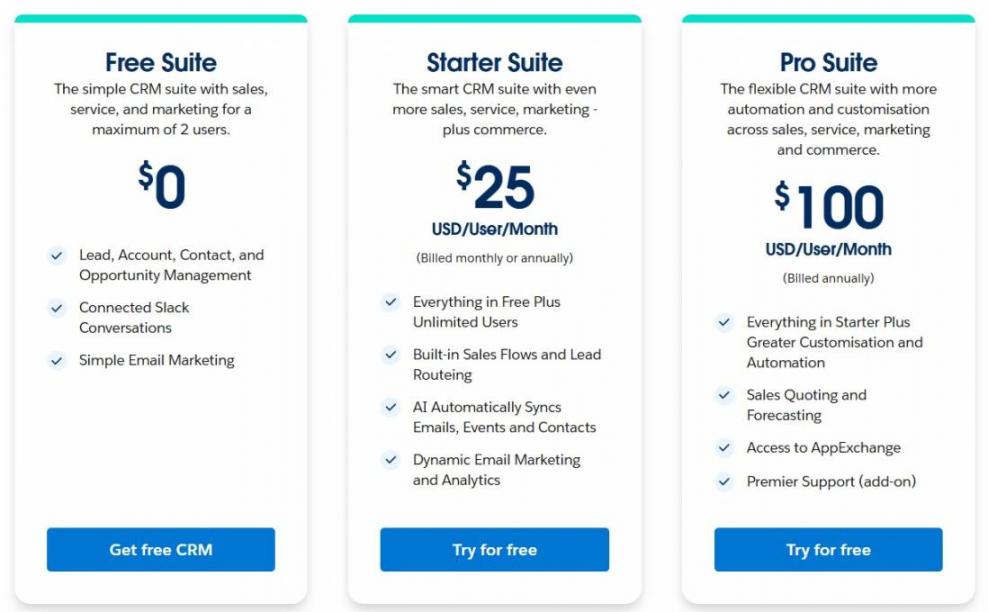
Image via Salesforce
Pro Tip: Use Salesforce’s shared customer view together with built-in AI insights to surface next-best actions for your team.
3. Zoho CRM
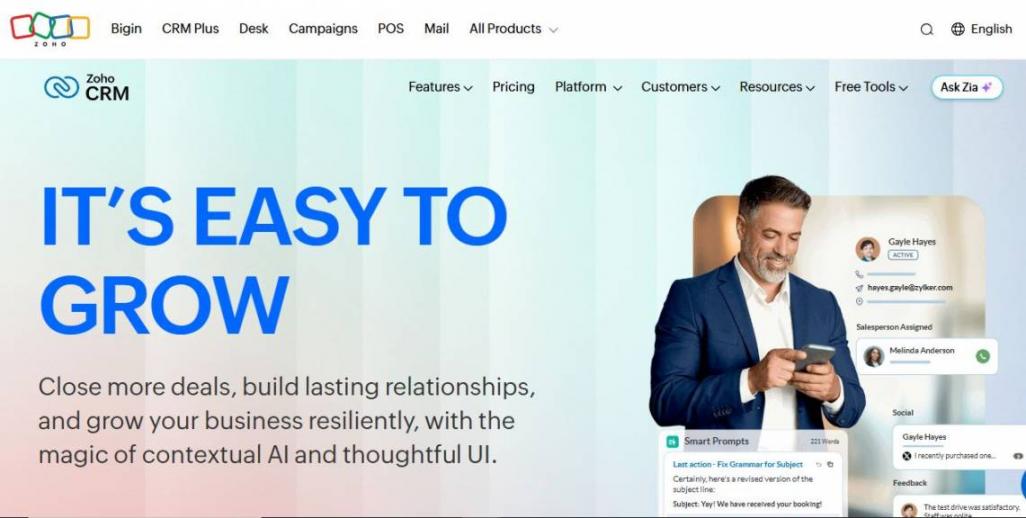
Image via Zoho CRM
Zoho is a great choice for ecommerce businesses looking for the best CRM platform to manage multi-channel interactions. It’s especially well-suited for teams that rely heavily on structured lead and deal management.
The platform allows businesses to attract leads from multiple sources, enrich lead data, and guide prospects through defined sales stages. Leads can be scored, segmented, and nurtured using built-in tools that ensure relevant engagement.
Zoho CRM also offers robust sales force automation features that reduce manual work for sales teams. Tasks such as follow-ups, contact updates, and activity tracking can be automated. This makes Zoho CRM one of the best ecommerce CRM solutions for businesses managing high transaction volumes and repeat customer interactions.
Key Features
- AI-powered sales assistance and recommendations
- Automated workflows and process enforcement
- Visual sales pipeline and forecasting tools
- Lead capture, enrichment, and nurturing tools
- Sales and CRM automation for leads, contacts, and deals
- Omnichannel customer interaction management
Pros
- Supports collaboration across teams
- Flexible structure that adapts to different business workflows
- Allows a high level of customization without heavy coding
Cons
- No free plan compared to some of the best ecommerce CRM tools available
- Ecommerce functionality is not built-in and requires integrations to sync data
Pricing
- Standard: $20/user/month
- Professional: $35/user/month
- Enterprise: $50/user/month
- Ultimate: $65/user/month
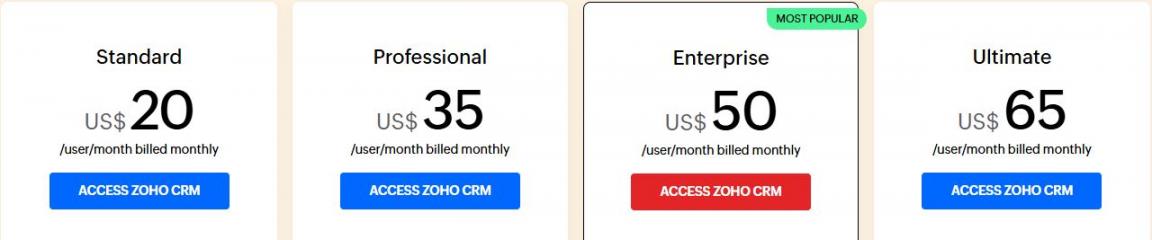
Image via Zoho CRM
Pro Tip: Use Zoho CRM’s Blueprint feature to guide sales reps through every deal stage while enforcing process rules automatically.
4. Freshworks CRM
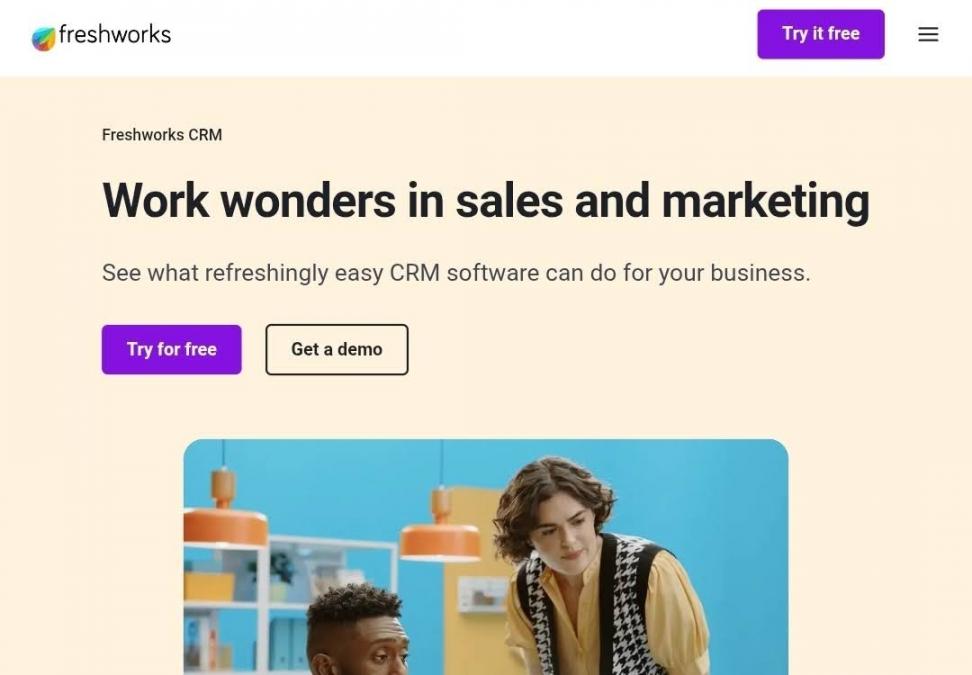
Image via Freshworks
Freshworks CRM ranks among the best ecommerce CRM solutions in 2026, combining AI-powered insights with an intuitive, unified platform for sales, marketing, and support teams.
The platform includes integrated lead scoring and contact management features. Ecommerce businesses can identify and nurture leads, enrich them with relevant data, and rank leads according to their potential.
Marketing teams benefit from Freshmarketer, which is an add-on offered with Freshworks CRM. Personalized campaigns can be executed across email, web, and social media, with detailed analytics to measure engagement and ROI.
Key Features
- AI-powered lead scoring and sales insights
- Multichannel marketing automation campaigns
- Centralized customer interaction tracking
- Customizable sales pipelines and stages
- Integrated ticketing and support management
- Reporting and analytics dashboards
Pros
- It is one of the best ecommerce CRM with unified platforms for sales, marketing, and support
- Easy to track customer interactions across channels
- Intuitive interface with fast onboarding
Cons
- Reporting customization options are limited in lower tiers
- Some integrations require additional setup or subscriptions
Pricing
- Growth: $11/user/month
- Pro: $47/user/month
- Enterprise: $71/user/month
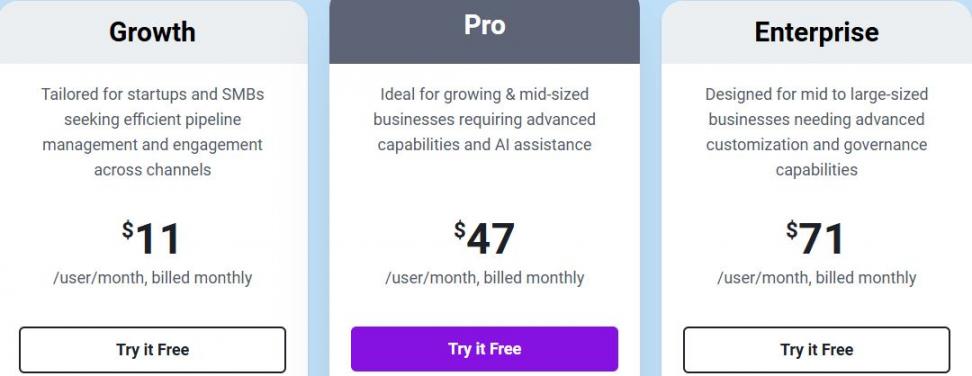
Image via Freshworks
Pro Tip: Use Freshworks CRM’s AI-powered lead scoring alongside automated workflows to focus on high-potential leads and shorten your sales cycle.
5. Insightly
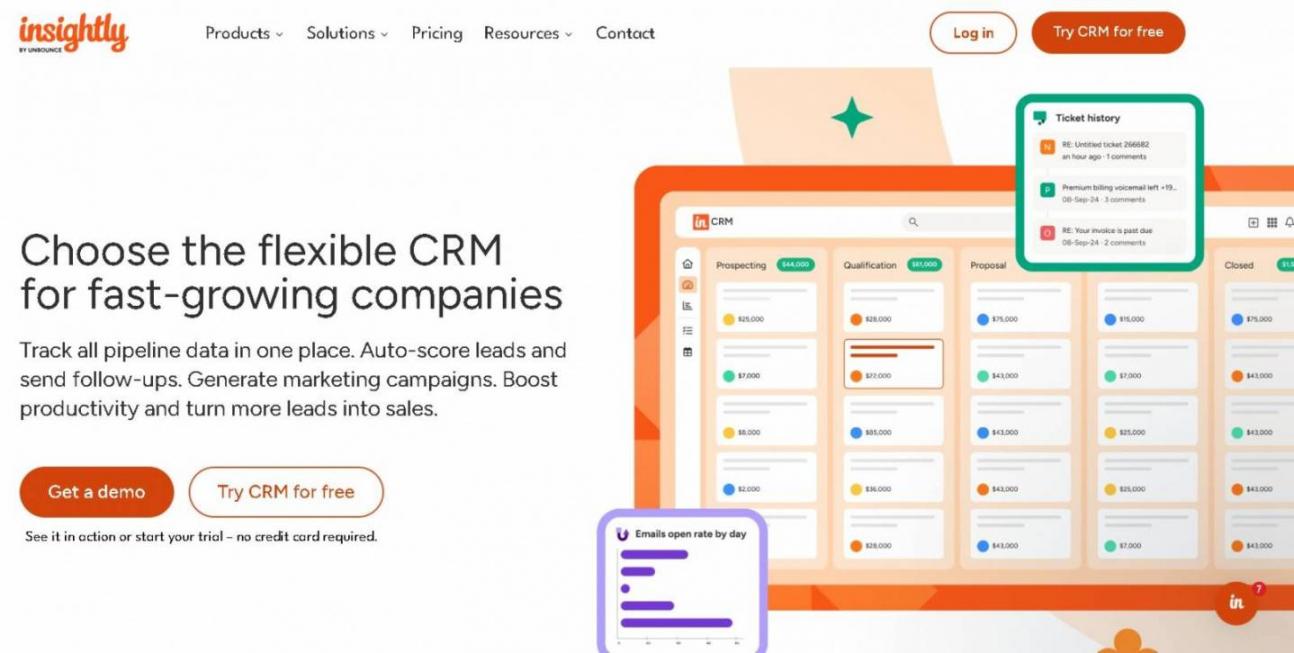
Image via Insightly
Like several of the best ecommerce CRM tools on this list, Insightly enables businesses to manage leads, deals, and customer relationships from a centralized platform.
Insightly CRM provides excellent sales pipeline and opportunity management tools that help ecommerce teams capture leads and convert them efficiently. Sales teams can view the real-time status of every deal, which makes it easier to prioritize work and respond at the right time.
But that's not all the features that make it a strong contender among the best ecommerce CRM options. Insightly CRM also supports quoting and post-sale execution throughout the customer lifecycle. This means that teams can generate branded quotes, send them by email, and track their status.
Key Features
- Sales pipeline and opportunity management with customizable stages
- Lead capture, prioritization, and distribution tools
- Workflow and process automation for repetitive sales tasks
- Validation rules for data accuracy and compliance
- Project and task management with milestones and pipelines
- Bidirectional customer email synchronization and tracking
Pros
- Insightly CRM offers a clean and intuitive interface that teams can easily adopt
- Its customization options allow businesses to adapt the CRM to their processes without relying on developers
- Offers strong integration with numerous business apps
Cons
- No free plan compared to some of the best ecommerce CRM tools like HubSpot CRM
- Workflow automation and advanced features require higher‑tier plans to unlock
Pricing
All the paid plans are billed annually:
- Plus: $29/user/month
- Professional: $49/user/month
- Enterprise: $99/user/month
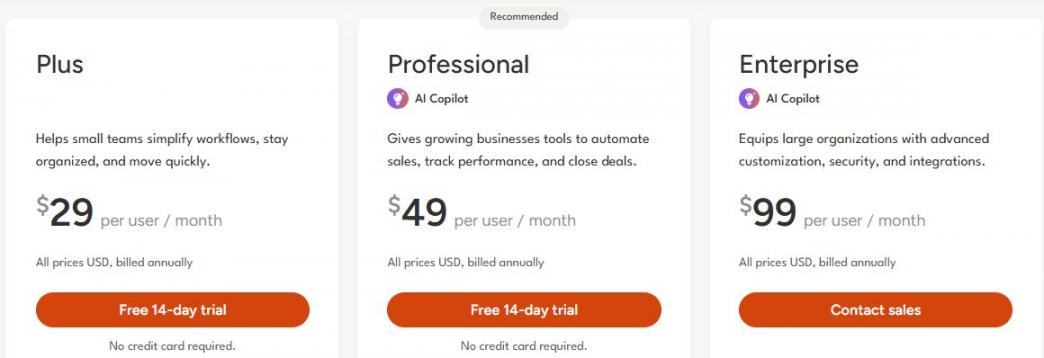
Image via Insightly
Pro Tip: Use Insightly’s opportunity-to-project conversion feature to integrate deal details with projects to ensure smooth handoffs between teams.
6. Pipedrive
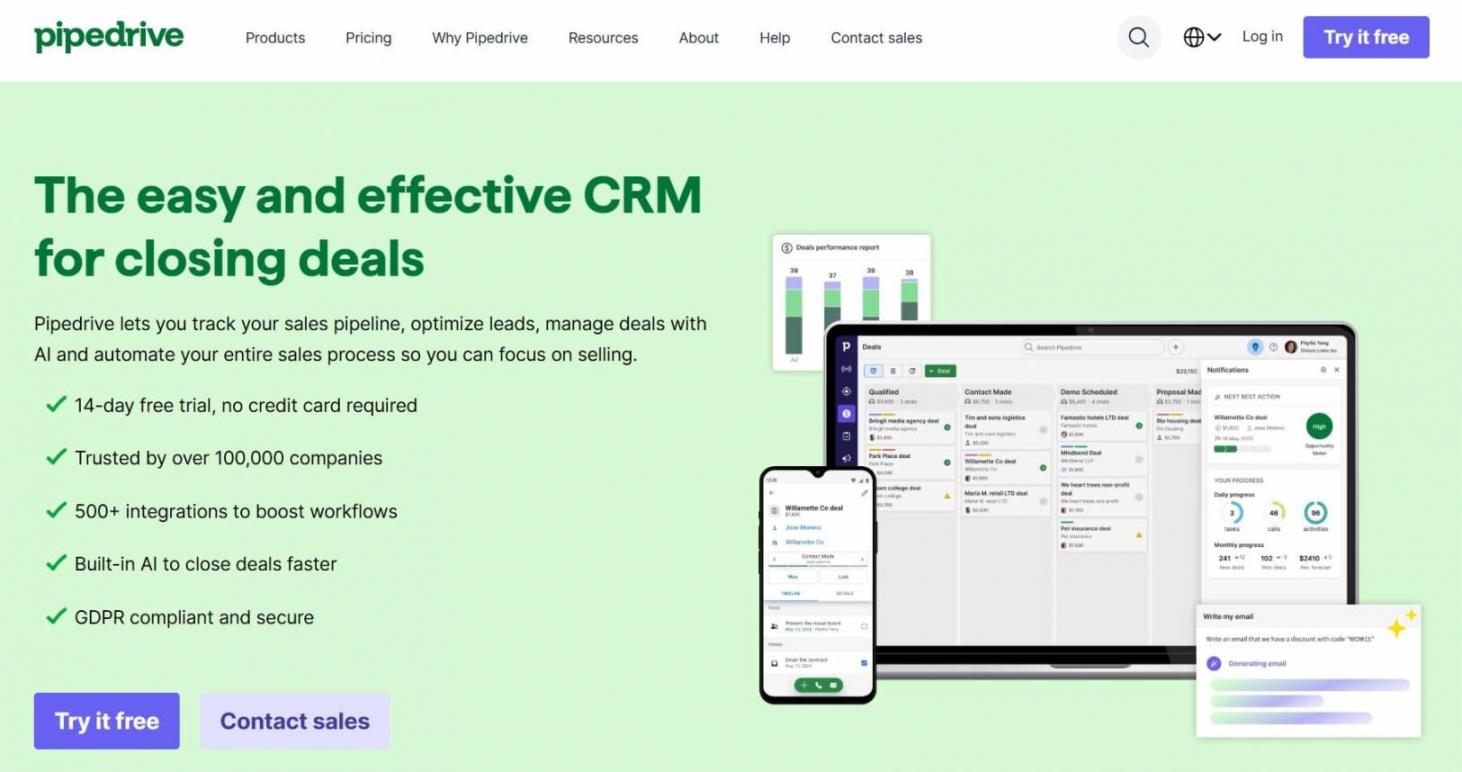
Image via Pipedrive
Used by more than 100,000 companies worldwide, Pipedrive is widely regarded as one of the best ecommerce CRM tools for sales-driven teams focused on closing deals efficiently.
With Pipedrive, you can organize leads, contacts, and deals in a kanban‑style view that shows the status of each opportunity at a glance. It uses built‑in AI to help spot trends and automate routine sales activities.
As one of the best ecommerce CRM options for data migration and pipeline visibility, Pipedrive makes it easy to import contacts and historical sales data from other systems. Ecommerce teams can link products or services to deals and track revenue potential throughout the customer journey.
Key Features
- Visual sales pipeline management with kanban‑style boards
- AI‑powered sales insights and forecasting
- Automated lead nurturing and follow‑up reminders
- Customizable fields and smart formula functions
- Real‑time reporting dashboards and revenue tracking
- 24/7 AI sales advisor (Nora) for personalized assistance
Pros
- The CRM is easy to set up and learn, even for non‑technical users
- Pipedrive integrates with many ecommerce and sales tools through its Marketplace
- It offers customizable workflow automation, which helps to streamline daily tasks
Cons
- Some features are offered as add-ons, which can increase the cost
- Limited built‑in support for advanced ecommerce marketing automation compared to tools like HubSpot CRM
Pricing
- Lite: $24/seat/month
- Growth: $49/seat/month
- Premium: $79/seat/month
- Ultimate: $99/seat/month
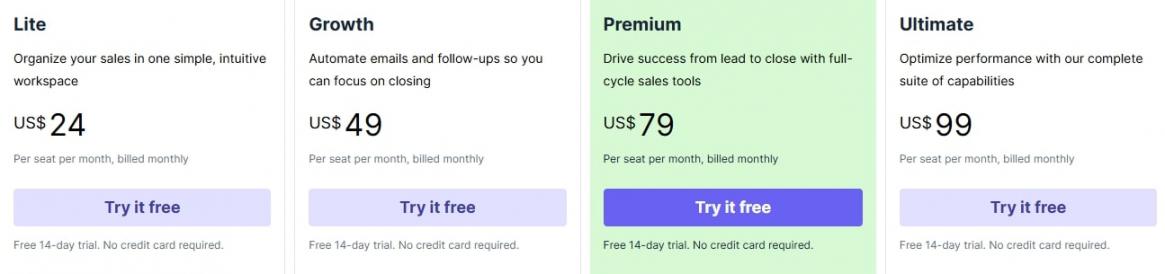
Image via Pipedrive
Pro Tip: Combine Pipedrive’s automation workflows with AI-based lead scoring to ensure high-value ecommerce leads are followed up quickly and consistently.
7. ActiveCampaign CRM
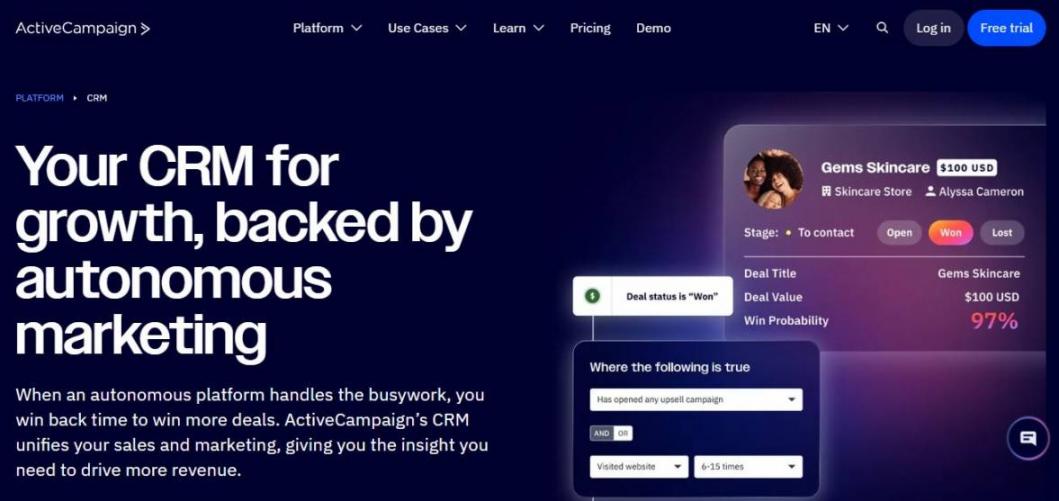
Image via ActiveCampaign CRM
ActiveCampaign CRM is a well-established platform built to help ecommerce teams unify sales and marketing efforts. Many businesses consider it among the best ecommerce CRM solutions because it combines CRM, email marketing, and sales funnel automation functionalities.
The platform provides a visual, customizable sales pipeline. Teams can map customer journeys, track opportunities, and adjust stages to fit their unique process.
ActiveCampaign also stands out among the best ecommerce CRM tools for its AI-driven lead and deal prioritization. The platform scores leads based on historical behavior and engagement, helping teams focus on prospects most likely to convert.
The CRM also includes predictive analytics through its Active Intelligence AI feature. Teams can see win probabilities in real time, receive suggestions for next best actions, and reduce risks in their sales pipeline.
Key Features
- Customizable sales and marketing dashboards
- Automated sales routing and team assignments
- Collaboration tools with shared notes and activity tracking
- AI-powered lead and deal scoring
- Automated task and workflow management
- Campaign performance and marketing impact reporting
Pros
- Easy-to-use, visual interface
- Flexible workflow customization
- AI-powered insights for smarter selling
Cons
- Some automations can be complex to configure
- No free plan for small teams compared to most ecommerce CRM platforms
Pricing
ActiveCampaign plans are billed annually, and they include the following:
- Starter: $15/month
- Plus: $49/month
- Pro: $79/month
- Enterprise: $145/month
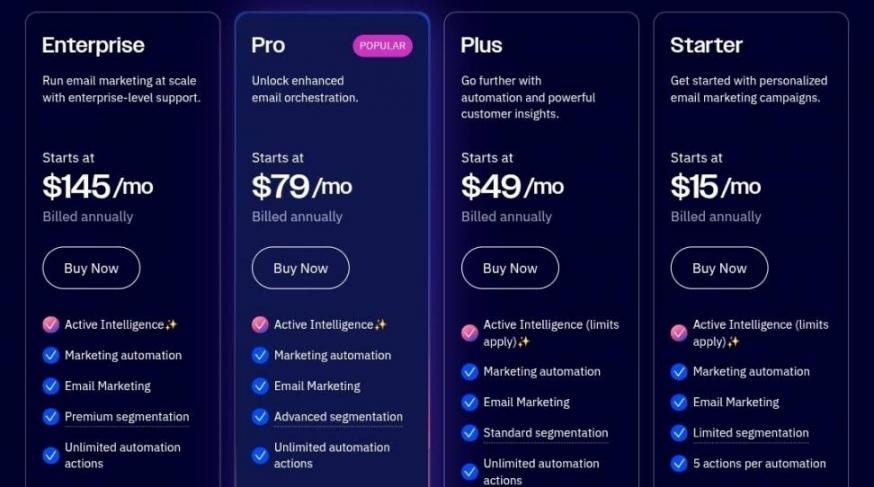
Image via ActiveCampaign CRM
Pro Tip: Pair ActiveCampaign’s AI-driven lead scoring with automated 1:1 email campaigns to prioritize high-value ecommerce prospects and increase conversion rates.
FAQ
Q1. What does an ecommerce CRM tool do?
A. Ecommerce CRM tools help businesses manage customer relationships across the entire buying journey. They store customer details, track purchases, log interactions, and record customer behavior. This data can help businesses personalize marketing, follow up on sales, and provide better support.
Q2. How much does ecommerce CRM software usually cost?
A. The cost of ecommerce CRM software depends on features, scale, and usage. Some platforms like HubSpot CRM offer free plans, while others charge monthly or annual fees based on contacts or users.
Q3. What features should the best ecommerce CRM solutions have?
A. The best ecommerce CRM solutions should have features that help online businesses understand customers, manage sales, and ensure repeat purchases. These include important features such as:
- Customer profile management for storing contact details, preferences, and buying behavior
- Purchase history tracking
- Order and transaction syncing
- Ecommerce tools integrations with platforms like Shopify and more
- Sales and revenue reporting
- Marketing automation
Q4. Which ecommerce CRM tool works best with Shopify?
A. Several ecommerce CRM solutions offer integration with Shopify and other ecommerce platforms. For example, HubSpot provides a native ecommerce integration that syncs customer, order, and product data. This helps ecommerce teams automate marketing, track sales, and personalize customer experiences.
Q5. Can HubSpot work for small ecommerce businesses?
A. Yes, HubSpot works well for both small ecommerce teams and growing businesses. It offers a free CRM with core features and paid tools that scale gradually. With this, small businesses can start with simple features and expand as they grow.
Ready to Choose the Best Ecommerce CRM Tool for Your Team?
The bottom line is that businesses have several ecommerce CRM options to choose from. The best ecommerce CRM tool is the one that aligns with your store’s growth stage, team size, and marketing strategy.
From our list, HubSpot Smart CRM remains the top choice for brands seeking an all-in-one solution. HubSpot gives you advanced automation for sales, marketing activities, AI insights, and robust integrations.
If you want to invest in a CRM solution that can boost customer engagement and sales efficiency, give HubSpot a try.
Disclaimer: This content contains some affiliate links for which we will earn a commission (at no additional cost to you). This is to ensure that we can keep creating free content for you.