HubSpot AEO vs Ahrefs is the kind of comparison that makes sense only if you understand what is changing in search.
Buyers are not waiting around for search results the way they used to. They are getting answers directly from AI, and that is reshaping how brands get found. There is a big shift from SEO to AEO.
HubSpot AEO is built for that shift. Ahrefs Brand Radar is built to measure it.
Both matter, but not in the same way. If you are trying to decide where to invest, this HubSpot AEO vs Ahrefs comparison will help you see which tool gives you more than just data.
Disclaimer: This content contains some affiliate links for which we will earn a commission (at no additional cost to you). This is to ensure that we can keep creating free content for you.
HubSpot AEO vs Ahrefs: The Summary Box
| HubSpot AEO | Ahrefs |
 |  |
| HubSpot AEO gives brands a simple way to track AI visibility and spot where they are losing ground. It turns that into clear next steps, so teams do not have to guess what to do next. It is more focused on marketing use than on deep research and analysis. | Ahrefs Brand Radar shows how your brand performs in AI answers and lets you measure that against competitors. It is useful for checking share of voice, prompt coverage, and source data. The tool is data-heavy, making it better suited for analysis than for quick action. |
HubSpot AEO
- HubSpot AEO gives brands a simple way to track AI visibility and spot where they are losing ground. It turns that into clear next steps, so teams do not have to guess what to do next. It is more focused on marketing use than on deep research and analysis.
Ahrefs
- Ahrefs Brand Radar shows how your brand performs in AI answers and lets you measure that against competitors. It is useful for checking share of voice, prompt coverage, and source data. The tool is data-heavy, making it better suited for analysis than for quick action.
HubSpot AEO vs Ahrefs: Product Ratings
| HubSpot AEO | Ahrefs | |
| Overall | ||
| Support | ||
| Features | ||
| User-Friendliness | ||
| Value for Money |
HubSpot AEO
- Overall:
- Support:
- Features:
- User-Friendliness:
- Value for Money:
Ahrefs
- Overall:
- Support:
- Features:
- User-Friendliness:
- Value for Money:
Pros and Cons: HubSpot AEO
| Pros | Cons |
| Easy to understand | Narrower platform coverage |
| Clear AI visibility score | The platform is still developing |
| Action-focused workflow | |
| CRM-based context | |
| Plain-language recommendations | |
| More affordable and accessible |
Pros
- Easy to understand
- Clear AI visibility score
- Action-focused workflow
- CRM-based context
- Plain-language recommendations
- More affordable and accessible
Cons
- Narrower platform coverage
- The platform is still developing
Pros and Cons: Ahrefs
| Pros | Cons |
| Broad AI visibility coverage | More data to sort |
| Strong competitor benchmarking | More expensive |
| AI Share of Voice calculation | Custom prompts could cost more |
| Custom prompt tracking |
Pros
- Broad AI visibility coverage
- Strong competitor benchmarking
- AI Share of Voice calculation
- Custom prompt tracking
Cons
- More data to sort
- More expensive
- Custom prompts could cost more
Pricing Details: HubSpot AEO
| Plan | Cost (Per Month) |
| HubSpot AEO | $50 |
| HubSpot Marketing Hub Professional (AEO Included) | Starts at $890 |
| HubSpot Marketing Hub Enterprise (AEO Included) | Starts at $3,600 |
- HubSpot AEO (Standalone) $50 per month
- HubSpot AEO + HubSpot Marketing Hub Starts at $890
- HubSpot Marketing Hub Enterprise (AEO Included) Starts at $3,600
Pricing Details: Ahrefs
| Plan | Cost (Per Month) |
| Select platforms | Starts at $199 per month |
| All platforms | $699 per month |
- Select platforms Starts at $199 per month
- All platforms $699 per month
Verdict: While Ahrefs offers deeper analytics, HubSpot AEO is more actionable, user-friendly, and cost-effective.
HubSpot AEO vs Ahrefs: Who Is It For?
| HubSpot | Ahrefs |
| Small marketing teams | AI SEO specialists |
| Existing HubSpot users | Digital marketing agencies |
| Growth-focused startups | Enterprise marketing teams |
| Non-technical marketers | Data-driven marketers |
HubSpot
- Small marketing teams
- Existing HubSpot users
- Growth-focused startups
- Non-technical marketers
Ahrefs
- AI SEO specialists
- Digital marketing agencies
- Enterprise marketing teams
- Data-driven marketers
HubSpot AEO vs Ahrefs: Features Comparison
| HubSpot | Ahrefs | ||
| AI Visibility Tracking | Visibility tracking across AI tools | ||
| Single AI visibility score | |||
| Competitor mention tracking | |||
| Competitor Analysis | AI Share of Voice | ||
| Gap identification | |||
| Actionable Recommendations | Plain-language suggestions | ||
| Built-in content actions | |||
| CRM-based insights | |||
| CRM-Powered Context | Context-aware prompts | ||
| Personalized recommendations | |||
| Prompt & Topic Analysis | Prompt tracking | ||
| Topic discovery | |||
| Custom Prompt Tracking | Ability to track custom prompts | Limited | |
| Included in base pricing |
HubSpot AEO
- AI Visibility Tracking
- Visibility tracking across AI tools
- Single AI visibility score
- Competitor Analysis
- Competitor mention tracking
- AI Share of Voice
- Gap identification
- Actionable Recommendations
- Plain-language suggestions
- Built-in content actions
- CRM-Powered Context
- CRM-based insights
- Context-aware prompts
- Personalized recommendations
- Prompt & Topic Analysis
- Prompt tracking
- Topic discovery
- Limited Ability to track custom prompts
- Included in base pricing
Ahrefs
- AI Visibility Tracking
- Visibility tracking across AI tools
- Single AI visibility score
- Competitor Analysis
- Competitor mention tracking
- AI Share of Voice
- Gap identification
- Actionable Recommendations
- Plain-language suggestions
- Built-in content actions
- CRM-Powered Context
- CRM-based insights
- Context-aware prompts
- Personalized recommendations
- Prompt & Topic Analysis
- Prompt tracking
- Topic discovery
- Ability to track custom prompts
- Included in base pricing
Verdict: Ahrefs Brand Radar has more depth, but HubSpot AEO is more practical for day-to-day use. For most teams, HubSpot’s approach will feel more useful.
Table of Contents
Detailed Review: HubSpot AEO
In this section of our HubSpot AEO vs Ahrefs comparison, we’ll talk about HubSpot’s key capabilities.
AI Visibility Tracking
HubSpot AEO’s AI visibility tracking is built for teams that want a fast read on where they stand. It shows how your brand appears in AI tools, where competitors are winning attention, and where your presence is missing.
The experience is intentionally simple. You get one score, one view, and a clear sense of what needs attention. That makes it easier for marketing teams to track AI visibility without treating it like a specialist research project.
Ahrefs Brand Radar also gives you a detailed breakdown of AI visibility across platforms. However, it’s more analytical. HubSpot AEO focuses on making that insight simple, clear, and immediately useful.
Competitor Gap Analysis
HubSpot AEO helps you see exactly where competitors are being recommended, and you’re not. It highlights missed opportunities in plain language, so you can quickly understand where you’re losing visibility during the buyer’s research phase.
Ahrefs Brand Radar also does competitor analysis, but through its AI Share of Voice metric. This shows the percentage of AI answers that mention your brand compared to competitors.
In short, both tools help you find gaps, but HubSpot AEO simplifies them into actions, while Ahrefs gives you benchmarking data.
Actionable Recommendations
HubSpot AEO is designed to help you do something with the data, not just look at it. It gives you personalized recommendations in simple language, so teams can quickly decide what to fix and where to start.
That is a big deal because most tools stop at observation. HubSpot AEO is clearly trying to shorten the distance between finding a gap and closing it.
Ahrefs Brand Radar is useful for tracking AI visibility and spotting where your brand is missing. HubSpot AEO feels more complete for teams that want guidance, not just analysis. It is the better fit when the real need is action.
CRM- Powered Context
HubSpot AEO uses your CRM data to make its recommendations more relevant. It already understands your industry, customers, and content, so it can suggest the right prompts to track and the right gaps to prioritize.
This makes the tool more tailored to your business over time.
Ahrefs Brand Radar does not have this layer. It works on a large dataset of prompts and visibility signals. So, it gives you a broad market view instead of business-specific insights.
Detailed Review: Ahrefs
Next on our HubSpot AEO vs Ahrefs comparison, we’ll cover the latter’s key features and capabilities. To keep the comparison fair, we’ll only discuss Ahrefs’ “Brand Radar tool.
AI Visibility Tracking
Ahrefs Brand Radar shows where your brand appears in AI answers. It pulls data from a large set of real prompts and tells you how often you’re mentioned.
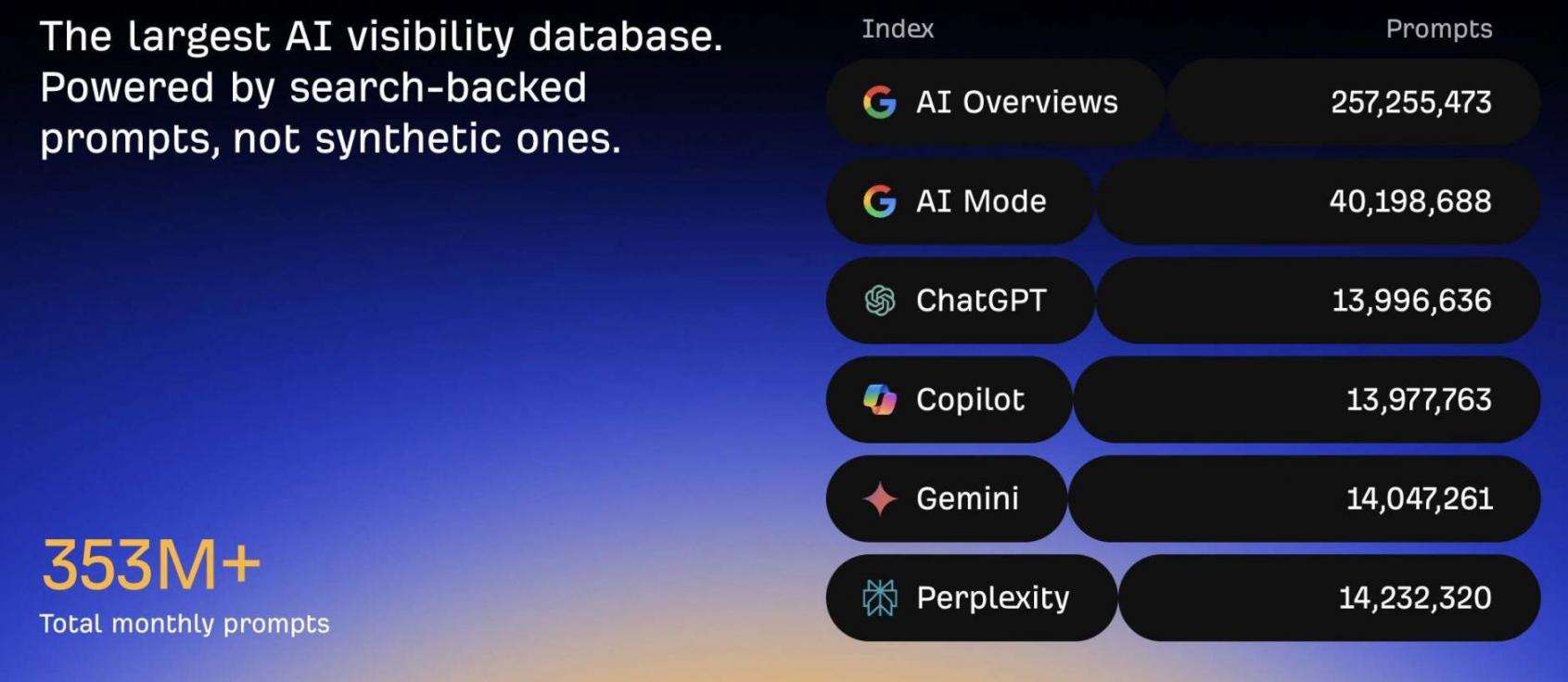
Image via Ahrefs
You can break this down further. See which topics bring up your brand, which ones don’t, and where competitors show up instead. It also shows what sources AI is pulling from, which helps explain why some brands get picked more often.
HubSpot AEO takes a more guided approach here. Ahrefs gives you a wider view of what’s happening, while HubSpot AEO focuses more on helping you respond to it quickly.
AI Share of Voice
One of the main things Ahrefs Brand Radar shows is AI Share of Voice. It tells you what slice of AI visibility your brand gets versus competitors, and it works across multiple AI indexes. That makes it useful for tracking where your brand stands against competitors.
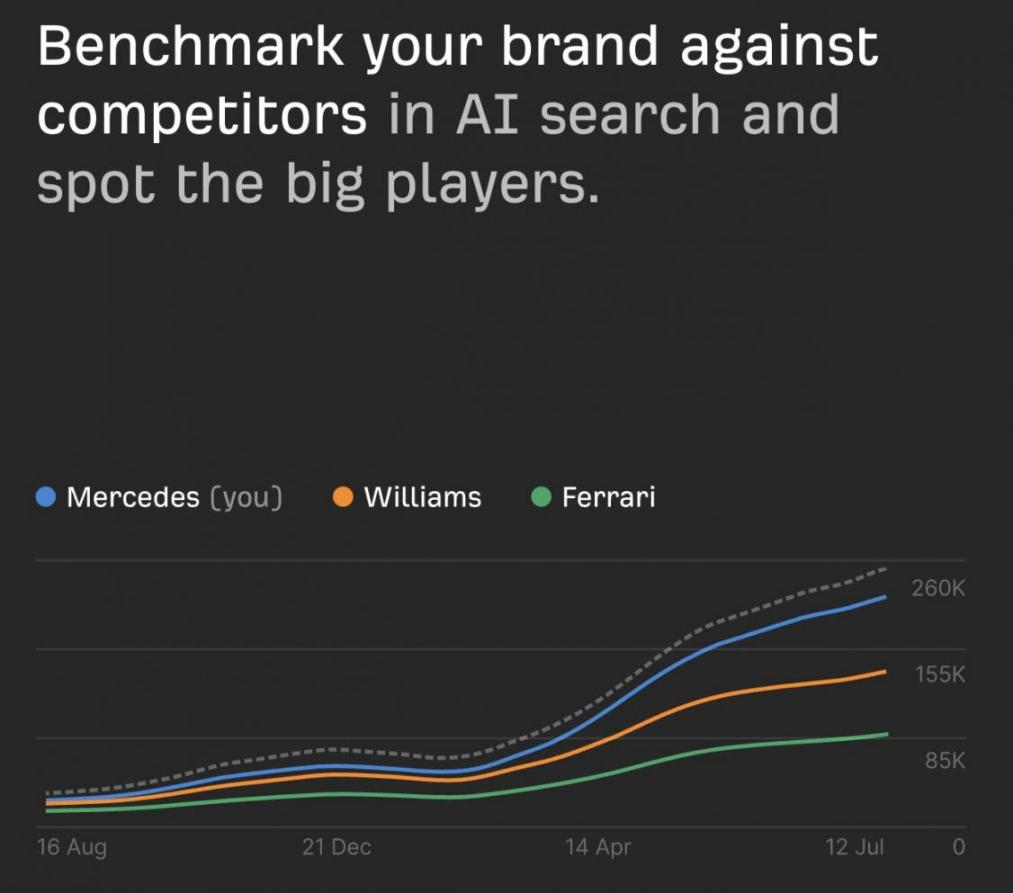
Image via Ahrefs
HubSpot AEO answers a different question. Instead of focusing on your share, it focuses on where you are missing and what you should do to improve it.
Prompt and Topic Analysis
Ahrefs Brand Radar gives you a way to follow the questions people ask in AI tools. You can add custom prompts, choose the AI assistant, and check how often your brand appears in those answers. That makes it easy to track the exact prompts that matter to your category.
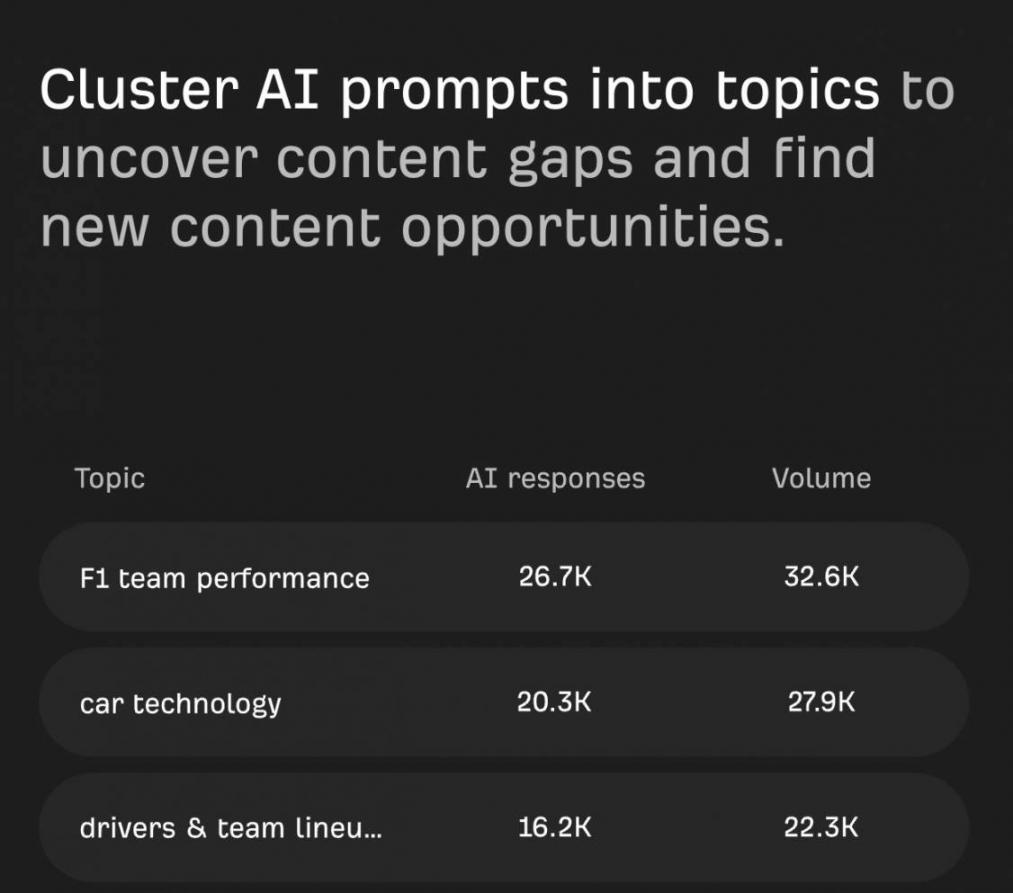
Image via Ahrefs
It also shows how your brand connects to wider topics. You can go beyond branded terms and look at AI visibility across products, regions, and categories. So, it helps with discovering content gaps and topics you can target.
HubSpot AEO is different, as it’s not a topic research tool, but is more marketing-focused. So, instead of giving you a big topic map, it uses your own business context to point you toward the prompts and gaps that matter most for your brand.
Custom Prompt Tracking
Ahrefs Brand Radar lets you track your own custom prompts, so you can watch the exact AI questions that matter to your brand. It is a useful way to go beyond the default dataset and focus on the searches that are most likely to drive sales.
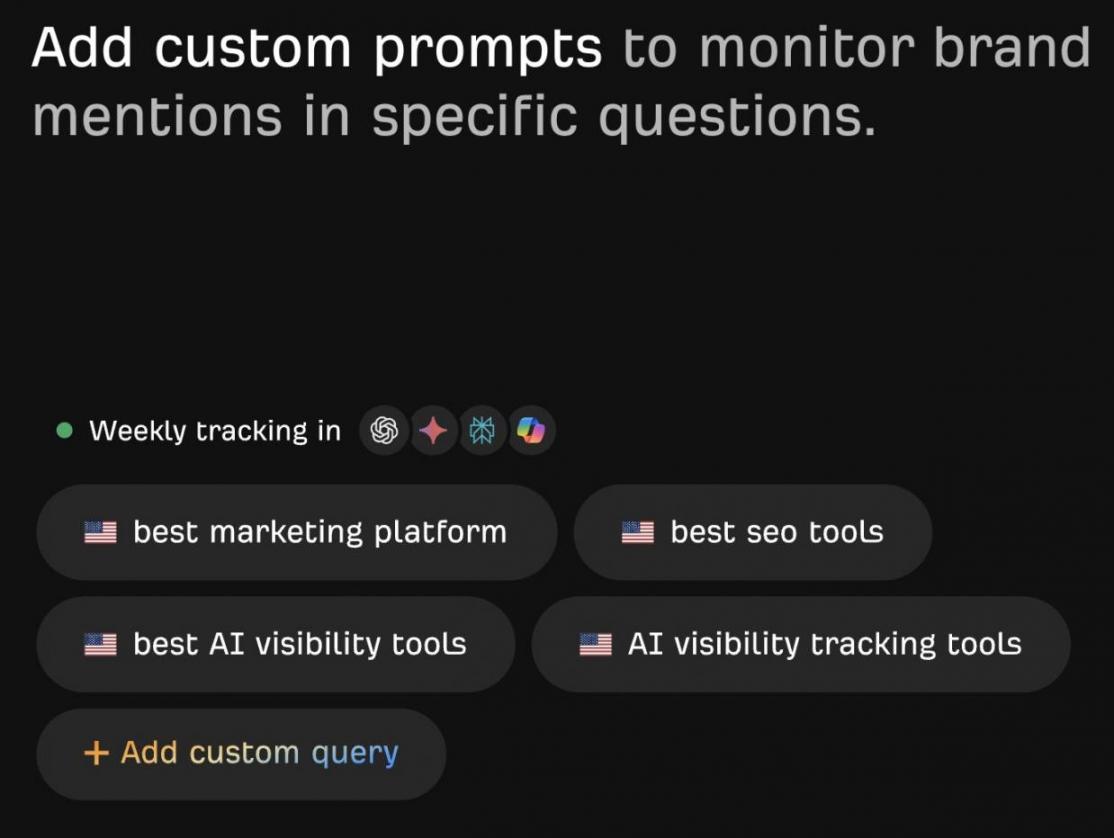
Image via Ahrefs
You need to opt for the “All platforms” paid plan to get 2,500 custom prompt checks per month. Beyond that, you’ll need to pay for these based on use, which can raise the costs significantly.
HubSpot AEO takes a different path. Instead of making you think about extra prompt packs and usage limits, it is framed more as part of a larger marketing workflow, which makes the whole thing feel easier to run.
HubSpot AEO Pricing Plans
In this part of our HubSpot AEO vs Ahrefs comparison, we’ll cover the former’s pricing.
You can start using HubSpot AEO for $50 per month, even if you don’t have any other HubSpot products like the Sales Hub or Service Hub.
However, we highly recommend that you combine this with HubSpot Marketing Hub for compounded benefits. The prices for that start at $890 per month.
Afrefs Pricing Plans
Ahrefs’ Brand Radar offers the following options:
- Select platforms: Starts at $199 per month
- All platforms: $699 per month
So, which one’s more affordable based on our HubSpot AEO vs Ahrefs pricing comparison?
HubSpot is the clear winner here. Even if you combine HubSpot AEO and the Starter plan of HubSpot Marketing Hub, you’ll still pay less and get more.
FAQ
Q1. What is HubSpot AEO?
A. HubSpot AEO is a new product that helps you see how your brand shows up in AI answers on tools like ChatGPT and Gemini. It gives you a visibility score, shows where competitors are being mentioned instead, and points out the gaps in simple language.
Q2. What are the main benefits of HubSpot AEO?
A. The key benefits of HubSpot AEO are clarity, action, and context. It shows visibility data and gives recommendations. It also uses CRM data to make those recommendations more relevant to your business.
Q3. How is HubSpot AEO different from Ahrefs Brand Radar?
A. HubSpot AEO is designed to fit into your existing marketing workflow. Ahrefs Brand Radar works more like a research tool that’s separate from your workflow.
Q4. Who should choose HubSpot AEO vs Ahrefs?
A. Marketing teams that want a simple way to track AI visibility and act on it fast should choose it over Ahrefs. It is also a good fit for teams that already use HubSpot or want something tied closely to their marketing workflow.
Q5. HubSpot AEO vs Ahrefs: Which offers more value for money?
A. HubSpot AEO offers better value. It focuses on helping you act on insights, not just track them. You get visibility, recommendations, and workflow in one place. Also, the monthly price is lower, and there are no extra costs for custom prompts.
Q6. Can small teams benefit from HubSpot AEO?
A. Absolutely, yes. In fact, its easy-to-use interface and low monthly price make it perfect for small teams that want quick answers and smart recommendations.
HubSpot AEO vs Ahrefs: Final Verdict
If you care about detailed data and market-level insights, Ahrefs Brand Radar is a strong option. But for most marketing teams, that is only part of the problem.
HubSpot AEO focuses on what comes next. It helps you understand your visibility and gives you a clear path to improve it. That makes it a more useful choice for everyday use.
Start by checking your AI visibility score and see where you stand.
Disclaimer: This content contains some affiliate links for which we will earn a commission (at no additional cost to you). This is to ensure that we can keep creating free content for you.