SEO has seen many changes with the introduction of AI SEO tools. Nowadays, it’s easier to find keywords and plan content. Tools like HubSpot AEO don’t just pull search data; they study intent, monitor competitors, and suggest content that your audience wants to read.
As an AI search tool, HubSpot also analyzes how people search via AI prompts and helps you determine which questions drive visibility. It also helps you identify gaps within the competitor’s content and address them.
In this article, you’ll learn how the best AI SEO tools reshape keyword research, content planning, and performance tracking. We’ll explore reliable platforms like RankIQ, seoClarity, Frase, and HubSpot. You’ll also learn where each tool fits based on how you build and scale content.
Disclaimer: This content contains some affiliate links for which we will earn a commission (at no additional cost to you). This is to ensure that we can keep creating free content for you.
How We Chose the Best AI SEO Tools
Choosing the best AI SEO tools takes more than scanning a feature list. Here are the key considerations that helped sway the needle.
- Accuracy of Data: Every sound decision starts with accurate data. So, we focused on the best AI SEO tools that deliver trustworthy keyword research, ranking data, and content analysis. This ensures strategies are built on solid ground instead of guesses.
- Quality of AI-Driven Recommendations: The best AI SEO tools, such as HubSpot AEO, provide practical content suggestions tied directly to search intent. We prioritized tools that help shape headlines, topic structure, and keyword placement in a way that fits naturally with user expectations.
- Automation of Repetitive Tasks: Search engine optimization involves generating keyword clusters to spot broken links or duplicate content. The best AI SEO tools automate these tasks, allowing professionals to spend less time on audits and more time on SEO strategy.
- Content Optimization Support: We evaluated how well each tool supports content writing and refining. This can include generating and optimizing content in line with what AI search engines prioritize. Tools like HubSpot AEO enhance this process by offering optimization suggestions and integrating those improvements directly into a broader marketing workflow.
- Technical SEO Audits: Search performance isn’t just about content. We prioritized tools that use AI to identify technical issues such as page speed problems, crawling errors, or poor mobile experiences.
- Reporting Features: Good data isn’t helpful if it can’t be analyzed and shared in formats that are easy to understand. We ranked tools that generate clear, customizable reports higher. We prioritized tools that make it simple for clients to grasp key insights at a glance.
- Competitor Analysis: The best AI SEO tools go beyond analyzing your site by also revealing what your competitors are ranking for. For example, HubSpot AEO helps identify which prompts you should target based on your business niche.
The Best AI SEO Tools Comparison Table
Before we dive into more detail, here’s a quick comparison of how the top AI SEO tools stack against each other.
| System | Key Feature | Best For | Free Plan | Starting Plan |
|---|---|---|---|---|
| HubSpot AEO | AI visibility tracking across ChatGPT and Gemini | AI search visibility and strategy | ✅ | |
| seoClarity | Clarity Grid with intent and ranking insights | Enterprise SEO and agencies | ❌ | Custom pricing |
| SurferSEO | Real-time content editor with SEO scoring | Content creation and optimization | ❌ | $119/month |
| Conductor | AI visibility tracking plus enterprise AEO workflows | Enterprise AEO and large SEO teams | ❌ | Custom pricing |
| Frase | AI content briefs and SERP analysis | Fast research and content creation | ❌ | $49/month |
| ChatGPT | AI content generation with flexible prompts | Content writing and ideation | ✅ | $5/month |
| Indexly | Auto-indexing via search engine APIs | Faster indexing and technical SEO | ❌ | $99/month |
| Localo | AI-powered GBP optimization | Local SEO management | ✅ | $39/month |
| SEOptimer | AI website audit and reporting | SEO audits and client reporting | ❌ | $29/month |
| Search Atlas | AI writer with clustering and backlink tools | Full SEO workflow for agencies | ❌ | $99/month |
| SE Ranking | AI content marketing and rank tracking | All-in-one SEO campaigns | ❌ | $129/month |
| RankIQ | AI content briefs with low competition keywords | Bloggers and niche sites | ❌ | Custom pricing |
| Koala AI | Real-time, SERP-based content generation | Fast SEO content production | ❌ | $9/month |
| NEURONwriter | NLP-based content optimization and scoring | Structured SEO writing | ❌ | $23/month |
| MarketMuse | Topic modeling and content gap analysis | Content strategy and authority | ❌ | Custom pricing |
| Writesonic | AI writing with SEO mode and brand voice | Scalable content creation | ❌ | $99/month |
| Colytics AI (beta) | AI citation tracking with page-level citation scoring | AI visibility and AEO diagnosis | ✅ | Free |
What Are AI SEO Tools? Quick Overview
AI SEO tools utilize artificial intelligence to enhance the efficiency and accuracy of search engine optimization. They analyze vast amounts of data and provide clear recommendations.
Furthermore, they provide AI-powered solutions, such as identifying search trends and content opportunities that people might miss. This allows SEO agencies to scale work across multiple clients without wasting time on repetitive manual checks.
What makes the best AI SEO tools stand out is their ability to process language in a way that’s closer to how AI search engines read content. They can assess whether a page truly answers search intent and suggest content improvements.
Recent data shows that the AI SEO software market is expected to reach $154.6 billion by 2030. This is almost a double increase compared to the 2025 market size of $82 billion.
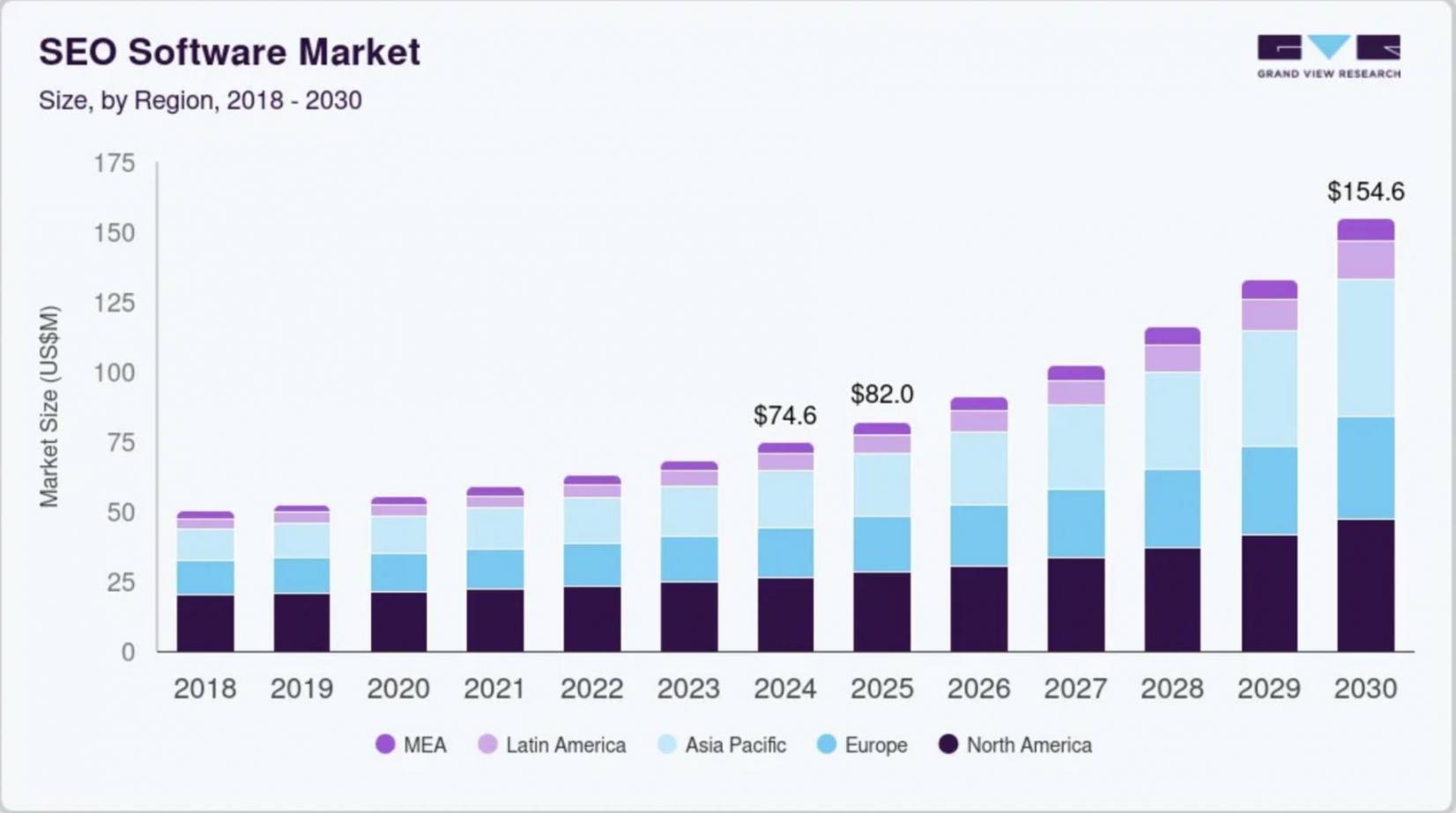
Image via Grandview Research
By combining data-driven insights with automation, AI SEO tools help professionals focus on content strategy and creativity.
17 Best AI SEO Tools You Can Try Out Today
There are so many AI SEO tools on the market, and choosing the right one can be challenging. To make things easier for you, here are the top options to try.
1. HubSpot AEO
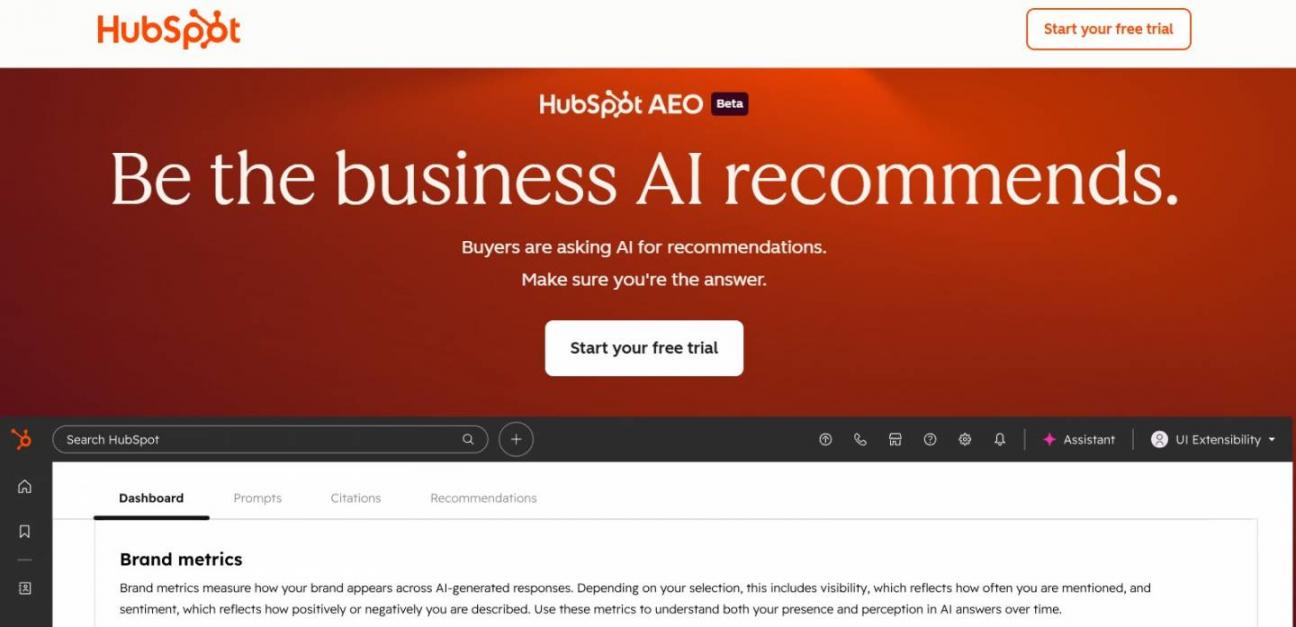
Image via HubSpot
HubSpot AEO tops our list of the best AI SEO tools due to its integration of visibility, analysis, and content action.
While most tools stop at reporting gaps, HubSpot AEO shows where your brand appears in AI-generated answers. It then connects that data directly to what you should fix next.
It works by mapping your brand against real prompts people use in tools like ChatGPT and Gemini. You enter your domain and competitors, and it generates a visibility score within minutes.
HubSpot AEO also improves over time by leveraging your CRM data. It already knows your audience, content, and market focus. This means it can suggest more relevant recommendations based on your business context.
Other tools offer generic insights. HubSpot adjusts to your business, helping your strategy become more accurate with each update.
Key Features
- AI visibility score across ChatGPT and Gemini
- Prompt-level tracking to check which AI queries mention your brand
- Clear recommendations linked to content actions
- CRM-powered prompt suggestions tailored to your business
- Weekly tracking with trend updates
- Integrated workflow from gap identification to content creation and publishing
Pros
- Connects data and action in one workflow
- Uses CRM to generate relevant recommendations
- Tracks real AI visibility
- Offers a 28-day free trial
- Easy to use, even for beginners
Cons
- Works best if you already use HubSpot
- Some features may still be rolling out
Pricing
- HubSpot AEO costs $50/month, which allows you to track 25 prompts daily across three search engines.
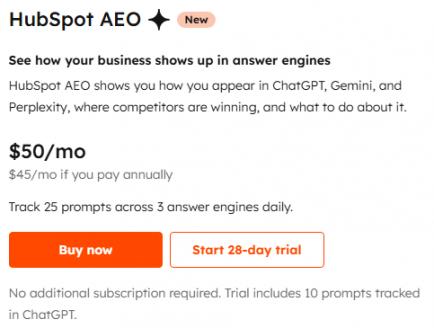
Image via HubSpot
Tool Level
- Beginner
Usability
- The interface is clear. You can see your scores, content gaps, and next steps without digging through reports. With its direct workflow, you spend more time acting than analyzing.
Pro Tip: Focus on the visibility score trends. When your score drops on key prompts, update those pages first to quickly recover lost visibility.
2. seoClarity

Image via seoClarity
seoClarity is one of the best AI SEO tools for any SEO agency looking to scale smarter. It's built for large websites that require real-time data and automation, without being slowed down by excessive use of SEO tools.
One of seoClarity’s standout features is its Clarity Grid. It gives you complete visibility into rankings, search intent, and content performance across entire domains. This helps agencies quickly figure out what needs fixing.
You can use this AI SEO tool to group keywords by intent, cluster them by topic, and match them to conversion paths. This enables brands to focus on what works instead of wasting SEO efforts by throwing a wider net, hoping it catches something.
Key Features
- Clarity Grid for keyword and page-level analysis
- AI-driven content optimizer with real-time guidance
- SEO audit with automated issue detection
- Integration with Google Search Console, GA4, and more
- Keyword intent mapping and clustering
- Topic Explorer for building content based on demand
- Content Fusion for AI-assisted writing and editing
Pros
- Great for enterprise-level SEO
- AI-backed suggestions based on live ranking signals
- Smart automation that saves time
- Flexible integrations for custom workflows
Cons
- Pricing is not ideal for small websites
- Steep learning curve for beginners
Pricing
- Custom pricing
Tool Level
- Expert
Usability
- seoClarity is an advanced AI SEO tool designed for large teams that handle multiple websites. The learning curve is a bit steep for beginners.
Pro Tip: Use the Clarity Grid alongside the Topic Explorer to build out entire content clusters based on intent. It’s one of the fastest ways to find SEO content gaps.
3. SurferSEO
Image via SurferSEO
This is one of the most popular AI SEO tools, renowned for its fast and data-driven ranking capabilities. Its strength lies in how it connects on-page SEO with live SERP data to guide writers and marketers in real time.
The Content Editor is where most people start. It shows precisely what keywords, word counts, headers, and structure your content needs to compete.
This AI SEO tool can seamlessly blend AI writing with SEO logic. The built-in AI Writer can generate full articles based on keywords and content scores. This makes it easy to go from a skeleton outline to a complete blog post.
Surfer also includes a handy content auditing tool that looks at live pages and compares them to top results. This auditing tool shows missing terms, slow load times, or header gaps.
Key Features
- Fast AI Writer for SERP-based content generation
- Content Editor with real-time SEO scoring
- SEO Audit for fixing underperforming pages
- Keyword research and clustering tool
- SERP Analyzer to study top competitors
- Integrations with Google Docs, WordPress, Jasper, and more
Pros
- Easy to use with a clean interface
- Real-time SEO suggestions
- Fast AI content creation
- Strong auditing tools
Cons
- Still requires human editing
- Limited technical SEO features
- Cheaper plans have monthly content limits
Pricing
- Standard: $119/month
- Pro: $219/month
- Peace of Mind: $359/month
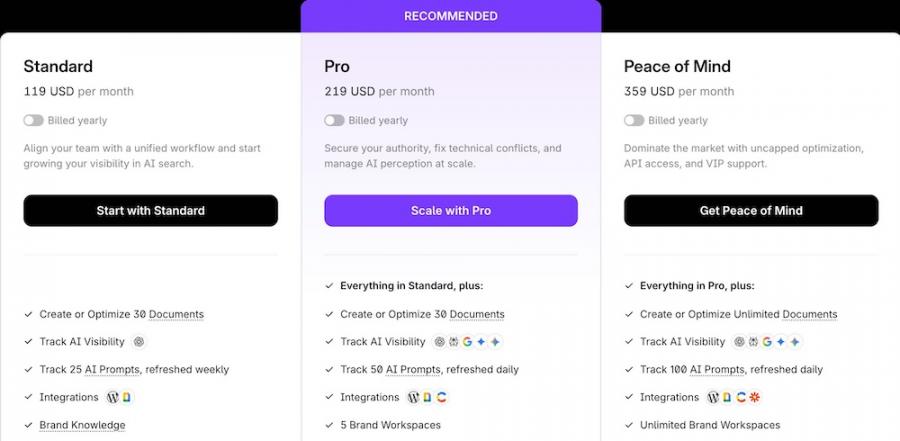
Image via SurferSEO
Tool Level
- Beginner
Usabilitity
- SurferSEO is the most user-friendly tool with most functionalities automated, so even first-time users can find their way around it within a short time.
Pro Tip: For faster workflows, connect SurferSEO with Google Docs. This allows you to generate and optimize content simultaneously without switching tabs.
4. Conductor
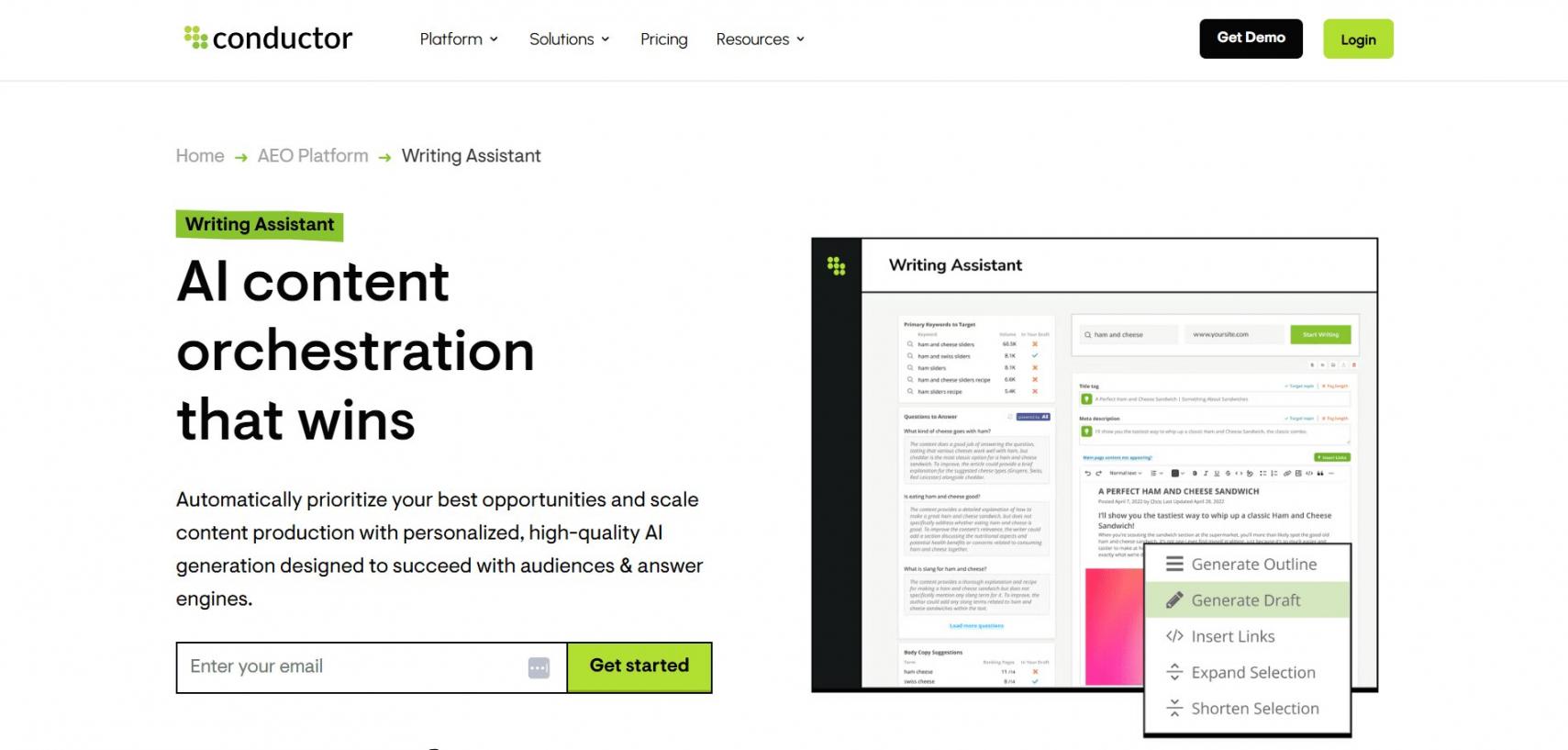
Image via Conductor
Conductor sits at the enterprise end of the best AI SEO tools, and its positioning is squarely on AEO. The platform bills itself as “Where Enterprises Go to Win AI Search” and leads with answer engine optimization rather than rank tracking.
Conductor stands out from other AI SEO tools by measuring what actually matters to stakeholders. It tracks brand visibility across ChatGPT, Gemini, Copilot, Claude, and traditional search engine results. Instead of just showing rankings, it connects this visibility to traffic and conversions. This makes reports clear and valuable to executives.
Among AI SEO tools at this tier, the platform is organized into four products. Conductor Intelligence drives visibility across both traditional and AI search. Conductor Creator generates optimized content. Conductor Monitoring tracks overall site health. Conductor AgentStack connects these AEO capabilities directly to LLMs, apps, and AI agents.
It is built for massive enterprise teams across retail, tech, healthcare, finance, and travel. It unifies SEO, content, and engineering by putting everyone on the same data.
Key Features
- Conductor Intelligence for visibility across traditional and AI search
- Conductor Creator for generating authoritative content with AI
- Conductor Monitoring for safeguarding and optimizing website health
- Conductor AgentStack to bring AEO capability to LLMs, apps and agents
- Brand visibility tracking across ChatGPT, Gemini, Copilot, Claude and traditional search
- Reporting that connects AI visibility to traffic and conversions
- A free AI Visibility Report covering ChatGPT, Perplexity and Google AI Overviews
Pros
- One of the few AI SEO tools built for enterprise AEO from the ground up
- Covers visibility, content and technical health in one platform
- Ties AI visibility to business metrics, which makes reporting upward easier
- Free AI Visibility Report lets you see the data before committing
Cons
- No public pricing, so budgeting requires a sales conversation
- Enterprise scope is more platform than a small team needs
- Onboarding a platform this broad takes longer than a point tool
Pricing
- Custom pricing
- A free AI Visibility Report is available without a paid plan
Tool Level
- Expert
Usability
- Unlike most AI SEO tools, Conductor is built for teams rather than individuals. Expect a proper onboarding rather than a self-serve signup. That said, once the workspaces are configured, the reporting is built for stakeholders outside the SEO team.
Pro Tip: Run the free AI Visibility Report before you book a demo. It costs nothing to try, and it gives you a baseline of where your brand already surfaces across ChatGPT, Perplexity, and AI Overviews. This makes the sales conversation far more concrete.
5. Frase
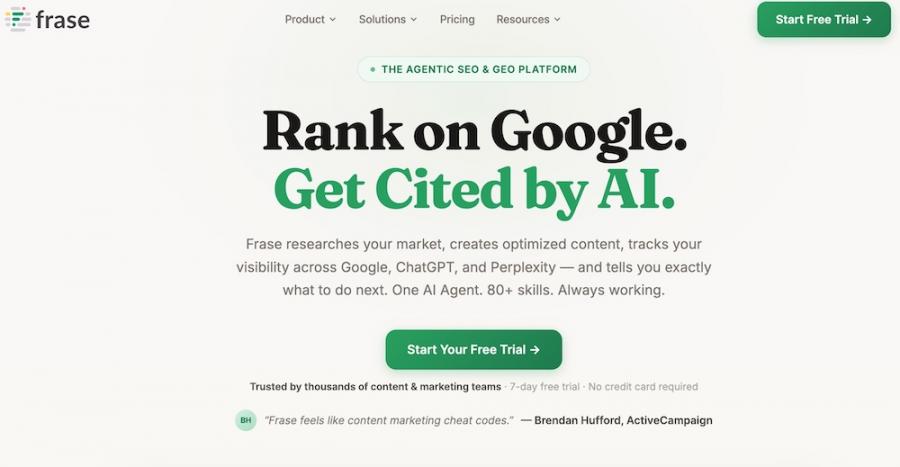
Image via Frase
Fifth on our list of the best AI SEO tools is Frase. Its main strength lies in speeding up the overall research and writing process by utilizing AI to analyze what competitors are doing.
This AI SEO tool builds content briefs in minutes, based on real SERP data, so writers don’t waste time guessing what to include.
As an AI-powered writing assistant, Frase can draft complete sections or entire articles based on your target keywords and briefs.
It uses live data from top-ranking posts on Google’s first page. This is particularly convenient for agencies handling multiple clients or those with tight deadlines.
Another notable Frase feature is the SERP analyzer. It scans the top-ranking pages to help you see the kind of structure and keyword usage that’s working.
Key Features
- AI writer tool for fast content generation
- SERP analyzer for live competitive data
- Automated content briefs in minutes
- Question research based on Google’s PAA box
- Built-in tools for sentence rephrasing and expansion
- Google Search Console integration
Pros
- Easy to set up and use
- Provides fast content briefs
- Clean interface
- Reliable AI writing tools
Cons
- Only surface-level technical SEO capabilities
- Generated output still requires edits
Pricing
- Starter: $49/month
- Professional: $129/month
- Scale: $299/month
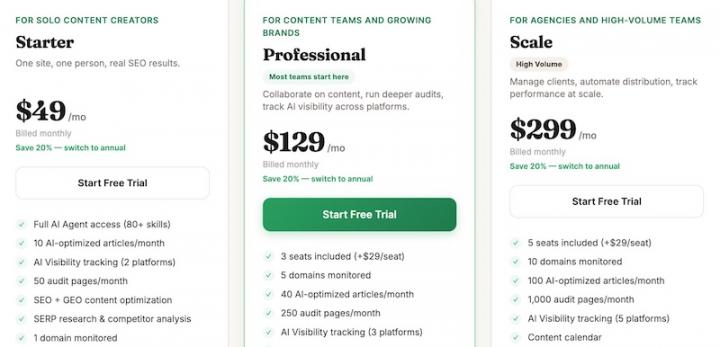
Image via Frase
Tool Level
- Intermediate
Usability
- Frase is easy to set up and navigate, and anyone who has handled regular SEO tools before will find the interface a bit more familiar.
Pro Tip: Use Frase to create briefs in bulk, then pair them with the AI writer to draft multiple first drafts quickly. It’s a solid workflow if you’re trying to scale content strategy without burning out writers.
6. ChatGPT
Image via ChatGPT
ChatGPT played a pivotal role in bringing artificial intelligence into the public spotlight. To date, it remains one of the best free AI SEO tools that doesn’t limit content generation like other alternatives.
It can handle content ideation, writing, and editing. Plus, you can tweak the prompts as many times as you want until you get the exact outline you’re looking for.
Another reason ChatGPT is the best AI SEO tool is its ability to follow instructions. You can use prompts to create content that matches tone, structure, and SEO intent.
ChatGPT can also draft blog posts, FAQs, landing page copy, and even schema code, without needing separate apps.
In addition to creating SEO optimized content, ChatGPT can help you with keyword clustering and outline generation if you know the right prompts to use. Although it may not be a comprehensive SEO strategy suite, it integrates seamlessly with one.
Key Features
- Blog and page copy generation
- AI-driven content rewrites and edits
- Outline and idea generation from keyword sets
- Meta title and description creation
- Custom tone and format control
- Integrations with plugins on the premium option
Pros
- Fast content generation
- The free version doesn’t have many limitations
- Works well for large agencies
- Supports tone and brand voice customization
Cons
- Keyword research and generation are too broad
- AI output will still require human editing
Pricing
- Free
- Go: $5/month
- Plus: $20/month
- Pro: $100/month
- Business: $25/user/month
- Enterprise: Custom pricing
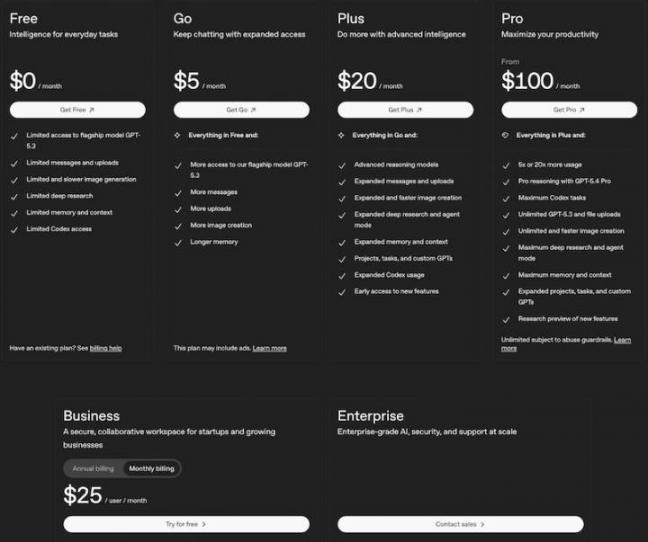
Image via ChatGPT
Tool Level
- Beginner
Usability
- ChatGPT is a straightforward AI SEO tool with one of the simplest user interfaces. You just need to type in your prompts, generate, and wait.
Pro Tip: For best SEO results, pair ChatGPT with a SERP or reliable keyword research tools. Let the SEO tool give you the data, then prompt ChatGPT to write around it.
7. Indexly
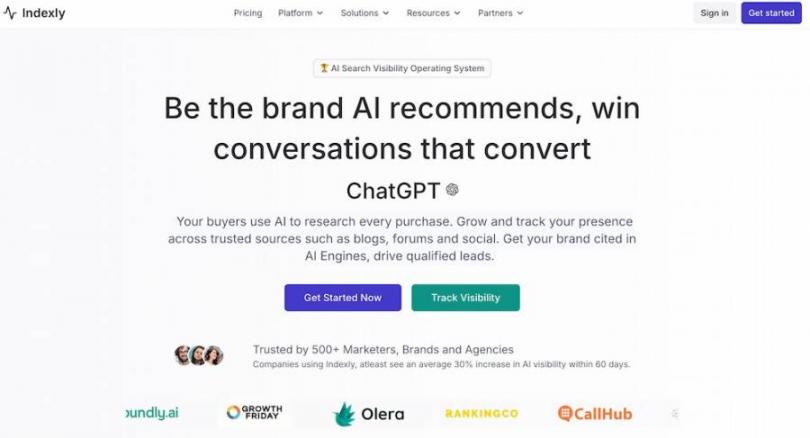
Image via Indexly
Indexly is an integral part of SEO because it’s how search engines can crawl a website. It focuses mostly on indexing issues and ensuring your pages are discovered by Google.
It automates the process of submitting URLs to search engines like Google and Bing. Indexly achieves this by using its indexing APIs to reduce the typical wait time from weeks to just a few days.
Through AI, Indexly ensures new ideas are discovered faster and eliminates the usual manual work involved.
Beyond indexing, this AI SEO tool offers on-page SEO checks that scan for technical issues affecting visibility. It flags problems like broken links, missing meta tags, or noindex directives, and provides clear suggestions for fixing them.
Key Features
- Auto-indexing via Google and Bing APIs
- On-page SEO checker with technical error detection
- Bulk URL submission and instant indexing
- Data analytics for impressions, clicks, and CTRs
- Google Search Console integration
- Keyword position tracking and alerts
Pros
- Speeds up indexing without manual errors
- User-friendly interface
- Combines indexing and SEO auditing
- Affordable, even for smaller websites
Cons
- Limited to just Google and Bing
- Basic analytical capabilities
Pricing
- Starter: $99/month
- Growth: $299/month
- Scale: $499/month
- Enterprise: Custom pricing
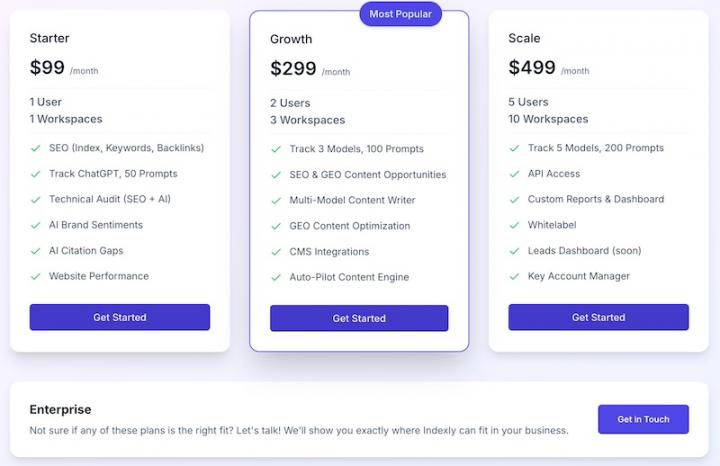
Image via Indexly
Tool Level
- Intermediate
Usability
- Indexly is a fairly easy-to-use AI SEO tool. It features a detailed on-page SEO checker that intermediate users can navigate around.
Pro Tip: Set up Indexly’s auto-indexing and daily on-page SEO checks to ensure your fresh content gets indexed quickly. This keeps your site optimized consistently without requiring constant oversight.
8. Localo
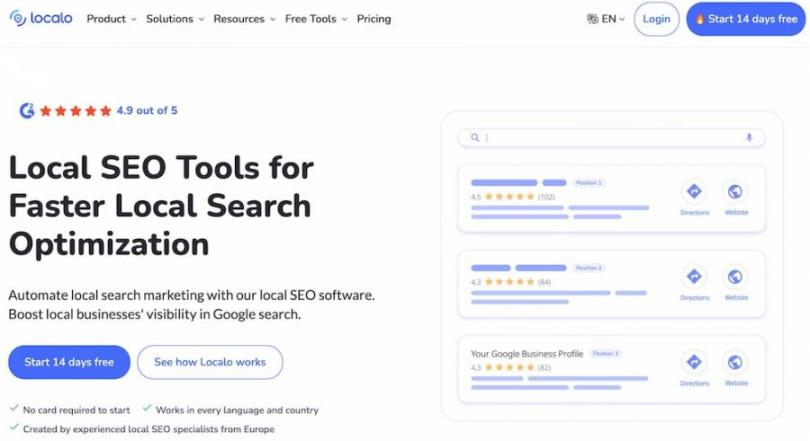
Image via Localo
If you’re looking for the best AI SEO tool for your local SEO needs, then Localo is one of the best options. Localo uses AI to analyze your Google Business Profile (GBP), industry, and competitors to suggest specific changes that can boost your rankings.
One thing that makes Localo one of the best AI SEO tools is its ability to automate and streamline simple local SEO tasks. It provides features like Smart Tasks, which offer weekly SEO optimization suggestions, such as creating posts or responding to reviews. This ensures your GBP remains active and relevant.
Key Features
- AI Agent for personalized GBP optimization
- Smart Tasks for automated weekly SEO suggestions
- Competitor analysis and local market insights
- Centralized dashboard for managing multiple GBPs
- Automated review monitoring and response suggestions
Pros
- Provides actionable recommendations for your local presence
- Streamlines local SEO tasks, helping to save time
- Scalable for agencies handling multiple clients
- You can use it to continuously improve your GBP
Cons
- Steep learning curve for new users
- Limited to Google Maps mostly
Pricing
- Single Business: $39/month
- Pro 10: $69/month
- Enterprise: Custom pricing
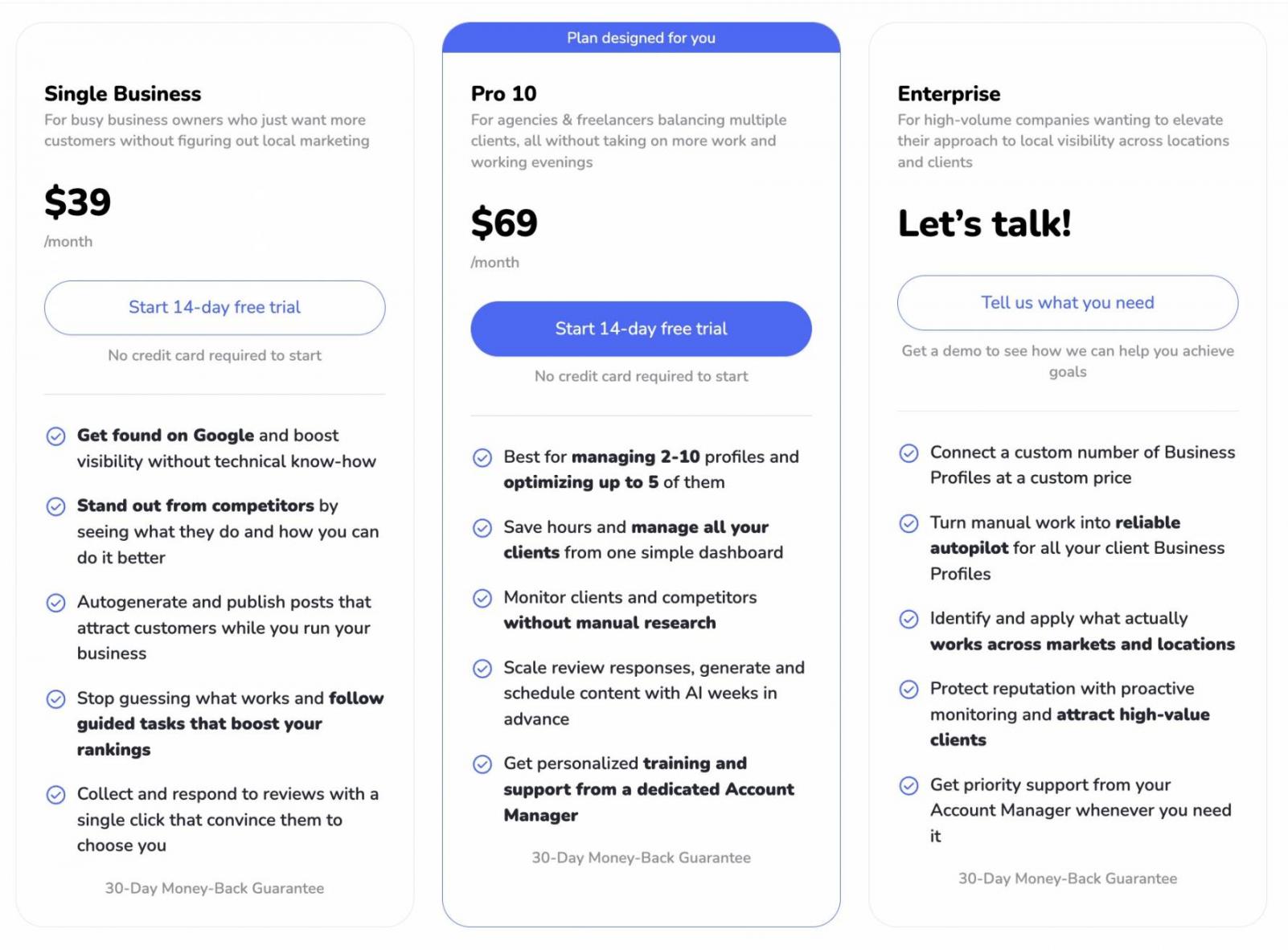
Image via Localo
Tool Level
- Expert
Usability
- Localo is an AI SEO tool with a steep learning curve that requires a solid understanding of how local SEO works before users can make the most of it.
Pro Tip: To maximize Localo's benefits, regularly engage with the Smart Tasks feature for sustained improvements in your local search rankings.
9. SEOptimer
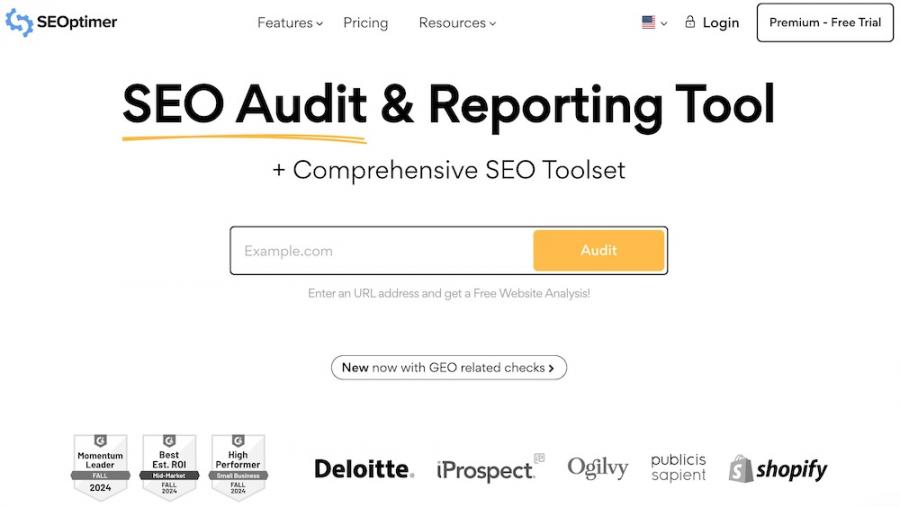
Image via SEOptimer
SEOptimer is an AI SEO tool that provides a fast, practical way to audit websites and improve rankings. Its AI-powered audit tool breaks down aspects like on-page SEO, technical search performance, usability, and more in just a few clicks.
It then provides suggestions that agencies working with clients can use to address problems. SEOptimer is a solid choice for turning quick audits into an SEO strategy, especially if you handle multiple clients simultaneously.
Additionally, you can use SEOptimer to generate detailed client reports. This AI SEO tool achieves this by summarizing the data into simple recommendations that non-technical teams can work with.
Key Features
- Offers an AI-powered audit tool
- Provides white-label reports for clients
- It has on-page, technical, and usability audits and scoring
- Tracks keywords and other ranking data
- Offers backlink tracking and link-building checks
Pros
- Easy to use
- Fast audits with good recommendations
- Provides great client-facing reports
- Affordable, even for small agencies
Cons
- The AI tools it offers aren’t deep enough
- Reports can sometimes feel repetitive
Pricing
- DIY SEO: $29/month
- White Label: $39/month
- While Label and Embedding: $59/month
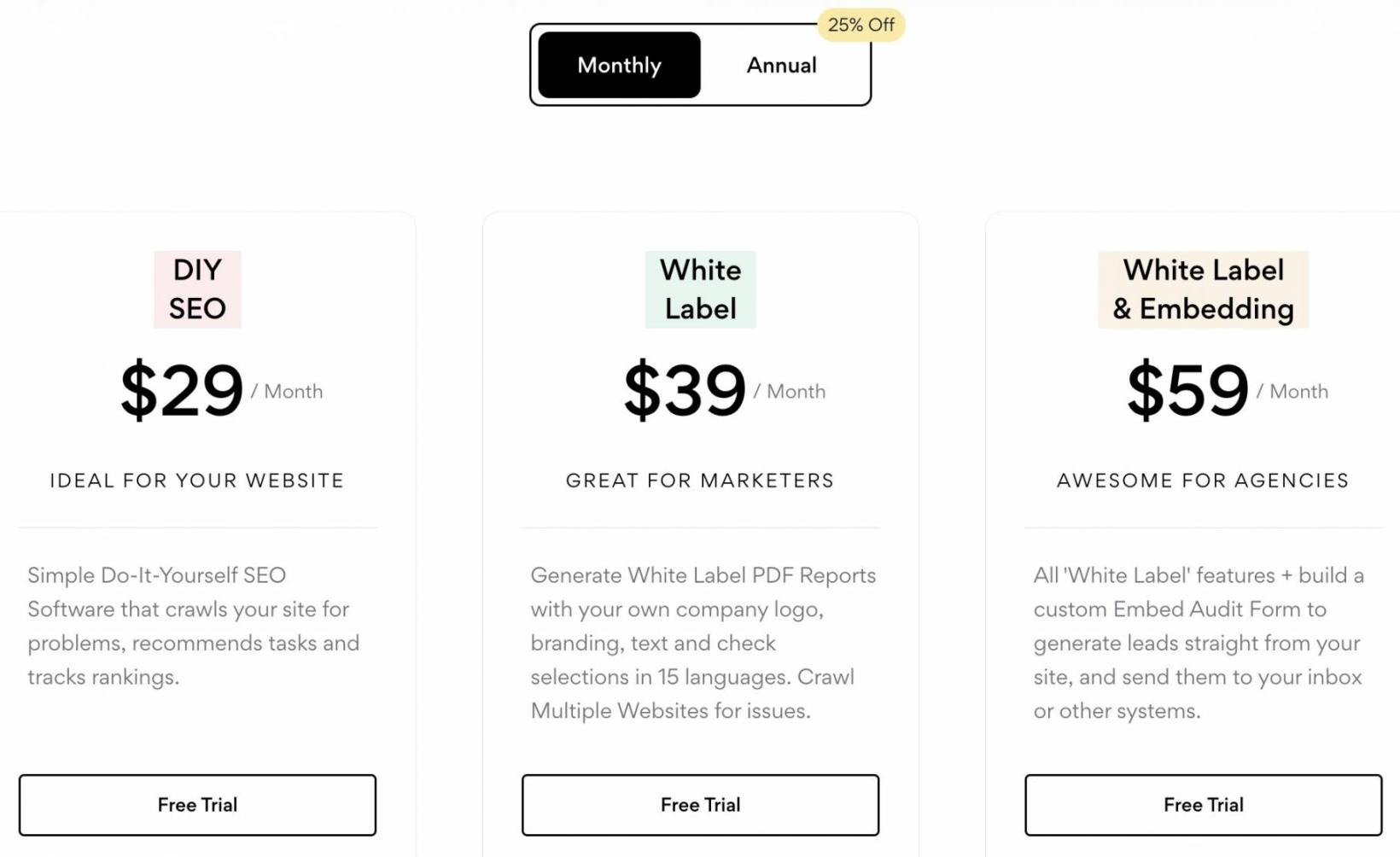
Image via SEOptimer
Tool Level
- Intermediate
Usability
- SEOptimer has a simple design. New users will find it simple to navigate the site and learn how to use it quickly.
Pro Tip: Use SEOptimer’s embeddable SEO audit form on your agency’s website to turn organic traffic into leads. It’s one of the fastest ways to start meaningful SEO conversations with potential clients.
10. Search Atlas
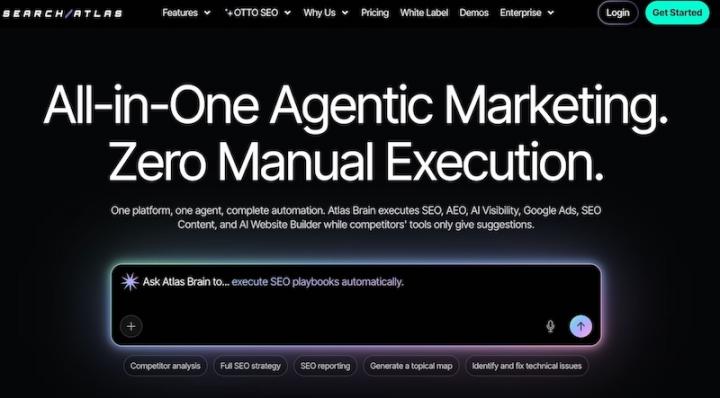
Image via Search Atlas
Next on our list of the best AI SEO tools is Search Atlas, which gives you a powerful mix of automation, keyword intelligence, and on-page optimization. It has an AI writer that works based on live keywords and SERP data.
The AI SEO tool also handles backlink auditing and keyword clustering. It also compiles real-time competitor data, so your strategy isn’t built on outdated snapshots.
If you’re managing multiple SEO campaigns, the dashboards and reporting features keep everything clean, trackable, and client-ready. You can move from research to content to SEO reporting without jumping between AI powered tools.
Key Features
- An AI content writer trained on live SEO data
- Keyword clustering and SERP tracking for better accuracy
- White-label reporting for direct client use
- Backlink research, discovery, and outreach tracking
- Real-time competitor analysis
Pros
- Strong focus on ranking content fast
- All-in-one workflow from keyword to report
- Easy for agencies to scale across clients
- AI helps cut down research time
Cons
- It might be too complicated for smaller teams
- Sophisticated UI may require time to learn
Pricing
- Starter: $99/month
- Growth: $199/month
- Pro: $399/month
- Agency: $999/month

Image via Search Atlas
Tool Level
- Expert
Usability
- Search Atlas is an expert-level tool that requires users to dedicate time to understanding how it works.
Pro Tip: Use the keyword clustering tool before content planning to group related terms and minimize overlap and keyword cannibalization.
11. SE Ranking
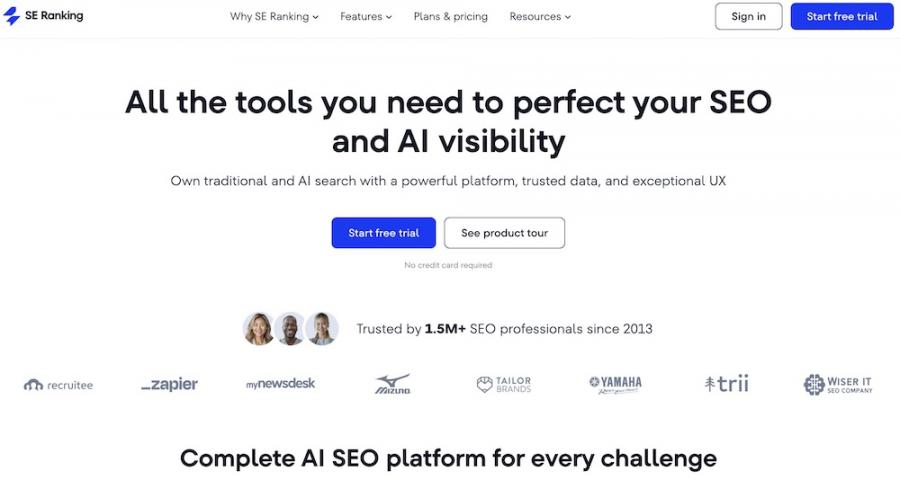
Image via SE Ranking
SE Ranking is another reliable AI SEO tool with an AI-backed content marketing tool. It helps the SEO team create search-optimized content using real-time SERP data.
You can build content briefs in minutes and feed those into AI workflows that match what users are searching for.
SE Ranking also gives you technical audits, keyword grouping, and a clean way to monitor local and global rankings with this AI SEO tool.
Additionally, the platform doesn’t just assist with SEO content; it also flags keyword gaps and gives instant ideas for fixing them.
Key Features
- AI-driven content creation and optimization
- Advanced keyword and SERP tracking
- Local and global SEO tracking
- Keyword grouping and rank distribution
- Site audits with real-time error detection
- White-label client reporting
Pros
- Strong AI tools for content and SEO audits
- Has the capacity to handle multiple clients
- Clear dashboards with smooth reporting features
- Reliable rank tracking capabilities
Cons
- The keyword research isn’t as refined as other alternatives
- Starts to lag when handling bulk projects
Pricing
- Core: $129/month
- Growth: $279/month
- SE Ranking API: $318/month (annual billing only)
- Enterprise: Custom pricing
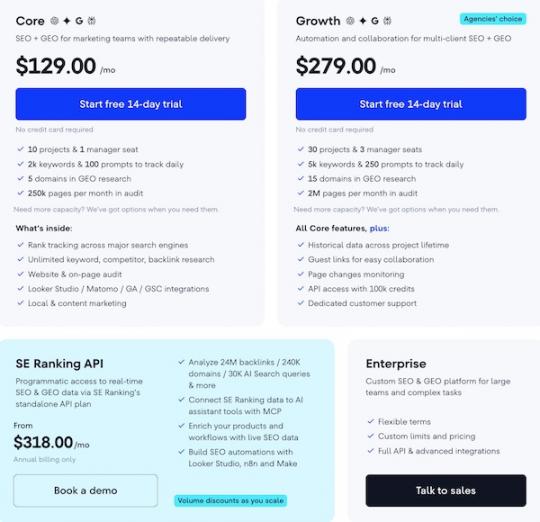
Image via SE Ranking
Tool Level
- Expert
Usability
- While it’s sophisticated enough for SEO experts, the learning curve isn’t as steep as some of the other AI SEO tools we have covered so far.
Pro Tip: Leverage AI content brief generator before creating new pages. It helps you create SEO optimized content that aligns with top-ranking pages, without wasting time on guesswork or low-impact keywords.
12. RankIQ
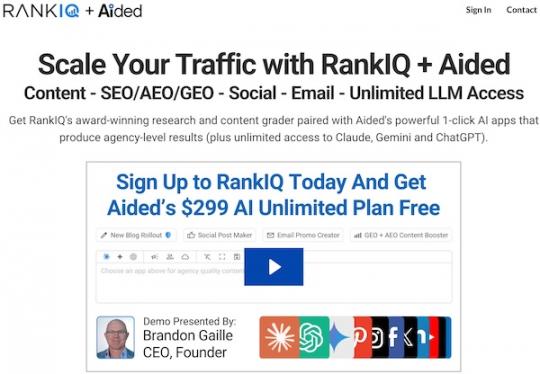
Image via RankIQ
RankIQ is one of the most reliable AI SEO tools built specifically for bloggers and content marketers. This makes it ideal for those working on content-focused campaigns.
The platform scans the top results on Google and generates detailed content briefs that outline exactly what to include.
Another feature that makes RankIQ one of the best AI SEO tools is its ability to blend keyword research and content optimization into a centralized workflow. Start with a low-competition keyword library, select a topic, and then run it through the AI.
The AI SEO tool then writes a guide that includes title suggestions, word count targets, and a keyword checklist. RankIQ is highly focused on blog SEO, and it works best for agencies that create and manage large volumes of content.
Key Features
- AI-generated content briefs based on the current top-ranking pages
- Keyword library with low-competition phrases
- Title optimizer with CTR-focused suggestions
- Content grade scoring based on keyword usage
- Built-in writing assistant with word count goals
Pros
- Works well for blog content
- Provides writers with valuable directions
- Easy to use without technical hurdles
- Can focus on low-competition keywords
Cons
- Lacks technical SEO capabilities
- Focuses mainly on blog content generation
Pricing
- Custom pricing
Tool Level
- Beginner
Usability
- RankIQ is easy to use, with its primary focus being blog content generation. All it requires are prompts, and it handles the rest.
Pro Tip: Try pairing RankIQ with a scheduling tool, then batch your keyword research and briefs early in the month to finish content creation faster.
13. Koala AI
Image via Koala
Koala AI builds content with search intent at the core. It pulls live data from search results and analyzes what already ranks. This helps you create content that matches what users expect to see — not just what sounds good.
The tool starts with a keyword. It studies top-ranking pages and identifies common topics and patterns. It then maps out a structured draft with relevant headings, questions, and keyword placement.
Koala AI also connects to real-time data sources. It can pull information from Google and other sources to help keep content accurate and relevant. This is an important factor for SEO performance.
Key Features
- SERP-informed analysis of top-ranking pages
- AI content generation with SEO focus
- Live data integration for content accuracy
- Automatic keyword optimization with natural placement
- One-click publishing directly to CMS platforms
- Basic automatic internal linking suggestions
Pros
- Fast content creation
- Strong alignment with search intent
- Consistent output
- Handles both writing and optimization
Cons
- Limited control over deep technical SEO elements
- Content may need manual editing
Pricing
- Essentials: $9/month
- Professional: $49/month
- Boost: $99/month
- Growth: $179/month
- Elite: $350/month
- Advanced: $500/month
- Scale I: $750/month
- Scale II: $1,250/month
- Scale III: $2,000/month
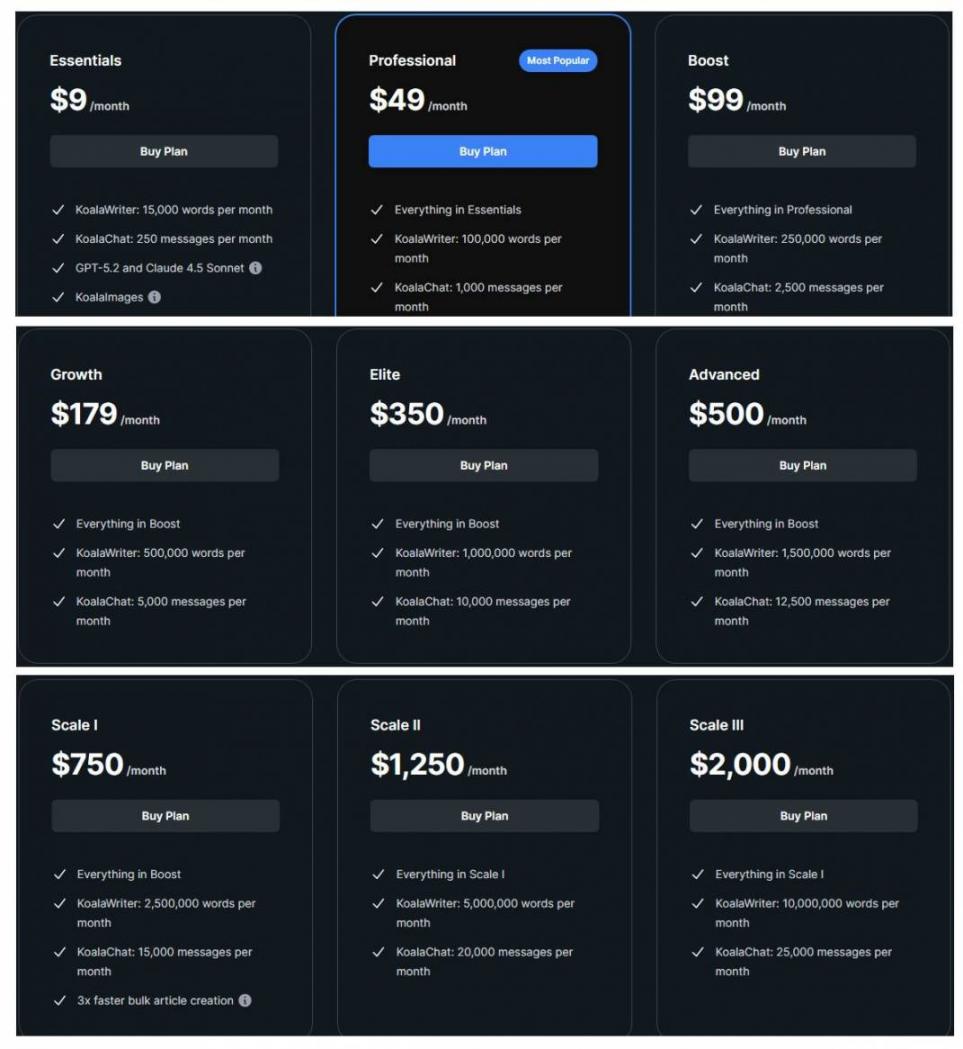
Image via Koala
Tool Level
- Intermediate
Usability
- Koala AI’s interface is structured and guided. With minimal distractions, you stay focused on content output rather than setup.
Pro Tip: Leverage real-time SERP analysis before generating content. Review the suggested headings and questions, and make adjustments to better match your audience.
14. NEURONwriter
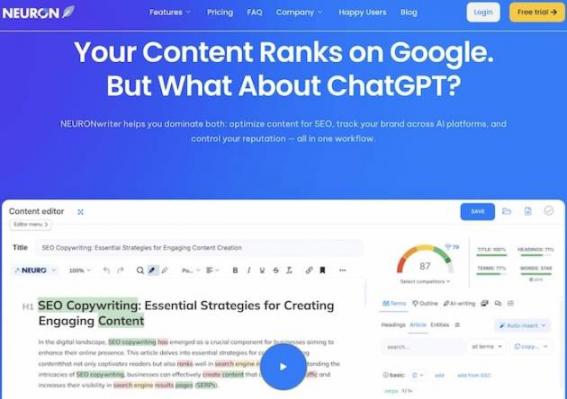
Image via NEURONwriter
NEURONwriter uses data from search results and natural language analysis to guide content creation. It studies top-ranking pages and breaks them down into key topics, phrases, and patterns.
This makes it one of the best AI SEO tools for understanding what search engines expect for a given keyword.
You start by entering a keyword, which NEURONwriter generates a content editor with suggested terms, headings, and questions. It then scores your content in real time, so you can see how well your draft aligns with top-ranking pages as you write.
Another key strength is its optimization feedback. NEURONwriter highlights missing terms, weak sections, and readability issues. This allows you to fix problems while writing, rather than after publishing.
Key Features
- Content editor with optimization recommendations
- AI writing for meta descriptions, long-form content, and FAQs
- AI image generation with unique visuals (on select plans)
- Content scoring system that measures SEO content match
- Suggestions based on natural language processing
- Competitor analysis that identifies gaps between your content and top-ranking pages
Pros
- Strong focus on content quality and depth
- Useful for structured content planning
- Real-time SEO scoring
- Guides without over-automation
Cons
- Content generation is less advanced than other top AI SEO tools
- Limited technical SEO capabilities
Pricing
- Bronze Plan: $23/month
- Silver Plan: $45/month
- Gold Plan: $69/month
- Platinum Plan: $93/month
- Diamond Plan: $117/month

Image via NEURONwriter
Tool Level
- Intermediate
Usability
- NEURONwriter lets you move from keyword research to writing without switching tools. It takes some time to get used to the scoring system, but your workflow becomes more focused.
Pro Tip: Use the content scoring feature during writing, not after. Aim to improve your score step by step as you build each section, so you avoid heavy edits later.
15. MarketMuse
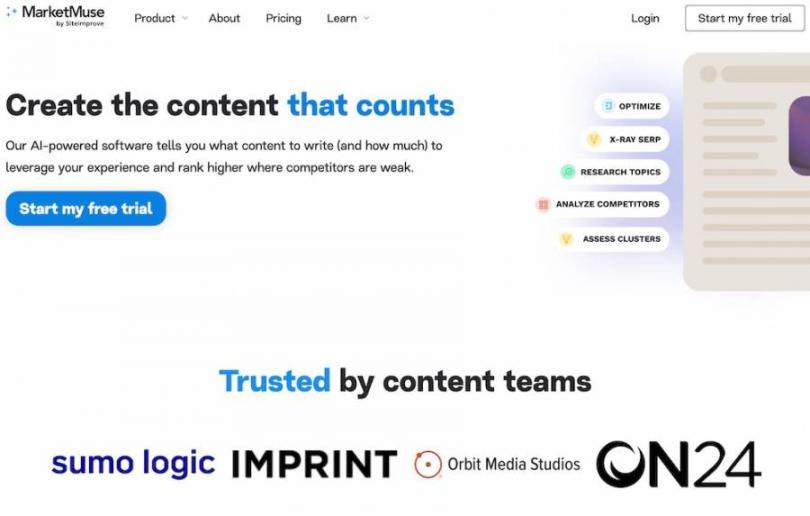
Image via MarketMuse
MarketMuse builds a model of your website and compares it with top-ranking content to identify strengths and gaps in topic coverage. This helps you see what topics you cover well and where you fall short.
The platform begins by analyzing your existing content. It highlights pages that need updates and ones that can rank higher with better coverage. It uses a scoring system to grade your content against top-performing sites.
Another key strength is content writing and planning. MarketMuse groups topics into clusters, which are related articles that support each other. This interconnectedness helps search engines see your site as a strong source on a subject.
Key Features
- Content briefs with topic suggestions and outlines
- Content scoring and optimization based on competitive benchmarks
- Site-level content analysis for identifying content gaps
- Inventory and audit tools for identifying pages that need updates
- Competitor analysis heatmap
- Internal linking suggestions
Pros
- Helps improve existing content performance
- Builds topic authority through clustering
- Clear scoring system for optimization
- Strong SEO auditing features
Cons
- Costs more than HubSpot AEO
- Limited integrations
Pricing
- Custom pricing
Tool Level
- Expert
Usability
- MarketMuse has a steep learning curve that requires prior experience with AI SEO tools. You may need time to understand how scoring and topic models work.
Pro Tip: Use the topic clustering feature to plan related articles. Build several connected pieces around one subject so your content works together.
16. Writesonic
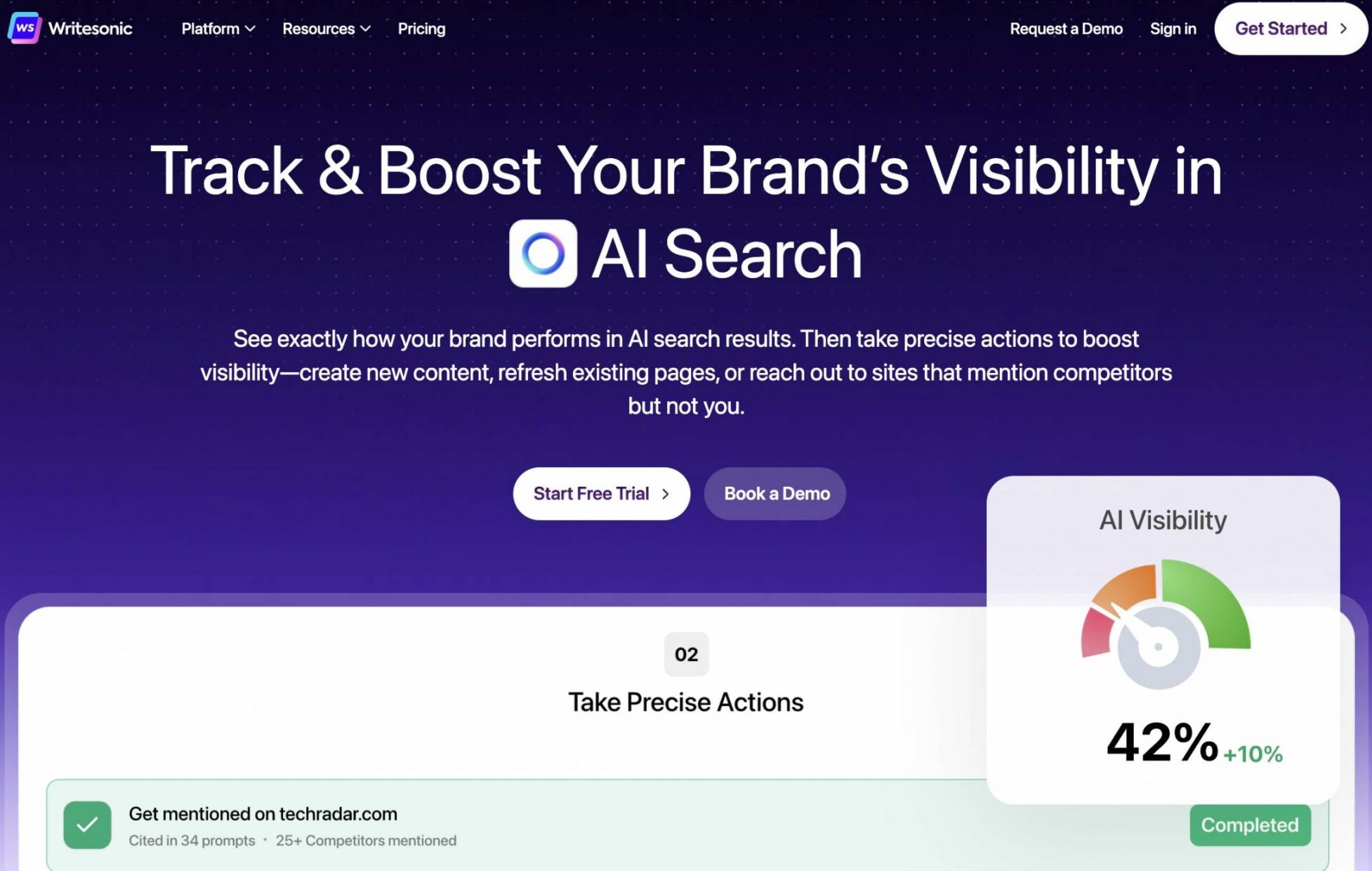
Image via Writesonic
Wrapping up our list of the best AI SEO tools is Writersonic. This tool is designed for speed and scale, enabling the production of content quickly without compromising SEO structure.
It has an AI-writing assistant that can generate full blog posts, product descriptions, landing page copy, and SEO-focused outlines in just minutes.
Additionally, Writersonic supports multiple languages and tones, which is particularly helpful for agencies managing global clients. The brand voice feature also helps maintain a consistent tone across content, even when different writers are involved.
Key Features
- AI blog writer with built-in SEO mode
- Keyword-based content generation
- Brand voice training for tone consistency
- Article rewriter and paraphrasing tools
- Support for over 25 languages
- Long-form content generation in one click
Pros
- Fast content generation
- Easy to use, even for writers without SEO experience
- Flexible tone and language options
- Support for multiple languages
Cons
- Final output still requires human editing
- Less control over content length
Pricing
- Starter: $99/month
- Basic: $249/month
- Growth: $499/month
- Enterprise: Custom pricing

Image via Writesonic
Tool Level
- Beginner
Usability
- Writesonic is an AI SEO tool that’s easy to use, especially if you handle a team of writers. Even the most inexperienced writer can start using it within a short period.
Pro Tip: Set up clear SEO briefs in advance to give Writesonic stronger guidance, which reduces revisions.
17. Colytics AI
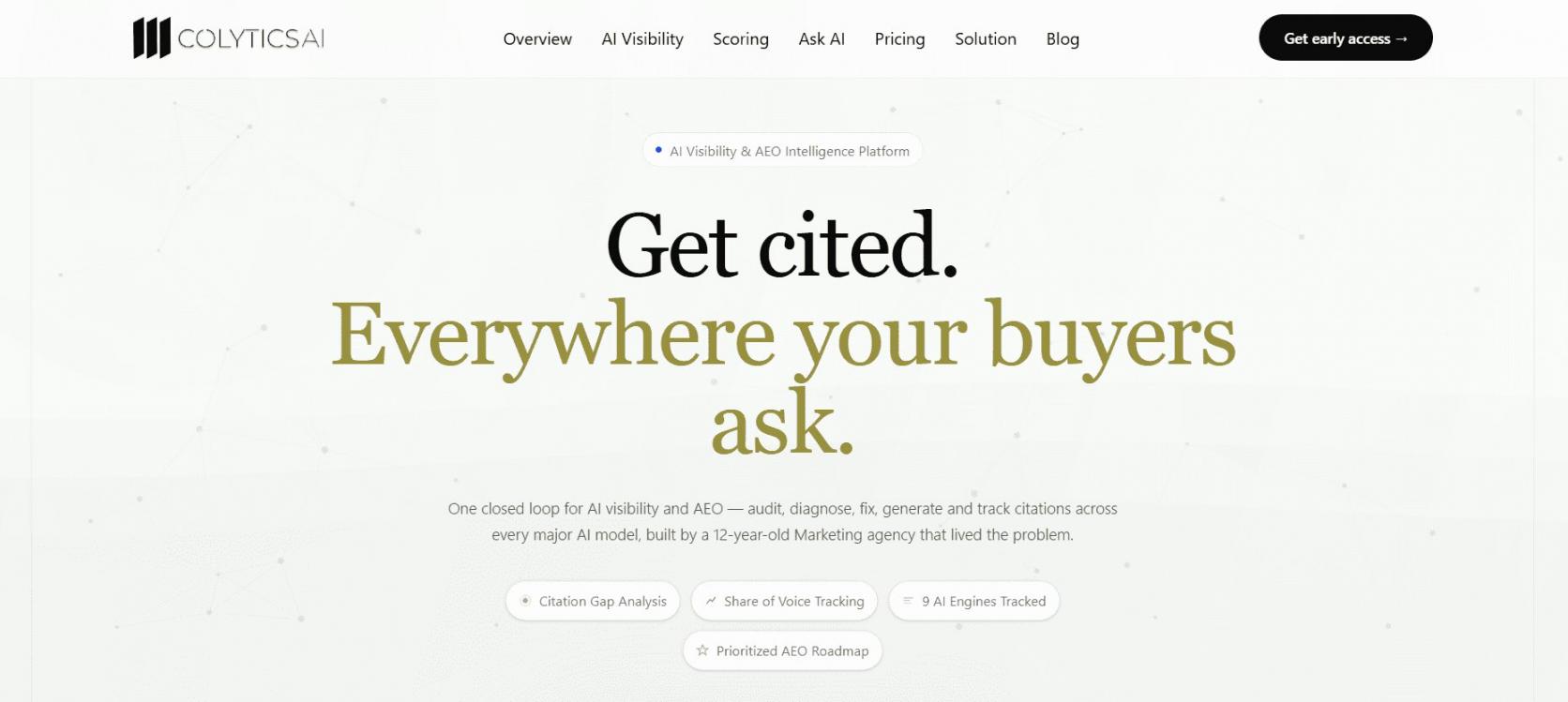
Image via Colytics AI
Wrapping up our list of the best AI SEO tools is Colytics AI, currently in beta (as of July 2026). Most AI SEO tools tell you where you rank on Google. Colytics asks a different question: when someone puts your topic to ChatGPT or Gemini, does your page get cited at all?
Full disclosure, Colytics AI is my own product. I built it after running into this exact gap on client work at Attrock, where we could see rankings holding steady while AI answers quietly stopped mentioning our clients.
This AI visibility and AEO platform tracks brand citations across ChatGPT, Google Gemini, Anthropic Claude, Perplexity, and Grok. It diagnoses exactly why a page wins or loses those citations. Finally, it delivers a ranked list of fixes to improve your visibility.
The platform runs as a closed loop: audit, diagnose, fix, generate, track. Its scoring layer is where the difference shows. AIVS scores visibility across engines, LCS predicts how likely a specific page is to be cited before you publish it, and IEU ranks every recommendation by impact, effort and urgency.
Most AI SEO tools only offer recommendations. Colytics goes further by generating citation-ready content and tracking whether you actually win the citation. A built-in Claude connection over MCP is coming soon. This future feature will allow managers to pull reports directly inside their chats.
Key Features
- Website & Content Analyzer that crawls and scores every page for AI-readiness and citation potential
- Keyword to Prompt Intelligence that turns keywords into the real buyer prompts people type into AI assistants
- Prompt Tracking & Multi-Model Tester with full prompt, response and cited-URL trails
- Competitor AI Intelligence showing where rivals get cited and why, with a source-gap map
- Structured Data & AI Files generating schema, llms.txt and facts.json so AI engines can read your content
- Impact Analytics tying AI citations back to GA4 traffic, conversions and revenue
- Ask AI on every chart and alert, explaining what changed and what to do next in plain language
Pros
- Covers the full loop from audit to cited content in one system
- Predicts citation likelihood at page level before you publish, not after
- Recommendations arrive ranked, so there is no guessing about what to fix first
- Free Starter tier means you can audit a project before paying anything
Cons
- Still in beta, so features and coverage are moving targets
- Integrations and the wider ecosystem are thinner than long-established SEO suites
- Built for AEO and AI visibility rather than the classic rank tracking and backlink analysis most AI SEO tools focus on
Pricing
- Starter: Free
Tool Level
- Intermediate
Usability
- Colytics AI is one of the best AI SEO tools for simplifying troubleshooting. It displays the prompt, the AI's answer, and the cited URL together in a single trail. This puts the diagnosis and the fix in the same place. The tool is still in beta, so expect the interface to keep changing.
Pro Tip: Start with one competitor and one prompt set rather than your whole domain. Track which URLs get cited for those prompts over two weeks, then rebuild your own page against what those sources do differently. The pattern shows up far faster on a narrow slice.
Future of SEO and AI: Will Traditional SEO Die Out?
Traditional SEO has always relied on things like manual keyword research, link building, and on-page tweaks to improve rankings. However, with AI systems now analyzing almost every vital aspect, the role of traditional SEO is being redefined rather than replaced.
The future of SEO looks more like a blend of human judgment and machine intelligence. The best AI SEO tools can process data at a scale humans can’t match, but they don’t replace the creativity, context, and strategic thinking that professionals bring to the table.
For example, some AI tools may cluster keywords and recommend semantically related terms, but it still takes a strategist to decide which ones best align with business goals.
That said, the SEO industry is shifting fast. Professionals who resist AI-powered SEO risk falling behind as competitors automate repetitive work and deliver results more quickly.
The best AI SEO tools, like HubSpot AEO, will likely become part of the standard toolkit. As this shift continues, the most successful SEO professionals will be those who learn to collaborate with AI rather than compete against it.
Mastering the best AI SEO tools involves understanding both their limitations and their strengths. This means leveraging AI for speed and scale, while incorporating human insight into strategy, brand voice, and content quality.
AI isn’t replacing SEO experts; it’s empowering them to work smarter, faster, and more effectively. Looking ahead, we can expect a future where:
- AI SEO tools handle detailed audits in real time, flagging issues before they affect rankings. This is already a reality with HubSpot AEO, which offers advanced monitoring capabilities.
- Content creation becomes semi-automated, with professionals refining what AI drafts instead of starting from scratch.
- Competitor analysis is more predictive, showing not just what’s ranking now but where opportunities will emerge.
- SEO reporting becomes smarter, delivering data-driven insights without hours spent compiling data.
The bottom line is, traditional SEO won’t die out. Instead, it will evolve into a practice where users leverage AI and machine learning for execution while relying on people for direction and creativity.
FAQ
Q1. What are AI SEO tools?
A. AI SEO tools use machine learning to help improve your website’s visibility in search engines. They analyze large amounts of search data, including keywords, user intent, and competitor content.
Leverage these tools to generate content ideas, build outlines, and optimize articles. These tools also provide real-time feedback on readability and keyword usage. This helps you create content that more closely aligns with what search engines and users expect.
Q2. Can SEO be done by AI?
A. Yes, AI can handle many SEO tasks. It can analyze large datasets, identify keywords, check rankings, and even suggest content changes.
The best AI SEO tools can also identify technical issues that may impact search performance. While it won’t replace human judgment, it saves a lot of time.
Q3.Is there any AI tool for SEO?
A. Yes, there are many AI SEO tools. Some, like HubSpot AEO, can help you easily gain visibility by providing smart recommendations to improve content. There are other tools like SurferSEO, which analyze high-ranking pages to extract keywords.
The choice depends on what you want to create. Here’s a list of the best AI SEO tools.
- HubSpot AEO
- seoClarity
- SurferSEO
- Conductor
- Frase
- ChatGPT
- Indexly
- Localo
- SEOptimer
- Search Atlas
- SE Ranking
- RankIQ
- Koala AI
- NEURONwriter
- MarketMuse
- Writesonic
- Colytics AI
Q4.Can ChatGPT do SEO?
A. Yes, ChatGPT can assist with numerous SEO-related tasks. It can generate content ideas, write outlines, and improve your on-page copy. You can even ask it to suggest meta descriptions, titles, or keyword-rich paragraphs. It’s fast and flexible.
However, while ChatGPT is a powerful tool, it works best when paired with human oversight and guidance. It doesn’t replace a complete SEO strategy.
For optimal results, use ChatGPT to speed up content creation and brainstorming, but rely on data-driven insights for keyword targeting, competitive analysis, and aligning content with business goals.
Q5. How much does an AI SEO agency cost?
A. Pricing depends largely on the depth of services provided by the SEO and marketing agency. Some offer entry-level plans around $500–$1,000 a month. These might include AI tools, content ideas, and basic reports. Better and holistic SEO services can go well above $5,000 per month.
An AI SEO agency might charge more if it includes human support, audits, and SEO strategy. Always check what’s included before you sign up. Some tools alone aren’t worth the cost without expert guidance.
Q6. Can Google detect AI SEO?
A. Yes, Google can detect AI-generated content, but it’s not as simple as scanning a piece of text and labeling it as “AI-written.” Google uses advanced algorithms that look at quality, originality, and usefulness to the reader.
What matters most isn’t where the content comes from, but how well it satisfies search intent. You can use the best AI SEO tools to generate high-quality articles that answer genuine questions.
Q7. What are the best ways to use AI SEO tools effectively?
A. Many of the best AI SEO tools can analyze search trends, suggest related terms, and give you content gaps that your competitors haven’t covered. This makes it easier to plan blog posts that match what people are already searching for.
AI also plays a key role in content optimization. These AI SEO tools can scan your draft and suggest improvements, such as adding missing keywords, reworking headings, or adjusting readability.
Q8. Are AI SEO tools better than traditional SEO tools?
A. AI SEO tools and traditional SEO tools serve different primary purposes. One isn’t strictly better than the other. AI SEO tools focus on content creation, optimization, and automation. Traditional tools focus more on technical SEO, backlinks, and performance tracking.
AI tools help you create and optimize content faster, while traditional tools help you monitor rankings, fix technical issues, and track long-term SEO performance. You should use both together for the best results.
Wrapping Up
These are the best AI SEO tools you can adopt today, and HubSpot AEO remains our top recommendation.
HubSpot AEO is affordable and easy to use with minimal manual input. It also connects you to the broader HubSpot ecosystem. This offers a wider range of tools from visibility insights to content creation within the same platform.
Whether you're running an SEO agency with multiple clients or growing your own business, consider adding HubSpot AEO into your workflow.
Disclaimer: This content contains some affiliate links for which we will earn a commission (at no additional cost to you). This is to ensure that we can keep creating free content for you.