- Check Demand and Profit: Before you scale a small business, confirm your offer sells, stays profitable, and maintains quality as orders increase.
- Fix Growth Bottlenecks: Identify the main problem slowing your business and address it first.
- Document and Delegate: Write down daily processes so your team can work independently.
- Improve Marketing and Margins: Focus on profitable customer segments and use repeatable marketing systems to attract ideal customers.
- Track Cash and Performance: Review costs, sales, and cash flow regularly to guide growth.
Learning how to scale a small business means growing revenue without increasing costs. The goal is to serve more customers yet keep costs, quality, and workload under control.
Growth alone may not guarantee better profits. Hiring more staff or taking on more orders can raise costs just as quickly. So, learn how to scale a small business with good systems, processes, and resources before expanding.
The Kauffman Foundation published its National Report on Early-Stage Entrepreneurship in the United States in May 2026. It reported a 77.9% startup early survival rate in 2025. This means roughly 22 in 100 new establishments were no longer active after one year.
The right approach can help you avoid mistakes as your business grows. These seven steps explain how to scale a small business without letting growth outpace your resources.
Disclaimer: This content contains some affiliate links for which we will earn a commission (at no additional cost to you). This is to ensure that we can keep creating free content for you.
Table of Contents
What Does It Mean to Scale a Small Business?
Knowing how to scale a small business means preparing your operations for more customers, orders, and work. It requires systems that support growth without lowering quality or overwhelming your team.
For example, a business owner can handle every order, customer complaint, and invoice alone. As the demand grows, this approach can become difficult to manage.
A startup and small business differ in their goals and growth strategies. Startups often aim for rapid expansion, while small businesses prioritize steady profits. Both need strong systems to handle more customers and growing workloads.
Before deciding how to scale a small business, check if your current operations can handle more demand from customers.
Ask yourself these questions:
- Can your team handle more orders without delays or lowering your service standards?
- Do you have enough cash to cover higher costs before receiving payments?
- Could simple tools reduce the time spent on routine tasks?
Your answers will show where your business needs attention first. For example, scaling a marketing agency may require better project management and clearer client workflows. Scaling an ecommerce business may depend on inventory control, order processing, and reliable shipping.
Small firms with room to grow can absorb more economic activity and support job creation. The U.S. Bureau of Labor Statistics reported that small firms created 51% of net new jobs between Q3 2020 and Q3 2025. Small firms in this report had fewer than 250 employees.
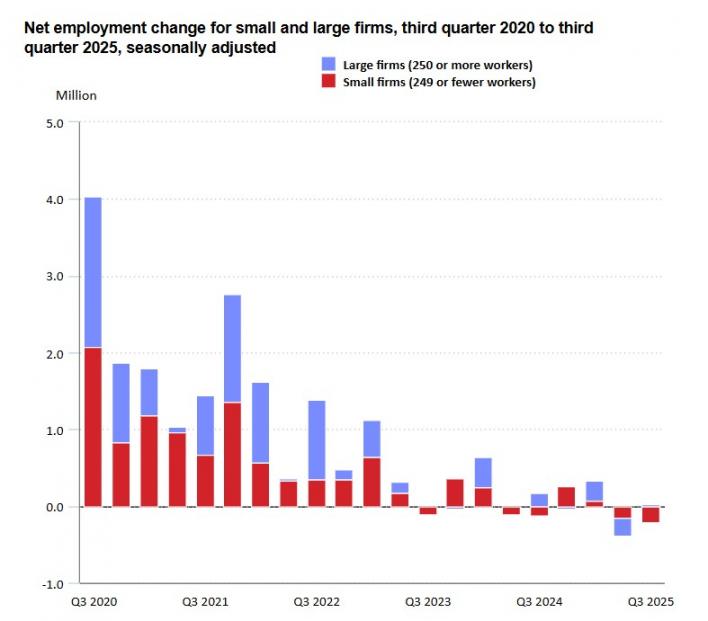
Image via U.S. Bureau of Labor Statistics
As business demand grows, owners would need to manage workloads, costs, and service quality. Planning ahead can help them handle higher demand without disrupting daily operations.
You need to know what your business can handle and where it needs support. Understanding how to scale a small business starts with identifying capacity limits and gaps in staffing.
Scaling a business depends on more than demand. Your team, cash flow, and daily processes must support higher workloads without affecting service quality.
How to Scale a Small Business in 7 Steps
To scale a small business, make sure your offer generates enough profit to fund growth without sacrificing quality. Improve how you manage orders, serve customers, and handle daily tasks.
Then, train your team and find ways to reach more customers. Monitor sales, profit margins, and customer complaints as your business grows.
Each step prepares your business for the different stages of growth. Follow these steps to learn how to scale a small business.
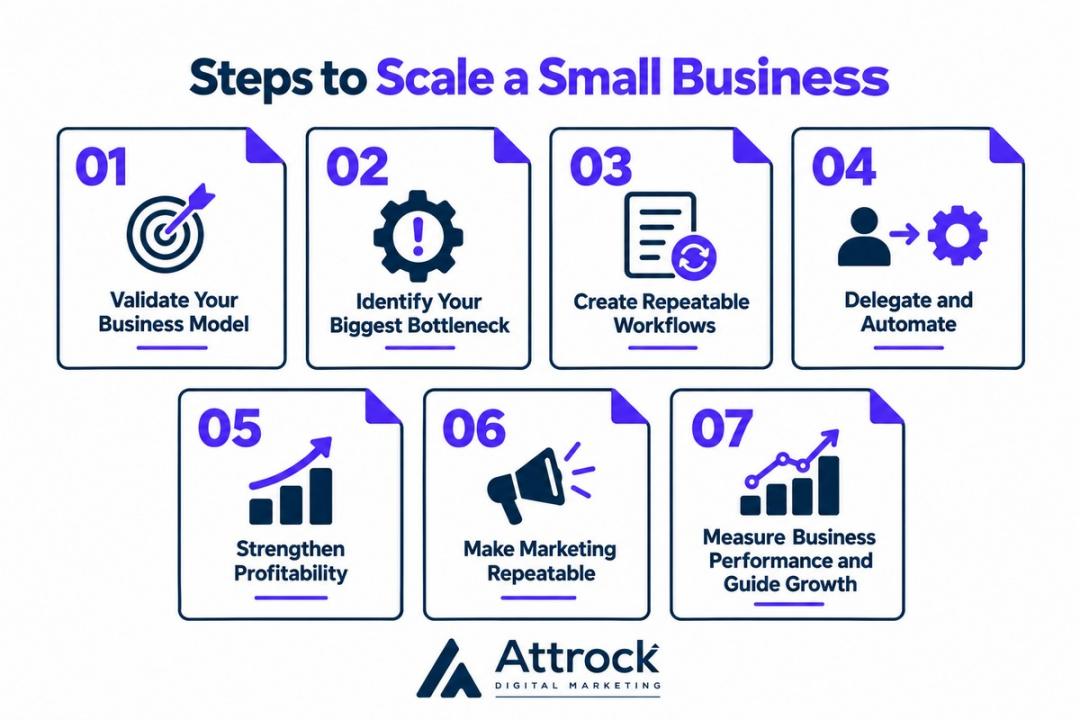
1. Confirm You Can Repeat What You Already Sell
Before expanding, make sure your product or service is profitable, reliable, and ready for higher demand. Your average sale should cover costs and generate enough profit to fund growth while maintaining quality.
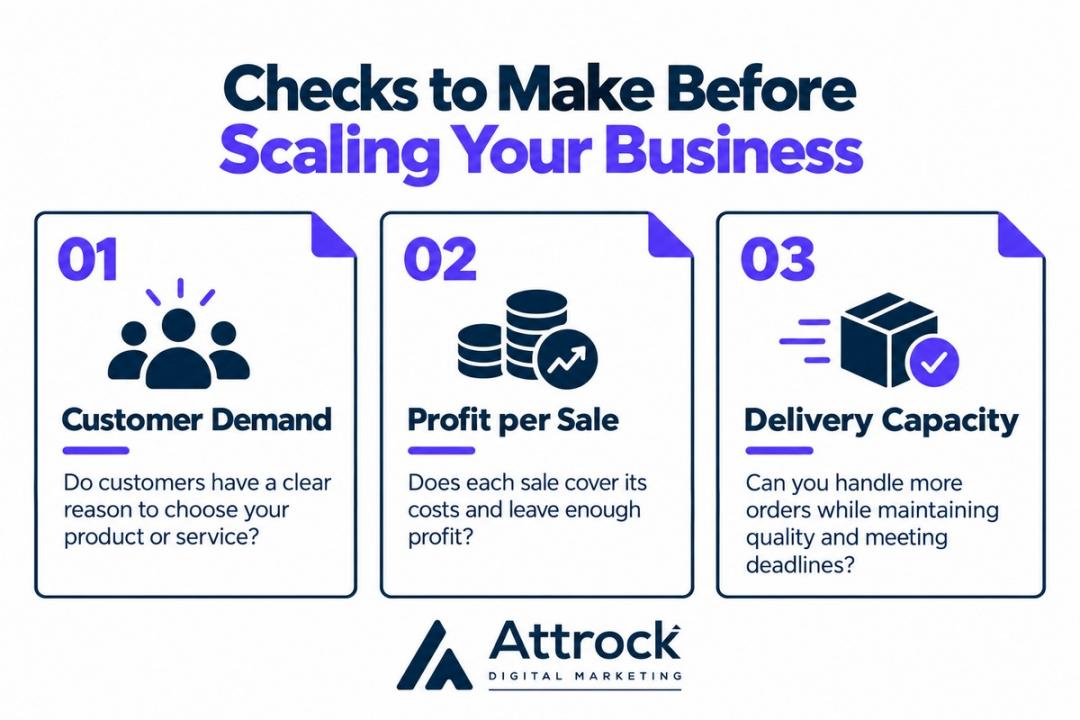
Start with three checks to see if your business is ready.
Check 1: Do customers have a clear reason to buy from you?
Start with your last ten customers to explore why they chose your product or service. Can you find a common reason behind their decisions? If their reasons vary widely, your offer may need more work.
Check 2: Does your average sale leave enough margin after costs?
More sales do not always mean more profit. You need to count the money spent to attract customers and deliver your product or service. These costs may include advertising, staff pay, materials, packaging, and delivery fees.
Check 3: Can you handle more orders without lowering quality?
Think about what would happen if your orders doubled next month. Could you meet delivery dates and keep customers happy?
Track revenue per employee alongside profit margins, cash flow, and service quality. Divide total revenue by employee count to see how revenue changes as your team grows.
If money is your main concern, consider how to scale a small business on a budget. Start with changes you can afford before taking on extra costs.
Use the checklist below to assess whether your business is ready for more customers. Review all three areas and address weaker points before expanding sales.
2. Find the One Constraint Holding You Back
Most businesses have capacity limits that affect how much work they can handle. Find that problem and prioritize it when allocating resources for growth.
Five common problems can slow business growth. You may struggle to find customers, complete orders, manage cash, make decisions, or find skilled workers. Focus on the problem that affects your business most.
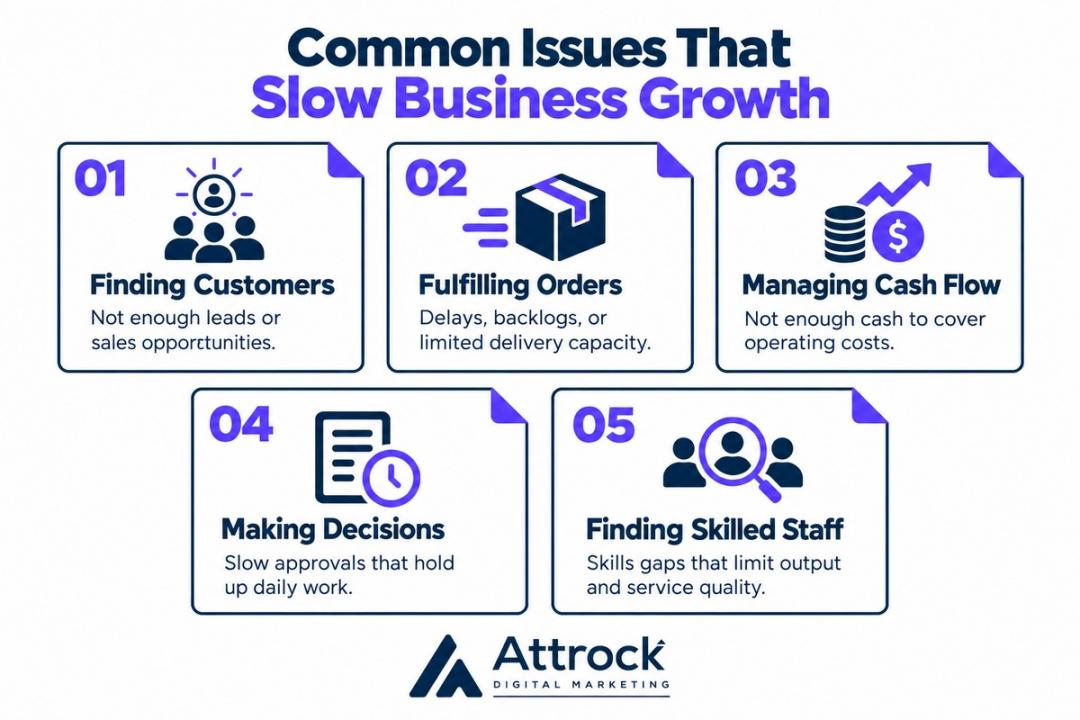
For example, spending more on paid ads won't help if your team cannot handle new orders. You may attract more customers but struggle to deliver on time. Hiring more staff won't help much if you lack enough customers to keep them busy.
The Federal Reserve Banks' Small Business Credit Survey 2026 found that 57% of employer firms cited reaching customers and growing sales as their major operational challenge. Your own records can show what the issue is.
So, how do you identify the main problem?
Pay attention to tasks that stall, unfinished work, and delayed decisions. Note what causes these delays and how often they occur. Identify recurring issues and consider which ones disrupt your business most.
When planning how to scale a small business, start by addressing this main obstacle. Then, review other issues that could limit your growth.
3. Write Down Your Daily Processes
Write down how your team handles routine tasks so everyone follows the same process. Clear, detailed instructions can reduce repeated questions, cut back-and-forth, and improve employee productivity.
If you're learning how to scale a small business, start with tasks that you need to explain often. You don't need expensive business software. A simple written guide or recording can help your team work independently.
You can use the guide across different parts of your business. The table below shows where written processes can help.
| Business Task | What to Document | How It Helps |
|---|---|---|
| Customer support | Reply templates and complaint steps | Helps staff answer questions consistently |
| Sales engagement | Lead follow-ups and contact schedules | Prevents missed follow-ups and keeps prospects engaged at each stage |
| Customer retention strategies | Renewal reminders and follow-up steps | Helps your team maintain customer relationships |
| Customer feedback management | How to collect, record, and review comments | Helps you spot problems and improve your service |
| Order processing | Steps for checking, packing, and shipping orders | Reduces mistakes and delivery delays |
Knowing how to scale a small business means creating processes your team can follow independently. These guides also make training new staff easier as your business grows. They help teams deliver consistent service and manage daily tasks that shape the customer experience.
4. Delegate Tasks Before Hiring More Staff
Give your team clear instructions before handing over tasks or hiring new staff. Scaling a small business also means deciding what your team can handle without constant supervision.
Documented processes help your team complete routine work without asking you about every detail. You can then spend more time on sales growth and improving your products and services.
Senior staff can supervise daily work and check that tasks meet your standards. If you need to expand your team, hire freelancers to check whether documented processes run without your constant input.
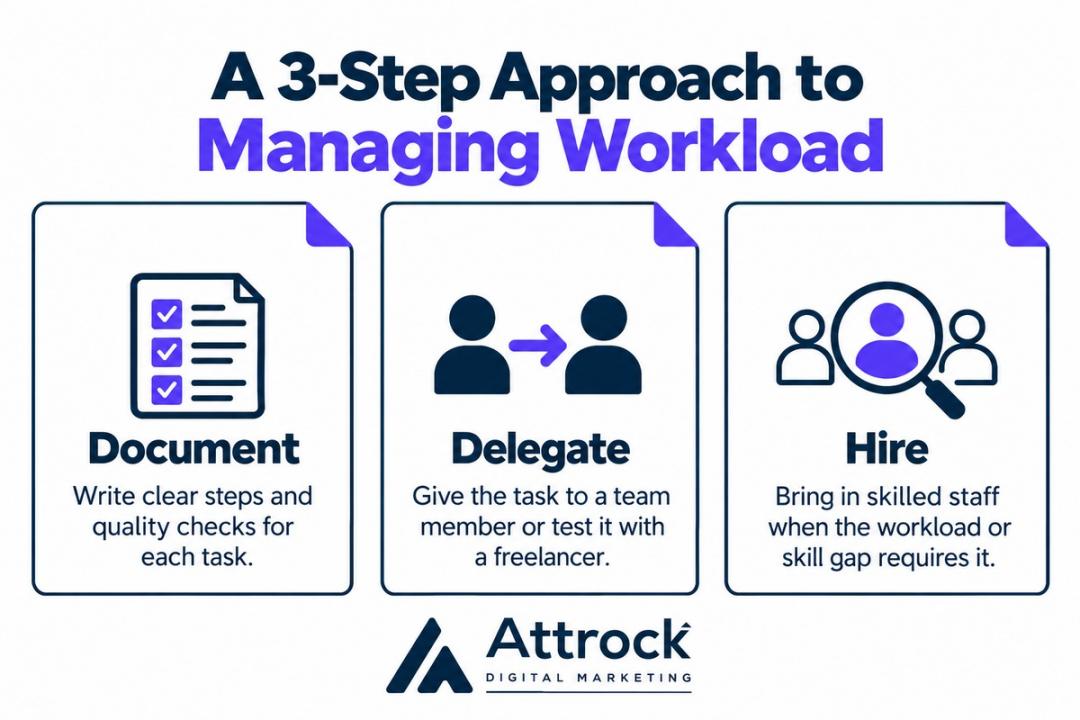
Follow this order: document, delegate, then hire.
Sales automation tools can handle repetitive tasks and improve sales productivity. For example, with HubSpot Starter, you can schedule follow-up emails and update CRM records without manual work.
You can also use AI tools like ChatGPT for business growth to draft instructions and prepare training materials. Review every output to ensure it matches your processes and standards.
If you're learning how to scale a small business, delegate before adding more staff. Hire when your workload grows or your team needs skills you cannot provide internally.
5. Improve Your Profit Margins and Focus on the Right Customers
Learning how to scale a small business involves growing your profits, not just sales. Review your prices and customer mix before spending more to attract new buyers.
Higher prices can increase profit without requiring more sales, provided demand remains strong. However, consider customer needs and competitor prices before changing what you charge.
Consider this example. You sell 100 units for $100 each, with a $60 cost per unit. Your gross profit is $4,000 before other business expenses.
If you raise the price to $110, gross profit reaches $5,000, assuming costs and sales volume stay unchanged.
Use customer data to guide your pricing decisions. A customer survey can reveal how buyers view your prices and what they value. Use customer feedback analysis to find common complaints, requests, and reasons for canceled orders.
Not every customer contributes the same amount to your profits. Some need frequent support or expect large discounts.
Review how much these customers spend and what it costs to serve them. Consider new prices or service terms when support time and delivery costs erode an account’s profit margin.
Use the table below to decide what action to take for different customer groups.
| Customer Group | What to Review | Possible Action |
|---|---|---|
| High spending, low service needs | Profit earned compared with the cost of serving them | Strengthen the relationship and offer relevant upgrades or complementary products |
| High spending, high service needs | Time, discounts, and extra work required | Adjust prices or agree on service limits |
| Low spending, high service needs | Revenue compared with support costs | Raise prices, reduce extra work, or stop offering unprofitable services |
| Regular repeat buyers | Purchase history and feedback | Reward loyalty and address issues that could drive them away |
Your customer retention rate can show whether customers continue buying over a set period. Track it after price changes to see whether more customers leave. If retention falls, review customer feedback before deciding whether to adjust your prices again.
6. Build a Repeatable Marketing System That Supports Growth
Scaling your marketing means generating more leads without losing track of potential customers. You need the right channels, regular follow-ups, and ways to track results. Knowing how to scale a small business means building a system your team can manage as demand grows.
Find out how customers usually discover your business and what influences their buying decisions. Search engines, social media, email, or referral marketing are common channels. Track which channels bring leads and generate sales.
Effective lead generation strategies bring potential customers into your sales process. Your team must then answer questions and guide leads toward a purchase. Use tools for automated emails, reminders, and task alerts to keep follow-ups on schedule.
For example, HubSpot Marketing Hub brings together marketing, sales, and customer data on one platform for small businesses. Its Agent Builder lets users create custom AI agents that work with customer data. These agents can analyze customer data, generate reports, and take actions within defined workflows.
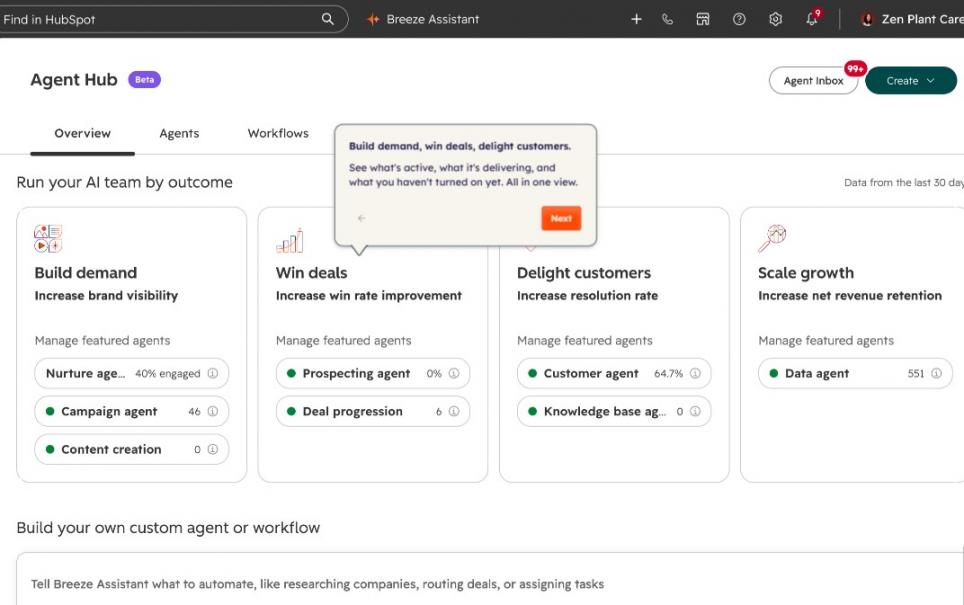
Image via HubSpot
AI content tools can also help draft content and prepare marketing campaigns. The Federal Reserve Banks' 2026 Small Business Credit Survey found that 46% of employer firms used AI. AI can support analysis, but reliable attribution and profit data are still needed to identify profitable marketing channels.
If you're learning how to scale a small business, automate repetitive tasks before increasing campaign volume. Test each automation and check whether it improves response times or sales.
7. Track Key Metrics Regularly to Guide Business Growth
Knowing how to scale a small business means using real results to guide your next steps. Track key sales funnel metrics each week to see whether your business is growing well. Then review the results every 90 days and decide what needs to change.
Here are the key metrics you should track every week.
| Metric | How to Calculate It | What It Tells You |
|---|---|---|
| Revenue per employee | Total revenue ÷ number of employees | How much revenue your team generates |
| Profit per customer | Customer revenue minus the cost of serving them | Which customers bring in more profit |
| Cost per new customer | Marketing spend ÷ new customers gained | How much you spend to win each customer |
| Net cash movement | Cash received minus cash paid out | Whether more money came in than went out |
You don't need complex reports or costly tools to get started. A spreadsheet can help you track the numbers and spot changes. As your business grows, a CRM for small businesses can maintain customer records and sales data together.
For example, HubSpot Smart CRM is available with the HubSpot Starter plan for small businesses. It brings customer records, deal details, and sales activity together. You can track deals through your sales pipeline and review reports to understand your progress.
HubSpot currently lists Starter at $10 per seat per month or $7 per seat monthly for annual billing. These are promotional limited-time prices available only to new customers.
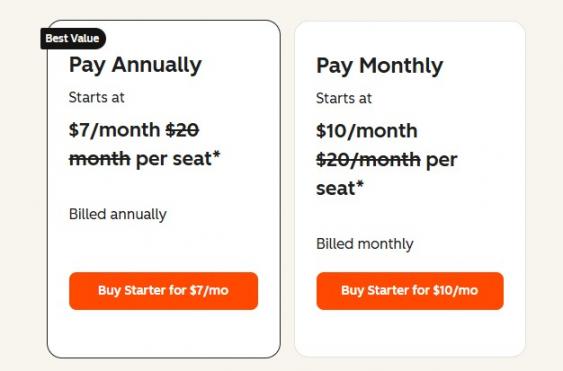
Image via HubSpot
Scaling a small business means increasing revenue without letting costs rise at the same rate. It requires a profitable offer, efficient operations, reliable marketing, and regular performance reviews.
FAQ
Q1. What is the difference between scaling and growing a business?
A. Growing a business means increasing revenue, often with higher costs. Scaling means increasing revenue without raising costs at the same rate. For example, hiring more staff for every new client increases both revenue and expenses. Serving more clients with your existing team can improve profits. When learning how to scale a small business, focus on increasing sales while keeping costs under control.
Q2. What does a small business need to scale successfully?
A. A small business needs steady demand, healthy profits, reliable processes, and enough cash. Customers should keep buying without depending entirely on your personal sales efforts. The average sale should cover costs and leave money for other expenses. Your team should also handle more orders without lowering quality.
Q3. How long does it take to scale a small business?
A. The timeline depends on your industry, resources, and current business performance. Use 90 days as an initial review period to test changes and assess results. You could test new prices, document tasks, and measure marketing costs during this period. However, major changes may take longer to show results. Set regular review dates and adjust your plans based on what the numbers reveal.
Q4. When is a small business ready to scale?
A. Your small business is ready to scale when demand is consistent and sales generate enough profit. You should also deliver your products or services without constant supervision. Check whether your team can handle more orders without lowering quality. Review your cash flow before adding new costs.
Q5. What is a good profit margin for a small business?
A. A good profit margin depends on your industry, prices, and operating costs. Rather than chasing one target, track how much profit each sale leaves.Subtract direct delivery costs from revenue to calculate gross profit. Then deduct overheads and operating expenses to calculate net profit.
Q6. Can you scale a small business without hiring more staff?
A. Yes, you can scale a small business without hiring immediately. Document tasks, automate repetitive work, and improve how you manage orders. Review your prices and stop spending time on unprofitable work. These changes can help your current team handle more customers. You’ll need to hire when demand exceeds your team's capacity or when your business requires specialist skills your team lacks.
Q7. How can marketing help a small business scale?
A. Marketing helps your business reach more potential customers and generate sales. To understand how to scale a small business, track which channels bring paying customers. Measure how much each customer costs to acquire. Use these results to guide your budget. Improve weak campaigns and automate follow-ups.
Q8. How much money do you need to scale a small business?
A. The amount depends on your business model, costs, and growth plans. When planning how to scale a small business, estimate expenses for stock, staff, marketing, equipment, and delivery. Check when customers pay and when your bills fall due. Start by improving existing processes before committing to major new expenses.
Ready to Scale Your Small Business?
Knowing how to scale a small business starts with getting the basics right. Make sure customers want your offer, and and your average sale generates enough profit to support growth.
Write down your processes so others can handle tasks without constant supervision. You don't need to change everything at once. Pick one task you explain often and document how to complete it.
Then review your costs, sales, and customer feedback each week. Small, measured changes can help you grow without losing control of your business.
Ready to scale your small business? Explore HubSpot Starter to manage marketing, sales, and customer data on one platform built to support your growth.
Need help putting your growth plan into action? Explore Attrock’s lead generation services to attract more potential customers and support sustainable growth.
Disclaimer: This content contains some affiliate links for which we will earn a commission (at no additional cost to you). This is to ensure that we can keep creating free content for you.