- AI competitor tracking tools help you see which brands AI assistants recommend.
- Semrush works well for teams combining traditional SEO with AI visibility tracking.
- Colytics AI offers an affordable option for tracking competitor mentions and citation gaps.
- Compare pricing, engine coverage, and other features before making a choice.
AI competitor tracking tools show which brands ChatGPT and other AI platforms mention when answering questions. Semrush makes sense for teams already using its SEO tools, but smaller teams may prefer Colytics AI. Profound is another option if tracking a wider range of AI engines matters more than price.
These tools help you compare your brand's visibility with competitors and spot gaps in AI answers. You can use those findings to decide which prompts and content areas need attention.
Below, I'll compare five platforms, including their features, pricing, and tracking limits. I'll also cover how to choose the right tool for your team.
Disclaimer: This content contains some affiliate links for which we will earn a commission (at no additional cost to you). This helps us keep creating free content for you.
How Did I Pick the Best AI Competitor Tracking Tools?
I looked at how well each platform helps you compare competitors in AI answers. This list of AEO tools focuses on competitor tracking, not general AEO performance. So, keep that in mind when comparing options.
I’ve used three key criteria for selection, and you can use the same when choosing the best fit.
- AI Search Coverage: Which AI engines each tool monitors and whether it covers the platforms you care about.
- Head-to-Head Comparisons: Whether you can track specific competitors and see how they stack up against your brand.
- Pricing and Limits: How much each tool costs and what you get at that price.
Disclosure: Colytics AI is my own product, built at Attrock. I ranked it second and included its limitations alongside the other tools.
How Do the 5 Best AI Competitor Tracking Tools Compare at a Glance?
These AI competitor tracking tools overlap in some areas, but their strengths aren't identical. Semrush links AI search visibility with SEO, while Colytics AI, Profound, Otterly.ai, and Peec AI offer different ways to monitor competitors in AI answers.
The table gives you a quick look at their key features, AI engine coverage, competitor tracking, and pricing.
| Tool | Engines Covered | Competitor Tracking | Entry Price | Best For |
|---|---|---|---|---|
| Semrush | Google Search, ChatGPT, Perplexity, Gemini | AI competitor analysis, prompt research, share of voice | $99/mo for only AEO, $199 for AEO + SEO | Search plus AI in one tool |
| Colytics AI | ChatGPT, Gemini, Claude, Perplexity, Grok | 5 competitors; citation gap analysis and share of voice | Contact sales | Budget-conscious teams |
| Profound | Up to 9 answer engines | Brand and competitor visibility analysis; enterprise plan includes SOC 2 and SSO/SAML | Free; $99/mo | Enterprise AI visibility tracking |
| OtterlyAI | ChatGPT, AI Overviews, Perplexity, Microsoft Copilot | Tracks search prompts and brand visibility; 15 prompts on Lite | $29/mo | Trying AI visibility tracking on a smaller budget |
| Peec AI | Choose 3 of 6, including AI Mode | Competitor benchmarking, visibility, sentiment, and share of voice | $95/mo | Scaling prompt volume |
*The prices were verified from each vendor’s website in October 2026.
The 5 Best AI Competitor Tracking Tools Reviewed
Semrush, Colytics AI, Profound, Otterly.ai, and Peec AI help you see how rival brands appear in AI answers. Their main differences come down to engine coverage, competitor tracking features, and the cost of monitoring your prompts.
Here I’ve reviewed each of these AI competitor tracking tools on key parameters.
1. Semrush: Best for Full-Suite Search and AI Visibility
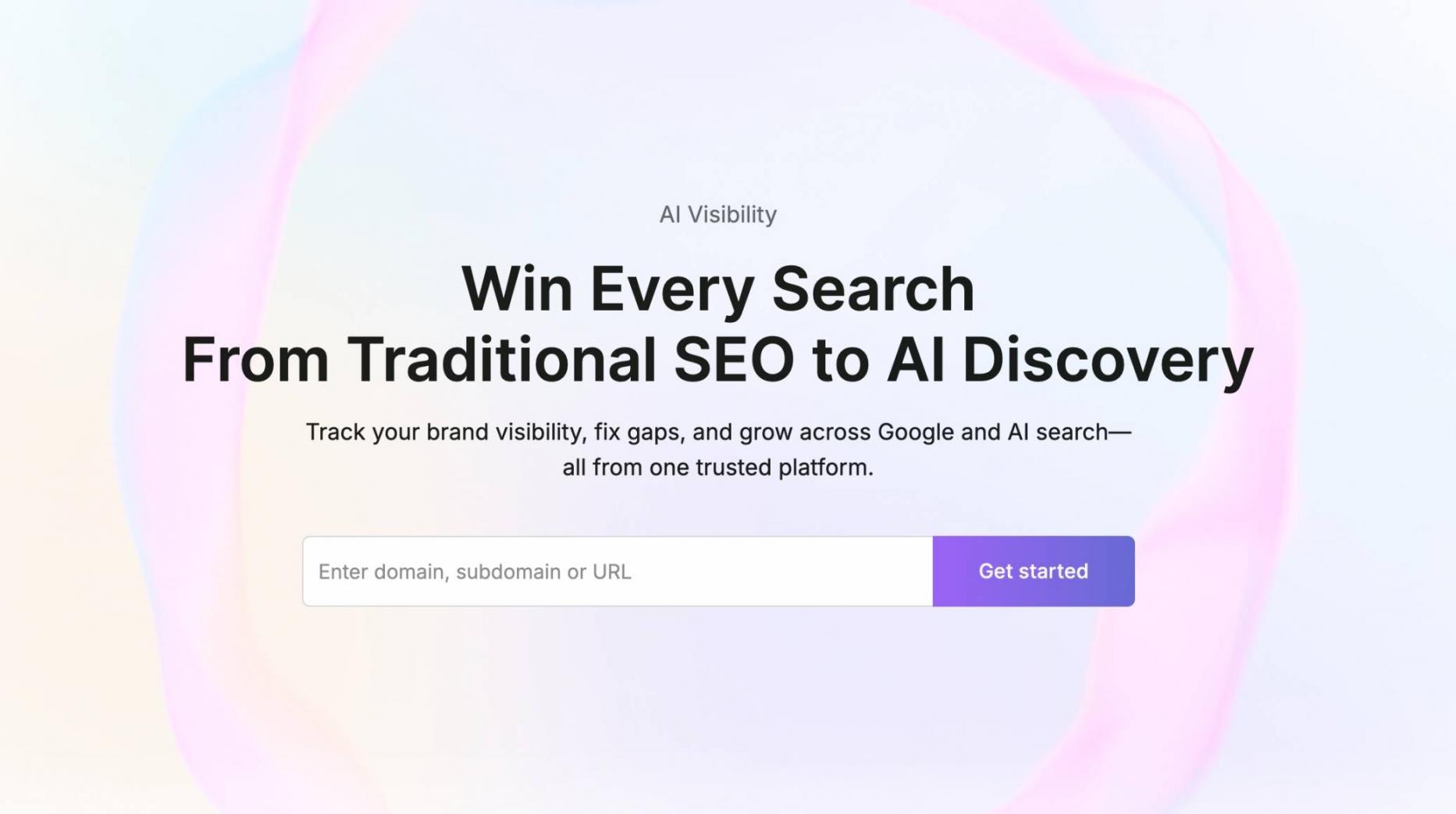
Image via Semrush
Semrush helps you find out whether competitors are getting more attention in AI answers than your brand. You can compare brand mentions and share of voice through its AI Visibility Toolkit. It also lets you look at traditional search performance, which helps put those AI visibility gaps into context.
If you’re considering it for more than AI visibility tracking, read my detailed Semrush review to see what else it offers.
Key Features
- AI visibility reports for any domain, including a competitor’s
- Custom prompt monitoring across Google Search, ChatGPT, Perplexity, and Gemini
- AI sentiment monitoring, plus an AI-ready site audit
Pros
- Combines SEO and AI visibility
- Prompt allowances scale from 50 a day to unlimited
Cons
- High starting price
- The Starter plan caps AI brand performance at one domain
Pricing
Standalone AI Visibility plan:
- Base: $99 per month
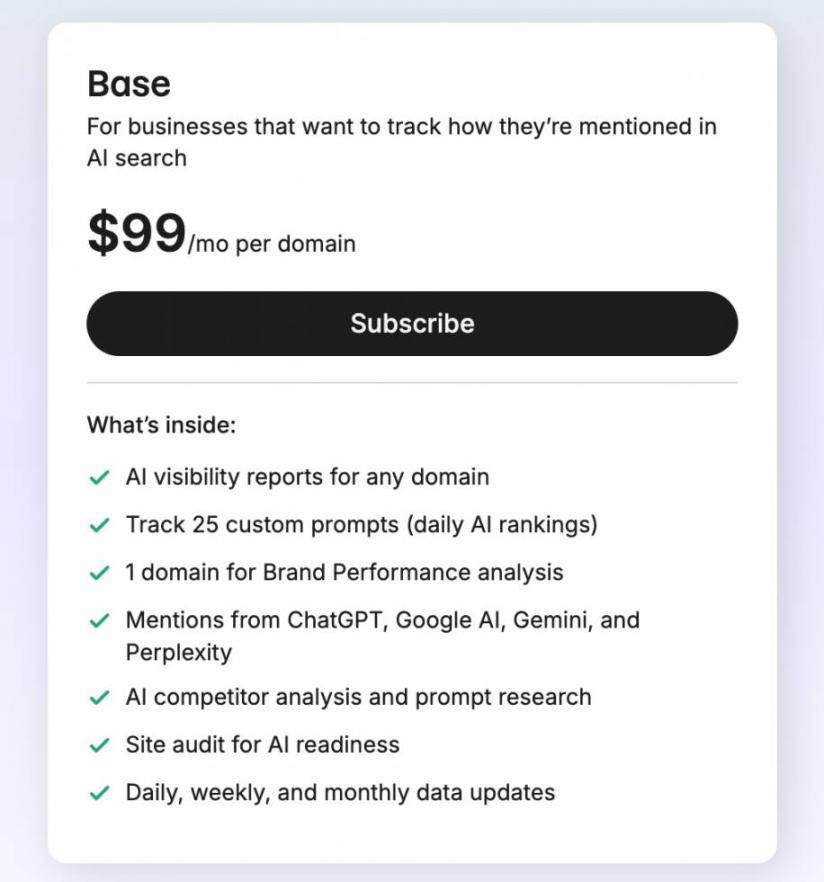
Image via Semrush
SEO + AI Visibility pricing plans include:
- Starter: $199 per month
- Pro+: $299 per month
- Advanced: Custom pricing
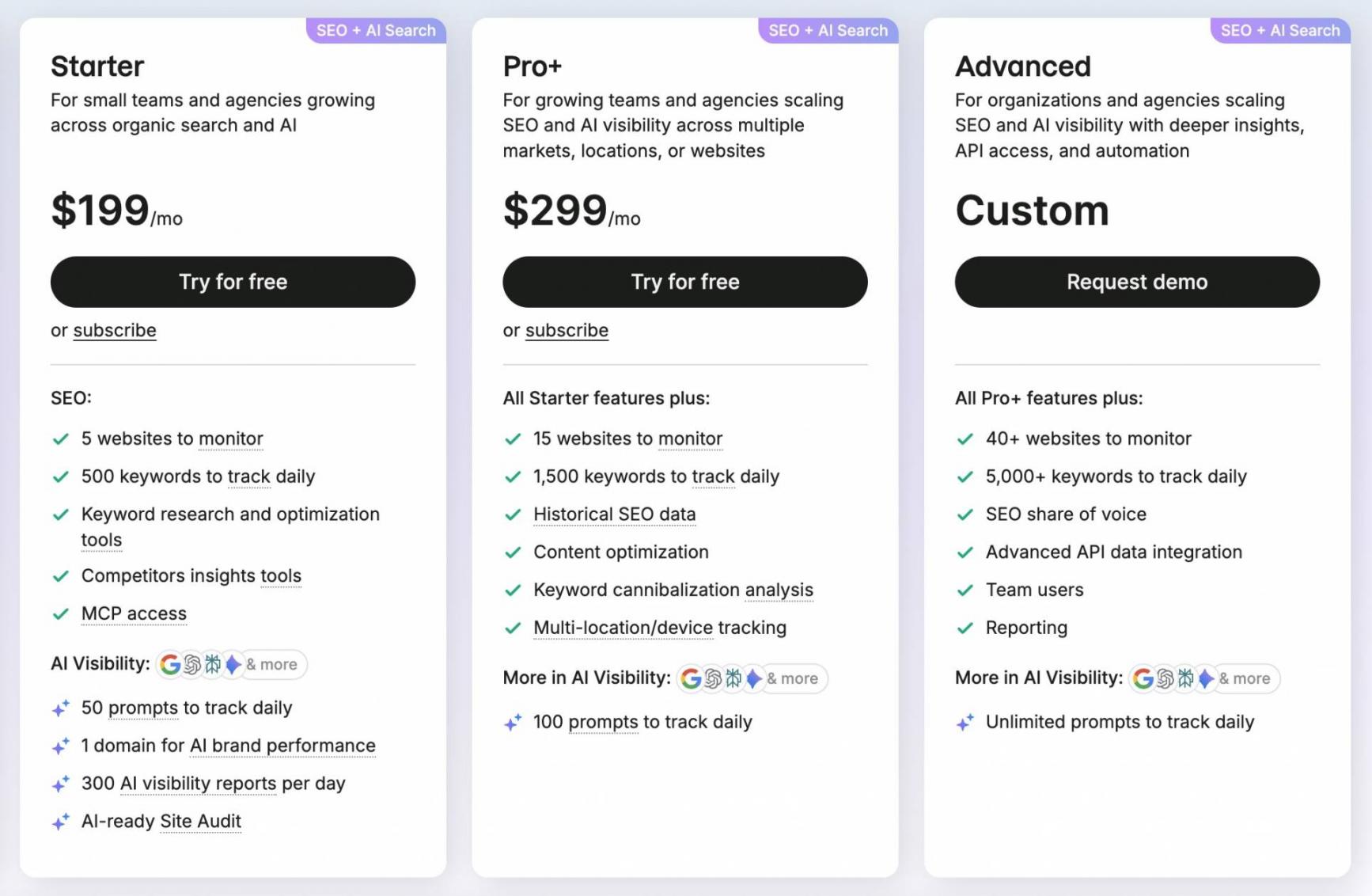
Image via Semrush
Best For: Teams tired of switching between separate SEO and AI tracking tools.
Pro Tip: Ask your sales team which questions prospects come up with the most. Use those questions to build your prompt list, then add three competitors.
2. Colytics AI: Best for Closed-Loop AEO on a Small Budget
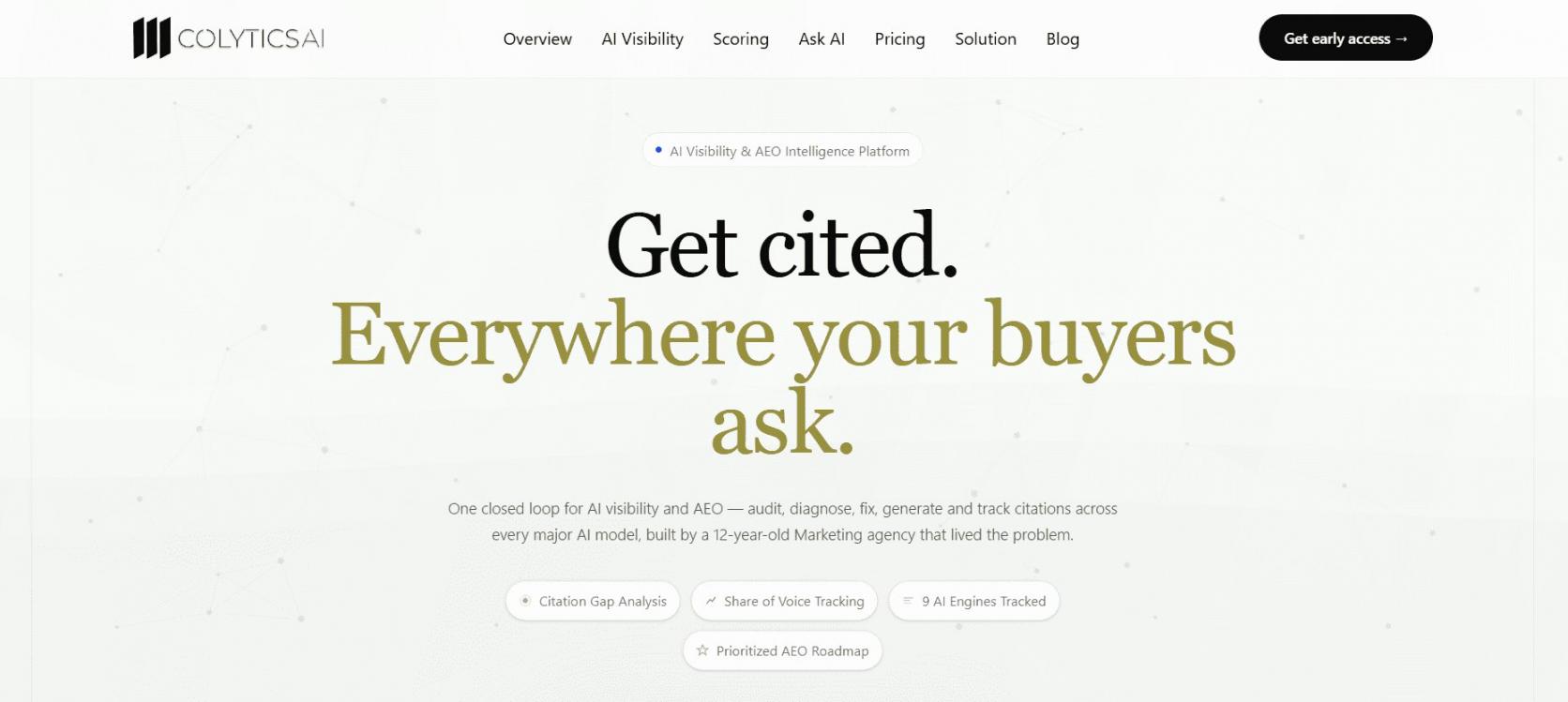
Image via Colytics AI
Colytics AI is one of the AI competitor tracking tools that helps you compare your brand's visibility with rival brands. It tracks mentions, citations, and share of voice across supported AI engines. You can also find citation gaps to see where competitors get cited, but your brand doesn't.
Key Features
- Competitor AI Intelligence covering up to five named competitors
- Citation gap analysis for prompts where rivals are cited, and you aren’t
- Share of voice across five named engines, plus GA4 impact attribution
Pros
- Allows you to track and compare five competitors at a time
- Tracks Claude and Grok, which most tools on this list don’t
Cons
- It’s still in early access, so the features are still evolving
- Prompt tracking has usage limits
Pricing
Check with the team for the latest pricing and available features.
Best For: Marketing teams that want to see how their brand compares with competitors in AI answers.
Pro Tip: Look at the prompts where competitors appear more often than your brand. Use those findings to plan your next content updates.
3. Profound: Best for Enterprise Answer-Engine Coverage
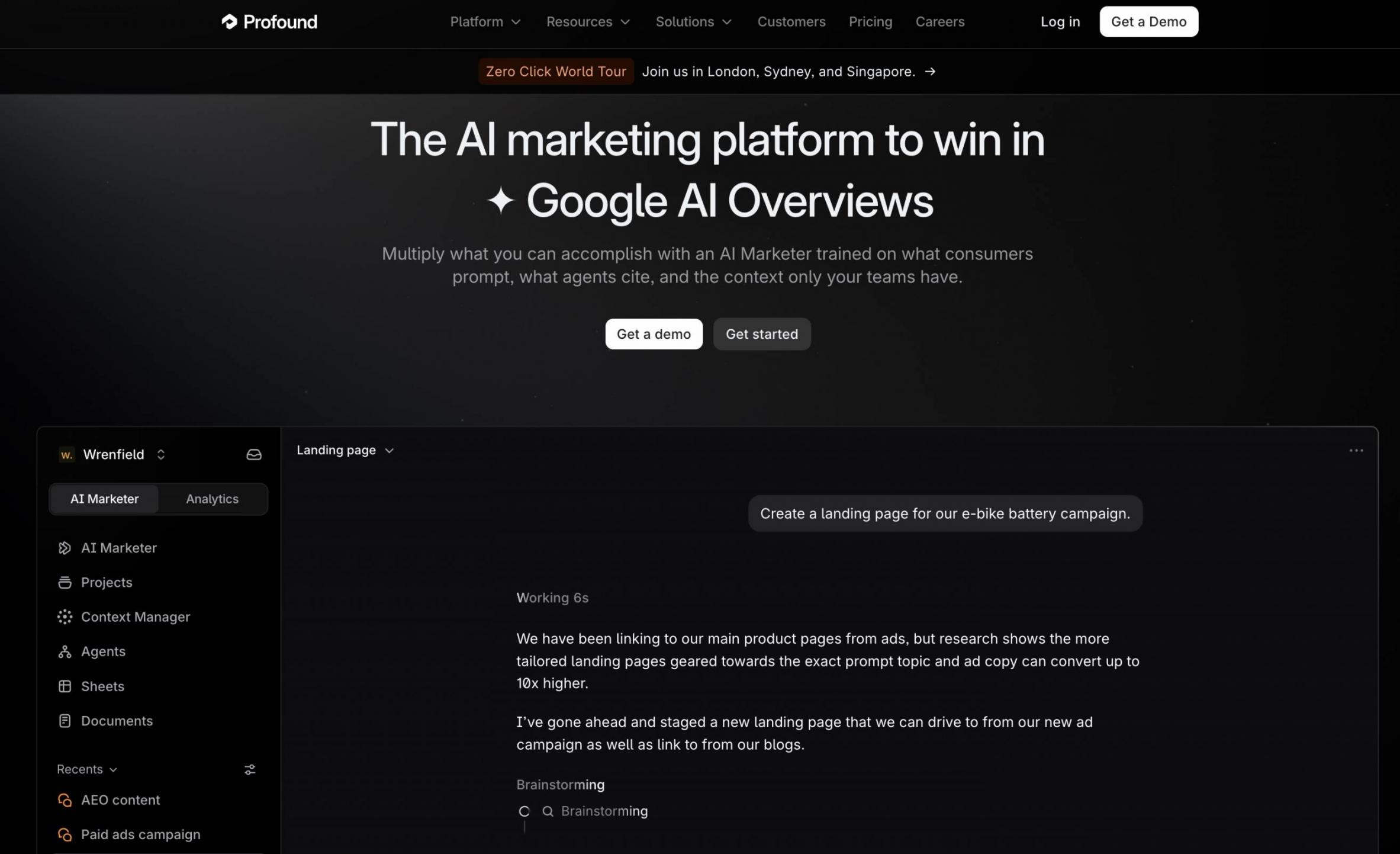
Image via Profound
Profound is one of the AI competitor tracking tools that helps brands see where they stand in AI search. It tracks competitor mentions, citations, AI visibility rank, and share of voice across AI platforms. You can find prompts where rivals outperform you and compare the pages earning citations.
Key Features
- Up to nine answer engines, including DeepSeek, Claude, and Exa Search
- Daily tracking on a tailored prompt plan
- SOC 2 compliance and SSO or SAML for enterprise rollout
Pros
- Tracks up to nine AI engines on the Enterprise plan
- Unlimited seats let marketing, SEO, and content teams share findings
Cons
- Enterprise pricing isn't available on the website
- The seven-day trial includes only three AI engines
Pricing
Plans for brands:
- 7-day free trial
- Enterprise: Custom pricing
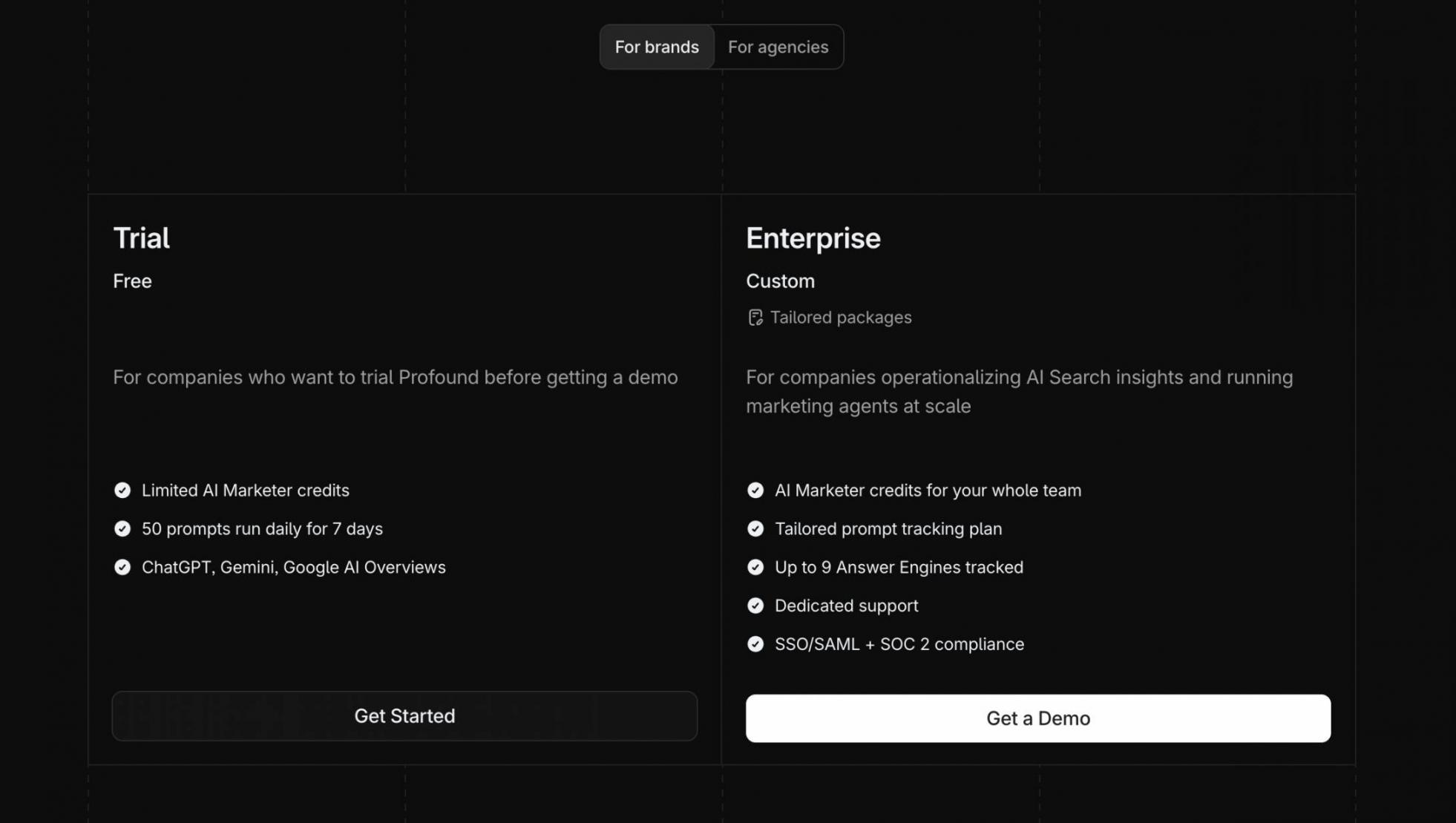
Image via Profound
Plans for agencies:
- Agency Growth: $99 per month
- Agency Enterprise: Custom pricing
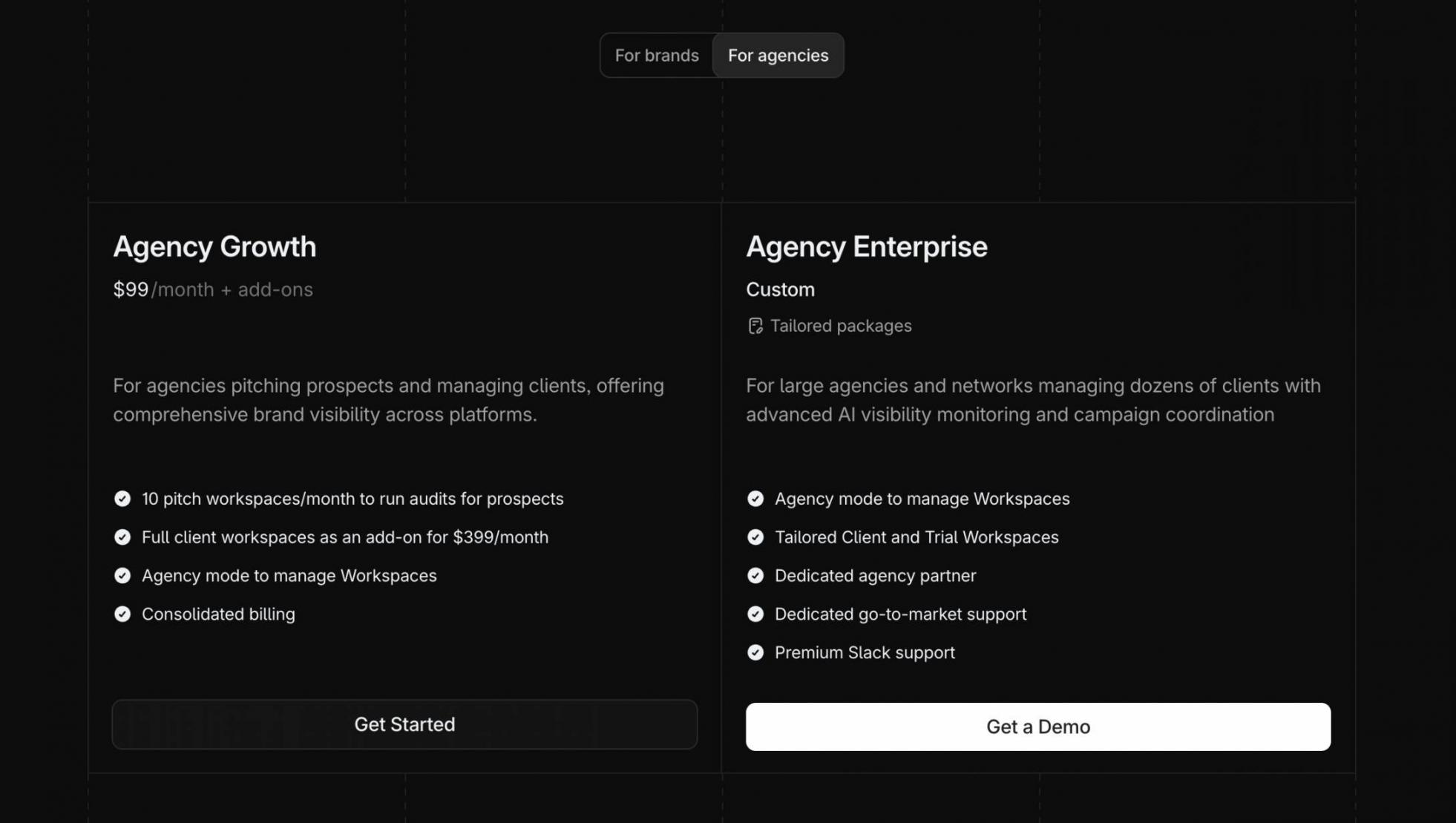
Image via Profound
Best For: Large companies that need to keep tabs on competitors across several AI platforms.
Pro Tip: Check which platforms come with your plan before you sign up. You don't want to pay for coverage you won't use.
4. OtterlyAI: Best for Transparent Entry-Level Pricing
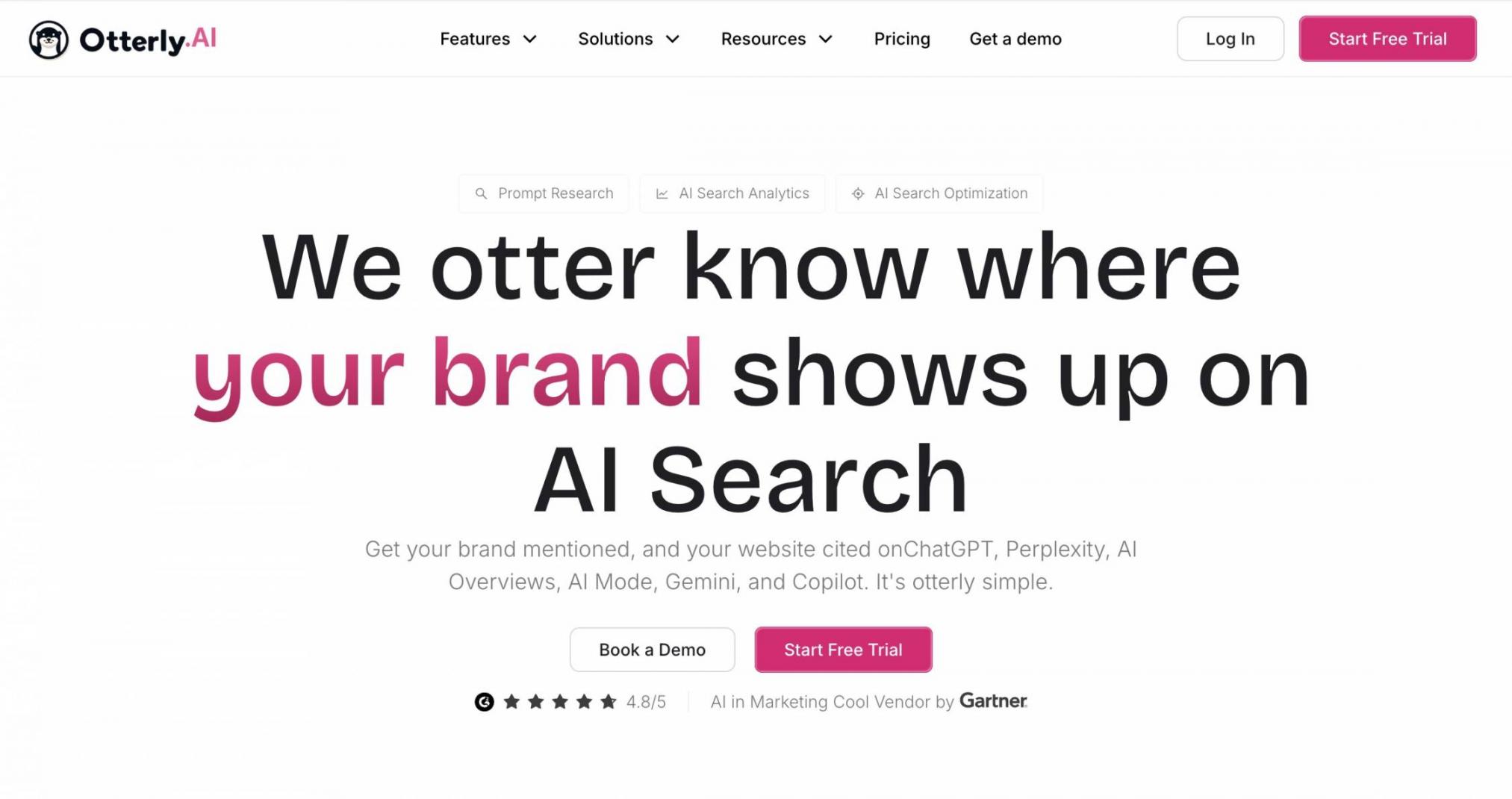
Image via OtterlyAI
Some competitors may get cited by AI platforms while your website goes unnoticed. OtterlyAI helps you investigate these gaps through brand monitoring and citation tracking. It’s among the AI competitor tracking tools that offer a useful mix of visibility reports and website audits.
Key Features
- Support for four platforms: ChatGPT, Google AI Overviews, Perplexity, and Microsoft Copilot
- Between 15 and 400 search prompts, depending on the plan
- GEO URL audits plus a connector for Google Data Studio on paid plans
Pros
- Published pricing at every self-serve tier, which is rarer here than it should be
- Unlimited team members on all plans
Cons
- Google AI Mode, Gemini, and Claude are paid add-ons, not included
- No competitor limit is stated anywhere on the pricing page
Pricing
- Light: $29 per month
- Standard: $189 per month
- Premium: $489 per month
- Enterprise: Custom pricing
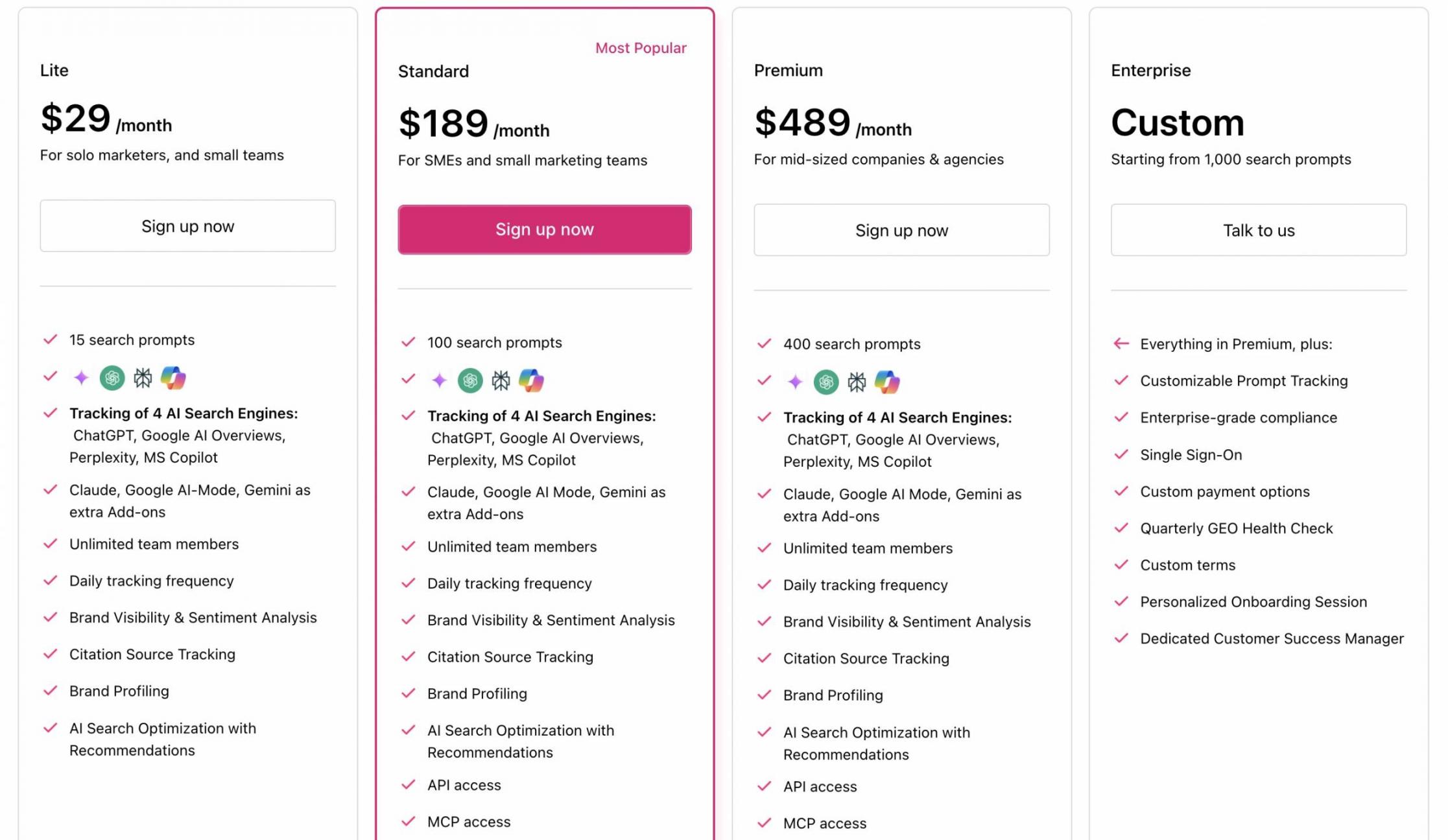
Image via OtterlyAI
Best For: Businesses that haven't decided whether AI search tracking is worth paying for.
Pro Tip: Use the Lite plan to check 15 questions your customers might ask. See what turns up before paying to track more.
5. Peec AI: Best for Scaling Prompt Volume
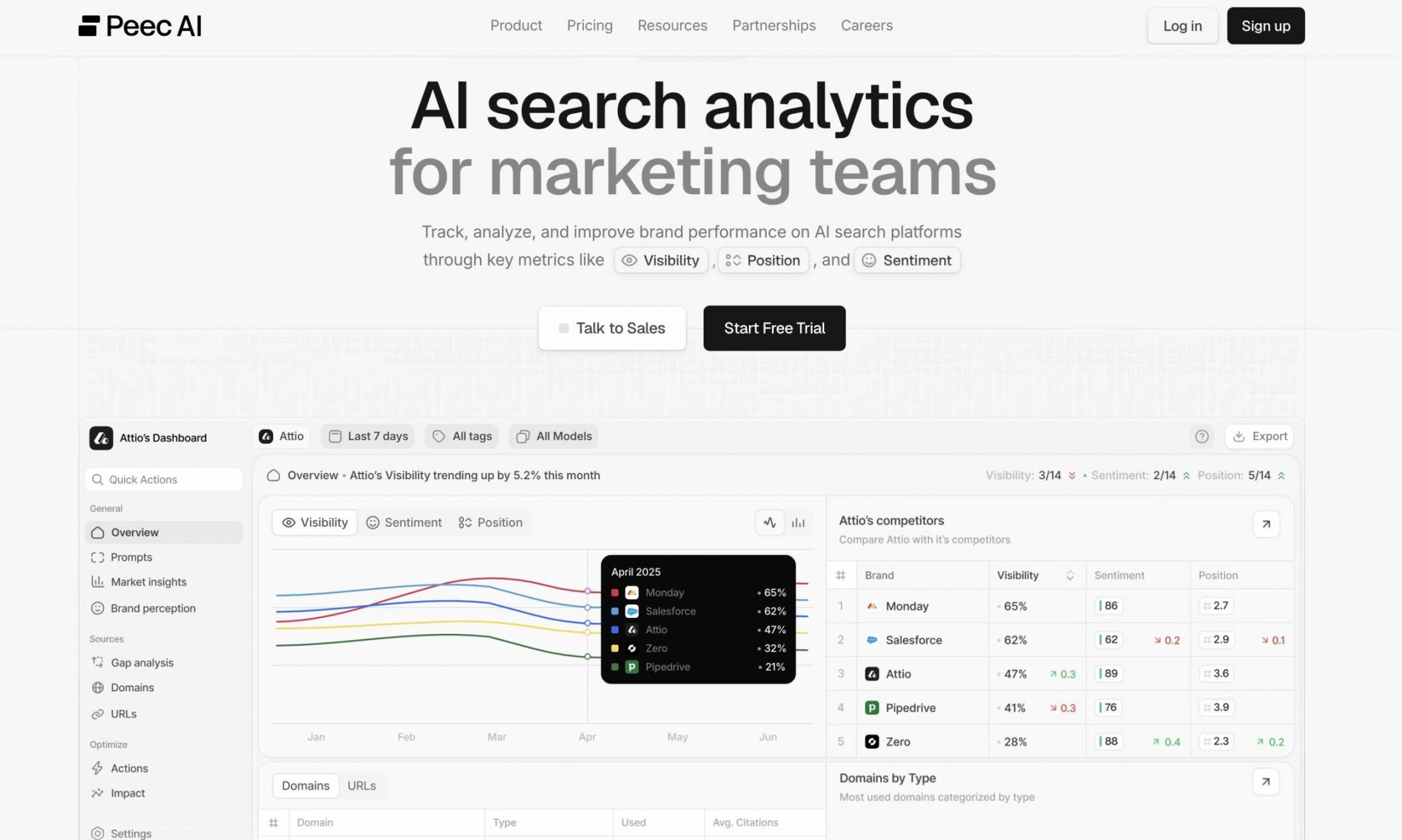
Image via Peec AI
Peec AI helps you compare competitor visibility and trace AI answers back to their cited sources. You can then look for gaps in your content or find sites that cover your competitors. This makes it useful for teams that want AI competitor tracking tools to guide their next research steps.
Key Features
- Visibility and sentiment data for your brand and its competitors
- Prompt-level reports showing brand mentions and the sources AI tools cite
- Multi-country tracking and Looker Studio integration on the Advanced plan
Pros
- Unlimited users on every plan, including the entry tier
- Daily tracking frequency across all self-serve plans
Cons
- Peec doesn’t publish a price for any self-serve plan
- Three engines per plan, with extra models sold as annual add-ons
Pricing
- Starter: $95 per month
- Pro: $245 per month
- Advanced: $495 per month
- Enterprise: Custom pricing
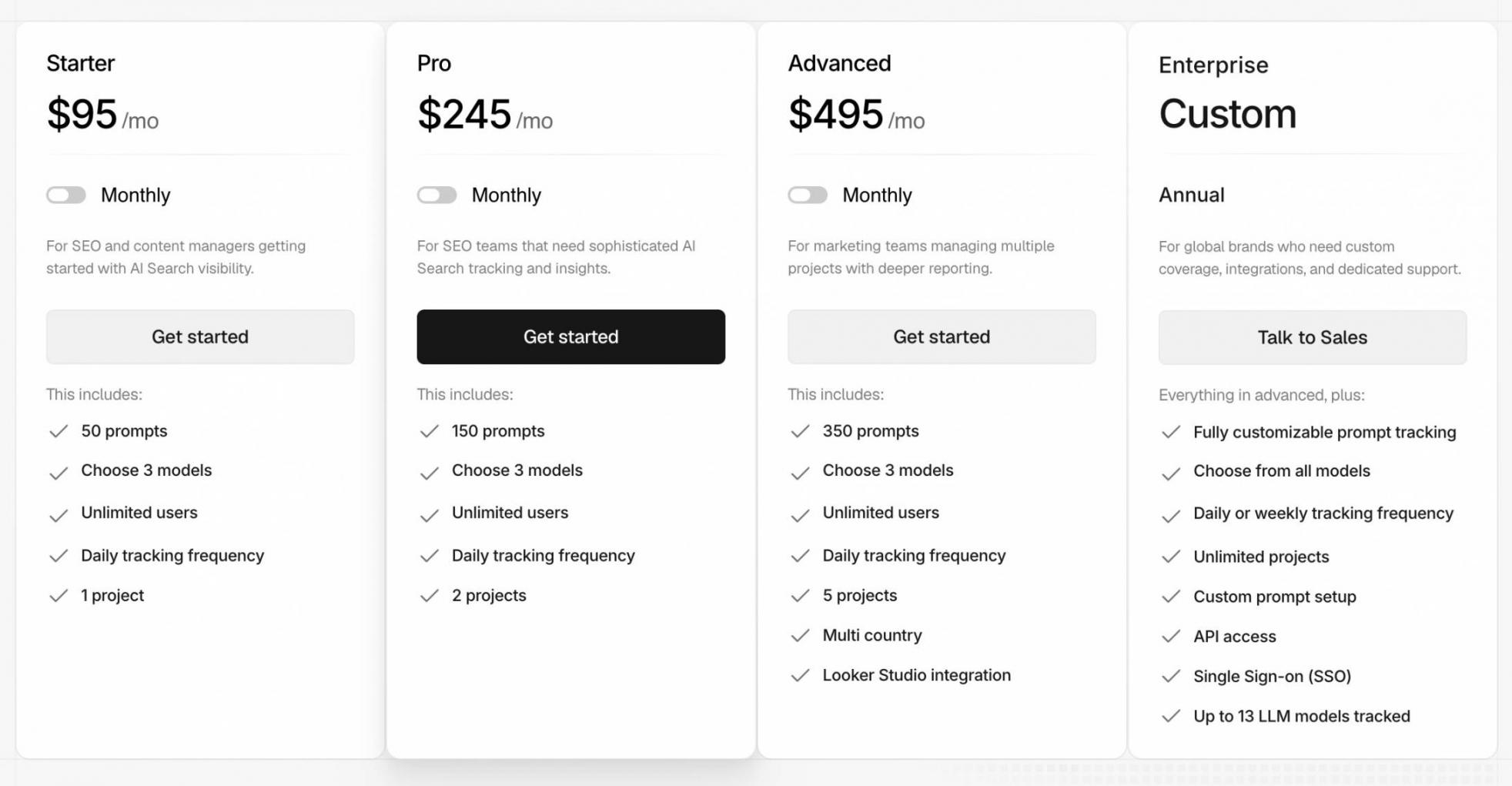
Image via Peec AI
Best For: Agencies that want to track AI search visibility for more than one brand.
Pro Tip: Make a list of the prompts you want to track across all clients. Use that number when comparing plans and prices.
Semrush is great if you want to combine SEO and AEO, while Colytics AI is good for finding content gaps for AEO. Profound is better suited for enterprise teams. Start with your requirements and then compare features to find the right fit.
How to Track Your Competitors’ Positioning in AI Answers
AI competitor tracking tools can show you where rival brands appear, but the results are only useful when you track them consistently. Stick to a fixed set of prompts and check the same competitors and platforms each week. Track key metrics like share of voice and citation gaps regularly.
These four steps will help you set up your tracking, and the metrics below will show you what to look for.
- Write Down 20 to 50 Prompts: Include broad questions about your category and direct comparisons between brands. Choose questions a real buyer might ask an AI assistant.
- Keep Your Competitor List Short: Start with three to five rivals. You can always add more later if you need a wider comparison.
- Track the Right Platforms: Choose AI assistants based on where your audience searches. More platform coverage won't help if your customers rarely use those assistants.
- Compare Results Over Time: Check your prompts every week and note what changes. Look for patterns instead of reading too much into one answer.
Key Metrics to Track
| Metric | What It Tells You | What Moves It |
|---|---|---|
| Share of voice | How often you are named against rivals | More cited sources, clearer entity signals |
| Citation gap | Prompts where a rival is cited, and you aren’t | Missing content on a question you never answered |
| Prompt wins | The questions you own outright | Strong, liftable answers on your own page |
| Sentiment | How the model describes you | Reviews, comparisons, third-party framing |
Tracking shows where you stand. Fixing it is a content job, and I’ve written separately on how to rank in AI search.
Think about what buyers ask before choosing you or a competitor. Check those questions weekly on the AI platforms your customers use. Use the right AI competitor tracking tools to track brand mentions, share of voice, citation gaps, prompt wins, and sentiment.
FAQ
Q1. Which AI tool is best for competitor analysis?
A. It depends on which AI platforms you want to track and how much detail you need. All five AI competitor tracking tools in this list compare your visibility with rivals, but Semrush stands out for combining AEO with SEO.
Q2. What should you measure to compare your brand with competitors in AI answers?
A. Look at more than how often your brand gets mentioned. Check your share of voice against competitors, find prompts where their pages get cited instead of yours, and see which questions bring up your brand. Sentiment can also help you understand how AI presents your business.
Q3. How is AI competitor tracking different from competitor tracking software?
A. Traditional tools help you keep tabs on competitors' prices, ads, and websites. AI competitor tracking tools show whether AI assistants mention your brand, recommend your rivals, or cite their content instead of yours.
Q4. Can I track competitors in ChatGPT for free?
A. Yes, some AI competitor tracking tools offer free trials and plans, but most come with limits. So, you can start for free, but will have to upgrade eventually.
Q5. How many prompts do I need to track?
A. Think about what customers ask before they choose a product or service. Turn 20 to 50 of those questions into prompts and track them regularly. Expand the list when you find gaps in what you're monitoring.
Q6. Which AI engines should I monitor?
A. ChatGPT is a useful starting point, but don't overlook the other platforms your customers use. When comparing AI competitor tracking tools, always check how many AI engines they track.
Conclusion
Knowing that competitors appear in AI answers is useful. Knowing where they appear and which sources get them there gives you something to work with.
That's where these AI competitor tracking tools differ. Semrush brings SEO and AI visibility together, Colytics AI focuses on AI visibility, Profound is geared towards enterprise teams, OtterlyAI offers a more affordable starting point, and Peec AI supports larger prompt lists.
Before picking one, think about what you want to learn. A focused list of buyer questions will tell you more than tracking hundreds of prompts without a clear goal.
Want help turning AI visibility into citations and traffic? Start with Attrock’s SEO services.
Disclaimer: This content contains some affiliate links for which we will earn a commission (at no additional cost to you). This helps us keep creating free content for you.