The best sales forecasting tools analyze pipeline data, deal patterns, and historical win rates to predict revenue with up to 95% accuracy. HubSpot Sales Hub leads this category with AI-powered forecasting, native CRM integration, and real-time updates.
The platform automatically tracks deals and calculates weighted forecasts based on stage probabilities. This allows teams to be confident in their projections without manual spreadsheet work.
Companies using advanced forecasting software predict outcomes months in advance with precision. These tools replace guesswork with AI-powered analysis, helping teams close more deals and consistently hit revenue targets.
This detailed guide reviews HubSpot and 10 of the best sales forecasting tools available in 2026. We'll cover pricing, AI features, integration options, and real sales performance data. You'll see which sales forecasting software works best for your team’s size and sales motion.
Disclaimer: This content contains some affiliate links for which we will earn a commission (at no additional cost to you). This is to ensure that we can keep creating free content for you.
How We Chose the Best Sales Forecasting Tools
AI-powered forecasting accuracy separates leading platforms from basic CRM tools. The best sales forecasting tools use machine learning to analyze deal velocity, stage duration, and close patterns — then calculate win probability for each opportunity.
1. AI and Predictive Analytics
The best sales forecasting tools use AI to analyze past deals. They look at win rates, sales cycles, and deal patterns. The tools use AI to identify which factors most strongly correlate with closed deals and then apply those insights to current opportunities.
2. CRM Integration
Your forecasting solution should connect directly to your CRM software. Native integrations eliminate data sync delays and manual entry errors that corrupt forecast accuracy.
HubSpot shows this well — forecasting lives inside the CRM. Third-party integrations often require scheduled syncs, which can cause forecasts to lag behind actual pipeline changes.
3. Real-Time Sales Pipeline Visibility
Sales leaders need to see changes as they happen. Real-time data reduces forecast gaps and prevents unexpected revenue shortfalls at month-end. The best sales forecasting tools update automatically when deals move. Visual dashboards make it easier to spot risk early and course-correct.
4. Mixed Forecasting Methods
No single forecasting model tells the full story. Strong platforms combine weighted pipeline forecasts, time-series analysis, and AI-driven predictions to reduce blind spots. If one method shows risk, others confirm or provide context.
The best sales forecasting tools, like HubSpot, combine all three approaches. This allows teams to switch between methods or view them side-by-side for complete pipeline visibility.
5. Customizable Categories
Different teams track revenue using varying forecasting methods. Some teams forecast by product line, while others segment by region or sales rep. Pick a sales forecasting software that lets you create custom categories that match your sales process.
6. Collaboration Features
The best sales forecasting tools should allow sales reps to submit their own forecasts while managers review and adjust revenue predictions.
HubSpot's forecast submission tool keeps teams aligned with scheduled reminders and automatic rollups. Teams see how individual forecasts roll up to company totals, making it easy to spot gaps early.
Best Sales Forecasting Tools in 2026: Comparison Table
We've broken down the best sales forecasting tools to help you compare at a glance. This table shows each platform's key details, strengths, and starting prices.
| Sales Forecasting Software | Sales Forecasting Capabilities | Free Tier? | Starting Price | Best For |
|---|---|---|---|---|
| HubSpot Sales Hub | AI predictions, deal-stage forecasting, weighted pipeline | ✅ | $15/seat/month | Growing teams need CRM and forecasting together |
| Salesforce Sales Cloud | Mixed forecast types, opportunity insights, predictive analytics | ✅ | $25/user/month | Large sales organizations with complex processes |
| Zoho CRM | Drill-down analysis, automated reports, territory roll-ups | ✅ | $20/user/month | Budget-conscious SMBs |
| Pipedrive | Visual forecasting, drag-and-drop deals, AI Pulse prioritization | ❌ | $24/seat/month | Small teams wanting easy pipeline management |
| Clari | Real-time forecasting, AI deal scoring, pipeline risk alerts | ❌ | Custom pricing | Mid-to-large B2B revenue teams |
| Terret (formerly BoostUp.ai) | Predictive analytics, pipeline health scoring, ML-powered accuracy | ❌ | Custom pricing | Complex enterprise sales cycles |
| Gong Forecast | Conversation-based insights, AI signal analysis, predictive models from calls | ❌ | Custom pricing | Teams focused on coaching and conversation data |
| Zendesk Sell | Performance metrics, modeling tools, and statistical forecasting | ❌ | $25/user/month | Service teams with CRM needs |
| Forecastio | Deal history tracking, pipeline health monitoring, win rate optimization | ❌ | $199/month | HubSpot users wanting advanced predictions |
| Aviso Predict | Time Series AI, WinScore probability, scenario forecasting | ❌ | Custom pricing | Data-driven mid/enterprise organizations |
| Anaplan | Driver-based forecasting, real-time modeling, and complex what-if planning | ❌ | Custom pricing | Large enterprises with complex models |
11 Best Sales Forecasting Tools Reviewed
We analyzed each sales forecasting tool's accuracy claims, pricing structure, and integration depth.
HubSpot Sales Hub ranks first for combining native CRM forecasting, AI predictions, and real-time updates. The following reviews show how each platform compares on forecasting methods, implementation speed, and total cost at different team sizes.
1. HubSpot Sales Hub
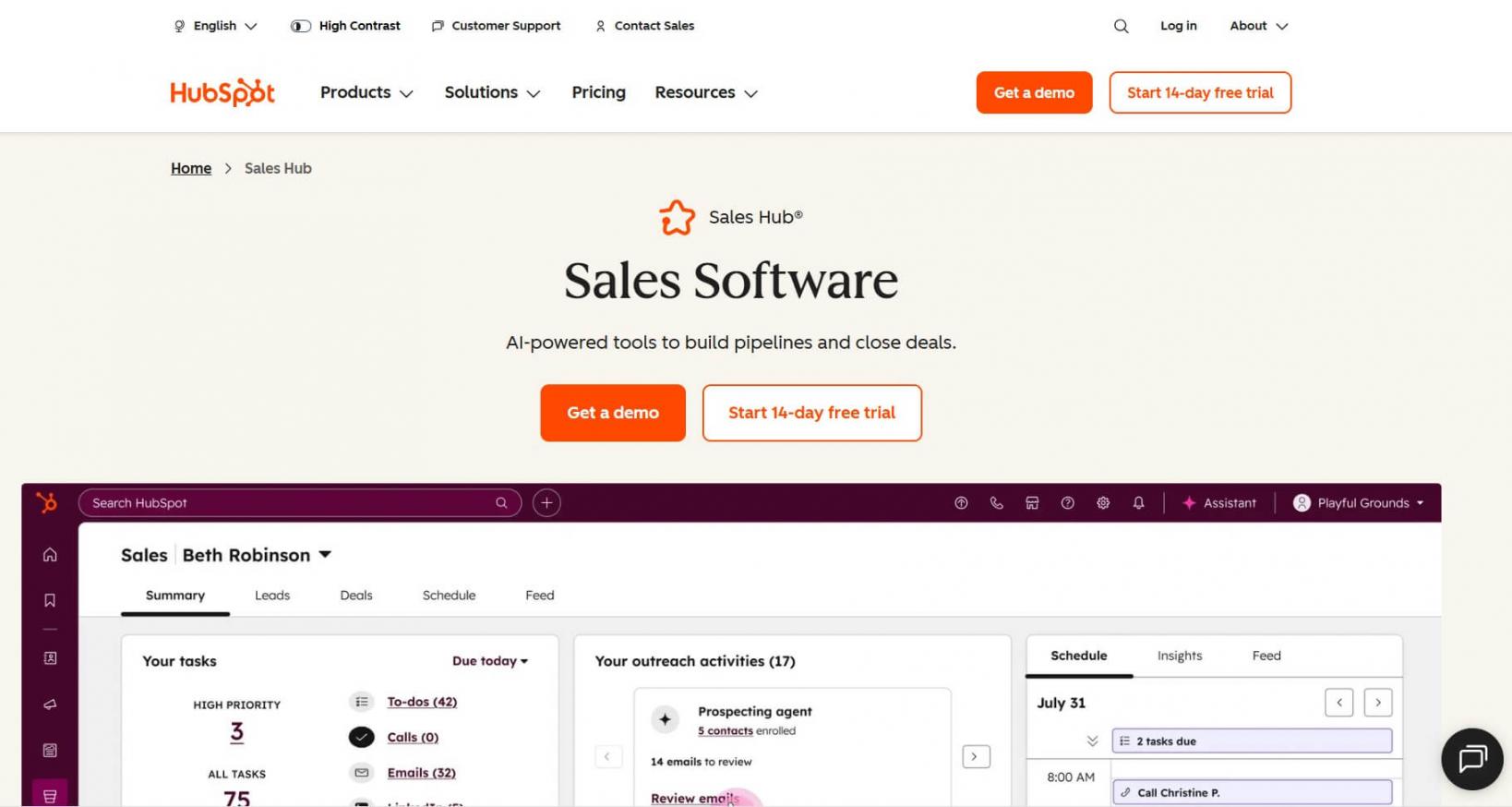
Image via HubSpot
HubSpot Sales Hub combines CRM and forecasting in one unified platform. The platform serves 278,880 customers globally and is ranked among the best sales forecasting tools. It also has a 38% market share in marketing automation.
Sales teams use HubSpot CRM to track deals from first contact to close. Managers see forecasts that update automatically as deals move through the pipeline. The system uses deal-stage forecasting with probability weights based on historical data.
Breeze AI powers HubSpot's forecasting accuracy. It analyzes past deals to identify patterns and predicts which opportunities are most likely to close.
Early testing showed teams achieving up to 95% forecast accuracy with Breeze AI. The AI also generates best-case, worst-case, and most-likely revenue scenarios. This helps leaders plan with confidence instead of relying on single numbers.
What's new with HubSpot?
September 2025 brought major AI updates at INBOUND 2025. HubSpot launched Data Hub to centralize structured and unstructured data sources.
Also, Breeze Marketplace and Breeze Studio entered public beta. This lets you discover and customize AI agents without coding.
Key Features
- Automated forecast submission reminders with scheduled cadence and team notifications
- Currency conversion support for multi-currency forecasting across global teams
- Pipeline coverage tracking shows weighted deal value against quota targets
- Deal change history reports track forecast movement through custom categories
- Deactivated user data remains in forecasting reports for historical accuracy
Pros
- The free tier includes forecasting features like pipeline visualization and basic reports, unlike most competitors
- One database eliminates silos between sales and marketing
- It has a faster setup compared to many enterprise CRM platforms
Cons
- Price increases as the contact database grows
- The full feature set can overwhelm new users
Pricing
- Free: Basic customer relationship management with simple pipeline reports
- Starter: $15/seat/month with custom categories, 500 HubSpot credits, and pipeline views
- Professional: $100/seat/month with AI forecasting and 3,000 HubSpot credits
- Enterprise: $150/seat/month with advanced models, 5,000 HubSpot credits, and predictive sales analytics
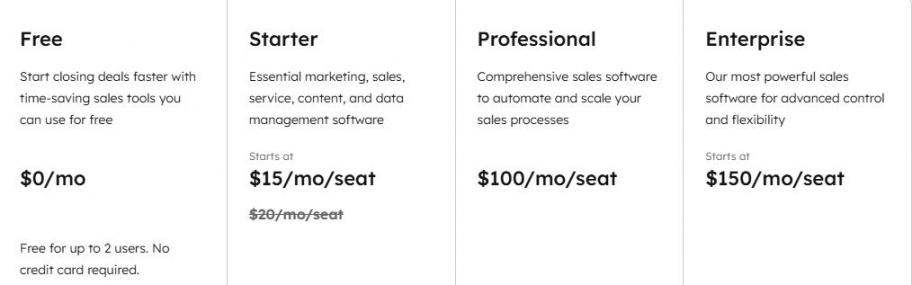
Image via HubSpot
Tool Level: Beginner to Advanced
Usability: Intuitive interface with guided setup
Best For: Growing businesses looking for unified sales, marketing, and forecasting on one platform.
2. Salesforce Sales Cloud
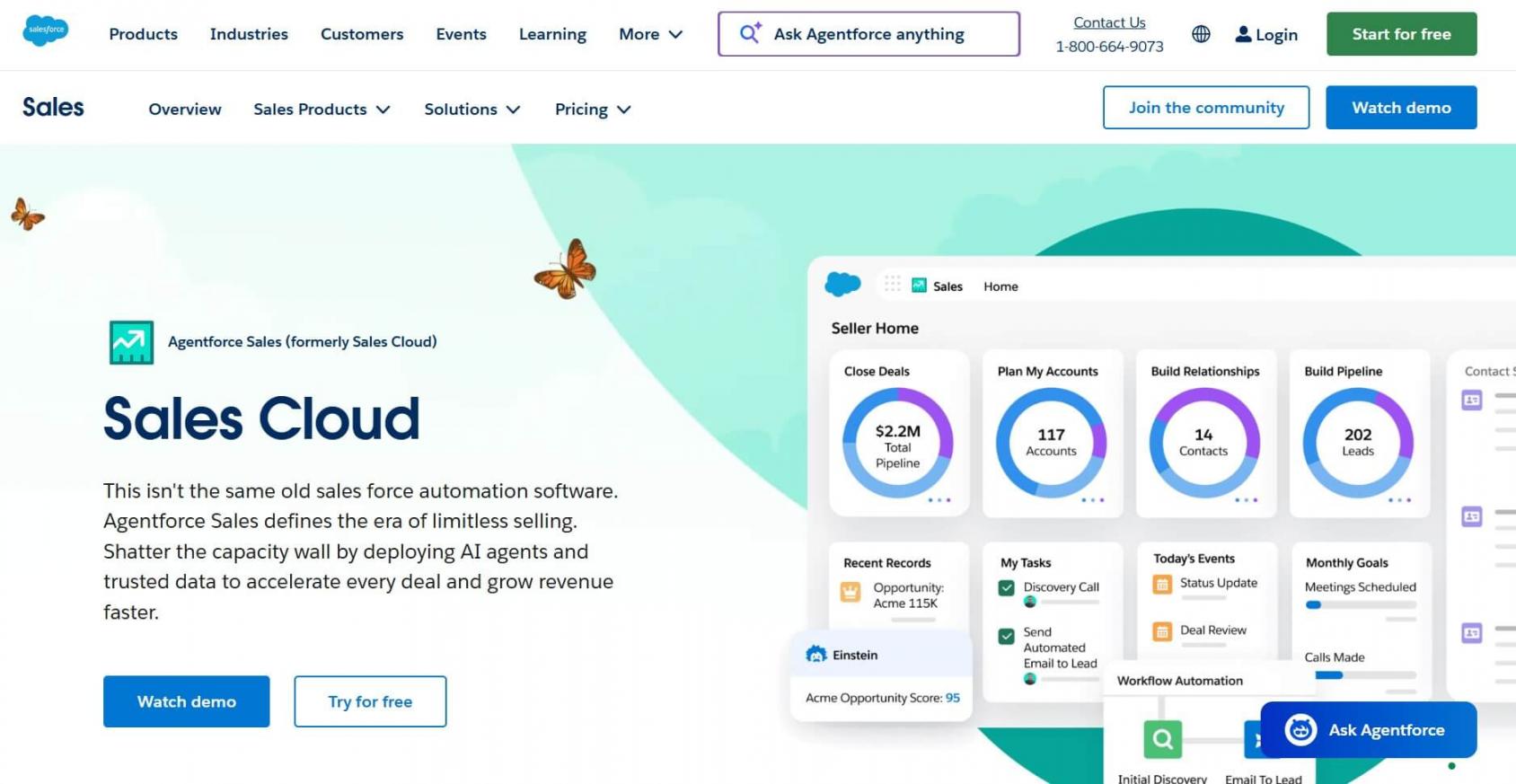
Image via Salesforce
Salesforce Sales Cloud is built for enterprise teams that require deep customization and complex sales process management. It is a prominent player in the CRM market and helps large organizations manage complex sales processes.
Sales Cloud uses Einstein AI to power its forecasting capabilities. The AI looks at past data, pipeline trends, and deal patterns. It then predicts future revenue.
The platform supports many forecast types. You can forecast by deal amount, product quantity, or custom fields.
Sales managers see cumulative rollups across their teams, with probability weights assigned to each forecast category. These probabilities update automatically as deals progress through pipeline stages.
Key Features
- Historical trending visualizes forecast changes with visual arrows
- Quota tracking displays color-coded sales progress bars for each forecast category
- Territory-based forecasting groups deal with regions or business units
- Product family forecasts track revenue by product line
- Multi-currency support lets you submit forecasts in local currency
Pros
- Deep customization for complex processes
- Strong AI capabilities with Einstein and Agentforce
- Large ecosystem of partners and pre-built forecasting solutions
Cons
- Steep learning curve that often requires dedicated admin resources
- Setup often takes much longer compared to more user-friendly tools like HubSpot
Pricing
- Free Suite (no forecasting feature)
- Starter Suite: $25/user/month
- Pro Suite: $100/user/month
- Enterprise: $175/user/month
- Unlimited: $350/user/month
- Agentforce 1 Sales: $550/user/month
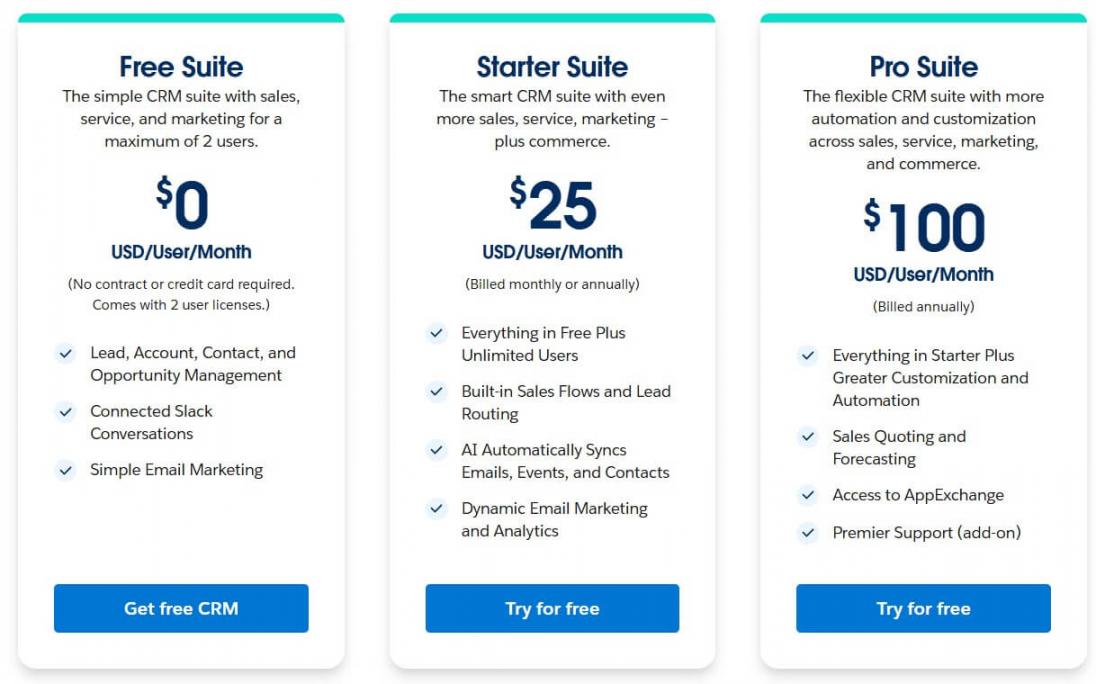
Image via Salesforce
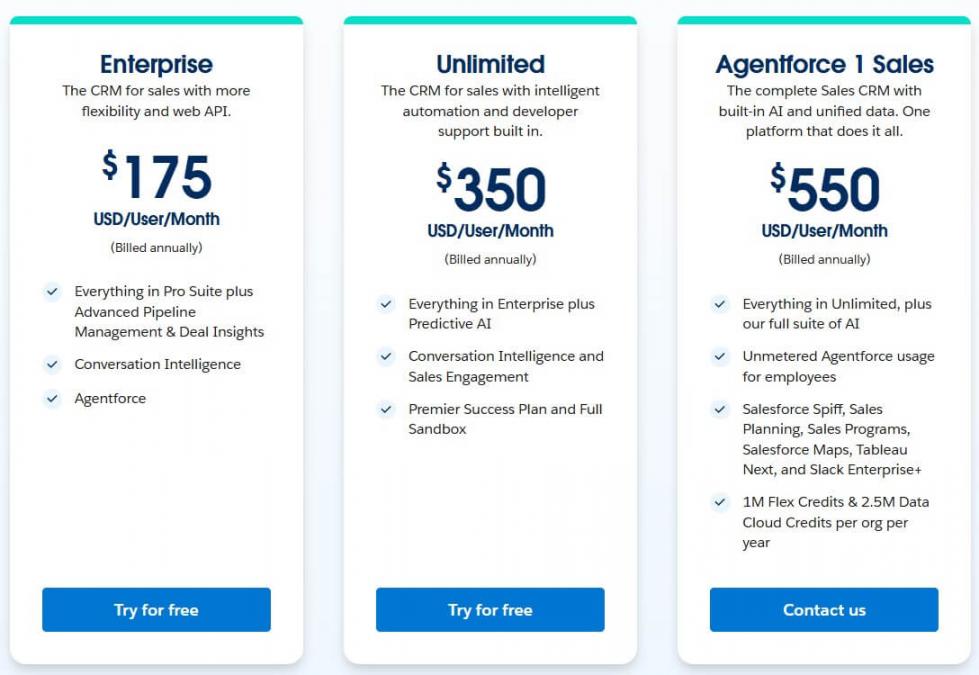
Image via Salesforce
Tool Level: Advanced
Usability: Steep learning curve
Best For: Large enterprises with complex sales processes needing deep customization
3. Zoho CRM
Image via Zoho CRM
Zoho CRM serves more than 300,000 businesses globally and is widely adopted by small and mid-sized teams. Its pricing and feature depth position it as one of the best sales forecasting tools for budget-conscious organizations that still want AI assistance.
Zia AI powers Zoho's forecasting. The AI analyzes sales data to predict deal outcomes and spot unusual patterns in team performance. It provides revenue predictions and shows gaps between revenue targets and actual results.
Zoho supports multiple forecast approaches. You can build forecasts based on revenue or deal count. The platform offers three categories:
- Pipeline
- Best Case
- Commit
You can structure forecasts based on roles or territories. This gives you ample flexibility in how you track performance. Dashboards show quotas, market trends, and gaps at a click.
Key Features
- Many forecasts across different time periods
- Drill-down analysis shows detailed performance data
- Automated detection flags unusual pipeline patterns
- Territory roll-ups combine forecasts from different regions
- Custom prediction models support tailored forecasting needs
Pros
- Lower price points compared to enterprise tools
- Works with 45+ Zoho business apps
- Voice commands for hands-free use
Cons
- Advanced forecasting requires higher tiers, unlike cost-effective tools like HubSpot
- Initial setup can feel slow for teams seeking a quick out-of-the-box experience
Pricing
- Standard: $20/user/month
- Professional: $35/user/month
- Enterprise: $50/user/month
- Ultimate: $65/user/month
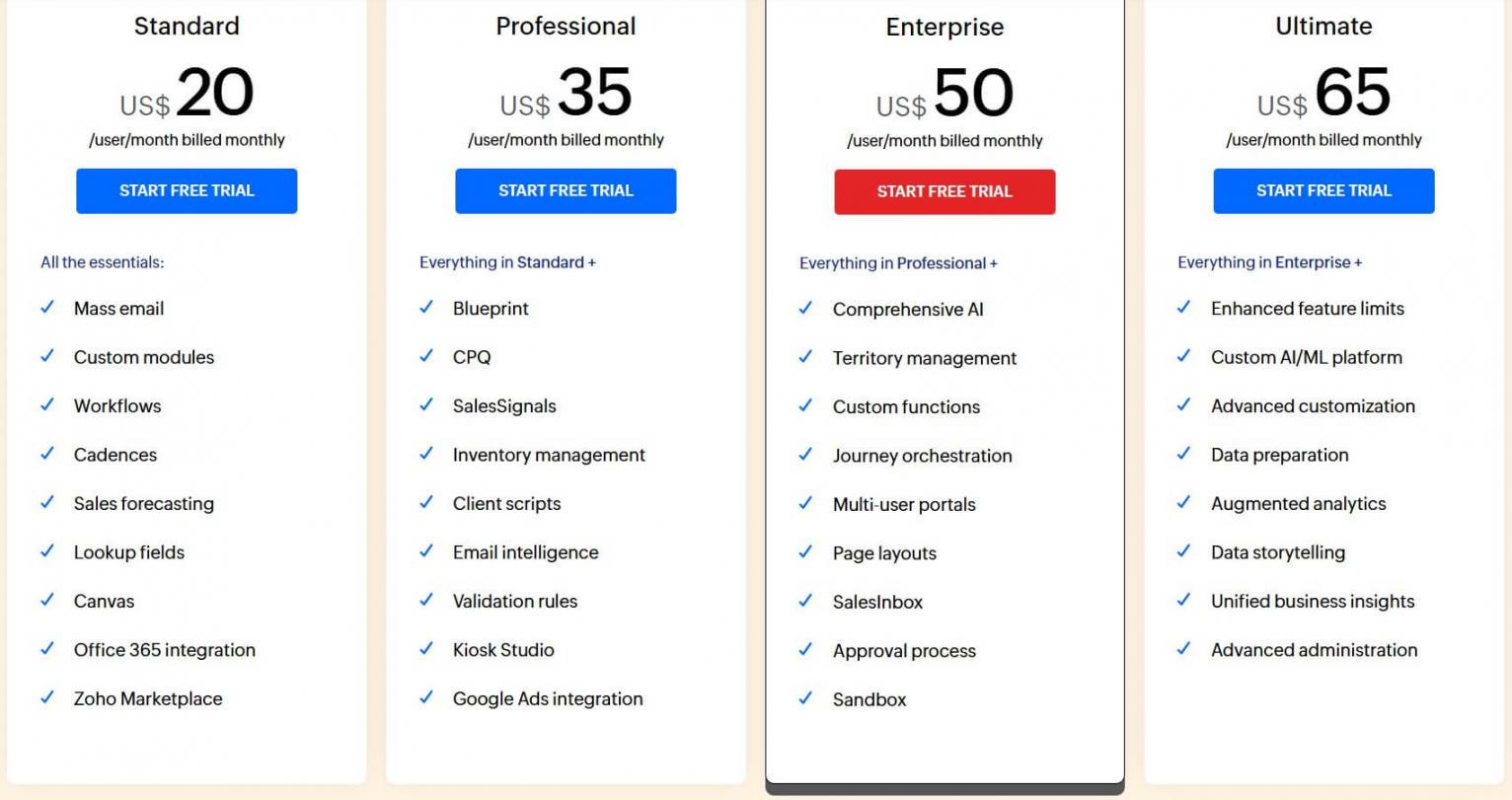
Image via Zoho CRM
Tool Level: Beginner to Intermediate
Usability: Moderate complexity
Best For: Budget-conscious SMBs wanting powerful CRM automation with AI forecasting
4. Gong Forecast
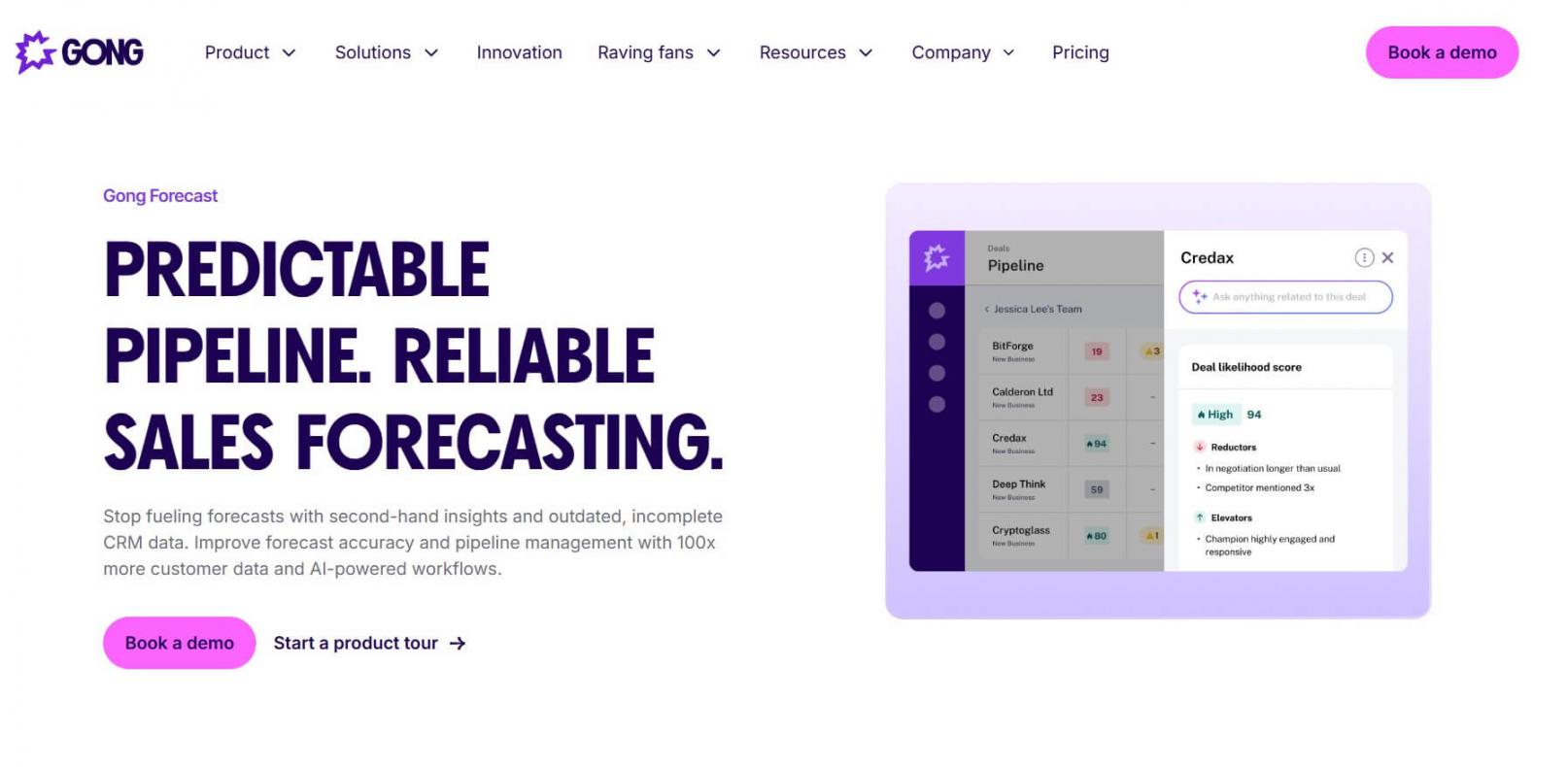
Image via Gong Forecast
Gong Forecast is part of Gong's Revenue AI platform. It uses conversation intelligence to power forecasting. The system analyzes buyer interactions, not just CRM data.
Gong captures 100x more data per opportunity than standard CRM systems. It records, transcribes, and analyzes sales calls, emails, and meetings. This gives your revenue team real insight into deal health.
The AI analyzes 300+ unique signals to predict deal outcomes. Gong claims 20% more prediction precision compared to CRM-only algorithms. It also has a 95% forecast accuracy. This ranks it high among the best sales forecasting tools on this list.
The platform helps you move from secondhand insights to real buyer behavior analysis. Its Deal Likelihood scoring feature analyzes opportunities and predicts closing chances. It derives insights from buyer engagement patterns captured from conversations.
Key Features
- Conversation intelligence captures and analyzes 99% customer interactions
- AI Revenue Predictor uses 300+ signals for deal outcome predictions
- Deal Likelihood scoring ranks opportunities based on buyer behavior
- Configurable forecast boards combine CRM data with interaction insights
- Real-time pipeline risk detection flags at-risk deals early
Pros
- Deep conversation insights provide stronger visibility into deal health
- Strong AI prediction accuracy based on buyer behavior
- Comprehensive revenue intelligence beyond just forecasting
Cons
- Complex pricing with several add-on modules required
- Steep learning curve for full platform adoption
Pricing
- Custom quote (no public listing)
Tool Level: Advanced
Usability: Moderate complexity with conversational insights
Best For: Sales teams focused on coaching and forecasting
5. Zendesk Sell
Image via Zendesk
Zendesk Sell is a sales CRM built for teams that need sales and customer support in one platform. More than 70% of companies get Zendesk Sell running in seven days or less.
The platform focuses on simplicity. Sales forecasting in Zendesk Sell uses win likelihood percentages and estimated close dates. The system calculates forecasts by multiplying the total deal value by the win likelihood for each deal.
You can set the win likelihood at the pipeline stage level. This means reps don't need to enter it manually for every deal. The Forecast dashboard provides a quick view of how forecasts compare to sales goals for the current period.
Key Features
- Win likelihood percentages at the deal or pipeline stage level
- Forecast dashboard compares actual sales to forecasted sales
- Email integration with Gmail and Outlook for activity tracking
- Mobile apps for iOS and Android with full CRM access
- Seamless handoff between sales and support teams
Pros
- Very fast setup compared to enterprise CRM platforms
- Strong mobile app for field sales teams
- Native integration with Zendesk Support creates a unified customer view
Cons
- Forecasting features are not available on the lowest-tier plans
- Limited AI-powered predictions and scenario modeling
Pricing
- Support Team: $25/user/month
- Suite Team: $69/user/month
- Suite Professional: $149/user/month
- Suite Enterprise: $219/user/month
- Suite + Copilot Professional: $155/user/month (billed yearly)
- Suite + Copilot Enterprise: $209 (billed yearly)
- AI Expert: Custom quote
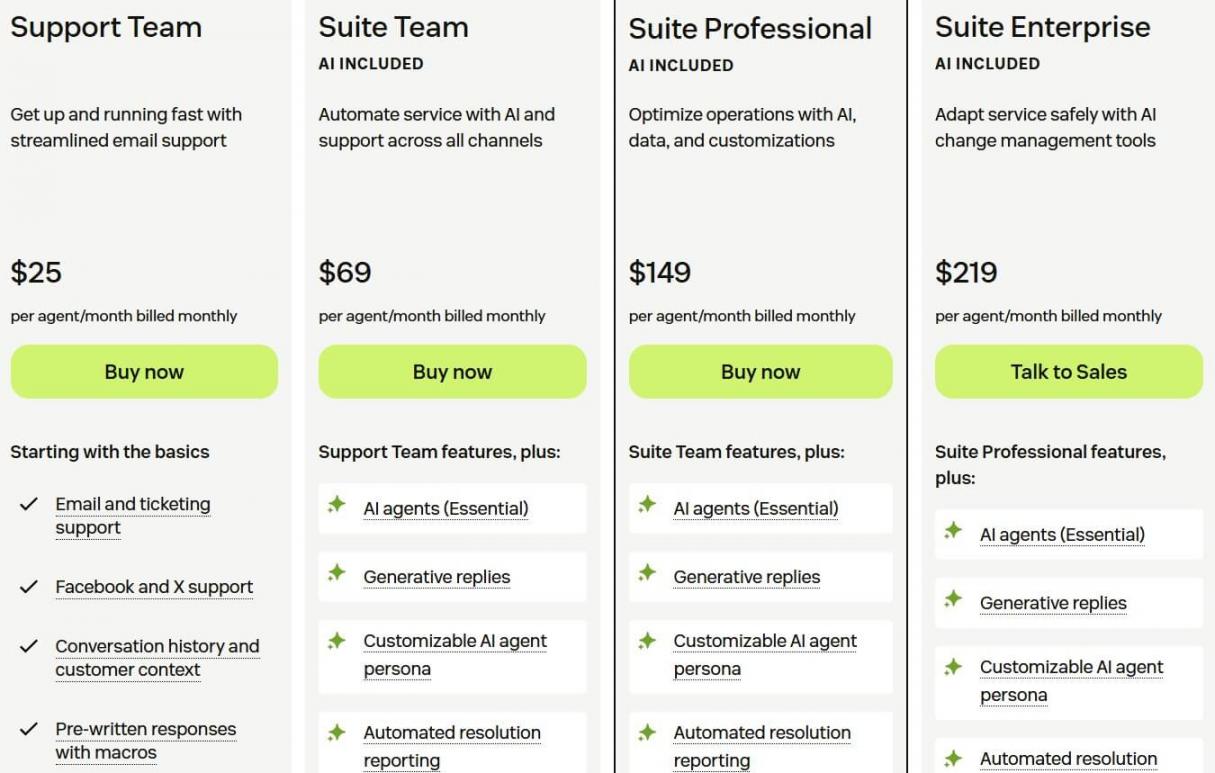
Image via Zendesk
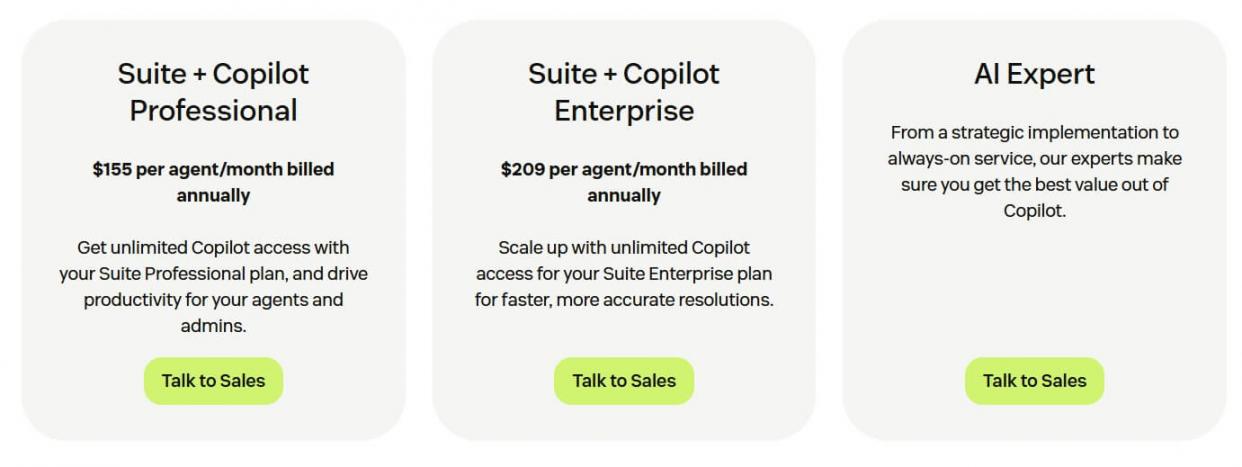
Image via Zendesk
Tool Level: Beginner to Intermediate
Usability: Simple, intuitive interface with fast setup
Best For: Service-based businesses and teams needing unified sales and customer support visibility
6. Aviso Predict
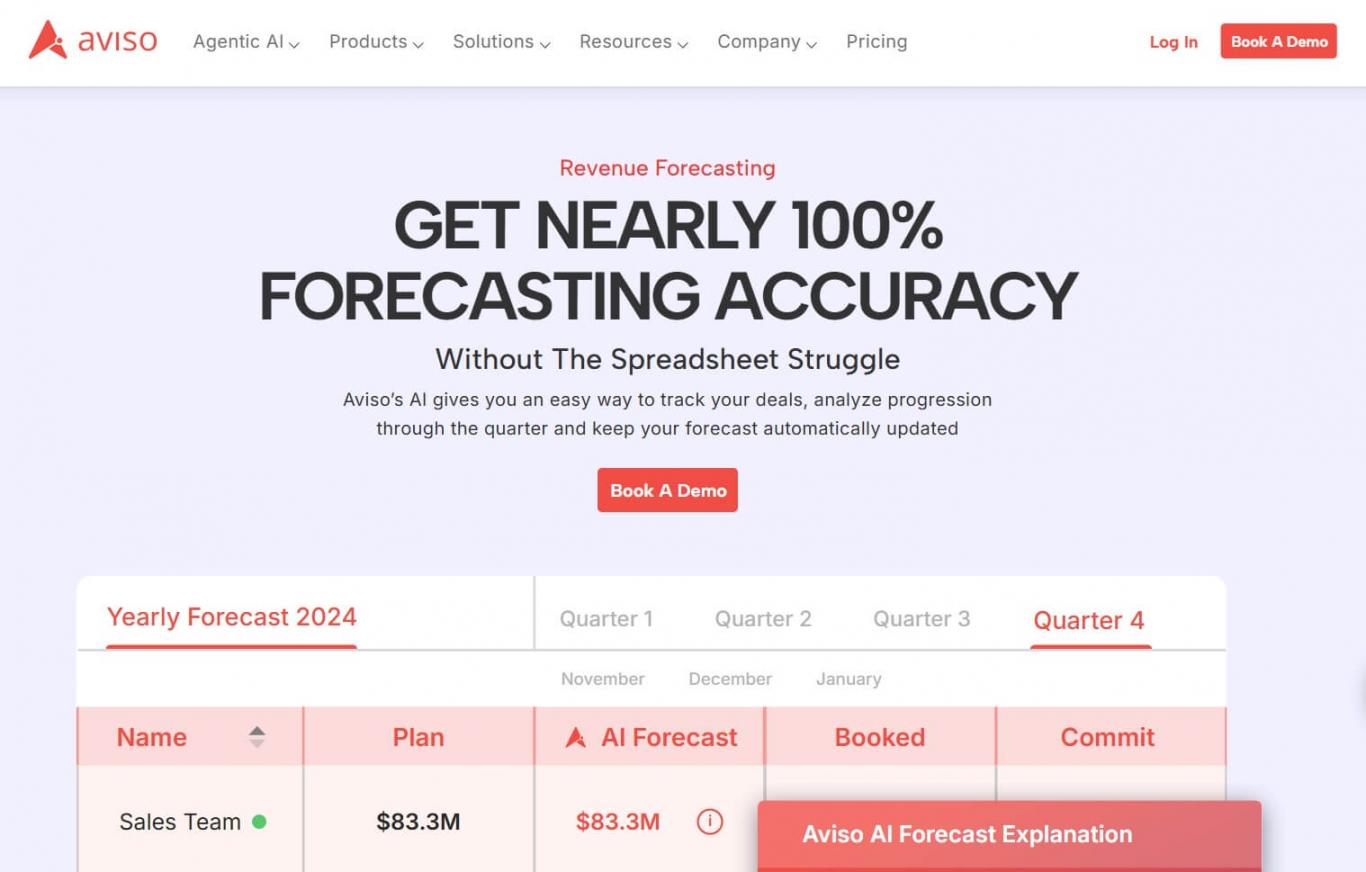
Image via Aviso
Aviso uses AI to help B2B companies create accurate forecasts. The platform claims 90%+ forecasting accuracy using AI-powered WinScore technology.
Aviso uses Time Series AI and machine learning to analyze deal progression patterns. It processes CRM data, email activity, and calendar events to generate predictive analytics.
MIKI, Aviso's AI Chief of Staff, claims to help GTM teams save up to 15-20 hours per week. It does this by automating CRM updates and drafting contextual emails.
The platform offers consumption forecasting for usage-based pricing models. This helps companies forecast revenue from pay-as-you-go business models.
Key Features
- AI WinScore assigns deal probability using machine learning algorithms
- Consumption forecasting for usage-based and run-rate business models
- Multi-hierarchy rollups provide forecast visibility across all levels
- MIKI AI automates CRM updates, email drafts, and revenue queries
- Scenario Forecasting with what-if analysis and gap-to-plan tracking
Pros
- Very high accuracy claims with AI-powered predictions
- Strong consumption forecasting for complex revenue models
- Comprehensive AI features across the full revenue cycle
Cons
- High enterprise pricing limits access for smaller teams
- Some users report bugs and performance issues
Pricing
- Custom quote (no public listing)
Tool Level: Advanced
Usability: Complex enterprise interface
Best For: Data-focused mid-to-large enterprises with complex revenue models
7. Pipedrive
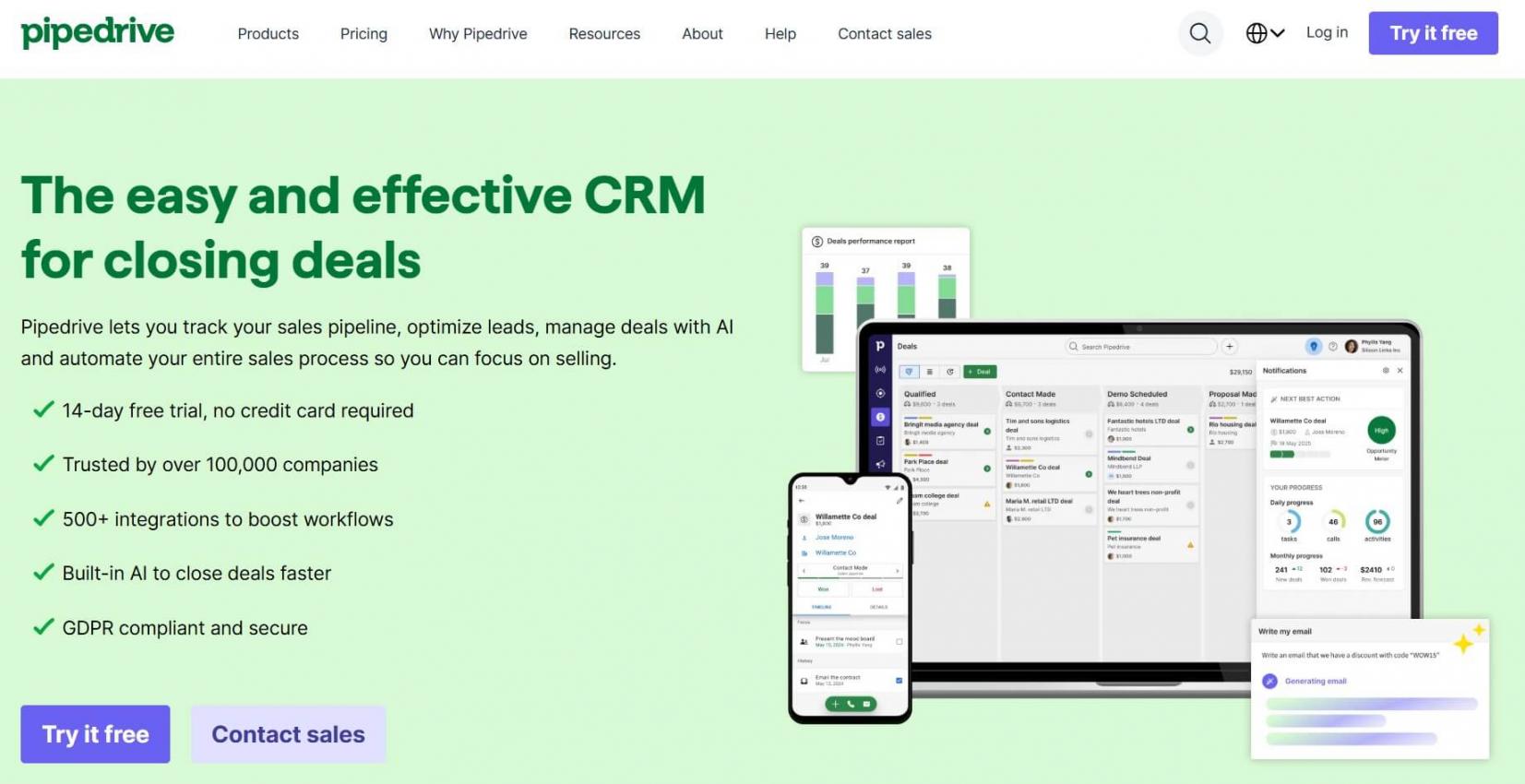
Image via Pipedrive
Pipedrive serves more than 100,000 businesses worldwide. Teams seeking the best sales forecasting tools with visual simplicity often choose Pipedrive.
Pipedrive calculates forecasts using expected close dates, deal values, and win probability percentages. Each deal stage has an assigned probability, which multiplies against the deal amount to produce weighted revenue projections.
The platform offers both cumulative and non-cumulative forecast views:
- Cumulative forecasts show accumulated revenue throughout selected time frames
- Non-cumulative views segment revenue by specific periods
Teams can filter forecasts by products, pipelines, or custom date fields.
Pipedrive's AI Sales Assistant tracks email engagement, sales calls, and CRM data. It helps reps understand their performance in real time.
Key Features
- Drag-and-drop deal cards for visual pipeline management
- Customizable probability weights for deal stages and forecasting on higher plans
- Product revenue tracking for one-time and recurring deals
- Deal priority indicators help surface high-value or time-sensitive deals in forecasts
- Custom date fields let you forecast by delivery date instead of close date
Pros
- Very easy to use with a minimal learning curve
- Strong mobile app for field reps
- 500+ integrations with tools like Zoom and Slack
Cons
- Add-ons required for full functionality can increase costs
- Limited marketing automation compared to all-in-one CRMs like HubSpot
Pricing
- Lite: $24/seat/month
- Growth: $49/seat/month
- Premium: $79/seat/month
- Ultimate: $99/seat/month
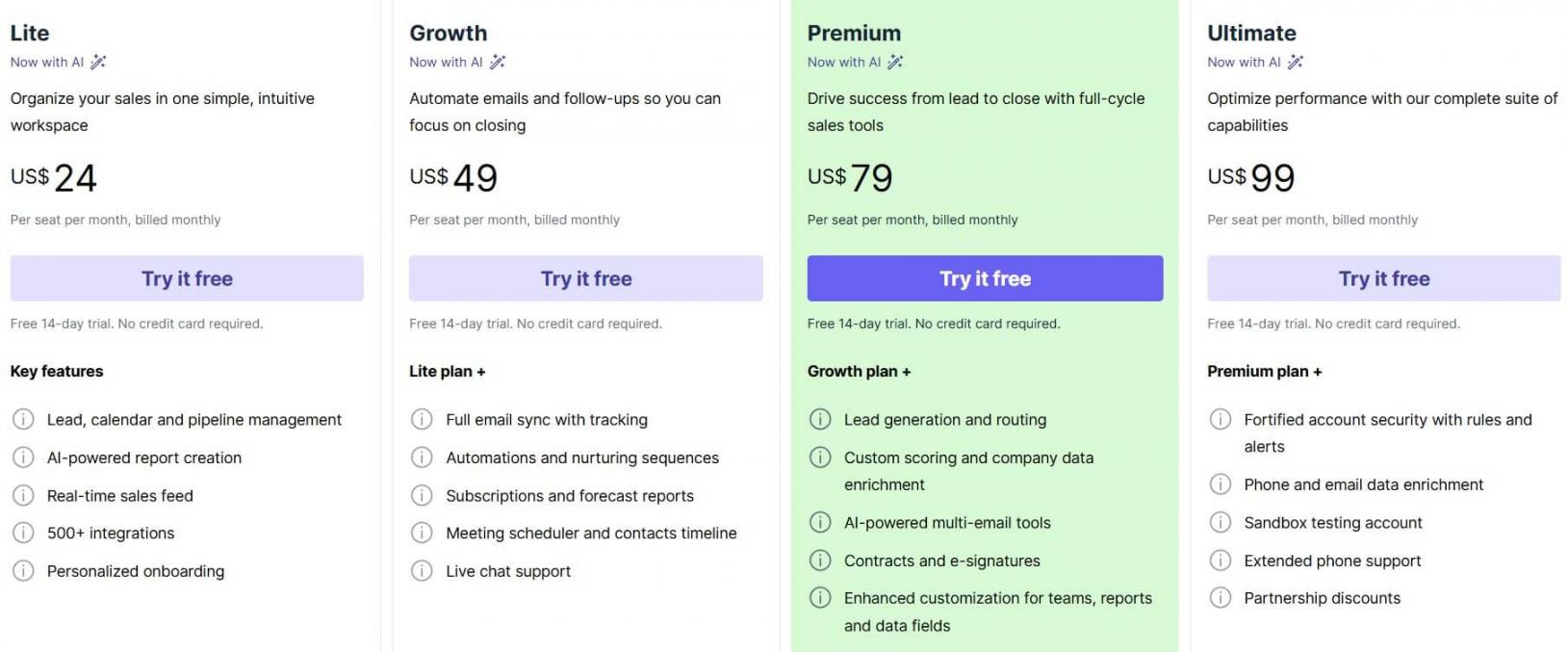
Image via Pipedrive
Tool Level: Beginner to Intermediate
Usability: Very simple drag-and-drop interface
Best For: Small to mid-sized sales teams wanting simple visual pipeline management and easy forecasting
8. Clari
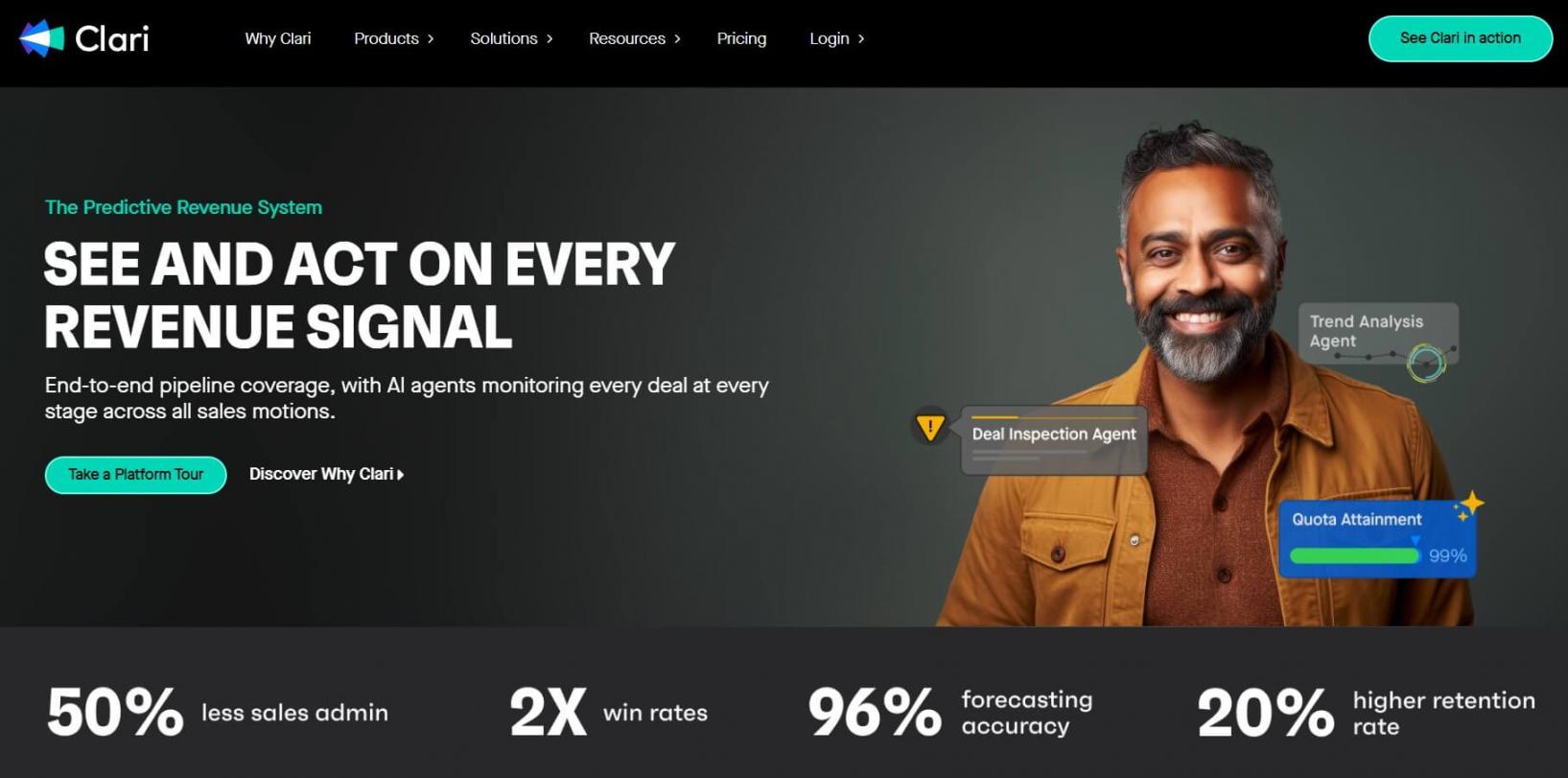
Image via Clari
Clari serves more than 1,500 companies, managing over $4 trillion in revenue. The platform focuses on revenue intelligence and forecast accuracy for enterprise teams. This makes it one of the best sales forecasting tools for enterprise users.
Clari claims 96% forecast accuracy by week two of the quarter. The AI analyzes two years of your company's history. It combines this with automatically captured sales activity. This creates deal priority scores and risk alerts.
The platform also provides real-time forecast roll-ups. Managers see how each change impacts the forecast. They can drill down from top-line views to individual deals.
Key Features
- AI-driven deal health scores using historical data
- Automated forecast submissions reduce manual work for reps
- Pipeline inspection dashboards identify stalled or risky deals
- Real-time Salesforce integration with bi-directional sync
- Scenario modeling lets you test different forecast outcomes
Pros
- High forecast accuracy for enterprise sales
- Deep Salesforce integration with strong reporting
- Comprehensive revenue intelligence across the pipeline
Cons
- Complex setup requires significant admin resources
- High pricing can limit access for mid-market teams
Pricing
- Custom quote (no public listing)
Tool Level: Advanced
Usability: Complex interface requiring significant onboarding
Best For: Enterprise teams looking for deep revenue intelligence
9. Terret (Formerly BoostUp.ai)
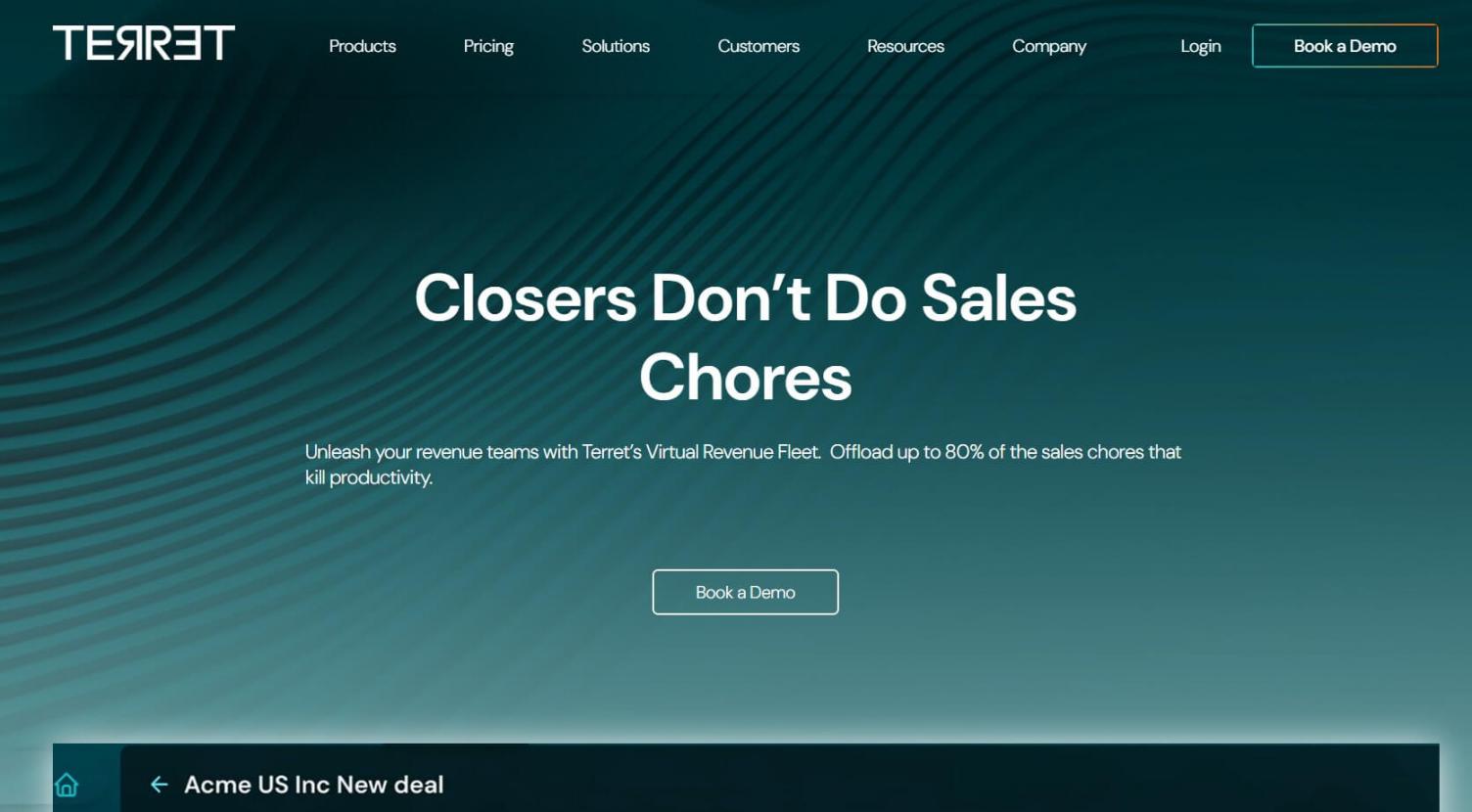
Image via Terret
Terret (formerly BoostUp.ai) rebranded in September 2025 with a new focus. In addition to forecasting, it now offers full revenue automation. Companies like MongoDB, Cloudflare, Carta, and Mistral rely on Terret for AI-driven revenue automation across the full sales cycle.
The platform offers a Virtual Revenue Fleet, a suite of interconnected AI agents. These agents automate workflows across pipeline generation, deal execution, and account expansion.
Terret claims its agents offload up to 80% of tactical activities. It has a Machine Forecast agent that uses predictive modeling for deal health assessment.
Key Features
- Machine Forecast uses predictive AI for accurate forecast rollups
- Pipeline Builder identifies high-value accounts and automates outreach
- Terret GPT answers ad hoc forecasting questions using natural language
- Sales Process Agent builds and updates sales motions based on meeting content
- Mutual Action Planner creates buyer-specific milestone tracking
Pros
- Interconnected AI agents work across the full revenue cycle
- Strong enterprise security and infrastructure
- Seamless handoff from sales to customer success teams
Cons
- A relatively new rebrand means less market validation
- Higher pricing for full AI agent features
Pricing
- AI Revenue Agents: $50/user/month
- Machine Forecasting: $80/user/month
- Conversation Intelligence: $30/user/month
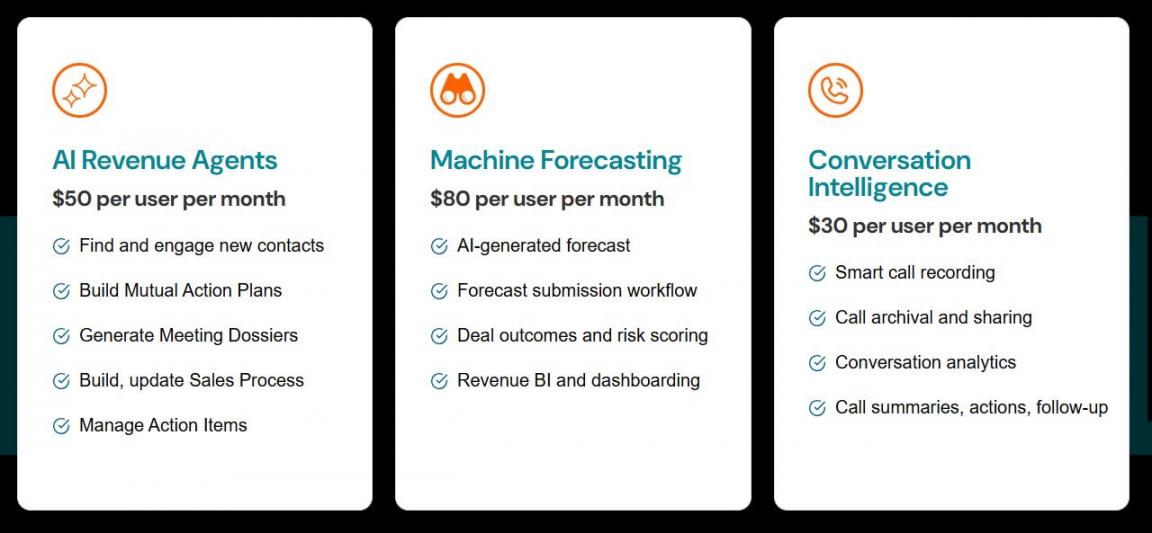
Image via Terret
Tool Level: Advanced
Usability: Moderate learning curve
Best For: Mid-to-large B2B teams wanting AI agents to automate revenue workflows
10. Forecastio
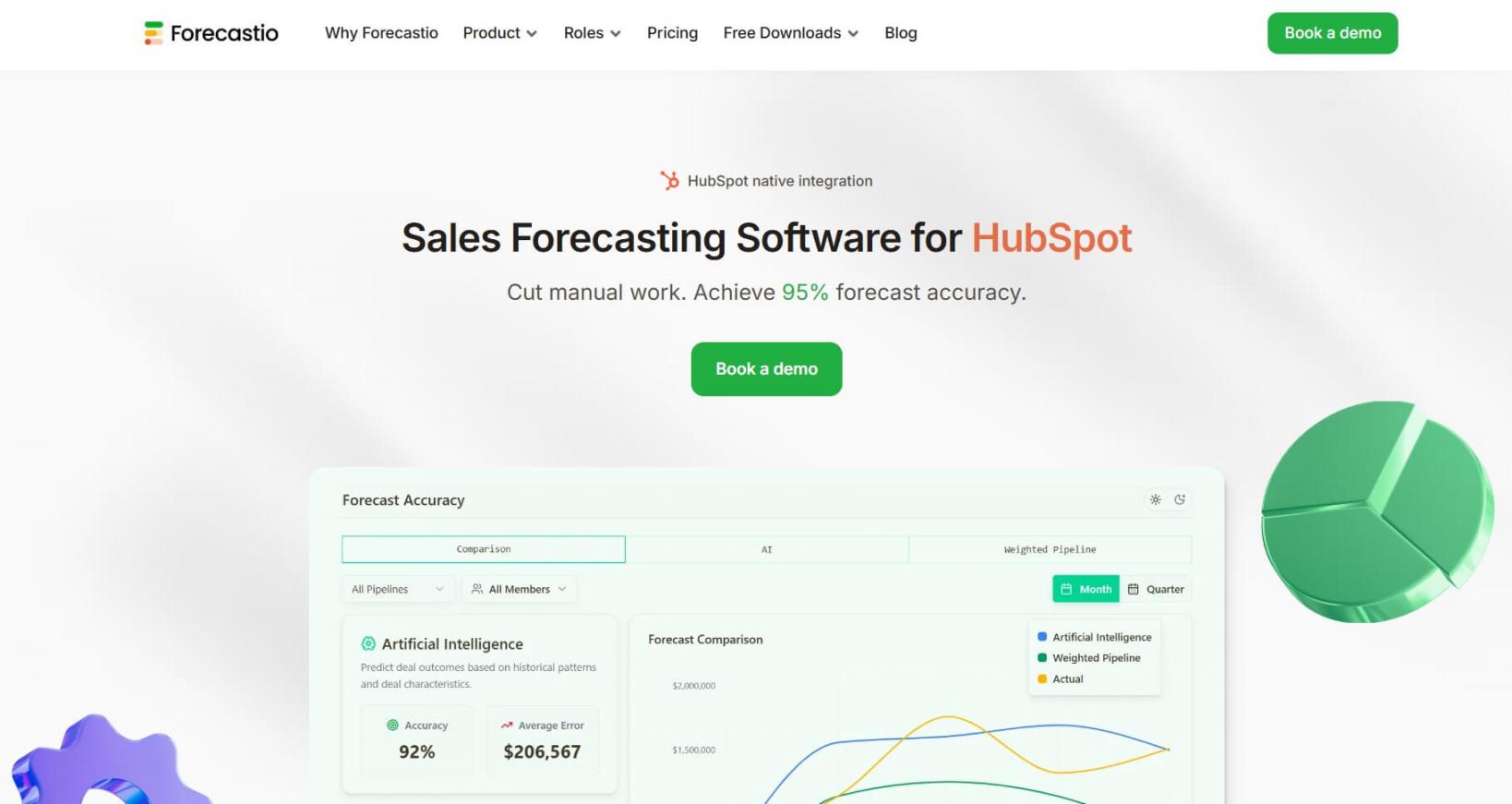
Image via Forecastio
Forecastio is a forecasting tool built specifically for HubSpot. HubSpot users looking for an alternative forecasting tool with native capabilities often turn to this tool. It connects to HubSpot and syncs all deals, stages, and pipeline data without manual input.
Forecastio claims up to 95% forecast accuracy. It achieves this by analyzing historical win rates, deal patterns, and pipeline health. The AI predicts both the probability of closing each deal and the most likely close date.
The system uses machine learning to find patterns by deal size, industry, segment, sales cycle length, and other factors. It assigns a win probability and projected close month to every open deal based on actual behavior.
Forecastio offers weighted pipeline forecasting, time-series forecasting, and AI-powered forecasting in one platform. The detailed audit trail tracks every forecast change, showing what changed, when, and who made the update.
Key Features
- AI-powered deal probability scoring based on HubSpot historical data
- Automated close date predictions using machine learning
- Complete forecast audit trail tracks all changes automatically
- Weighted pipeline, time-series, and AI forecasting methods
- Retrospective accuracy tracking shows how accurate past forecasts would have been
Pros
- Native HubSpot integration connects in minutes
- Lightweight and focused solely on forecasting
- Very fast implementation compared to enterprise platforms
Cons
- Only works with HubSpot (not available for other CRMs)
- Focused solely on forecasting without broader revenue operations features
Pricing
- Basic: $199/month for two seats (billed annually)
- Custom: Tailored quote
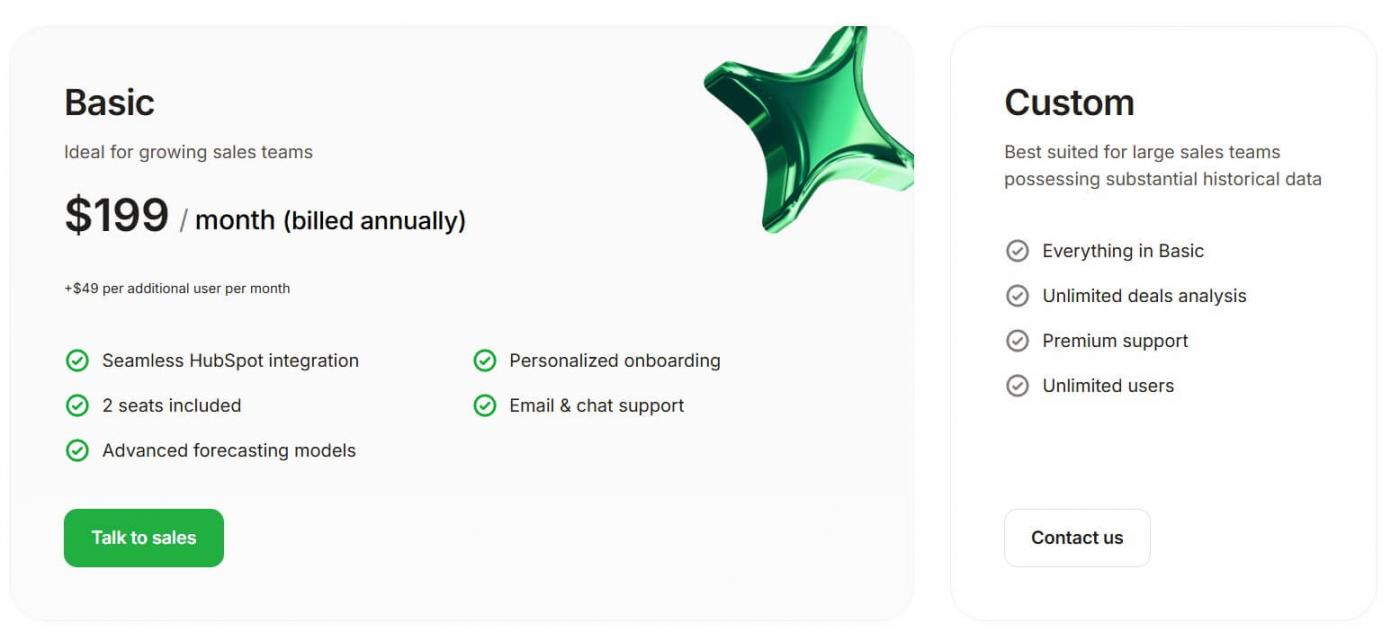
Image via Forecastio
Tool Level: Beginner to Intermediate
Usability: Very easy for HubSpot users
Best For: HubSpot teams wanting enhanced AI forecasting capabilities
11. Anaplan
Image via Anaplan
Anaplan is an enterprise planning platform that extends beyond sales forecasting. The platform connects sales forecasting with territory planning, quota management, and compensation modeling. According to Anaplan, its client list comprises popular names like Coca-Cola, AWS, and JLR.
Anaplan uses intent data, statistical algorithms, and time-series forecasting to surface insights. The platform lets teams model what-if scenarios and simulate deals across stages. You can adjust forecasts to align with top-down and rep-level targets.
The system integrates sales forecasts with:
- Segmentation
- GTM capacity
- Territory planning
- Incentive compensation
Key Features
- Scenario planning with base, upside, and downside models
- Real-time forecast updates across all connected plans
- Territory and quota planning with dynamic management
- Driver-based forecasting with customizable formula builder
- Audit trails and version control for forecast history tracking
Pros
- Very flexible and highly customizable for complex needs
- Connects sales forecasting with broader financial planning
- Strong what-if modeling and scenario capabilities
Cons
- Steep learning curve requires significant training time
- User interface can feel outdated and slow for some users
Pricing
- Custom quote (no public listing)
Tool Level: Advanced
Usability: Highly complex with a steep learning curve
Best For: Large enterprises with complex planning needs
FAQ
Q1. What are the best sales forecasting tools?
A. The best sales forecasting tools include:
- HubSpot Sales Hub
- Salesforce Sales Cloud
- Zoho CRM
- Gong Forecast
- Zendesk Sell
- Aviso Predict
- Pipedrive
- Clari
- Terret
- Forecastio
- Anaplan
Q2. What are the best sales forecasting tools for small- to mid-sized businesses (SMBs)?
A. HubSpot Sales Hub, Zoho CRM, Pipedrive, Freshsales, and Zendesk Sell rank among the best sales forecasting tools for SMBs. These platforms offer affordable pricing, fast setup, and user-friendly interfaces.
Q3. What are the main features to look for in the best sales forecasting tools?
A. Track these features when evaluating the best sales forecasting tools:
- AI-powered predictions
- CRM integration
- Real-time pipeline visibility
- Mixed forecasting methods
- Scenario modeling
- Deal health scoring
- Automated data capture
- Collaboration features
Q4. What makes HubSpot Sales Hub one of the best sales forecasting tools?
A. HubSpot Sales Hub rolls CRM, AI-powered forecasting, and real-time pipeline updates into a single platform. It offers forecasting on the free tier, unlike most competitors. HubSpot achieves up to 95% forecast accuracy while keeping setup simple for growing teams.
Q5. Is Excel good for sales forecasting?
A. Excel works for very small teams with simple pipelines. But it requires manual updates and becomes error-prone as your team grows. The best sales forecasting tools automate data capture and update forecasts in real time.
Conclusion: The Best Sales Forecasting Tools
You have many strong options for the best sales forecasting tools in 2026.
HubSpot Sales Hub stands out for its unified sales, marketing, and service tools with native forecasting. Agentforce Sales works well for large enterprises. On the flip side, Zoho CRM offers flexible features on a budget.
The right sales forecasting software fits your daily workflow and team size. Focus on ease of use and how well the system supports your current processes.
Consider starting with free trials to test automation, dashboards, and integrations before committing.
Selecting the right forecasting tool improves accuracy and helps your team close more deals. Start with HubSpot today and transform your forecasting process.
Disclaimer: This content contains some affiliate links for which we will earn a commission (at no additional cost to you). This is to ensure that we can keep creating free content for you.