Most prospects don’t buy the first time they hear from you, and that’s why you need good lead nurturing email strategies. Oftentimes, you need more than one message to move someone to act.
People need time, clear information, and trust before they decide. With proven strategies and marketing tools like HubSpot, you can stay relevant by sending the right message at the right time.
In this post, you’ll learn how to plan and execute your lead nurturing process. We’ll teach you how to segment your audience, write focused content, and time your emails with purpose.
Disclaimer: This content contains some affiliate links for which we will earn a commission (at no additional cost to you). This is to ensure that we can keep creating free content for you.
Table of Contents
What Is Lead Nurturing in Email Marketing?
In email marketing, lead nurturing involves guiding contacts with steady, relevant messages. Instead of sending generic emails, you plan content based on what readers need at each stage.
Effective lead nurturing email strategies focus on timing, intent, and clear communication. They ensure that every message has a purpose.
Lead nurturing follows a specific path. To begin, you share basic information that builds awareness. As interest grows, you send more focused content that answers specific questions and clears doubts.
These strategies work for emails because they offer direct and controlled communication. They also let sales and marketing teams track engagement, helping them identify trends and support more accurate sales forecasting.
What Is the Difference Between Lead Nurturing and Lead Generation?
Although these two terms may sound similar, you must understand that they have key differences.
With lead generation, you gain leads through numerous channels, including content writing, social media marketing, and SEO. Once you’ve acquired qualified leads, the next process is lead nurturing.
This entails building a solid relationship with leads, or anyone interested in your business, to increase conversions and traffic. The goal is to turn interest into sales. To achieve this, marketers must understand the needs and wants of their target audience.
Lead Nurturing Email Strategies Every Business Needs
If you want to optimize your email marketing campaigns, here are the top lead nurturing email strategies we recommend.
1. Use a Compelling Subject Line
A compelling subject line can shape how your emails perform, providing the first impression that determines whether your audience opens the email or ignores it.
Our lead nurturing email strategies here include writing clear, focused lines that inform the reader what to expect. Avoid vague wording; instead, highlight a specific benefit or idea.
According to a 2025 State of Email report by Litmus, subject lines are among the most effective strategies adopted by email marketers.
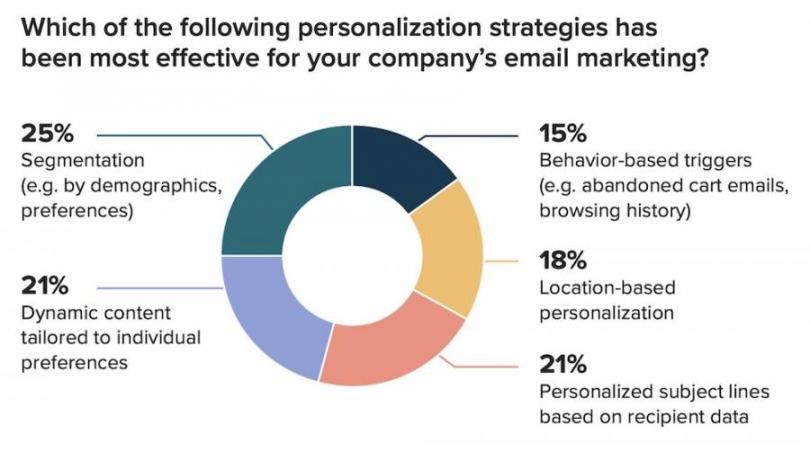
Image via Litmus
Well-written subject lines also ensure consistency in your email marketing campaigns. They set the tone for the overall email and build trust over time.
When readers know your emails deliver clear value, they pay more attention. That’s a good recipe for successful lead nurturing campaigns.
For better results, consider these tips:
- Keep subject lines between six and 10 words
- Focus on one clear benefit
- Use action-oriented language
- Use subject line tester tools before rollout
- Include specific details to show value
2. Implement Clear CTAs
Calls to action (CTAs) guide the reader to one specific action in each email. One of the key lead nurturing email strategies is to keep CTAs direct, visible, and tied to the email’s goal.
CTAs are crucial because they turn interest into measurable action. The Litmus report mentioned before shows that CTAs are the most effective interactive elements for emails.
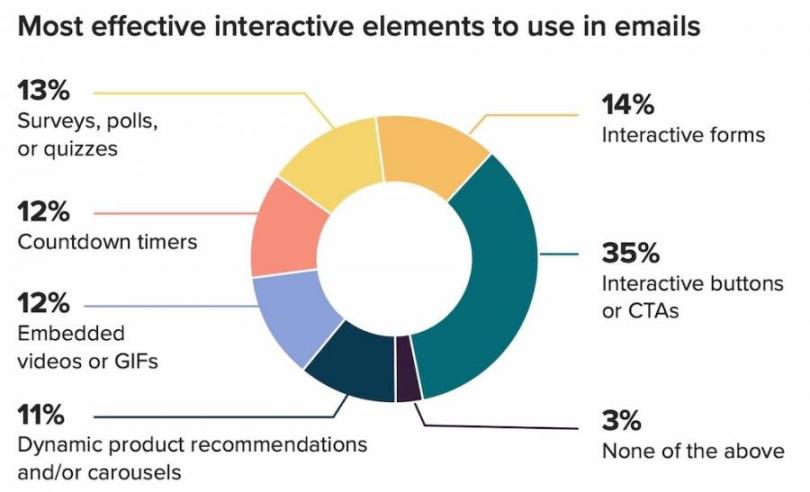
Image via Litmus
Clear CTAs can improve email performance over time by making it easier to track user actions. This data helps you see what resonates and refine your approach in future campaigns.
For better results, consider these tips:
- Use one clear CTA per email
- Place the CTA where it’s easy to see
- Keep the wording short and direct
- Match the CTA to the email’s intent
- Test different placements and phrasing
3. Use Mobile-Friendly Design
Your emails need to display well on small screens for better readability. A mobile-friendly design displays content in a way that messages can load fast and can be read without zooming. This email strategy also extends to images and any other element within the message.
Mobile design is crucial because many people check emails on their phones. If your email looks cluttered or hard to read, they may ignore it. Ensure simple layouts and focused content that readers can scan and act on quickly.
To get the most out of email marketing on mobile, try these tips:
- Use short paragraphs and clear spacing
- Choose readable font sizes for small screens
- Keep subject lines and preview text concise
- Use easy-to-tap buttons
- Test emails across various devices
4. Personalize Email Content
Personalizing email content involves tailoring each message to audience data. This includes behavior, interests, and past actions. It goes beyond just addressing the user by their first name.
Effective lead nurturing email strategies include keeping each email aligned with the reader's expectations. If your content matches the reader’s needs, they’re more likely to pay attention.
Additionally, personalization helps you deliver more relevant messages based on where the reader is in their journey. This makes your emails feel more timely and increases the chances of engagement.
To get better results from your lead nurturing efforts, adopt these tips:
- Use behavior data to guide content
- Segment your audience by interest and activity
- Match content to the reader’s stage
- Keep messaging relevant and specific
- Review data often to refine your approach
5. Segment Your Email Audience
Another important lead nurturing email strategy is segmentation. This involves grouping contacts based on shared traits or actions, such as behavior, interests, or their current customer journey stage. According to the previously mentioned Litmus report, interest-based segmentation is the most effective.
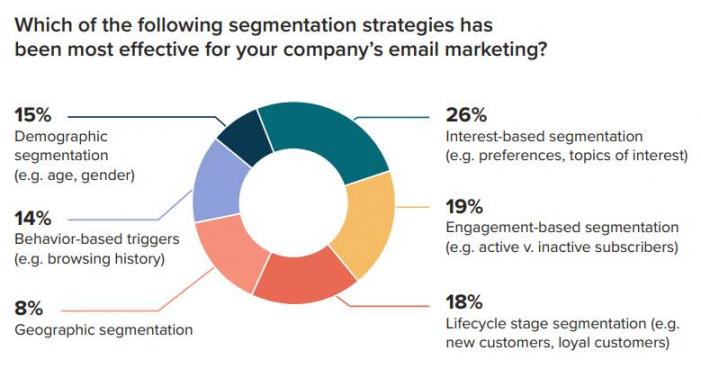
Image via Litmus
Segmentation allows better personalization of emails, ensuring relevance and reader interest.
This strategy also adds structure to your email marketing campaigns by organizing your audience into clear groups. It allows you to track email marketing metrics like engagement rates by segment. This way, it’s easier to identify what’s working and adjust your approach.
Follow these lead nurturing email strategies for segmentation:
- Segment users based on behavior, activity, or interest
- Align segments with stages in the process
- Update segments as user behavior changes
- Review performance data for each segment
6. Incorporate Social Proof And Testimonials
People usually trust other people’s experiences more than paid promotions. That’s why incorporating social proof is one of the most effective lead nurturing email strategies.
Include real user feedback or ratings to show how others experience your offer. This can help build trust and encourage more conversions without requiring additional ad spend.
Social proof also works because it adds credibility to your message. When readers see that others have had positive results, they feel more confident in your brand. You guide them with proof instead of merely claims. Below is a great social proof example because it’s specific and story-driven, highlighting clear outcomes.

Image via Zapier
Using customer success stories also gives your content more weight and keeps readers engaged. Here are some tips to enhance the effectiveness of your testimonials:
- Use clear and concise testimonials
- Place proof near key message points
- Keep it relevant to the reader’s stage
- Keep proof updated regularly
- Focus on clarity and authenticity
7. Use Automated Drip Campaigns
Drip campaigns are a series of pre-written emails sent automatically based on time or behavior-based triggers. For effective lead nurturing, your sales team plans each message so it reaches the reader at the right moment. Here’s a quick illustration of how it works.
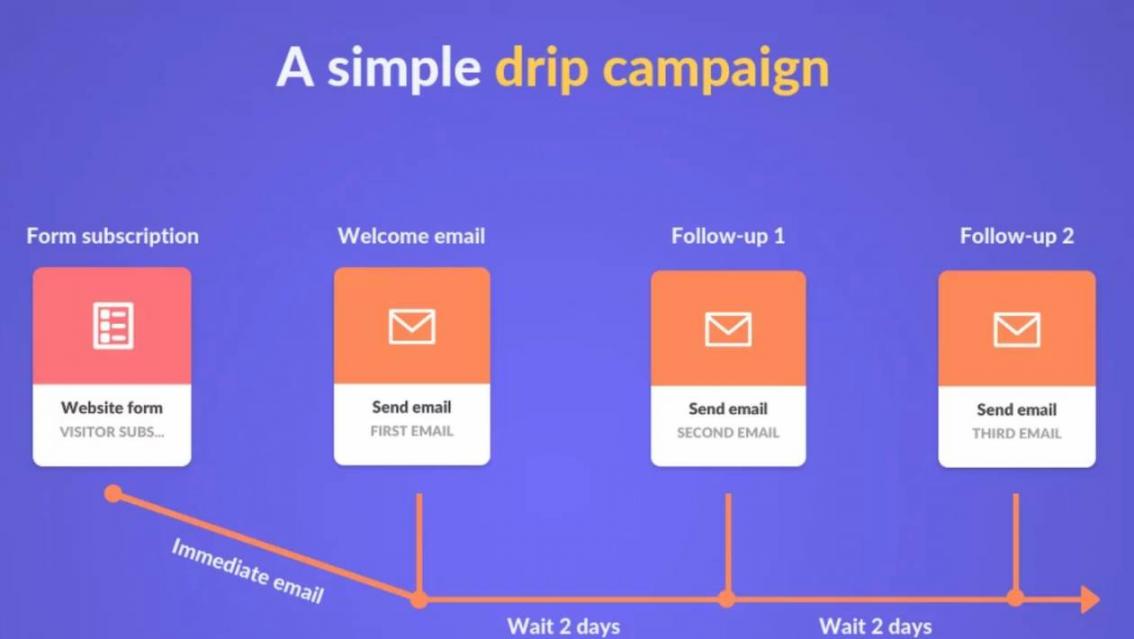
Image via Automizy
Using automated drip campaigns involves mapping out a clear sequence of emails for each stage. You decide what the reader needs to know and when they should receive it.
Aside from saving time, this is one of the best lead nurturing email strategies because it helps ensure a consistent flow of messages. You can improve the effectiveness of your drip campaigns through the following tips:
- Define a clear goal for each email sequence
- Align emails with user actions and stages
- Keep messages focused and relevant
- Review performance and adjust timing
- Avoid sending too many emails at once
8. Create Value-Driven Educational Content
Create value-driven educational content that gives readers practical information they can apply easily and immediately. This value keeps your brand top of mind once they do decide to take action.
For instance, you could break topics into small parts that readers can easily follow and act on. This is one of the most dependable lead nurturing email strategies for maintaining email relevance.
Educational content also improves your email performance in the long run. It keeps readers coming back because they find your information useful. Here’s how you can ensure this strategy works:
- Focus on one clear idea per email
- Use clear language to avoid confusion
- Answer specific questions directly
- Deliver relevant content that matches the reader’s stage
- Review engagement to refine topics
9. Optimize Send Times and Frequency
Timing can shape how your emails perform more than the message itself. Choose when and how often to contact your audience based on their behavior. For example, you can track when they open emails and how often they engage.
If you send emails too often, they may feel overwhelmed or unsubscribe altogether. If you send too few, they may lose interest. Strike a good balance by adopting marketing automation software like HubSpot, which was the third-most used platform in 2025, as shown below.
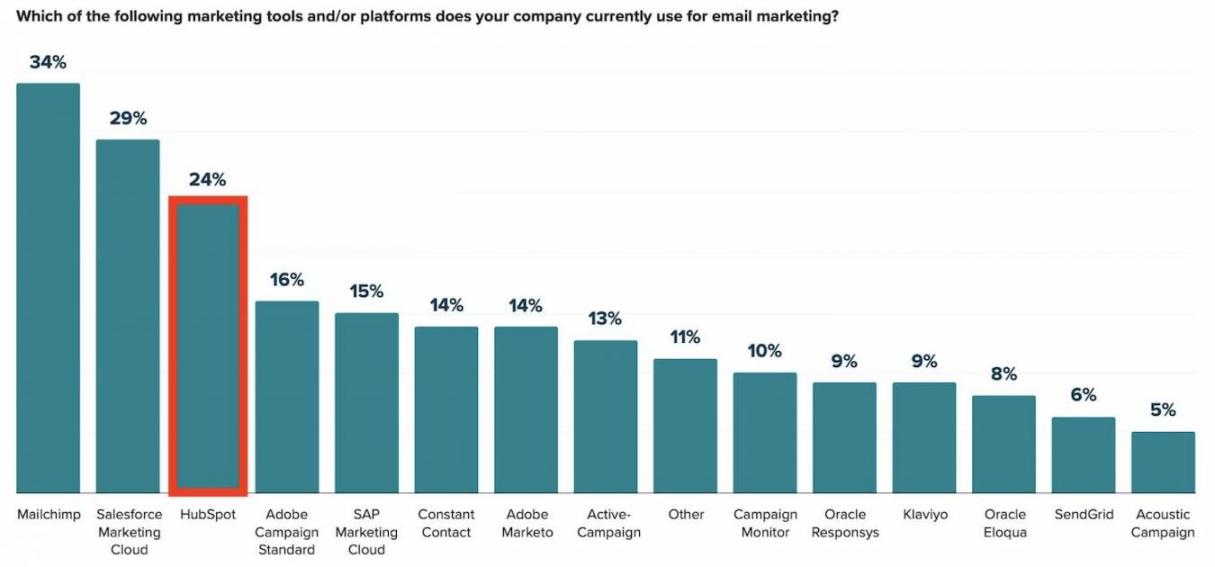
Image via Litmus
Appropriate timing also improves long-term engagement. It ensures that your emails arrive when readers are most likely to act. Here’s how to optimize send times:
- Track open and engagement patterns
- Test different days and times
- Adjust frequency based on user activity
- Avoid sending too many emails in a short time
- Review results and refine your schedule
10. Align Emails with the Buyer’s Journey
Every reader moves at a different pace, and your emails should reflect that. Aligning emails with the buyer’s journey means matching each message to where the reader stands in their decision process.
Effective lead nurturing email strategies involve leveraging this alignment to guide readers step by step without friction. It works because it provides each audience with what they need to proceed to the next stage of the buyer’s journey.
If you send advanced content too soon, it may confuse the reader. If you repeat basic information, it may feel unnecessary.
To ensure alignment, keep the following tips in mind:
- Identify key stages in the buyer’s journey
- Match the content to each stage clearly
- Adjust messaging based on user behavior
- Avoid sending the same content to all users
- Review engagement to refine stage mapping
11. Use Dynamic Content Blocks
The idea behind dynamic content blocks operates on one simple question: what if each email changed based on who reads it?
It involves setting rules that change text, images, or offers based on user data like location, past clicks, or purchase history. Each reader sees a version that fits their needs.
When content reflects what someone cares about, they pay attention and stay engaged. When used well, this approach sharpens your lead nurturing email strategies, potentially increasing the number of paying customers.
To maximize your dynamic content blocks:
- Start with clear audience segments before building content
- Use behavior data to guide changes
- Keep each content block focused on one idea
- Test different versions to see what works best
- Avoid overloading emails with too many variations
12. Re-Engage Inactive Subscribers
Some subscribers go quiet, but that doesn’t mean they’ve lost interest. Inactive subscribers are those who’ve stopped opening your emails or clicking on links. Identify and re-engage these users by sending focused emails to bring them back.
This approach is called retargeting, and there are different approaches you can try. You might ask if they still want updates. You can also share any information they might have missed.
Re-engagement strengthens your lead nurturing email strategies by giving you another chance to guide users forward. It also helps you determine your audience’s reasons for disengagement. Then, use this data to prevent this from happening in the future.
This leads to more relevant emails and improved long-term engagement.
Here are some extra tips to consider:
- Define inactivity based on time and behavior
- Use clear subject lines that acknowledge the gap
- Ask if preferences have changed and update them
- Remove users who stay inactive after follow-ups
- Track re-engagement rates and refine your approach
13. A/B Test Email Elements
Small tweaks can change how your emails perform, and A/B testing shows you what actually works. You create two versions of one email and change a single element like the subject line, image, or call to action.
Then, you send each version to a segment of your audience and compare the results. This gives you room to figure out what works best for nurtured leads before official rollout.
It also improves your lead nurturing efforts by refining each message over time. You learn which content keeps readers interested at each stage. This leads to more consistent results across campaigns.
Here are some tips you can use to enhance your lead nurturing campaign:
- Test one variable at a time to keep results clear
- Use a large sample size to improve accuracy
- Measure both open rates and click activity
- Run tests long enough to gather steady data
- Apply your findings to future emails
FAQ
Q1. What is a lead nurturing email strategy?
A. A lead nurturing email strategy is a planned series of emails that guide a contact from first interest to a clear decision. This approach focuses on timing, relevance, and steady communication. Strong lead nurturing strategies for email keep your audience engaged without overwhelming them.
Q2. Which type of email is best for lead nurturing?
A. The best email type depends on where your reader is in the decision process. You should match content to their current needs and level of awareness.
- Educational emails explain key topics and establish credibility
- Product-focused emails clarify features and use cases
- Trust-building emails provide social proof and build trust
Effective lead nurturing email strategies use a mix of these formats to maintain relevance.
Q3. What is the 80-20 rule in email marketing?
A. The 80-20 rule means you give more than you ask. Most of your emails should inform, while a smaller portion should guide action. Eighty percent focuses on helpful and relevant content, while 20% provides direct offers or requests.
Q4. What are the four pillars of email marketing?
A. Email marketing relies on four key areas that shape performance and consistency. Each pillar plays a clear role in your results.
- Audience segmentation ensures each message fits the reader's interest
- Content quality keeps emails clear and relevant
- Automation ensures appropriate timing and urgency
- Performance tracking shows what needs adjustment
Q5. How often should you send lead nurturing emails?
A. You should send lead nurturing emails based on user behavior and interest level. Start with a steady rhythm, then adjust frequency as engagement changes.
If you send too often, readers may unsubscribe. If you send too little, they may lose interest. Effective lead nurturing email strategies include tracking open rates and response patterns to fine-tune timing.
Conclusion
With consistent implementation, you can turn average campaigns into ones that produce impactful results. These lead nurturing email strategies work best when they’re used in a structured way, tested often, and improved over time.
From segmentation and personalization to timing and automation, every approach guides qualified leads from interest to action with minimal friction.
To manage your lead nurturing email campaign efficiently, you need a platform that brings everything you need together. HubSpot stands out as the ideal option, offering powerful automation, smart segmentation, and detailed analytics in one place.
So, give HubSpot a try and improve how prospects perceive your brand.
Disclaimer: This content contains some affiliate links for which we will earn a commission (at no additional cost to you). This is to ensure that we can keep creating free content for you.