Struggling to pick a CRM that actually fits your sales process?
Well, many people face the HubSpot vs monday CRM dilemma, as both are popular tools.
This HubSpot vs Monday CRM guide cuts through the noise. We’ll compare setup, contact management, reporting, integrations, and more.
Read this to stop guessing and choose the CRM that saves your team hours every week.
Disclaimer: This content contains some affiliate links for which we will earn a commission (at no additional cost to you). This is to ensure that we can keep creating free content for you.
| HubSpot | monday CRM |
 |  |
| HubSpot Smart CRM organizes customer data and automates repeatable sales motions. You get Workflows to route leads, Sequences to scale outreach, Conversations to centralize messages, AI Data Enrichment to fill gaps, and the Data Agent to pull quick account summaries — all tied to robust reporting. | Monday CRM is a board-first CRM built on monday.com’s Work OS. It models contacts and deals as board items, uses no-code automations, templates, dashboards with cross-board rollups, and supports integrations. You can build lead scoring with formula columns and AI features and enrich data via marketplace apps. |
HubSpot
- HubSpot Smart CRM organizes customer data and automates repeatable sales motions. You get Workflows to route leads, Sequences to scale outreach, Conversations to centralize messages, AI Data Enrichment to fill gaps, and the Data Agent to pull quick account summaries — all tied to robust reporting.
monday CRM
- Monday CRM is a board-first CRM built on monday.com’s Work OS. It models contacts and deals as board items, uses no-code automations, templates, dashboards with cross-board rollups, and supports integrations. You can build lead scoring with formula columns and AI features and enrich data via marketplace apps.
HubSpot vs monday CRM: Product Ratings
| HubSpot | monday CRM | |
| Overall | ||
| Support | ||
| Features | ||
| User-Friendliness | ||
| Value for Money |
HubSpot
- Overall:
- Support:
- Features:
- User-Friendliness:
- Value for Money:
monday CRM
- Overall:
- Support:
- Features:
- User-Friendliness:
- Value for Money:
Pros and Cons: HubSpot
| Pros | Cons |
| Easy to use for beginners, but powerful enough for advanced teams | Advanced analytics may require external BI tools |
| Free CRM is generous and usable in the long term | Some high-end features are locked behind the Enterprise plan |
| Quick to set up and start seeing value | |
| Strong learning resources through HubSpot Academy | |
| Clean, modern interface that feels intuitive | |
| Scales well as teams and data grow | |
| Smart CRM is included with other HubSpot products |
Pros
- Easy to use for beginners, but powerful enough for advanced teams
- Free CRM is generous and usable in the long term
- Quick to set up and start seeing value
- Strong learning resources through HubSpot Academy
- Clean, modern interface that feels intuitive
- Scales well as teams and data grow
- Smart CRM is included with other HubSpot products
Cons
- Advanced analytics may require external BI tools
- Some high-end features are locked behind the Enterprise plan
Pros and Cons: Monday CRM
| Pros | Cons |
| Flexible and visual interface, great for beginners | Not as deep on CRM-specific automation and lead scoring |
| Strong support for custom boards and workflows | Reporting and forecasting are less advanced than full CRMs |
| Good entry-level pricing for basic CRM needs | Two-way data sync and integrations can require extra setup |
| Easy to build and change pipelines without code | |
| Dashboards roll up data across boards for quick insights |
Pros
- Flexible and visual interface, great for beginners
- Strong support for custom boards and workflows
- Good entry-level pricing for basic CRM needs
- Easy to build and change pipelines without code
- Dashboards roll up data across boards for quick insights
Cons
- Not as deep on CRM-specific automation and lead scoring
- Reporting and forecasting are less advanced than full CRMs
- Two-way data sync and integrations can require extra setup
Pricing Details: HubSpot
| Plan | Cost (Per Month) |
| Free | – |
| Starter | $15 per seat/month |
| Professional | $50 per seat/month |
| Enterprise | $75 per seat/month |
- Free: —
- Starter: $15 per seat/month
- Professional: $50 per seat/month
- Enterprise: $75 per seat/month
Pricing Details: Monday CRM
| Plan | Cost (Per Month) |
| Basic | $18 per seat/month |
| Standard | $25/seat/month |
| Pro | $41/seat/month |
| Enterprise | Custom |
- Plan Cost (Per Month)
- Basic $18 per agent/month
- Standard $25 per agent/month
- Pro $41/seat/month
- Enterprise Custom
Verdict: While monday CRM shines at visual boards and flexible workflows, HubSpot’s native CRM-first features and AI-driven context make it the safer choice for scaling revenue teams. HubSpot trades a little initial complexity for much stronger CRM outcomes.
Who is it For?
| HubSpot | monday CRM |
| Startups ready to scale | Solopreneurs |
| Small and growing businesses | Small teams that prefer visual workflows |
| Marketing and sales teams | Product and cross-functional teams |
HubSpot
- Startups ready to scale
- Small and growing businesses
- Marketing and sales teams
monday CRM
- Solopreneurs
- Small teams that prefer visual workflows
- Product and cross-functional teams
HubSpot vs monday CRM: Features Comparison
| HubSpot | monday CRM | ||
| Ticketing and Help Desk | Contact and Company Records | ||
| Deal/Opportunity Tracking | |||
| Custom Objects and Events | |||
| Workflow Automation | |||
| Built-In Automatic Data Enrichment | |||
| Centralized Audit Log/Change Tracking | |||
| AI Data Agent | |||
| UI and Ease of Use | Flexible Views | ||
| Quick In-Record Editing | |||
| Logical Navigation | |||
| Native Gantt Views | |||
| Mobile App | |||
| Setup and Onboarding | Guided Setup/Onboarding | ||
| CSV Import | |||
| Paid Onboarding Services | |||
| Knowledge Base/Guides | |||
| Community Forum | |||
| Product-Specific Free Courses | |||
| Contact and Lead Management | Lists and Segmentation | ||
| Lead Scoring | |||
| Duplicate Detection and Merge | |||
| Meeting Scheduler | |||
| Unified Conversations Inbox | |||
| Analytics and Reporting | Custom Reports | ||
| Built-In Project-Level Reporting | |||
| Enterprise BI and Advanced Predictive Modeling | |||
| Integrations | App Marketplace | ||
| Public API | |||
| No-Code Connectors | |||
| Payment and plans | Knowledge Base/Guides | ||
| Free Plan | |||
| No Credit Card for the Free Plan/Trial | |||
| Customized Plan |
HubSpot
- Core CRM Features
- Contact and Company Records
- Deal/Opportunity Tracking
- Custom Objects and Events
- Workflow Automation
- Built-In Automatic Data Enrichment
- Centralized Audit Log/Change Tracking
- AI Data Agent
- UI and Ease of Use
- Flexible Views
- Logical Navigation
- Native Gantt Views
- Mobile App
- Setup and Onboarding
- Guided Setup/Onboarding
- CSV Import
- Paid Onboarding Services
- Knowledge Base/Guides
- Community Forum
- Product-Specific Free Courses
- Contact and Lead Management
- Lists and Segmentation
- Lead Scoring
- Duplicate Detection and Merge
- Meeting Scheduler
- Unified Conversations Inbox
- Analytics and Reporting
- Custom Reports
- Built-In Project-Level Reporting
- Enterprise BI and Advanced Predictive Modeling
- Integrations
- App Marketplace
- Public API
- No-Code Connectors
- Payment and Plans
- Free Plan
- No Credit Card for the Free Plan/Trial
- Customized Plan
monday CRM
- Core CRM Features
- Contact and Company Records
- Deal/Opportunity Tracking
- Custom Objects and Events
- Workflow Automation
- Built-In Automatic Data Enrichment
- Centralized Audit Log/Change Tracking
- AI Data Agent
- UI and Ease of Use
- Flexible Views
- Logical Navigation
- Native Gantt Views
- Mobile App
- Setup and Onboarding
- Guided Setup/Onboarding
- CSV Import
- Paid Onboarding Services
- Knowledge Base/Guides
- Community Forum
- Product-Specific Free Courses
- Contact and Lead Management
- Lists and Segmentation
- Lead Scoring
- Duplicate Detection and Merge
- Meeting Scheduler
- Unified Conversations Inbox
- Analytics and Reporting
- Custom Reports
- Built-In Project-Level Reporting
- Enterprise BI and Advanced Predictive Modeling
- Integrations
- App Marketplace
- Public API
- No-Code Connectors
- Payment and Plans
- Free Plan
- No Credit Card for the Free Plan/Trial
- Customized Plan
Verdict: HubSpot gives stronger long-term value for money because bundled Hubs reduce the need for multiple add-ons. Pay more up front, and you avoid stitching together a stack that costs time and money later.
Table of Contents
Detailed Review: HubSpot
In this section of our HubSpot vs monday CRM comparison, we’ll review HubSpot’s key features in detail. Let’s get right to it.
Core CRM (Customer Relationship Management) Capabilities
HubSpot’s Smart CRM is focused on turning raw interactions into usable sales and service signals. In our hands-on work, HubSpot has consistently reduced time spent on admin tasks. The platform stitches together conversation data, enrichment, and automation in one place.
Teams we work with rely on HubSpot for predictable follow-up and accurate lead prioritization. The CRM’s features are built to scale as processes grow. That means fewer one-off scripts and more repeatable, measurable workflows.
Here’s what you get with the HubSpot Smart CRM.
- Contact Record Linking: HubSpot keeps contacts and companies connected and shows activity timelines by default. This single view speeds prep for calls and reduces context-switching.
- Custom Properties and Lead Scoring: You can add bespoke fields and score leads based on behavior and firmographics. We use scoring to push best-fit leads to reps first, improving conversion focus.
- Workflows With Associated Records: HubSpot workflows can act on contacts, companies, and deals together. This cross-object power simplifies handoffs and complex routing rules.
- Conversations Inbox and Chatflows: HubSpot captures emails, chats, and forms into one shared inbox and links them to records. The no-code chatflows qualify visitors and add those answers to the CRM automatically.
- Sequences and Task Queues: Sequences combine automated emails with task reminders, and task queues keep reps moving. This combo increases follow-up discipline across teams.
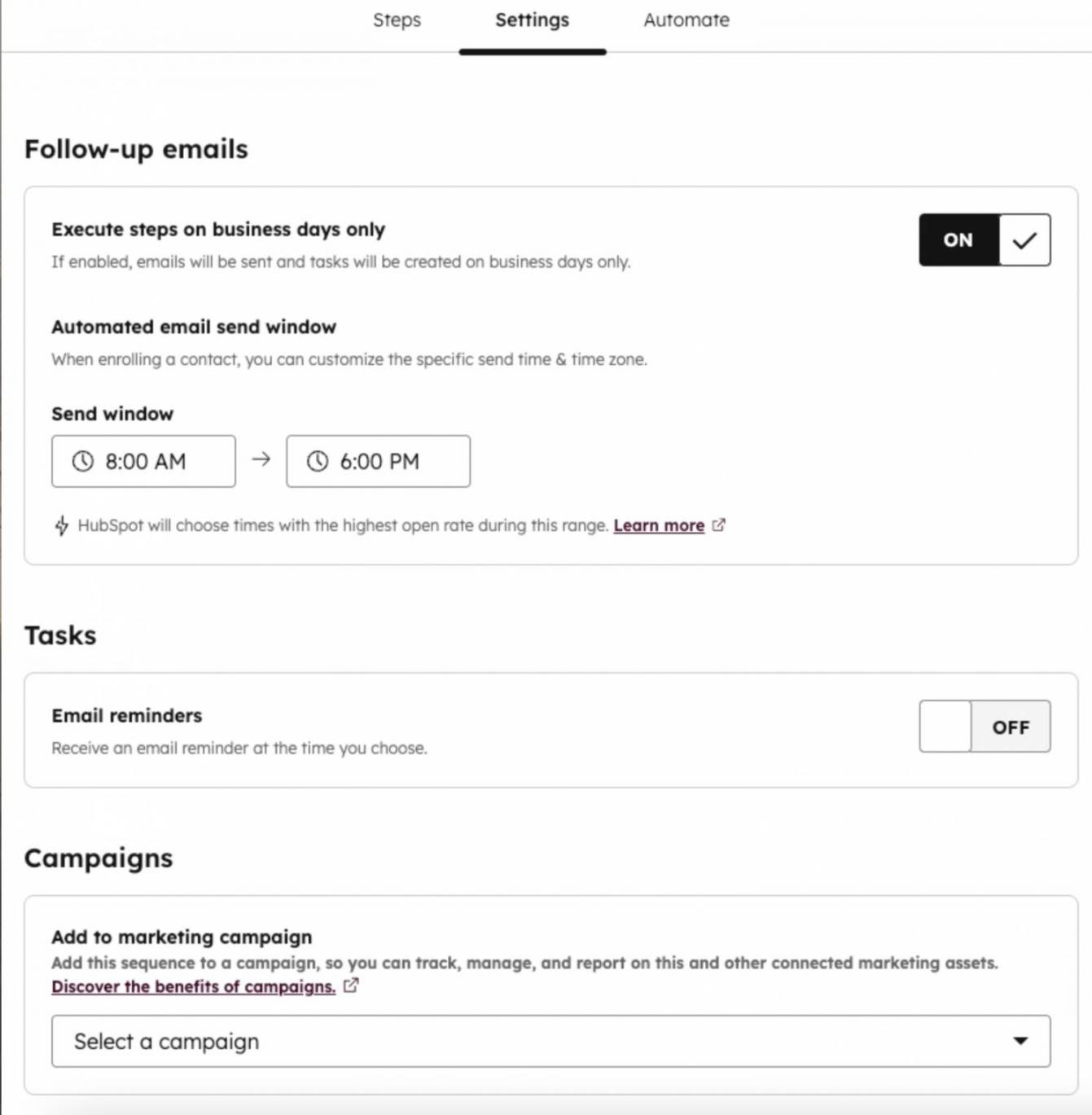
Image via HubSpot
Against monday CRM, HubSpot’s advantage is CRM depth rather than board flexibility. If your priority is predictable sales motion and data quality, HubSpot pulls ahead.
Overall, HubSpot’s Smart CRM excels at keeping customer data clean and actionable.
User Interface and Ease of Use
HubSpot’s interface focuses on clarity and consistent interaction patterns. We found it lowers training time and reduces user errors.
The system uses a clear visual hierarchy and predictable controls. That makes growth-stage teams quicker to adopt and scale with HubSpot.
- Unified Header and Search: The global search and header stay available on every page. Fast search reduces time spent hunting for contacts or deals.
- Saved Views and Filters: You can save custom lists and filters for different roles. Saved views cut reporting time and give reps consistent daily queues.
- In-App Notifications: HubSpot shows actionable notifications for mentions, tasks, and assignments. Notifications keep handoffs tight and prevent missed steps.
- Performance and Load Times: HubSpot loads lists and records quickly, even for large accounts. Fast response times keep teams in flow during heavy use.
Here’s what the dashboard looks like.
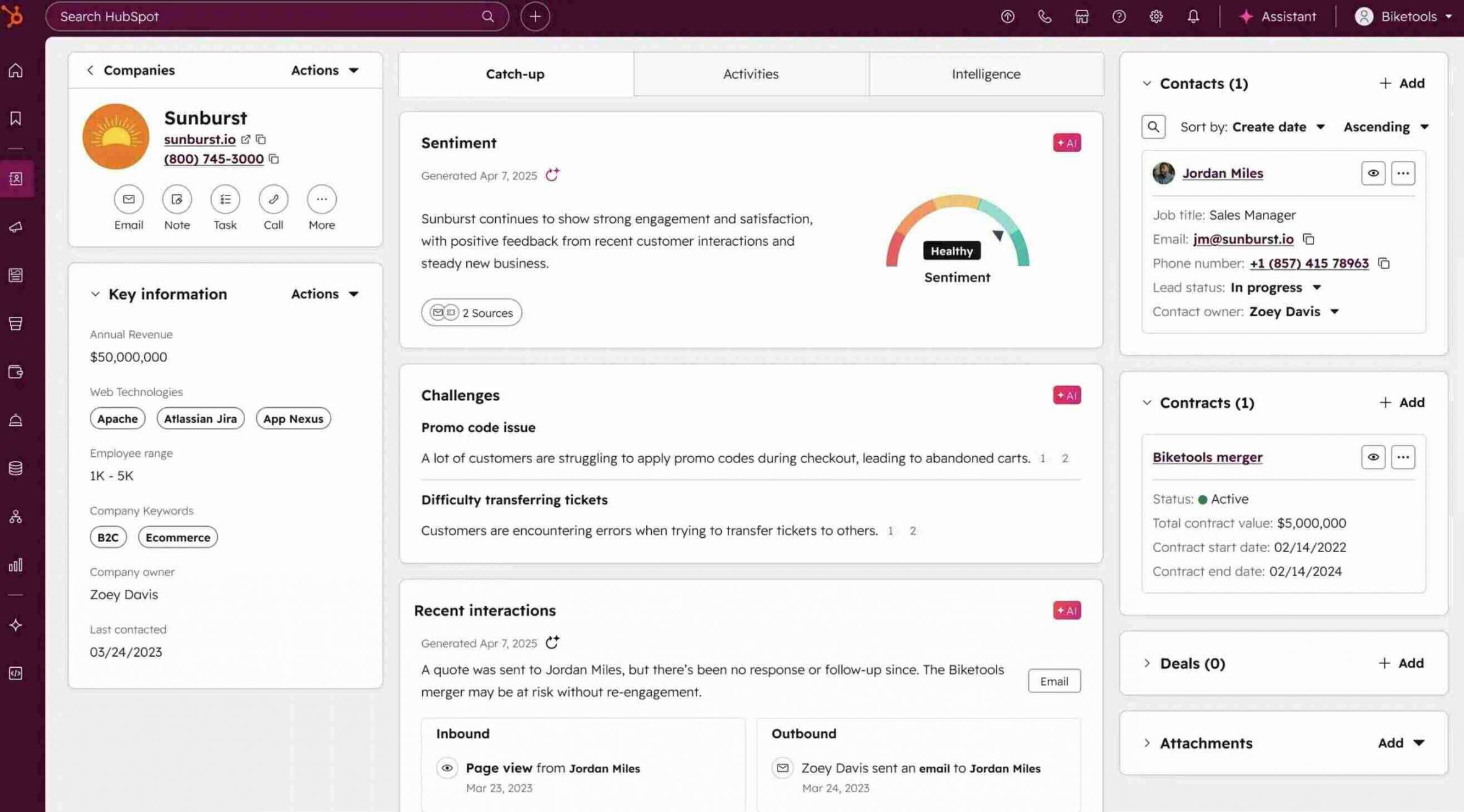
Image via HubSpot
When comparing HubSpot vs monday CRM, HubSpot’s interface feels more CRM-focused and guided. monday CRM offers greater visual flexibility through boards, but HubSpot is faster for core CRM actions like searching records and reviewing history. For teams that value speed and clarity, HubSpot’s interface is easier to use.
Overall, HubSpot’s consistent UI and quick search speed cut user friction. Pick HubSpot when you want reliable, fast CRM navigation.
Setup and Onboarding Experience
HubSpot’s Smart CRM onboarding is thorough and staged. You get a checklist, guided setup, and optional paid onboarding services to match your goals and product mix.
The platform combines self-serve training with hands-on help. HubSpot Academy and HubSpot’s paid Onboarding Services are both available, so teams can choose DIY learning or expert implementation.
- Import and Contact Setup: HubSpot offers guided CSV import tools and mapping helpers to move contact data in cleanly. The import flow highlights mapping errors so you can fix problems before records are created.
- HubSpot Academy: HubSpot Academy provides role-based courses and practical exercises. The Academy reduces reliance on external training and quickens user adoption.

Image via HubSpot
- Personalized Onboarding Plans: HubSpot’s onboarding plans deliver expert implementation for complex migrations and integrations.
When comparing HubSpot vs monday CRM, you’ll find that HubSpot offers more extensive onboarding support. You can use self-help resources or pay for a personalized onboarding, depending on your needs.
To conclude, HubSpot combines checklists, free Academy training, and paid onboarding. This mix shortens the learning curve and lowers rollout risk.
Contact and Lead Management
HubSpot CRM makes contact and lead management feel reliable and repeatable. From our experience, it gives sales and marketing teams a single place to store leads, score them, and push the right ones to reps.
The platform ties contact records to company records, deals, and conversations so teams do not miss context. Built-in tools reduce manual work and keep follow-ups timely.
Here’s what you can expect from the HubSpot Smart CRM.
- Contact and Company Records: HubSpot ties contacts to company profiles and related deals so teams see everything connected. That linked view shortens prep time and prevents duplicated outreach.
- Activity Timeline: The activity timeline shows every interaction in order, so reps know what happened last. This clarity avoids repeating questions in discovery calls.
- Lead Scoring: HubSpot scores leads quietly in the background as people interact with your site. Reps just open the record and instantly know if someone is worth calling.
- Lead Rotation and Assignment: HubSpot routes leads automatically using workflow logic and assignment rules. This removes delays caused by manual distribution.
- AI Data Enrichment and Duplicate Management: HubSpot fills in missing company and contact data and warns about duplicates on import. That reduces manual research and keeps lists usable for campaigns.
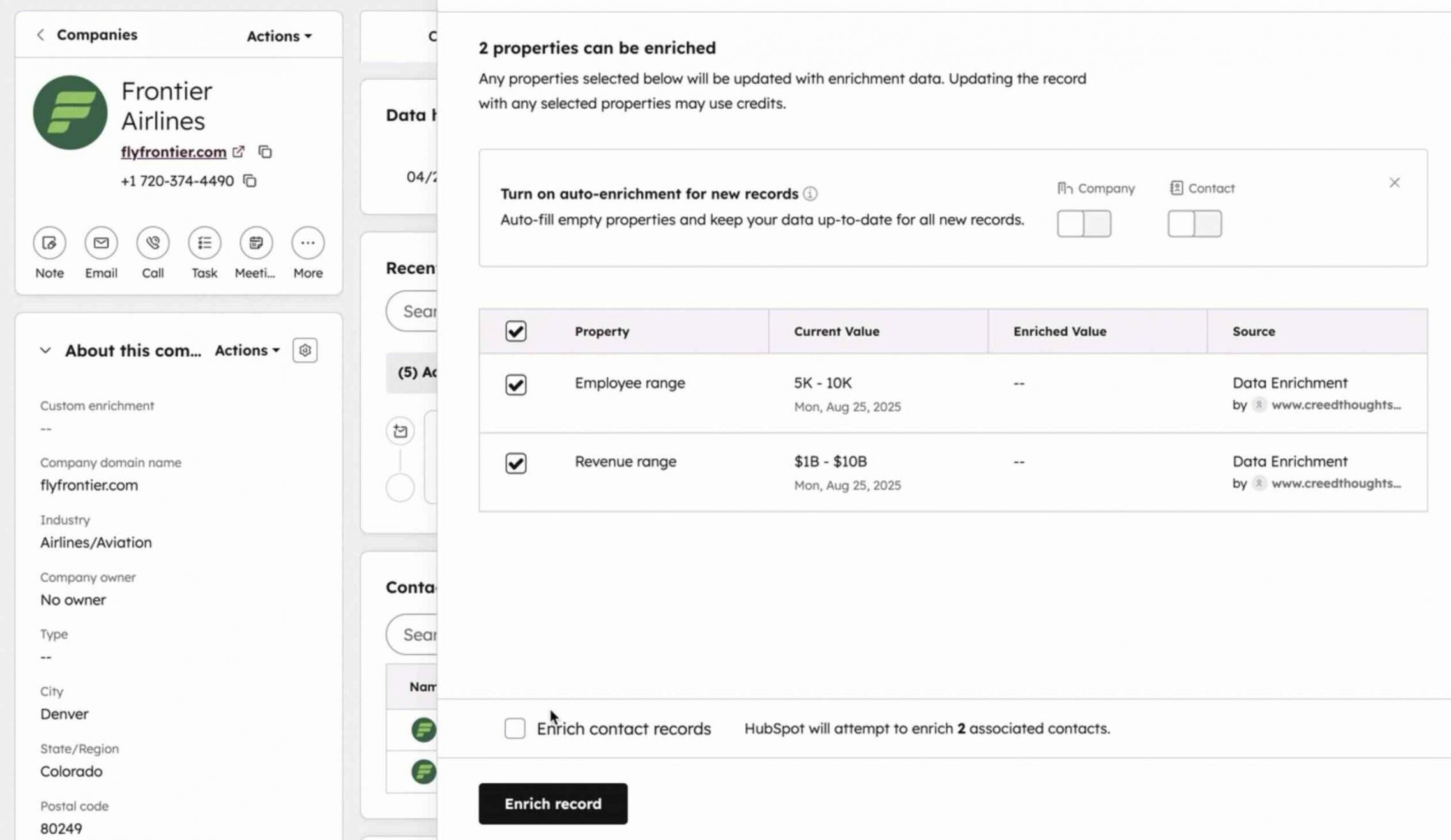
Image via HubSpot
In a HubSpot vs monday CRM comparison, HubSpot wins if your priority is automated prioritization and clean lead routing. For predictable sales outcomes, HubSpot is the better operational choice.
In short, HubSpot CRM automates lead prioritization and routing while keeping records clean. Use it to scale consistent, high-quality lead management.
Analytics and Reporting
HubSpot’s data analytics feature is built around the CRM, so every report can link back to contacts and deals. The platform provides prebuilt dashboards, a robust Custom Report Builder, and attribution tools to measure what actually creates the pipeline.
Here are some analytics-related features you can expect.
- Custom Report Builder: The Custom Report Builder lets you join objects and visualize cross-object datasets without leaving HubSpot. Build funnel, cohort, or revenue reports and save them to dashboards for easy sharing.
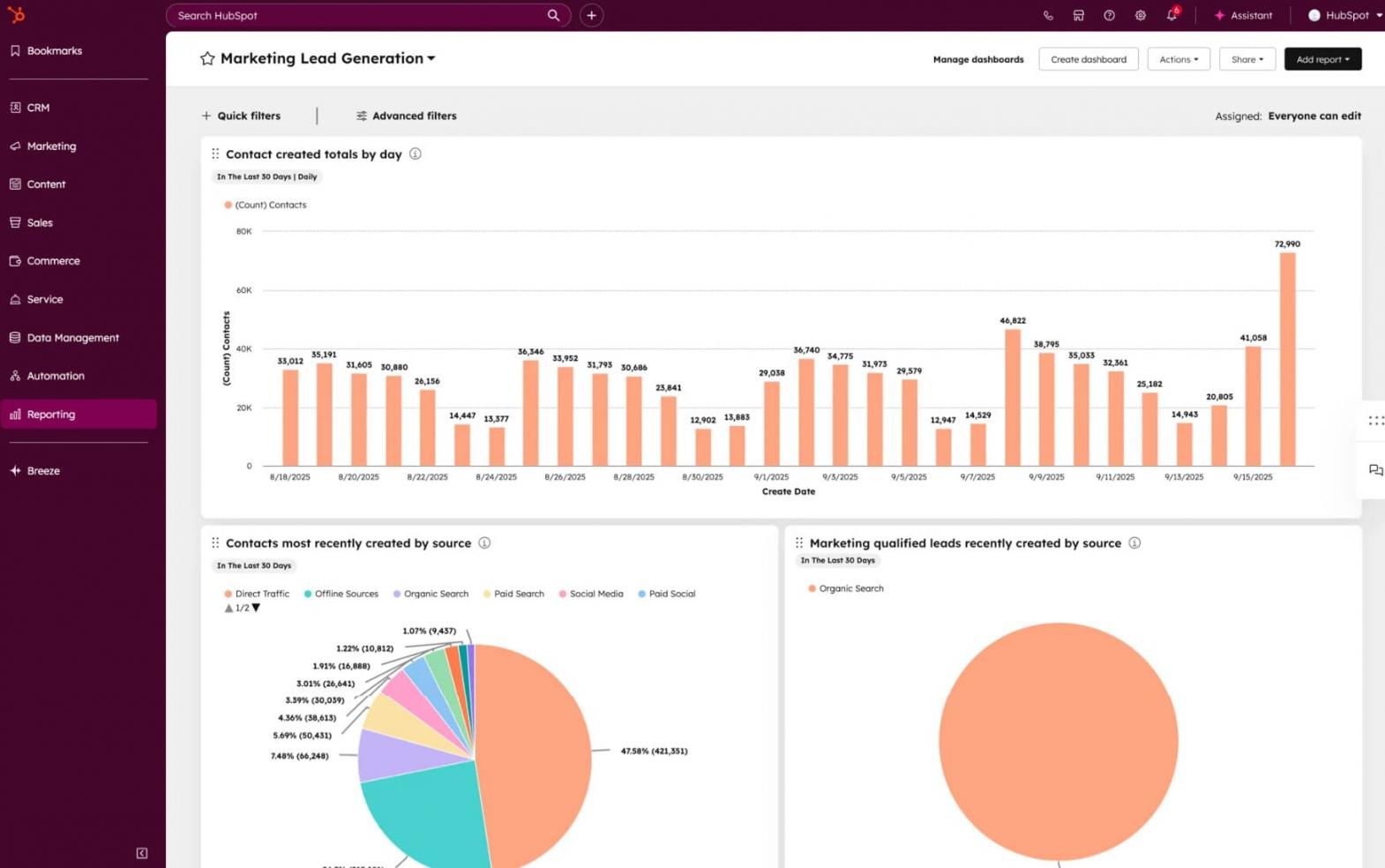
Image via HubSpot
- Dashboards and Report Library: Dashboards collect reports into role-based views, and the Report Library stores templates you can reuse. Managers can assemble executive roll-ups and operational views in minutes.
- Attribution Reporting: Attribution Reporting helps you understand which channels and assets drove contacts, deals, and revenue. Use model comparisons to see how different touchpoints contributed to the pipeline.
- Sales Analytics and Forecast Tool: HubSpot’s sales analytics suite and Forecast tool give you pipeline health, rep activity, and forecast scenarios.
- Report Sharing and Automation: HubSpot lets you share reports with the team without exporting files every time. You can schedule them so the right people see updates before meetings.
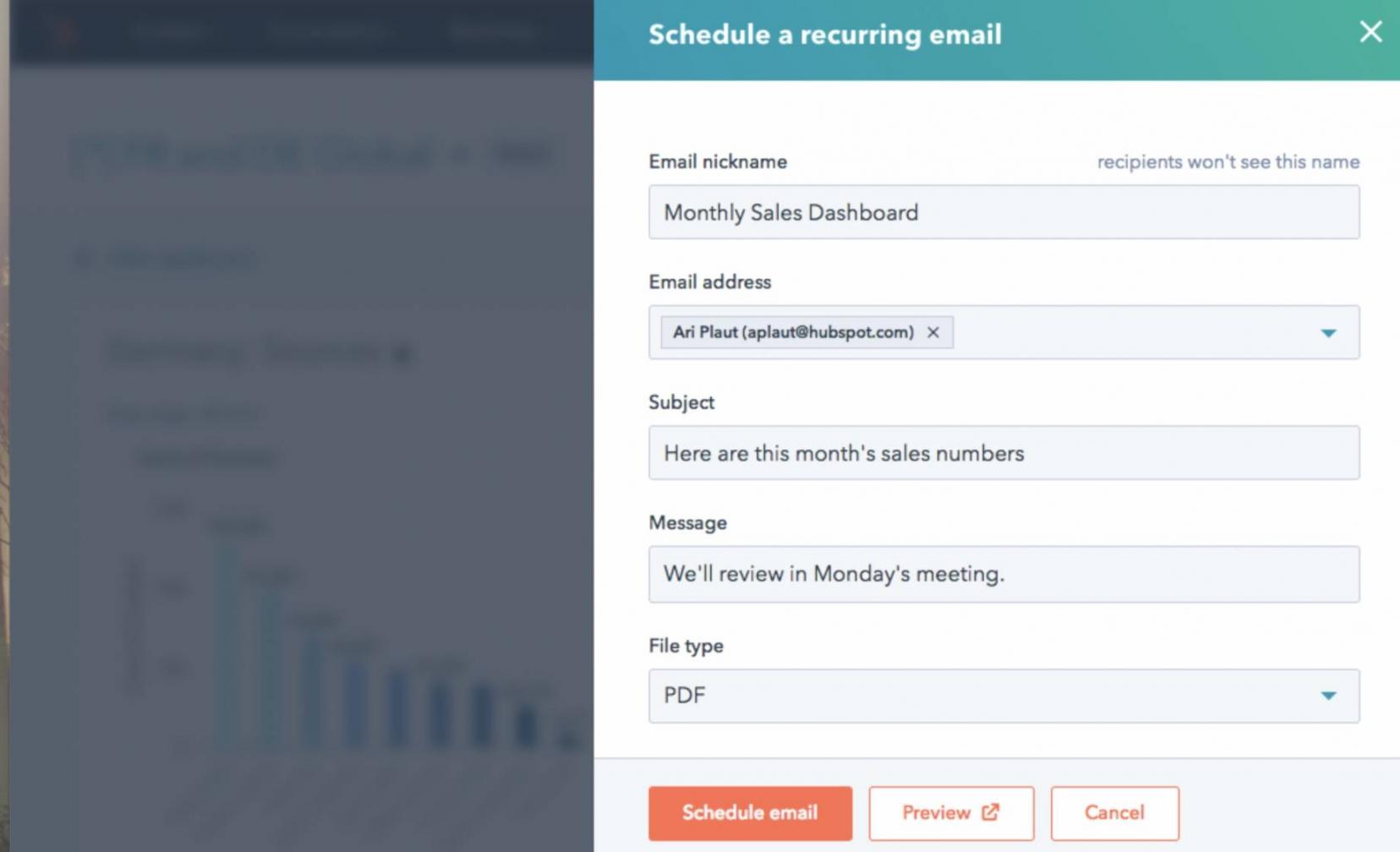
Image via HubSpot
When we compare HubSpot vs monday CRM, HubSpot is stronger for advanced reporting and attribution.
Integration with Other Essential Tools
HubSpot connects natively to 2,000+ apps through the App Marketplace and prebuilt connectors. The HubSpot Data Sync provides two-way syncing with common systems, so contact and company records stay consistent across tools.
Image via HubSpot
Use HubSpot when you want built-in two-way sync, data ops controls, and reliable APIs for custom work.
Detailed Review: monday CRM
This section of our HubSpot vs monday CRM comparison will focus on the latter’s features in detail.
Core CRM Capabilities
The monday CRM is a visually driven CRM platform and a project management tool built to let you tailor pipelines, automation, and reporting quickly. It focuses on flexibility: you build the CRM you need from boards, widgets, and templates.
In practice, monday CRM gives you visual boards, automation building blocks, and AI helpers to speed routine work. It is best for teams that value customizable boards and cross-team collaboration over a rigid, CRM-first model.
- Custom Boards and Views: You can model deals and accounts as boards with columns that match your process.
- No-Code Automations: Automations trigger actions across boards with simple rules and templates. Teams use these to assign owners, send reminders, and update statuses without writing code.
- AI Actions and Board Preview: Monday CRM’s AI can summarize board content and suggest actions to reduce clicks.
- Templates and CRM Packs: Monday CRM provides ready-made CRM templates and pipeline packs to get started fast. These templates save setup time when you convert from spreadsheets.
- Integrations and Communication: Monday CRM centralizes messages and connects to email and other apps so activity stays tied to records.
When comparing HubSpot vs monday CRM, the latter wins on adaptability and cross-functional workflows.
HubSpot still leads on CRM-specific intelligence like automatic contact enrichment and deeply integrated conversational CRM. If your team needs more advanced CRM, HubSpot will be a better fit.
In short, monday CRM is best when you want flexible boards, powerful no-code automations, and strong visual reporting.
User Interface and Ease of Use
Monday CRM’s interface centers on visual boards that map processes to rows and columns. The design encourages teams to model workflows exactly how they work, using cards, columns, and status fields.
This interface helps non-technical users create and change pipelines quickly. It reduces reliance on IT and makes process updates fast.
- Board-Centric Interface: Boards are the main way to view deals and accounts. They present items as rows with customizable columns for each data point.
- Custom Columns and Views: You can create numerous column types to capture process details. Saved views let each team focus on its priorities.
- Drag-and-Drop Workflow: Pipeline changes happen with drag-and-drop simplicity. That immediate control improves pipeline hygiene and velocity.
- Templates and AI Actions: Monday CRM offers ready-made CRM templates to speed setup and adoption. Its AI helpers summarize boards and suggest actions to reduce manual work.
In a HubSpot vs monday CRM comparison, monday CRM wins on visual modeling and flexibility. HubSpot still leads on CRM-first search, enrichment, and conversation linking.
In short, monday CRM is ideal for teams that want visual, no-code CRM workflows. Use it when process flexibility and easy customization matter most.
Setup and Onboarding Experience
Monday CRM gets teams up and running fast with CRM templates, no-code automations, and self-paced training through Monday Academy.
The vendor also supports professional services and certified partners for customized onboarding and implementation.
- CRM Templates: Monday CRM offers a wide library of ready-made CRM and pipeline templates to jumpstart setup. These templates include commonly used columns and basic automations so teams avoid building from scratch.
- Monday Academy Training: Monday Academy provides courses, webinars, and certifications to train admins and end users. Teams use the Academy to onboard internally without hiring external trainers.
- Partner and Onboarding Services: Monday CRM has a partner ecosystem and professional services that offer implementation and tailored onboarding.
Monday CRM is quick to prototype with templates, automations, and Academy training. Use it when you need fast, visual setup and partner-led implementations.
Contact and Lead Management
Monday CRM manages contacts and leads using a board-first model that maps records to rows and columns. This visual layout makes it easy to capture details, track activity, and move prospects through stages.
Teams capture leads with forms or email integrations and store them as items on boards. From there, Automations and custom columns help triage, score, and route leads without heavy engineering.
Here are the features it offers.
- Boards as Records: Boards act as contact and lead databases where each row is a record. That format makes it simple to add custom columns for status, owner, or product interest.
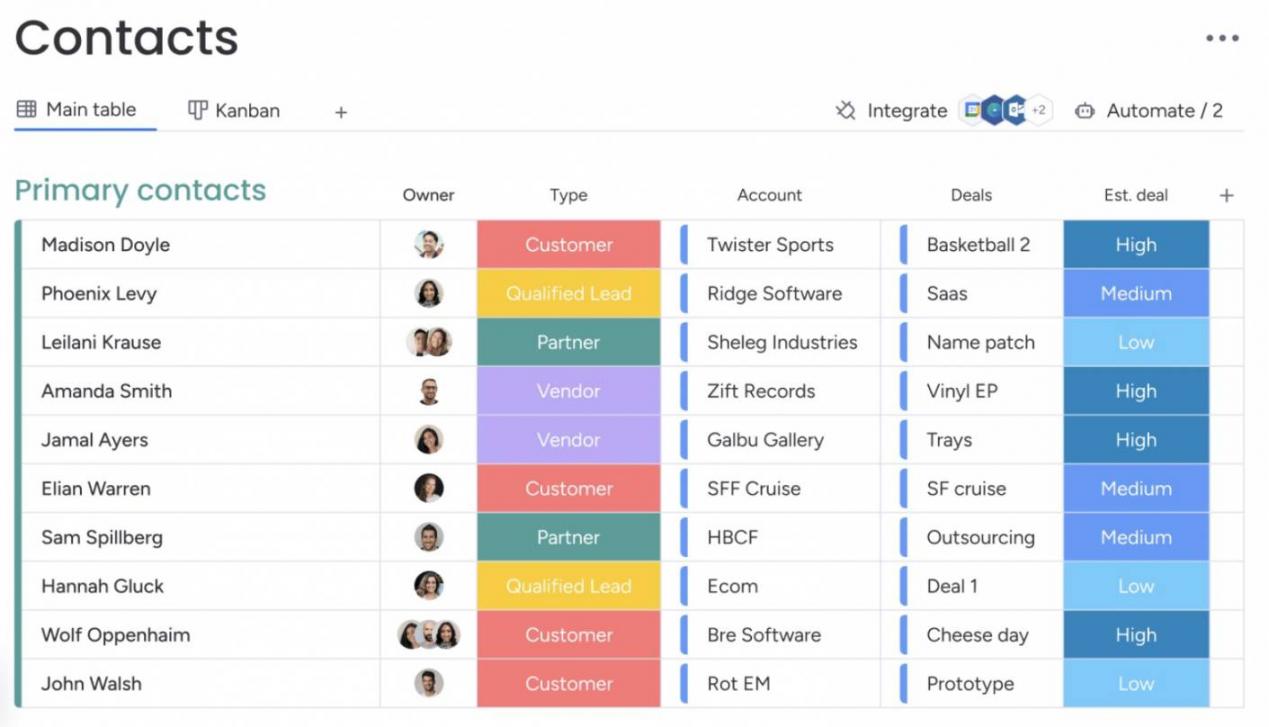
Image via monday CRM
- Updates and Activity Log: Each item has an updates stream that records comments, emails, and file attachments. This keeps conversation history and internal notes tied to the lead.
- Forms and Lead Capture: Monday CRM forms capture inbound leads and create items automatically on boards. That direct capture shortens response time and reduces manual entry.
- Automations and Routing: The automation builder supports triggers like new item or status change to assign owners, send notifications, or move items across boards. Round-robin and conditional recipes help distribute leads fairly.
In a HubSpot vs monday CRM comparison, monday CRM’s board-first model offers more visual clarity and faster setup. HubSpot wins on CRM-native intelligence, enrichment, and predictive lead scoring, which benefit teams focused on sales conversions.
Monday CRM turns sales leads into board items you can score and route visually. Choose it for fast, low-friction contact management that non-technical teams can own.
Analytics and Reporting
Monday CRM turns your boards into live dashboards you can build without asking IT. You drag widgets like charts and numbers onto a canvas and watch the pipeline update in real time.
Teams create dashboards for reps, managers, and execs to answer the right questions fast. The ability to pull data from multiple boards lets you compare pipelines or roll up activity across teams.
Here are some key features you should know about.
- Dashboards and Widgets: Add chart, numbers, and workload widgets to get key metrics on one page. Widgets refresh automatically, so you do not chase the latest figures.
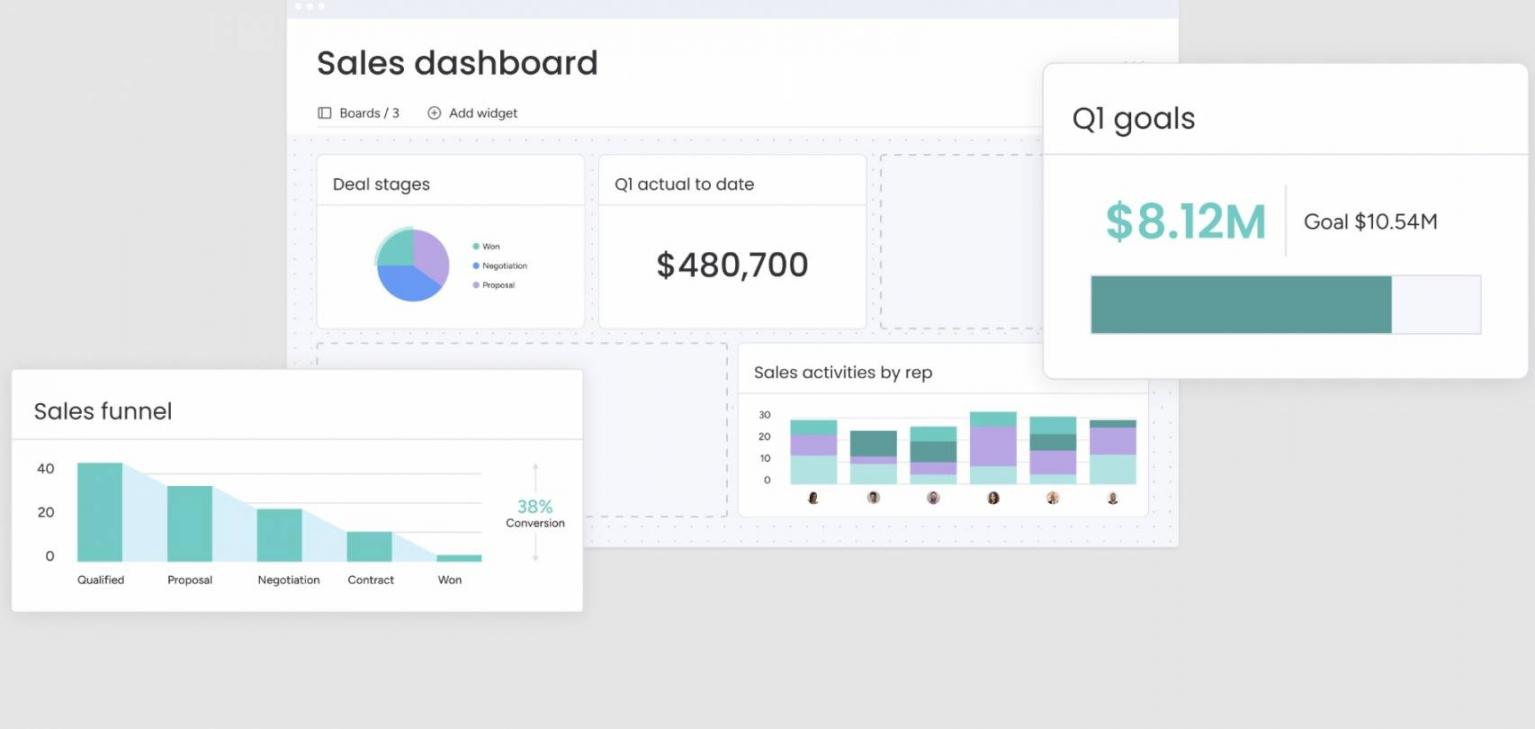
Image via monday CRM
- Cross-Board Rollups: Dashboards can aggregate data from several boards into a single view. That lets managers watch the total pipeline without manual spreadsheets.
- Prebuilt Templates and Widgets: Start from a dashboard template to avoid building from scratch. Templates include common sales and CRM metrics, so you hit value quickly.
- Custom Charts and Formulas: Use formula columns and chart widgets to build tailored KPIs and computed metrics.
- Automation and Data Refresh: Automations keep source boards updated and dashboards current.
Monday CRM lets teams build and share live dashboards quickly. Pick it when you want visual reporting without BI complexity. However, HubSpot offers more in-depth data analytics and reporting.
Integration with Other Tools
Monday CRM hooks into lots of apps through its Integrations page and the broader Zapier ecosystem, so you can connect email, calendar, forms, ads, and more without heavy engineering. It also has an app marketplace.
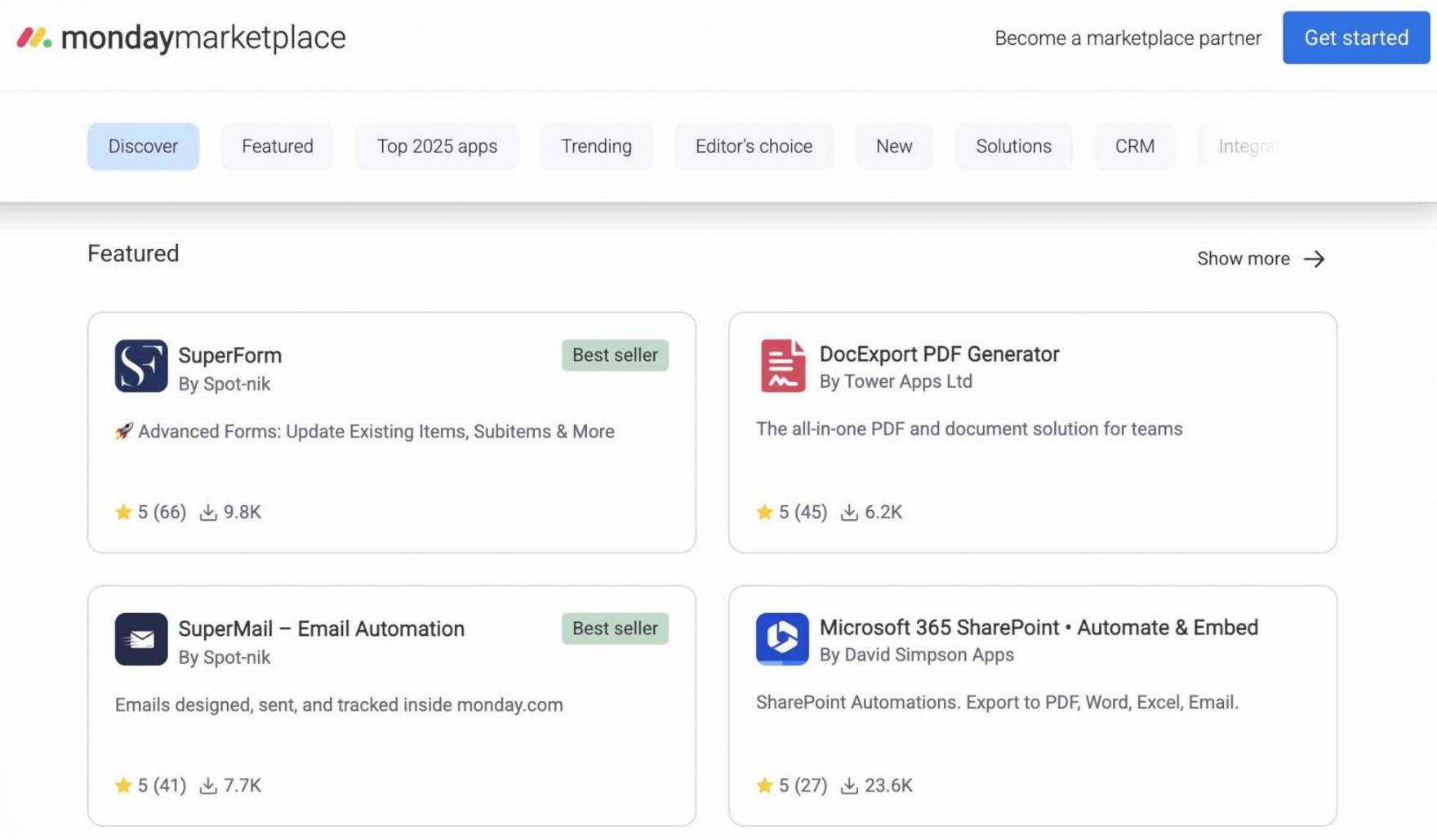
Image via monday CRM
Setting up common connectors is mostly click-to-configure, and there are ready-made recipes for popular flows.
Monday CRM balances fast no-code connectors and automations with APIs and apps for custom work.
HubSpot Pricing Plans
HubSpot offers a free CRM platform you can use forever. The free tier includes core contact, deal, and engagement features and does not expire.
HubSpot’s Smart CRM is available as a separate, paid product when you need advanced CRM features. If you buy HubSpot’s Marketing Hub, Sales Hub, or other paid Hubs, the Smart CRM functionality is included as part of those product bundles.
The main pricing plans are as follows:
- Free
- Starter: $15 per seat per month
- Professional: $50 per seat per month
- Enterprise: $75 per seat per month
HubSpot’s pricing is transparent and accessible for most companies.
Monday CRM may be simpler per-user at first glance, but if you add digital marketing automation, attribution, or advanced sales features, HubSpot’s bundled approach can be more cost-effective.
Monday CRM Pricing Plans
Monday CRM is sold per seat with annual and monthly billing options, and pricing is published on the monday CRM pricing page. The listed annual rates are the best value; monthly billing is available but costs more per seat.
Here are the prices of monthly plans.
- Basic: $18 per seat per month
- Standard: $25 per seat per month
- Pro: $41 per seat per month
- Enterprise: Custom
So, HubSpot vs monday CRM: which is more affordable?
If you only need lightweight CRM features and visual boards, monday CRM usually costs less per seat up front.
HubSpot vs monday CRM: What Do Their Customers Say About Them?
| “HubSpot has revolutionized outreach towards our customers. We’re able to deliver differentiated types of communication tailored to different stages of the lead journey, curating messaging to cater for different levels of interest.” – Mia Negru, | “I really like how intuitive and easy monday CRM is to use – it’s very visual and straightforward, so our whole team can jump in without much training. I love that we can all collaborate in real time, track every stage of our leads and clients, and see at a glance who’s responsible for what and what’s coming next.” – Elina C. |
FAQ
Q1. What is the main difference between HubSpot vs monday CRM?
A. HubSpot helps you manage customer relationships end-to-end. Monday CRM offers the essentials and has a visual interface that’s good for beginners.
Q2. HubSpot vs monday CRM: Which is better?
A. For most sales teams, HubSpot is better. It just does more CRM work out of the box.
Q3. Is HubSpot difficult to learn?
A. Absolutely not! Its UI is intuitive and easy to navigate. If you still need help, there are tons of resources and onboarding support to get you started.
Q4. Why should I choose HubSpot over monday CRM?
A. HubSpot is ideal if CRM is central to your business. It offers deeper lead scoring, reporting, and automation than monday CRM.
Q5. What is the difference between HubSpot’s free CRM and the paid one?
A. HubSpot’s free CRM covers the essentials. The paid CRM adds scale, automation, and advanced control.
HubSpot vs monday CRM: Final Verdict
At the end of the day, both tools do their job.
Monday CRM is flexible and nice to look at, especially if you like boards and custom workflows.
But if CRM is something your team uses every single day, HubSpot simply does more. Lead management, automation, reporting — it all works together without extra setup.
Final verdict: for most growing teams, HubSpot wins. It feels like a proper CRM that you can grow into, not something you’ll need to replace later.
Disclaimer: This content contains some affiliate links for which we will earn a commission (at no additional cost to you). This is to ensure that we can keep creating free content for you.