The best sales engagement platforms in 2026 are HubSpot Sales Hub, Salesloft, Outreach, and Apollo.io. Getting the right pick depends on your team size, sales motion, and existing tech stack.
A sales engagement platform automates your outreach across email, phone, and LinkedIn. That frees reps to spend less time on busywork and more time selling.
Now, I've spent over 12 years helping sales and marketing teams choose tools their reps actually use. Most “best platform” lists blur software categories and quote stale prices. This one doesn't.
Here's the real problem. Sales reps spend close to 60% of their time on non-selling tasks, according to a 2026 Salesforce report. A good platform claws that time back.
Below, I rank nine platforms by features, real pricing, and verified G2 ratings. You also get a buyer's guide, so you can match a tool to your team in one read.
Disclaimer: This content contains some affiliate links for which we will earn a commission (at no additional cost to you). This is to ensure that we can keep creating free content for you.
Still building your pipeline? My guide to lead generation strategies pairs well with any tool here.
What Is a Sales Engagement Platform?
A sales engagement platform is software that automates and tracks a sales team's outreach across email, phone, LinkedIn, and SMS. It organizes those activities into structured sequences, called cadences, so reps can engage prospects more consistently. It sits on top of your CRM, managing your day-to-day sales outreach.
Think of it as the main workspace for your sales team. Reps open one screen, follow a planned sequence, and log customer interactions without entering data twice.
Here's a simple example. A cadence might send an intro email on day one. It could schedule a LinkedIn outreach task on day two and queue a call on day four. The platform runs that sequence automatically for every prospect.
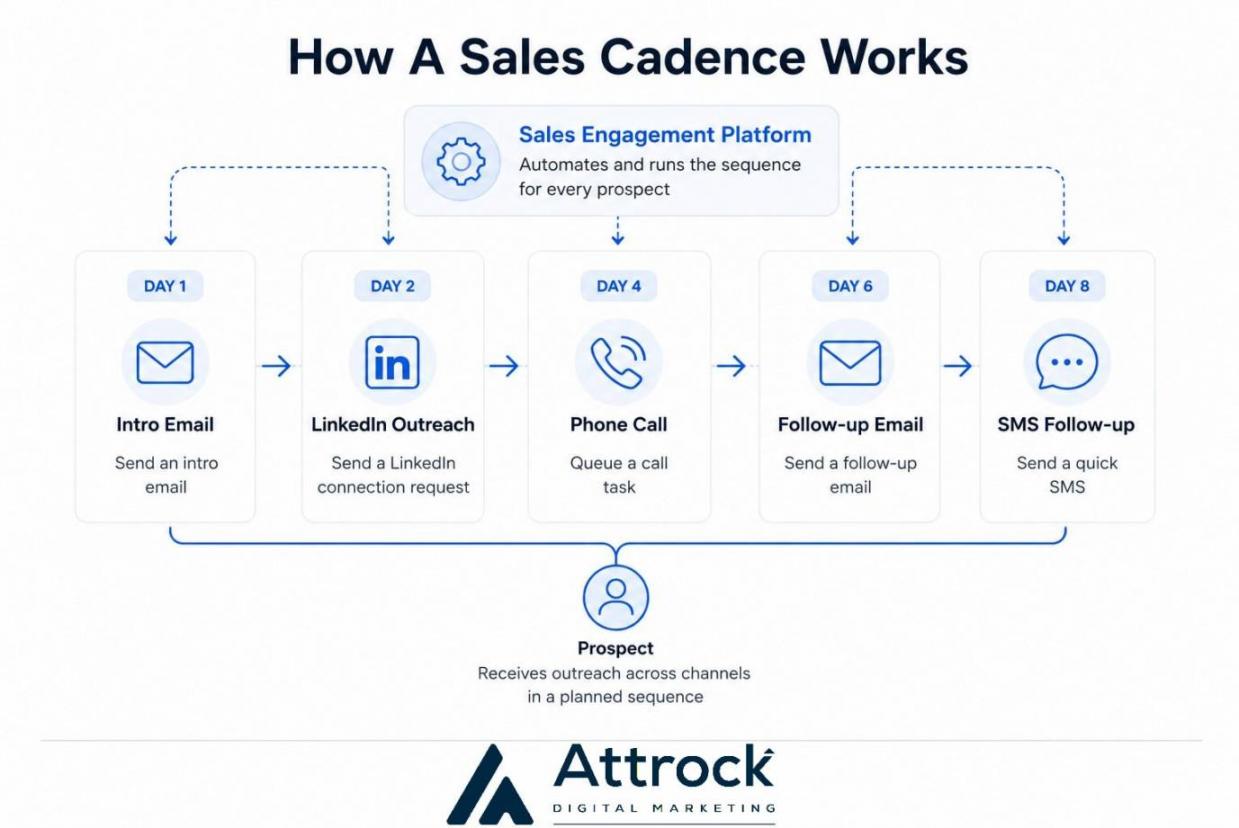
Image via Attrock
Why does this matter so much? Because effective sales engagement strategies rely on persistence. It takes around 8 touchpoints to secure a first meeting, according to RAIN Group. Top performers often need only five.
A 2024 Gartner survey found that sellers using AI-powered sales tools are 3.7 times more likely to hit quota. Modern sales engagement platforms help teams put that technology into action.
A sales engagement platform keeps outreach activities on track. It automatically logs your customer interactions, then shows which sales activities drive replies. That's how it helps sales teams manage a growing pipeline without adding headcount.
It automates multi-channel sales outreach, tracks every reply, and surfaces the next best step. That helps reps follow a more consistent sales process with less manual work.
How I Picked the Best Sales Engagement Platforms
I evaluated every sales engagement platform using the same six criteria. That helped me compare tools fairly based on real-world value, rather than marketing claims. No Attrock product appears on this list, which helps keep the rankings unbiased.
Here's the framework I used to rank these sales engagement tools:
- Core Engagement Features: Cadences, a built-in dialer, and true multi-channel outreach
- Deliverability: How reliably emails reach inboxes at scale
- CRM Integration: Native, two-way sync with HubSpot, Salesforce, and other existing tools
- Pricing Transparency and Total Cost: The real per-seat cost, not just the sticker
- AI Depth: How well the platform actually drafts, prioritizes, and researches
- Verified G2 Ratings: Real user sentiment, weighted by review volume
In the process, I reviewed each vendor's pricing page. Where a custom quote is required, I’ve noted it clearly. This transparency is important, as unexpected add-ons such as dialers and data credits negatively impact budgets.
One more filter shaped this list. I weighted fast adoption, because even the best sales engagement software fails if reps refuse to use it. Adoption often determines whether a tool delivers value or remains unused.
I also watched for dialer fees, weak deliverability, and a clunky CRM sync, among other often-hidden red flags.
Each tool was scored on engagement features, deliverability, CRM integration, pricing transparency, AI depth, and verified G2 ratings. No house product appears in the list.
Sales Engagement Platforms Compared
Here's the full field at a glance. Prices are starting list prices in USD, verified as of June 2026. Reconfirm on the vendor page before you buy.
| Platform | Best For | Starting Price (USD/month) | Free Plan | G2 Rating |
|---|---|---|---|---|
| HubSpot Sales Hub | All-in-one CRM plus engagement | $10/seat | Yes | 4.4 (13,800+) |
| Salesloft | Enterprise revenue orchestration | Custom quote | No | 4.5 (4,250+) |
| Outreach | High-volume outbound at scale | Custom quote | No | 4.3 (3,500+) |
| Apollo.io | Data plus engagement on a budget | $59/seat | Yes | 4.7 (9,650+) |
| Salesforce Sales Engagement | Salesforce-native teams | $50/user add-on (billed annually) | No | 4.4 (25,800+) |
| Reply.io | AI multichannel for SMB and agency | $59/user | No | 4.6 (1,500+) |
| Klenty | Cost-conscious mid-market | $60 (billed quarterly) | No | 4.6 (380+) |
| Mixmax | Gmail-native teams | $34/user | Yes | 4.6 (1,450+) |
| Amplemarket | AI data and signals (mid-market) | $600 (billed annually) | No | 4.6 (600+) |
The 9 Top Sales Engagement Platforms for 2026
The best sales engagement platforms for 2026 include HubSpot Sales Hub, Salesloft, Outreach, and more. Each of the platforms I ranked below follows the same format. This way, you can compare feature by feature and cost by cost.
1. HubSpot Sales Hub
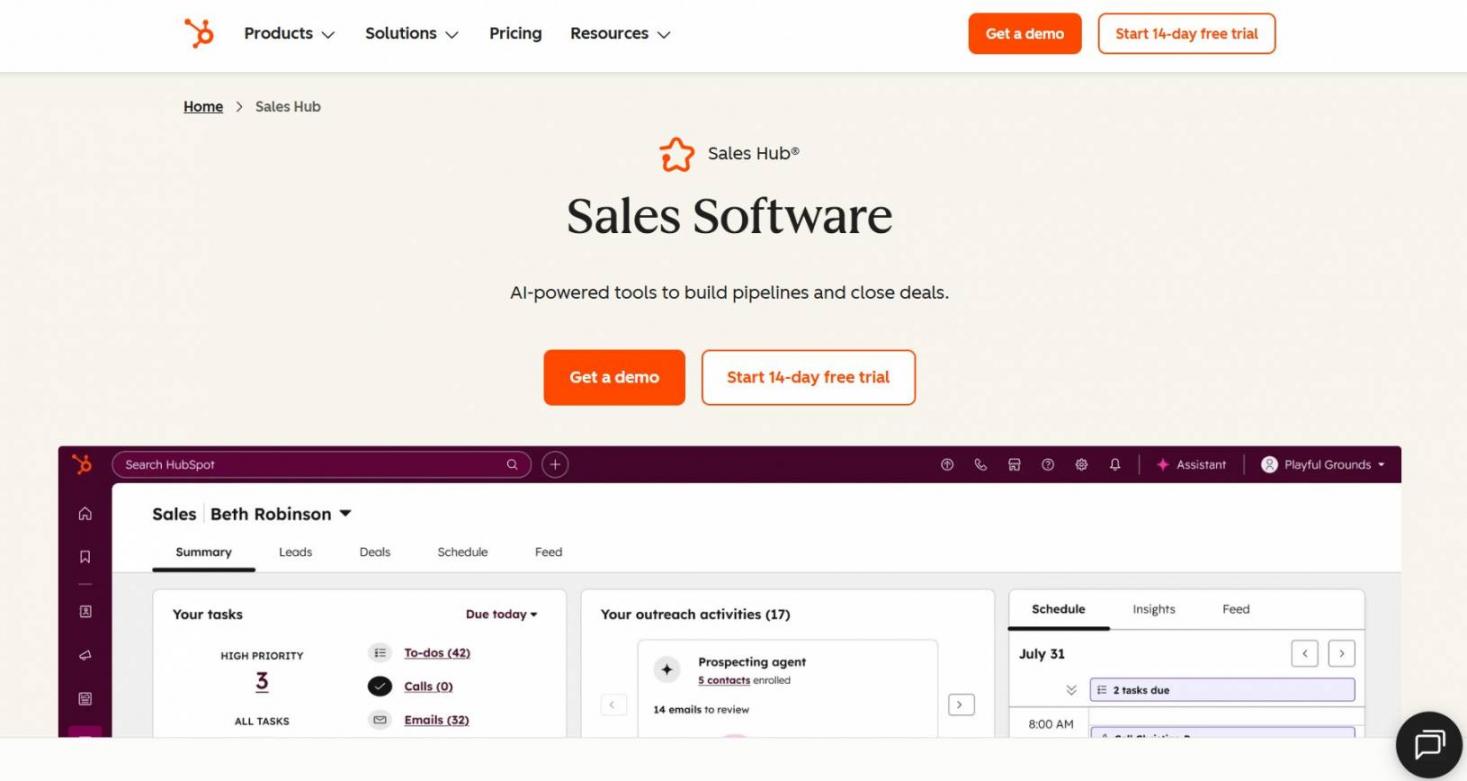
Image via HubSpot
HubSpot Sales Hub is the best sales engagement platform for teams that want their CRM and sales outreach in one tool.
It combines email tracking, scheduling, and a built-in dialer with HubSpot's free CRM. That means sales professionals can manage outreach and track interactions without switching tools.
The biggest advantage is shared data. Emails, calls, notes, and meetings update the contact record that sales, marketing, and customer success teams use. Opening a deal lets you see past conversations, engagement history, and customer insights. This creates a smoother workflow and helps maintain consistent engagement.
New reps find HubSpot Sales Hub easy to learn. Even sales managers can build sequences and workflows without technical help. This is evident in its G2 rating of 4.4 out of 5 based on more than 13,800 reviews. Users praise its easy-to-use interface and fast onboarding process.
As your business grows, the platform grows with it. You can add forecasting, payments, quotes, and advanced reporting when needed. For growing sales teams, that flexibility removes the need to replace tools later. It also makes HubSpot one of the easiest modern sales engagement platforms to adopt and scale.
It gives growing teams one system for contact data and outreach. This ensures reps spend less time stitching tools together and more time in conversations.
Key Features
- Built-In Dialer: Call from the record, then log the call automatically
- Meeting Scheduler: Shareable booking link that syncs to your calendar
- Sequences: Automated, multi-step email and task cadences with smart send times
- Email Tracking and Templates: Real-time open and click alerts, plus saved snippets
- AI Assistance: AI-drafted emails and a conversation assistant in the workflow
Pros
- Easy onboarding, so reps adopt it fast
- A genuinely useful free CRM tier to start on
- One platform for CRM, marketing, and outreach execution
Cons
- Sequences and automation sit behind the paid Professional tier
- Per-seat cost climbs quickly as you scale
- Power outbound teams may want a deeper standalone dialer
Pricing
- Free
- Starter: Starts at $20/month per seat
- Professional: Starts at $100/month per seat
- Enterprise: Starts at $150/month per seat
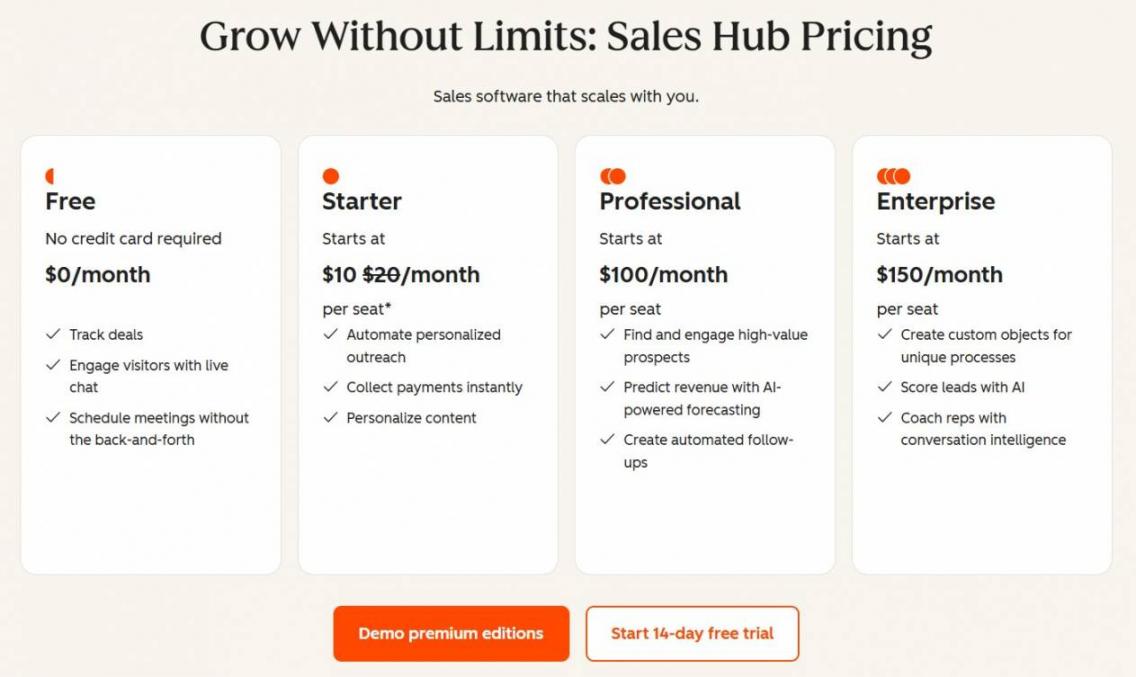
Image via HubSpot
Tool Level
- Beginner to Intermediate
Usability
- Onboarding is among the fastest on this list, with a very short learning curve. This sales engagement platform is easy for reps to adopt and simple for admins to manage.
Pro Tip: Start on the free CRM, then upgrade only the reps who run sequences to Professional, so you control the cost curve.
2. Salesloft
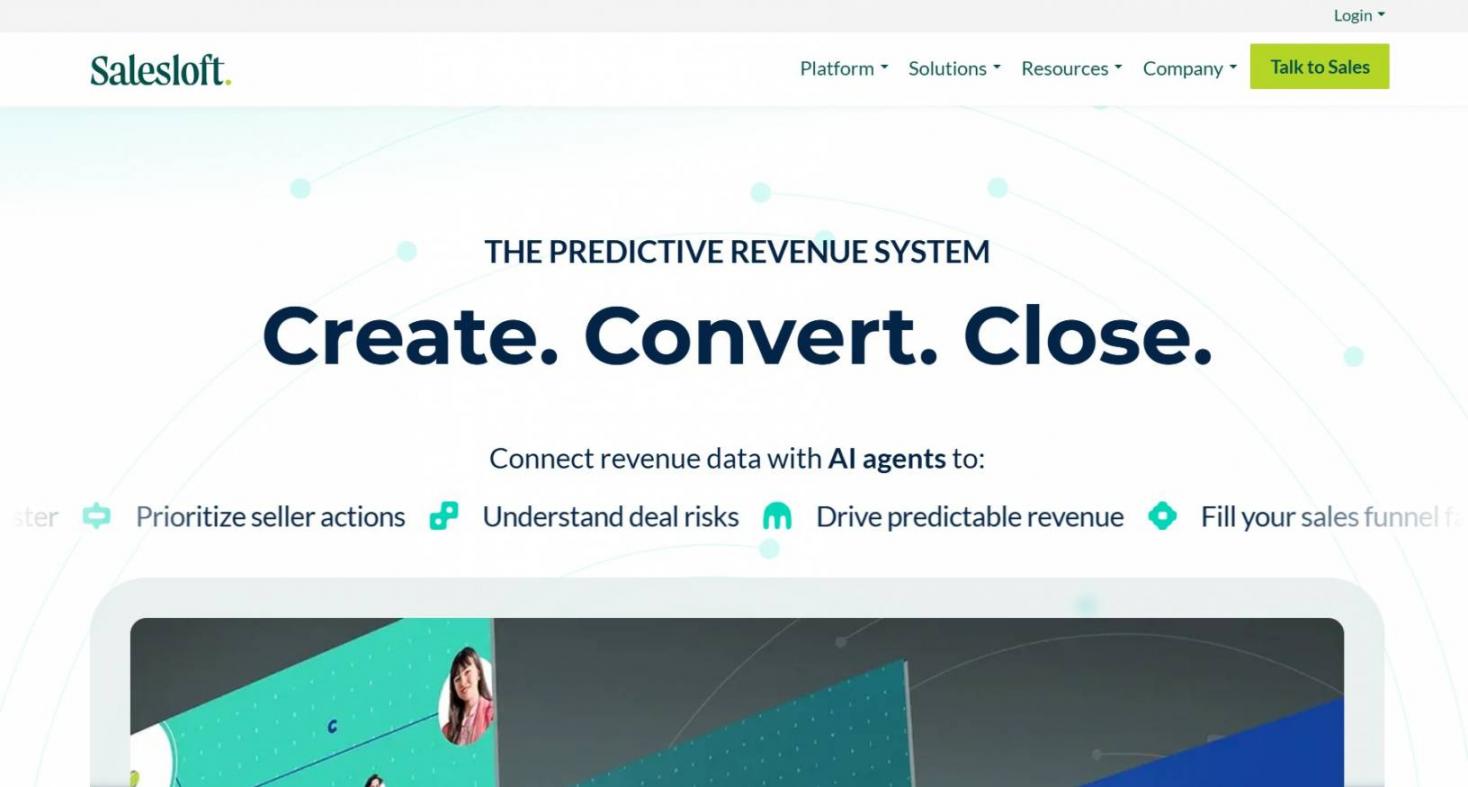
Image via Salesloft
Salesloft is a modern sales engagement platform for mid-market and enterprise revenue teams. It combines cadences, conversation intelligence, and coaching tools in one space. This helps sales leaders improve rep performance with real call data.
Managers can review recordings and flag winning sales conversations, then share them within the platform. This feedback loop keeps large teams aligned on a uniform sales strategy.
For enterprise sales teams focused on pipeline management, Salesloft offers deep Salesforce integration. RevOps leaders gain cleaner data, stronger tracking, and actionable insights without manual exports.
With a 4.5-star G2 rating, Salesloft is ideal for revenue teams of 20 or more reps. Many sales professionals find the workflow and personalized outreach valuable.
It gives growing teams one system for contact data and outreach. This ensures reps spend less time stitching tools together and more time in conversations.
Key Features
- Dialer: Integrated calling with local presence options
- Deal Management: Pipeline and forecasting views for managers
- Cadences: Disciplined, multichannel sequences with deep analytics
- Conversation Intelligence: Call recording, transcription, and coaching cues
- AI Features: AI summaries and next-step suggestions across deals
Pros
- Strong Salesforce and CRM integrations
- Deep coaching and analytics for manager-led teams
- A reliable cadence engine trusted by large organizations
Cons
- Pricing is quote-based, with no public transparency
- It's heavy for very small teams
- Premium features push the real cost up
Pricing
- Advanced: Custom pricing
- Elite: Custom pricing
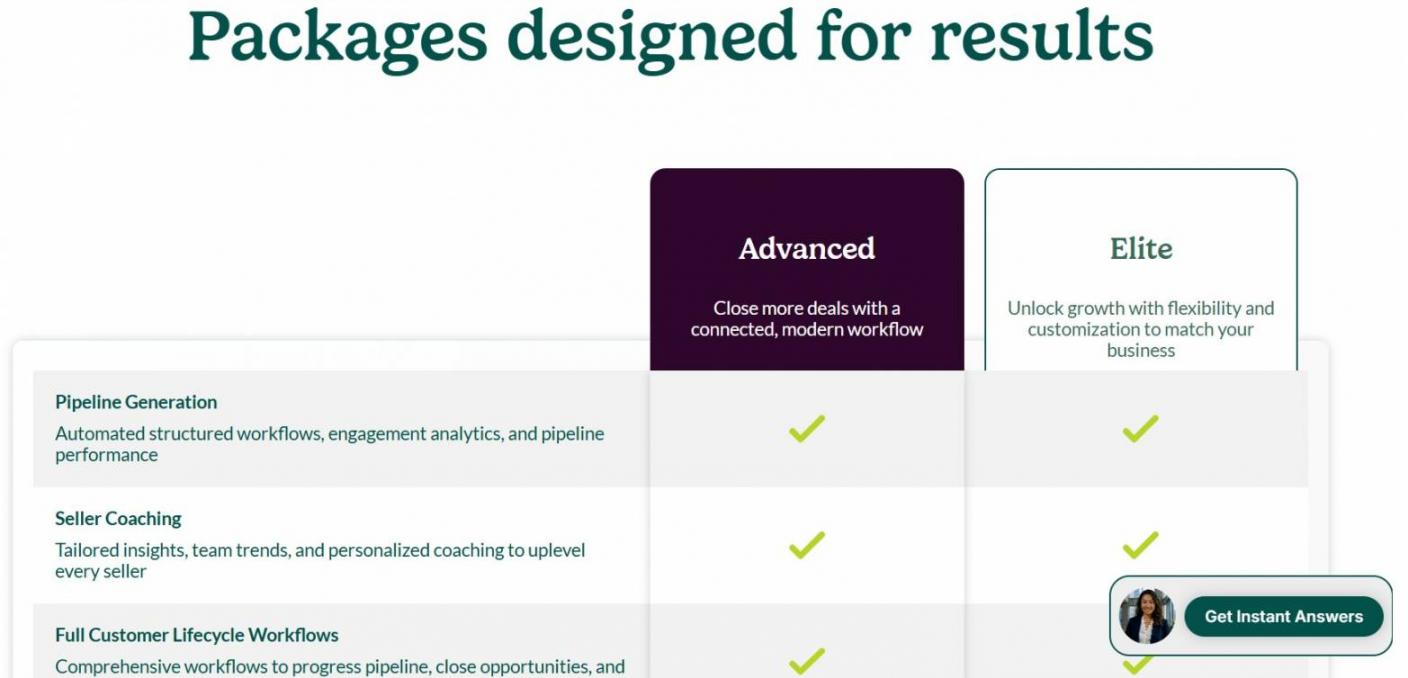
Image via Salesloft
Tool Level
- Intermediate to Advanced
Usability
- Onboarding requires structure, but teams adapt quickly with guided training. Once live, users report high satisfaction with engagement tracking and coaching features.
Pro Tip: Lean on Salesloft's conversation intelligence early. The coaching data is where most teams find their fastest sales performance gains.
3. Outreach
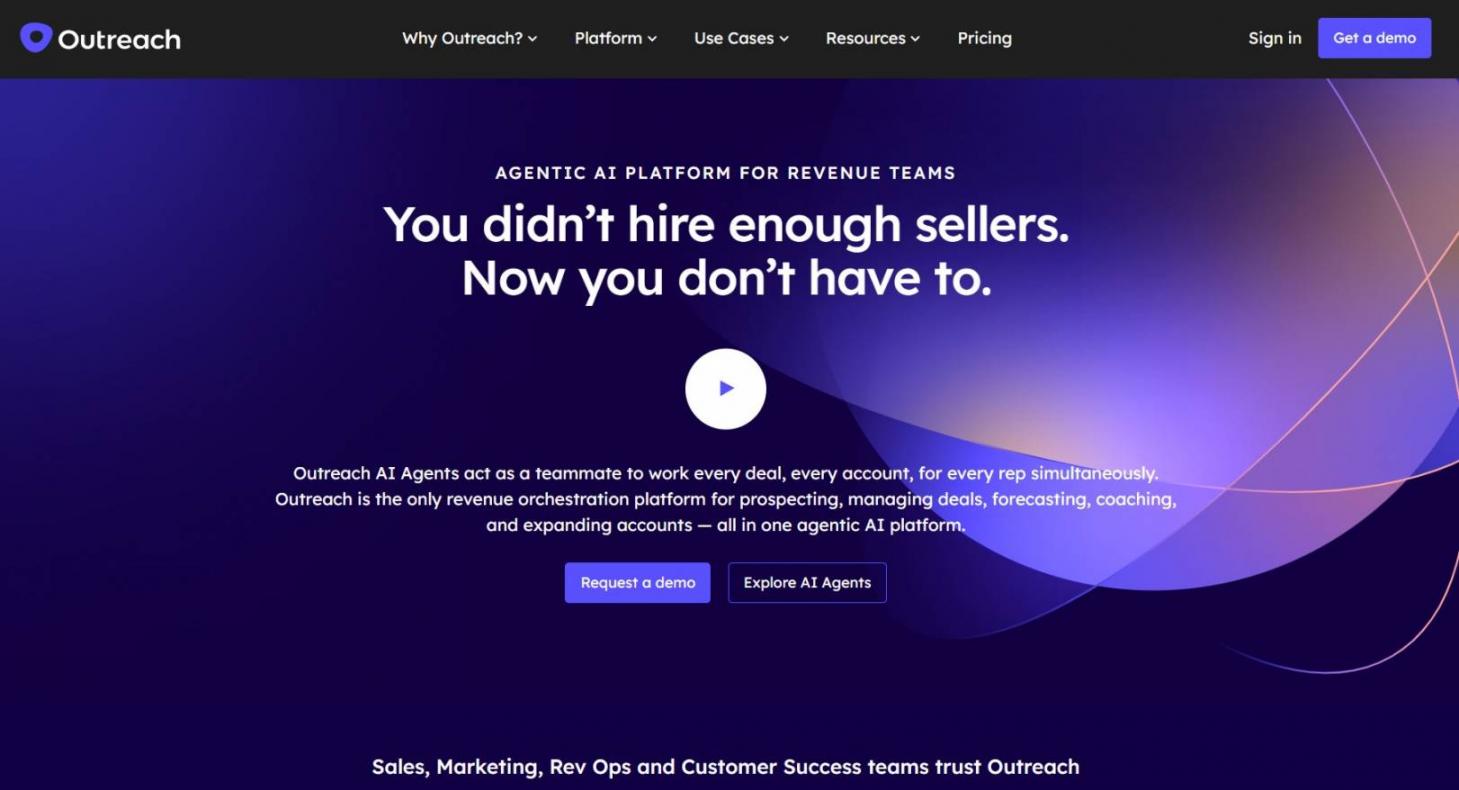
Image via Outreach
Outreach is an enterprise sales engagement platform for teams that run outbound at scale. It helps SDRs and account executives manage large volumes of sales outreach with consistent messaging. Teams can create sequences across email, phone, LinkedIn, and other channels, then guide reps through every step.
One of Outreach's biggest strengths is control. Sales leaders can set rules and workflows that help teams follow the same process. That consistency becomes more important as headcount grows and prospect engagement expands.
The platform also includes AI-powered tools for improved sales productivity. It can rank leads, recommend next actions, and draft follow-up messages based on past performance. These features help teams focused on outbound sales spend more time selling and less time deciding next steps.
With Outreach, you get conversation insights and engagement tracking. These help managers spot trends and improve results over time. Its 4.3-star G2 rating reflects strong satisfaction among enterprise users.
Key Features
- A/B Testing: Test subject lines and steps at scale
- AI Workflows: AI-assisted prioritization and content
- Deal and Forecast Tools: Pipeline health and AI forecasting
- Sequences: Granular, rules-based cadences for big teams
- Dialer: Integrated calling with logging and analytics
Pros
- Scales cleanly to very large outbound teams
- Sharp reporting on sequence performance
- Mature integrations and admin controls
Cons
- Pricing is quote-based, with onboarding fees
- Setup is complex and takes real time
- It's overkill for small teams
Pricing
- Amplify Core: Custom pricing
- Amplify Plus: Custom pricing
- Amplify Pro: Custom pricing
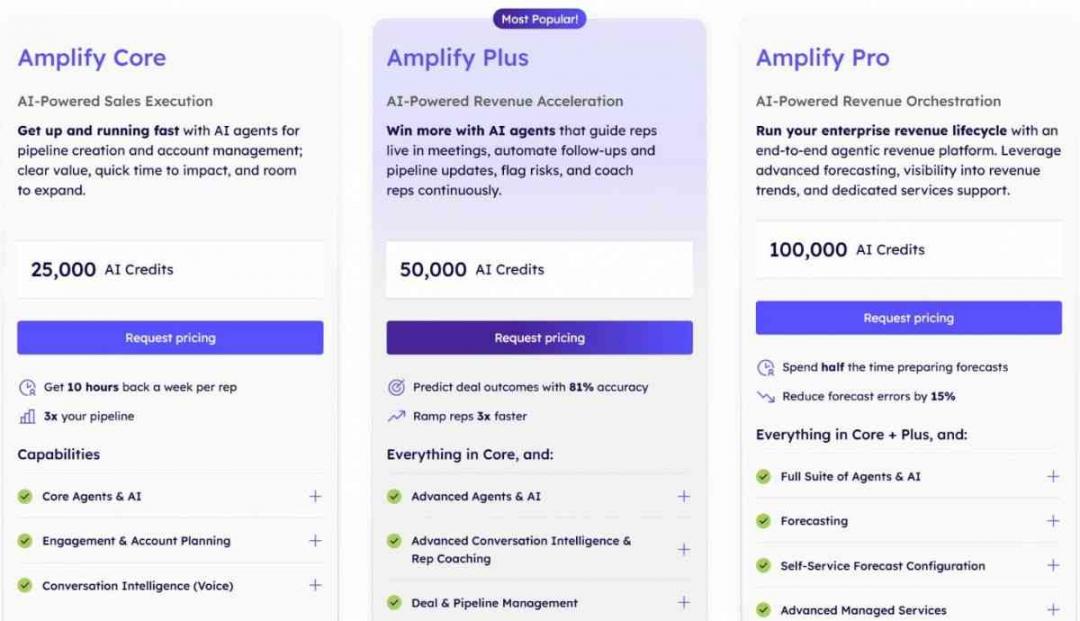
Image via Outreach
Tool Level
- Intermediate to Advanced
Usability
- It takes two to four weeks for admins to set things up properly. Once configured, reps benefit from a guided workflow that balances power with usability.
Pro Tip: Use Outreach's A/B testing on the first three steps of your sequence. Small lifts there will compound across a high-volume sales cycle.
4. Apollo.io
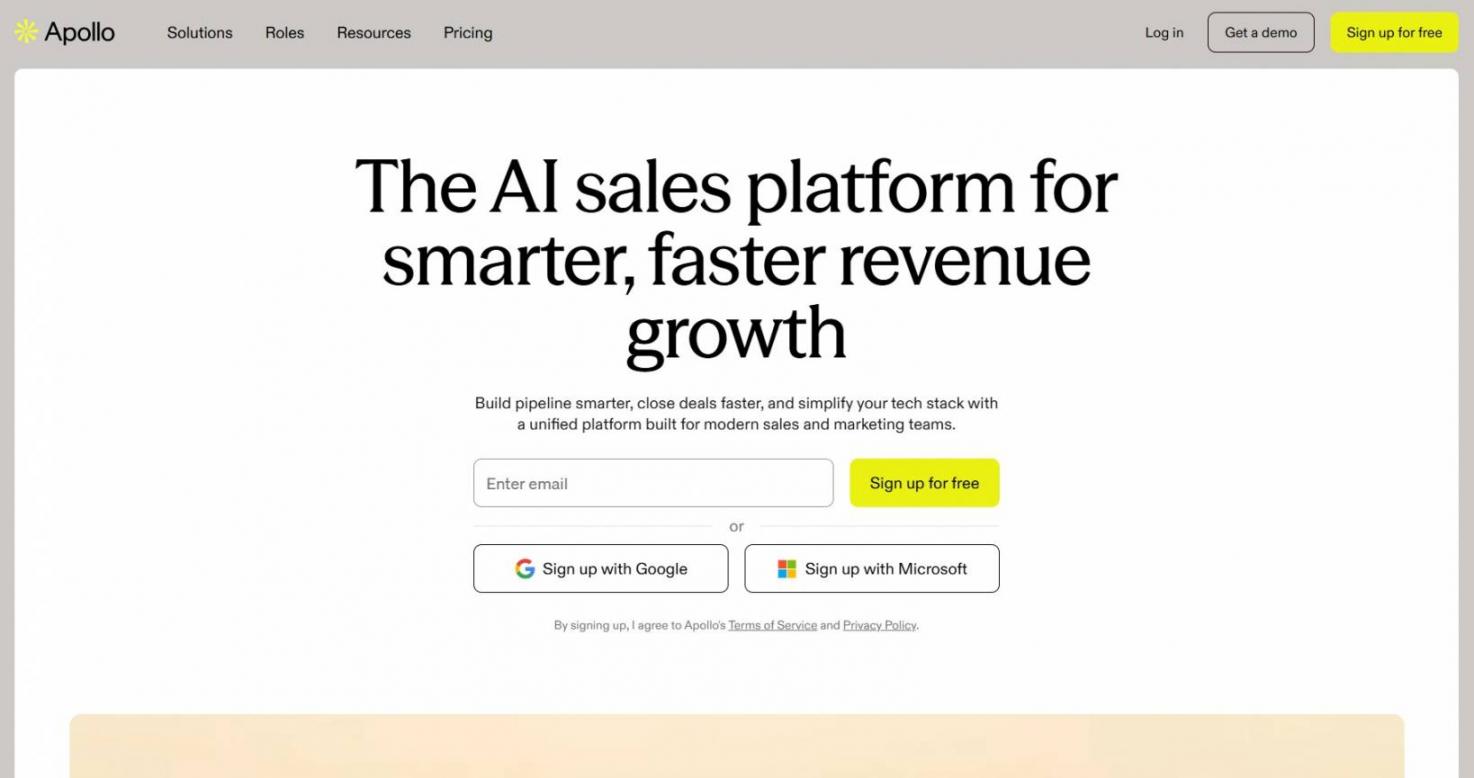
Image via Apollo
Apollo.io is the best value sales engagement platform because it pairs a large B2B contact database with built-in sequencing. Startups and SMB teams can prospect and engage from a single tool, often starting on the free plan. That mix of data and outreach makes Apollo the default first choice for many new sales teams.
Apollo’s biggest advantage is convenience. Reps can quickly find prospects by job title, industry, company size, or buying signals. They can then add those contacts directly to email, phone, or LinkedIn sequences. This helps sales teams move from finding leads to starting conversations much faster.
The platform delivers strong value for the price, but you must watch your credit usage. Contact exports, enrichment, and some data features draw from the same monthly allowance.
Despite its broad feature set, Apollo remains easy to use. The platform holds a category-leading 4.7-star G2 rating, the highest score on this list. Users praise its balance of data, automation, and usability.
It combines contact data and outreach in one affordable tool. This way, smaller sales teams skip buying a separate database and a separate sequencer.
Key Features
- B2B Database: Millions of contacts with filters and intent signals
- Data Enrichment: Email verification and CRM enrichment
- Sequences: Multichannel email and task cadences
- AI Assistance: AI writing and prospect research
- Dialer: Built-in calling on paid tiers
Pros
- A strong free plan, rare in this category
- Data and engagement in one low-cost tool
- Fast setup for small sales rep teams
Cons
- Data accuracy varies by region and role
- Credit limits gate heavy data use
- Deliverability needs careful management
Pricing
- Free
- Basic: $59/seat per month
- Professional: $99/ seat per month
- Organization: $149/seat per month
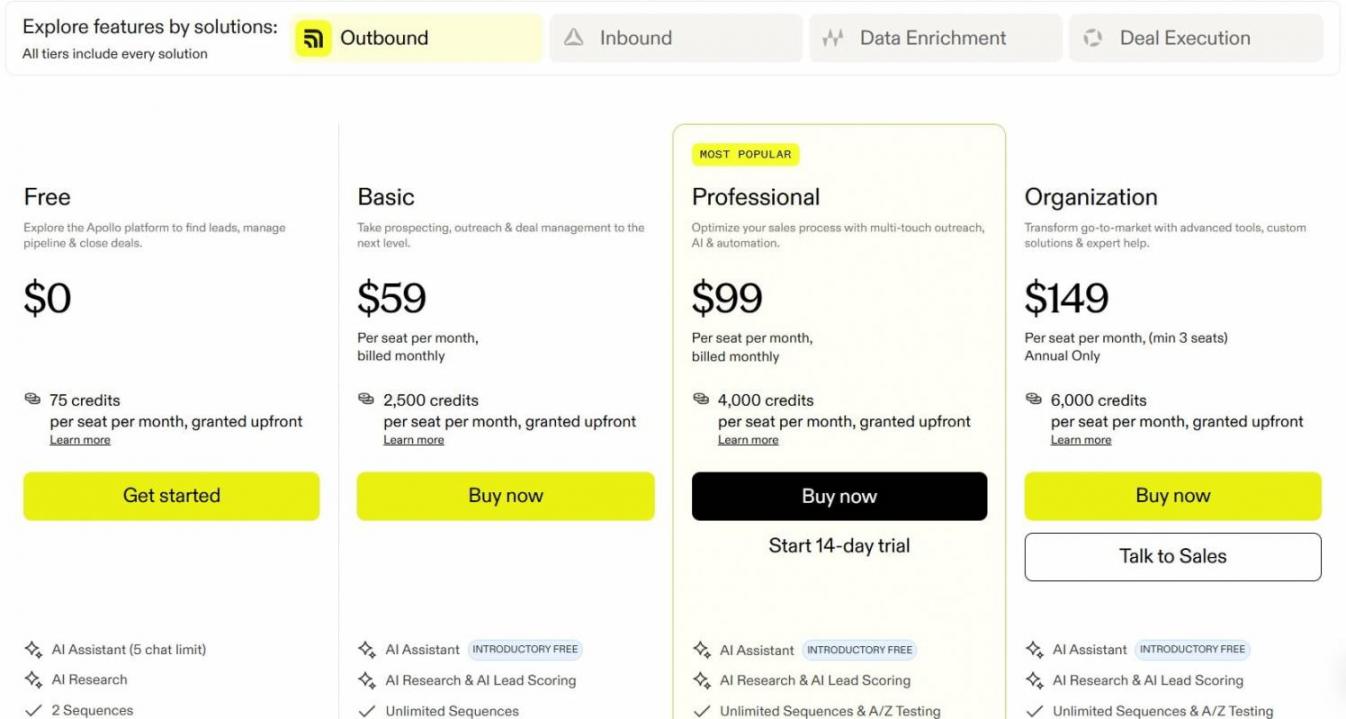
Image via Apollo
Tool Level
- Beginner to Intermediate
Usability
- Most reps can start prospecting and building sequences on their first day. The interface stays simple as your sales engagement platform needs grow.
Pro Tip: Verify high-value contacts before you send, since Apollo's credits make spot-checking cheaper than a bounced sales engagement campaign.
5. Salesforce Sales Engagement
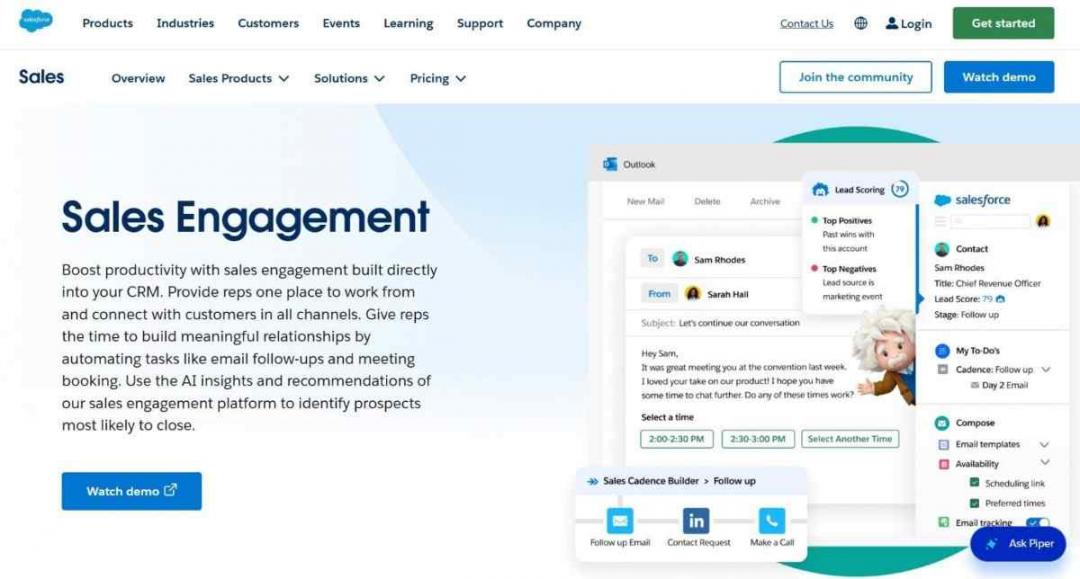
Image via Salesforce
Salesforce Sales Engagement is a sales engagement platform that's built directly into Salesforce CRM. Formerly called High Velocity Sales, it helps teams manage cadences, sales outreach, and follow-up tasks.
Its biggest advantage is native integration. Every email, call, task, and cadence step updates the Salesforce record automatically. There are no third-party connectors to manage and no data sync issues to troubleshoot. That gives sales managers cleaner records and more reliable pipeline management.
The platform also includes AI-powered features through Einstein. Reps receive lead recommendations, next-step suggestions, and customer insights inside the same workspace. This helps teams focus on outreach and the opportunities most likely to convert.
Salesforce Sales Engagement is built for mid-market and enterprise teams already running on Salesforce. Prospect engagement, interaction tracking, and activity management all live in one place. Its 4.1-star G2 rating signals solid functionality, though some users find it steeper to learn than standalone tools.
Key Features
- Cadences: A sequence builder native to Salesforce records
- Work Queues: Prioritized rep to-do lists inside the CRM
- Email and Call Logging: Automatic activity capture
- Einstein AI: Lead scoring and next-step guidance
- Reporting: Native Salesforce dashboards
Pros
- Zero data sync issues, since it lives in Salesforce
- Unified reporting with the rest of your CRM
- A great fit for sales and marketing teams already on Salesforce
Cons
- It requires a paid Sales Cloud license
- The real cost is high once stacked
- It's less specialized than standalone engagement tools
Pricing
Sales Engagement is sold as an add‑on to Sales Cloud at $50 per user per month (billed annually). To use it, you'll need one of the following Sales Cloud plans:
- Enterprise Edition: $175 per user/month
- Unlimited Edition: Included
- Einstein 1 Sales: Included
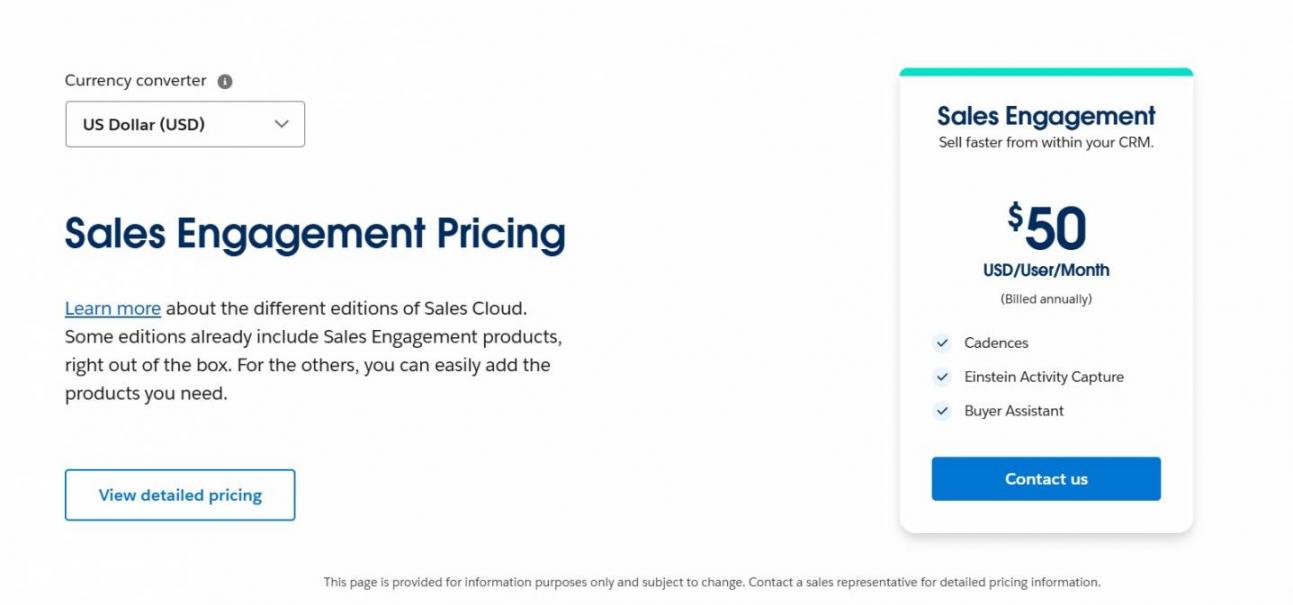
Image via Salesforce
Tool Level
- Intermediate to Advanced
Usability
- Salesforce users will feel at home quickly. New users face a learning curve, but native integration keeps workflows efficient.
Pro Tip: Turn on work queues first, since guiding reps to the next best action is where Salesforce-native engagement pays off fastest.
6. Reply.io
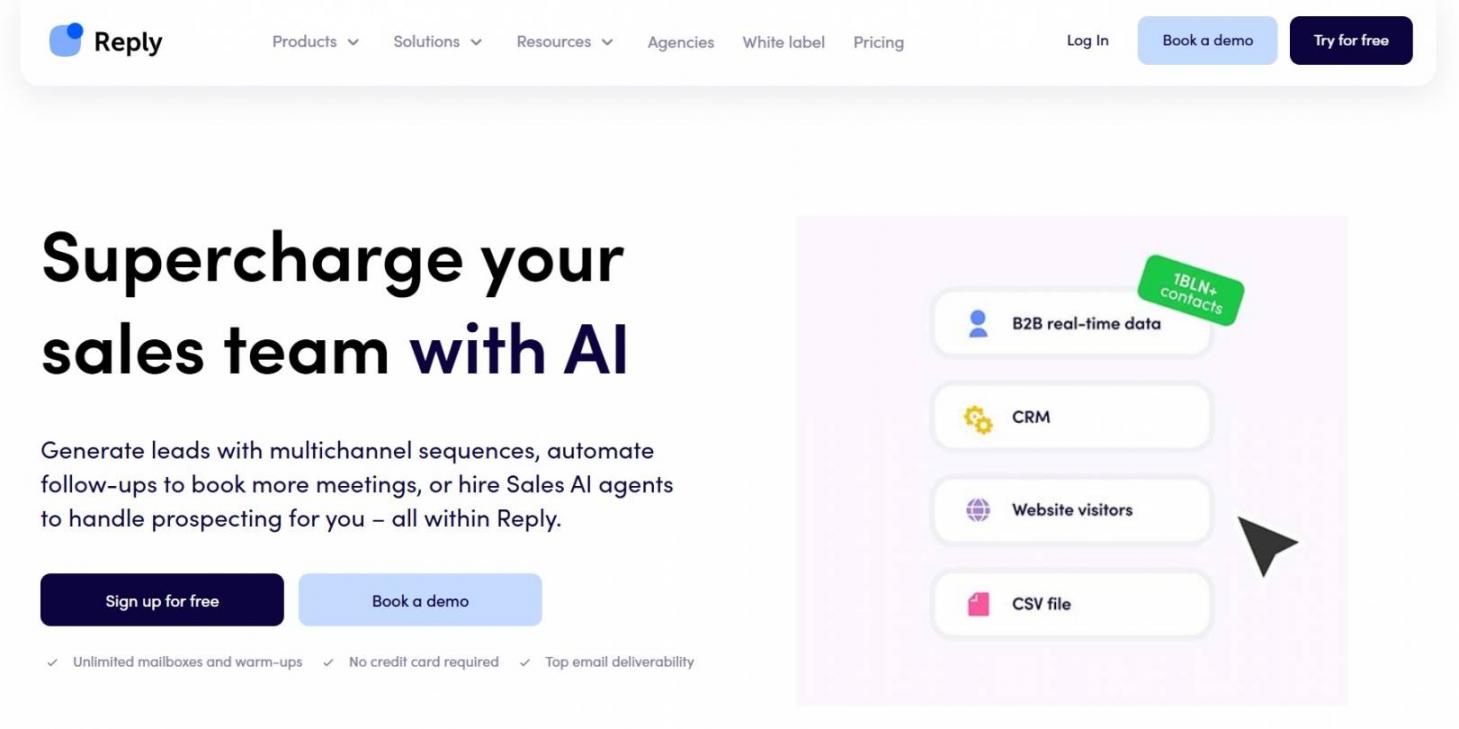
Image via Reply.io
Reply.io is an AI-powered sales engagement platform built for SMBs, agencies, and lean outbound teams. It combines email, calls, LinkedIn, and other outreach channels into one workflow.
The platform also uses AI to draft messages, personalize outreach, and automate follow-ups. This helps you reach more prospects with less manual work. Indeed, one of Reply.io's biggest strengths is automation.
Teams can build multi-channel sequences that keep sales outreach moving without constant manual effort. Agencies also benefit from dedicated client workspaces and tools that manage multiple inboxes. If LinkedIn is part of your outreach strategy, it's worth learning more about LinkedIn for B2B sales before building sequences.
Reply.io also helps protect email deliverability as campaigns grow. Features like inbox rotation and warm-up reduce the risk of landing in spam folders. Combined with its AI SDR, these tools help growing sales teams engage prospects at scale while maintaining a personal touch.
The platform has a strong 4.6-star rating on G2. Users praise its automation, AI-powered workflows, and ability to scale outbound campaigns.
Key Features
- AI SDR: AI agents that draft and respond
- Deliverability Tools: Inbox rotation and warm-up
- Multichannel Sequences: Email, LinkedIn, calls, and SMS in one flow
- CRM Integrations: Sync with Salesforce, HubSpot, and Pipedrive
- Reporting: Sequence and reply analytics
Pros
- True multichannel in one tool
- Strong AI personalization for small teams
- Flexible plans, including agency pricing
Cons
- Deliverability needs active management
- The interface has a learning curve
- AI output still needs human review
Pricing
- Email Volume: Starts from $59/user per month
- Multichannel: Starts from $99 per user/month
- AI SDR: Starts from $500/month
- Agency: Starts from $210/month
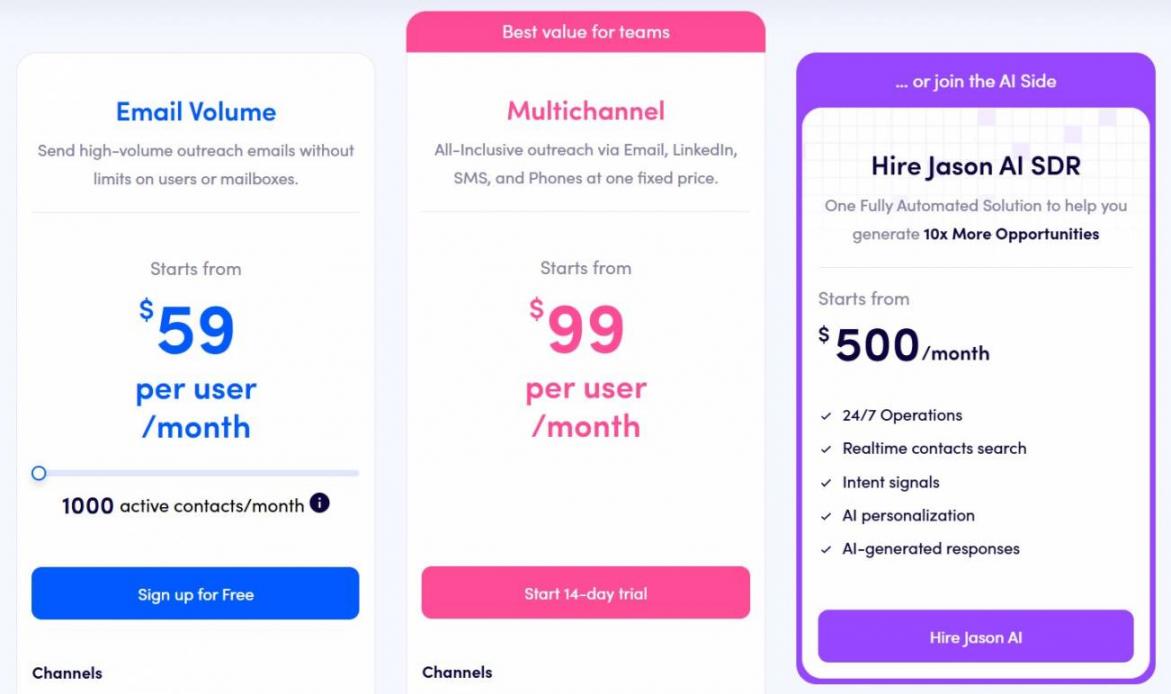
Image via Reply.io
Tool Level
- Beginner to Intermediate
Usability
- Setup takes a little time, but most teams are fully operational within a week. This sales engagement platform makes it easier for lean teams to automate outreach and manage more accounts.
Pro Tip: Let Reply's AI draft the first version, then edit for voice, since human review keeps reply rates and trust high.
7. Klenty
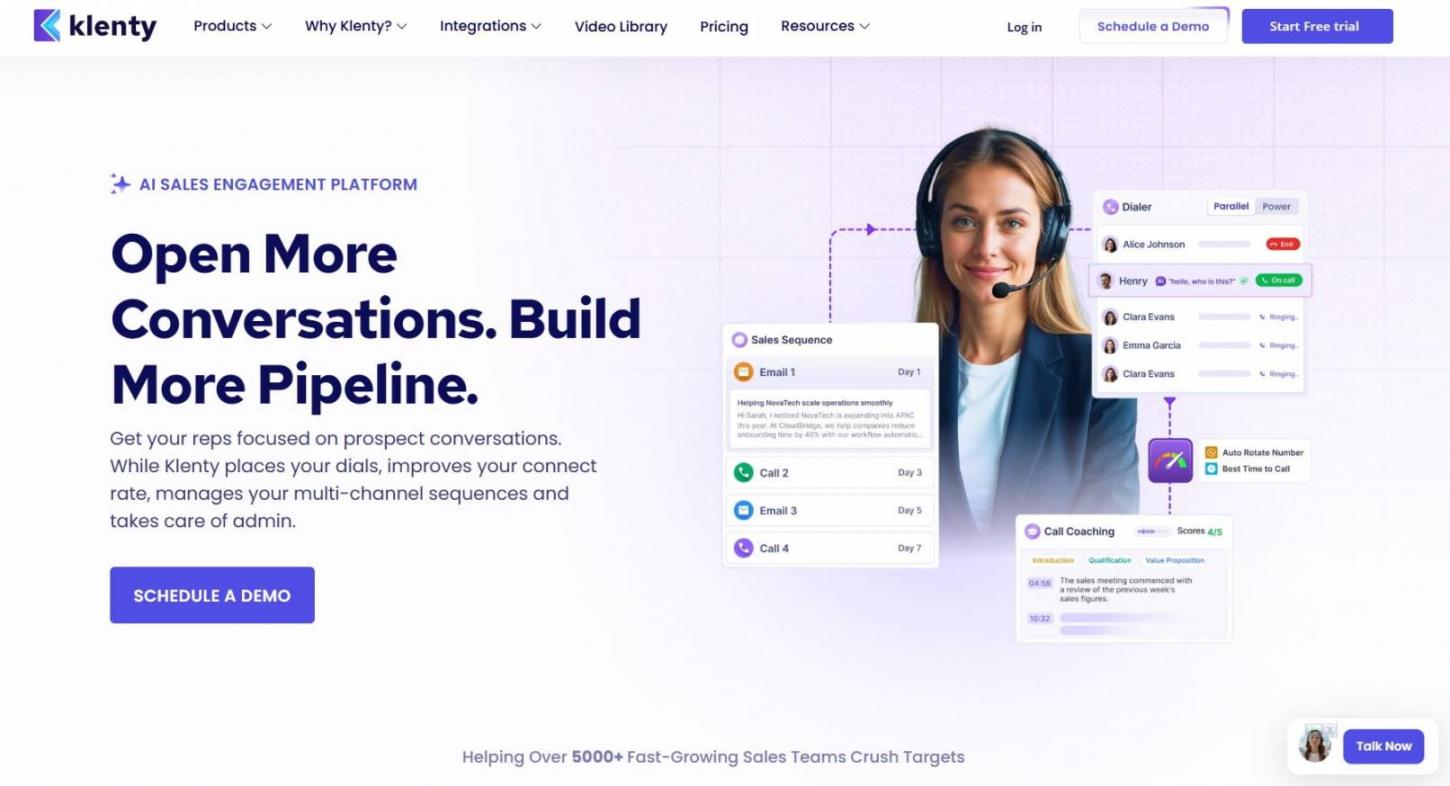
Image via Klenty
Klenty is a sales engagement platform for SMBs and mid-market teams that need more than basic outreach tools. It combines email sequences with power and parallel dialers, helping reps reach more prospects in less time.
Value is Klenty's biggest strength. Teams get many of the cadence and automation features found in premium platforms at a much lower price.
With Klenty, sales professionals can build smart sequences that change based on prospect engagement. For example, an email reply or open can automatically move a contact to the next step in the workflow.
The platform is especially useful for inside sales teams that spend much of the day calling leads. Its built-in dialers help reps work through long call lists faster. This improves sales productivity without adding extra software.
Klenty also has a 4.6-star G2 rating, with many users highlighting its ease of use and affordable pricing.
Key Features:
- Cadences: Email-led multichannel sequences
- Dialers: Parallel and power dialing add-ons
- AI Research: Account and prospect research helpers
- CRM Sync: Native HubSpot, Salesforce, and Pipedrive sync
- Routing: Intelligent prospect routing for teams
Pros
- Strong cadences at a fair price
- Capable dialers for high-velocity teams
- A responsive support reputation
Cons
- A lighter brand than Outreach or Salesloft
- The dialer is a paid add-on
- Fewer advanced enterprise controls
Pricing
- Starter: Starts at $60/month (billed quarterly)
- Growth: $85/month per user (billed quarterly)
- Plus: $119/month per user (billed quarterly)
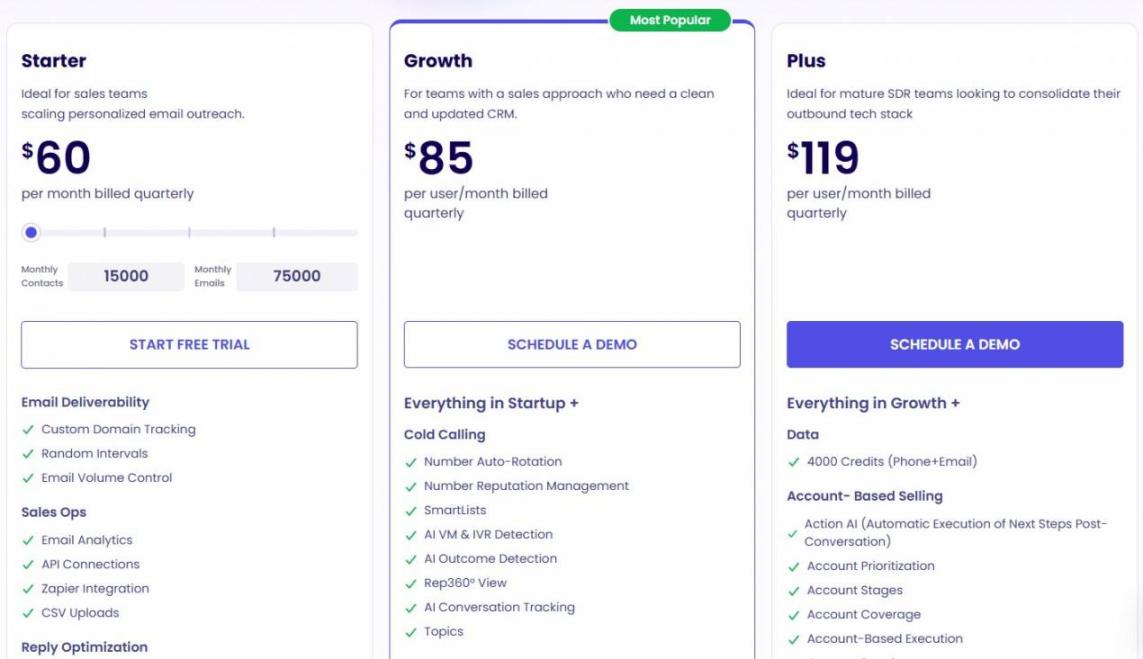
Image via Klenty
Tool Level
- Beginner to Intermediate
Usability
- Most teams can learn the platform quickly, and ongoing administration stays simple. This sales engagement platform is easy to manage while still offering advanced outbound sales features.
Pro Tip: Use Klenty's parallel dialer for power hours, since stacking calls into focused blocks lifts connect rates for busy sales reps.
8. Mixmax
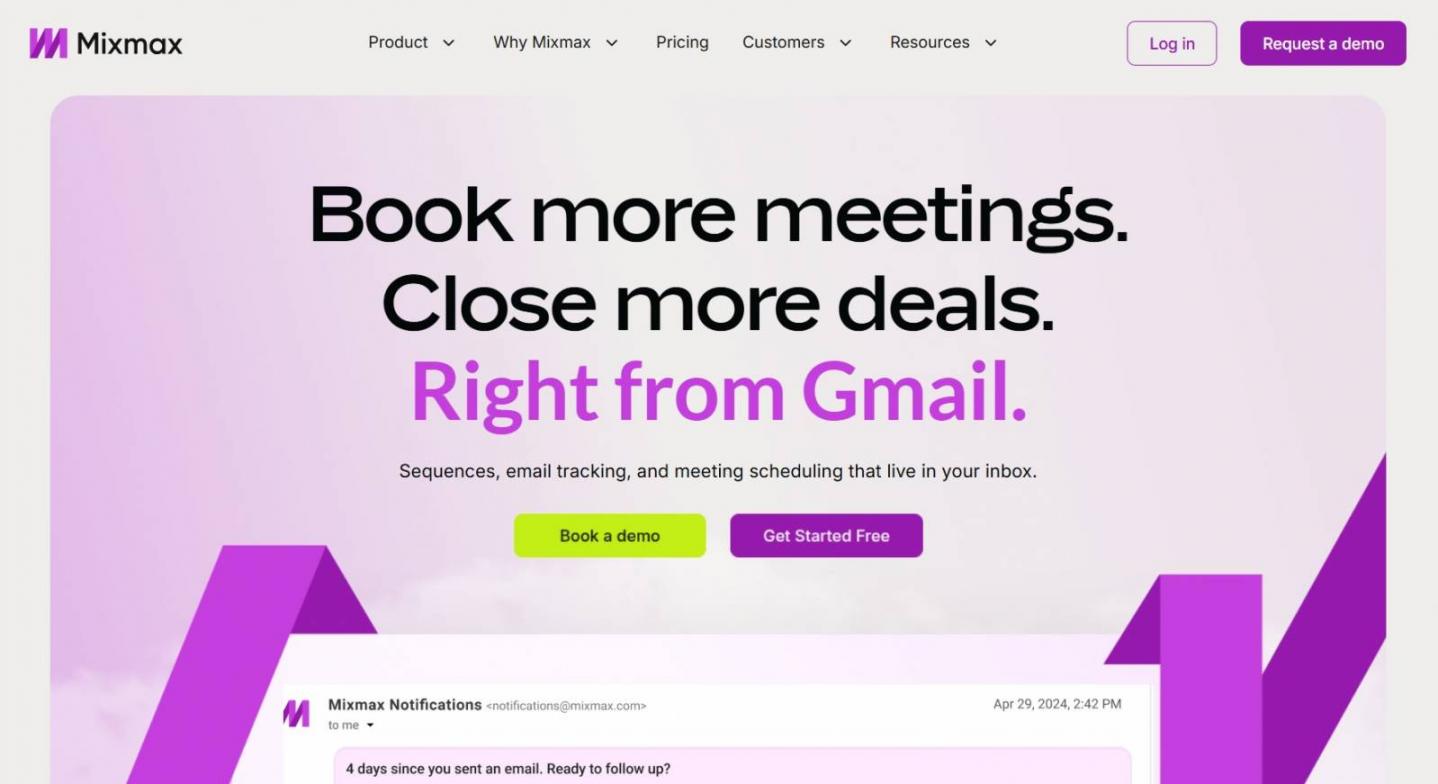
Image via Mixmax
Mixmax is a Gmail-native sales engagement platform for Google Workspace teams. It adds sequences, scheduling, and AI copilots directly to the inbox reps already use.
Its biggest advantage is convenience. Every cadence, meeting invite, and reminder runs in Gmail, so you don’t have to switch tools. You can send follow-ups, schedule emails, set reminders, and manage outreach from one place.
Mixmax also displays live calendar availability inside emails, making it easy to book meetings with just a few clicks. That saves time and keeps sales conversations moving.
Because everything runs inside Gmail, onboarding is fast, and daily adoption comes naturally. Teams don't have to learn a separate platform or manage another browser tab. Mixmax holds a strong 4.6-star G2 rating, with users often highlighting its ease of use and smooth Gmail experience.
Key Features
- Scheduling: One-click meeting booking links
- Email Tracking: Opens, clicks, and reminders
- Gmail Sequences: Outreach cadences inside Gmail
- AI Copilots: AI writing and meeting helpers
- Dialer: Calling available as an add-on
Pros
- Almost no learning curve for Gmail users
- A fast, lightweight day-to-day workflow
- A useful free tier to test it
Cons
- It's built around Gmail, so it fits Workspace shops best
- It's less suited to large outbound organizations
- Some features are paid add-ons
Pricing
- Free
- Mixmax Suite: $89/month per user (billed annually)
- Mixmax for Teams: Custom pricing
- Or, go with specific Copilots:
- Inbox Copilot: $34/month per user
- Meeting Copilot: $34/month per user
- Engagement Copilot: $65/month per user
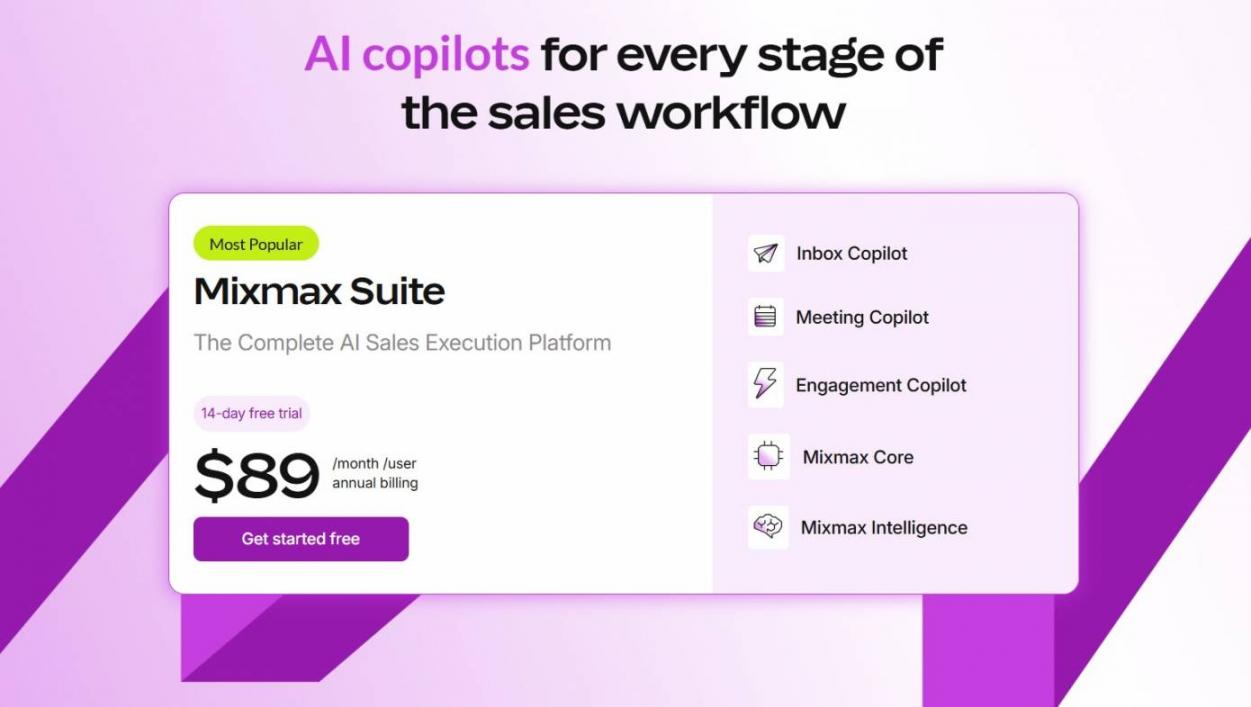
Image via Mixmax
Tool Level
- Beginner to Intermediate
Usability
- Gmail users can start working almost immediately with very little training. Mixmax feels like a natural extension of Gmail instead of a separate application.
Pro Tip: Pair Mixmax sequences with its scheduler, since cutting the back-and-forth on booking shortens your sales cycle noticeably.
9. Amplemarket
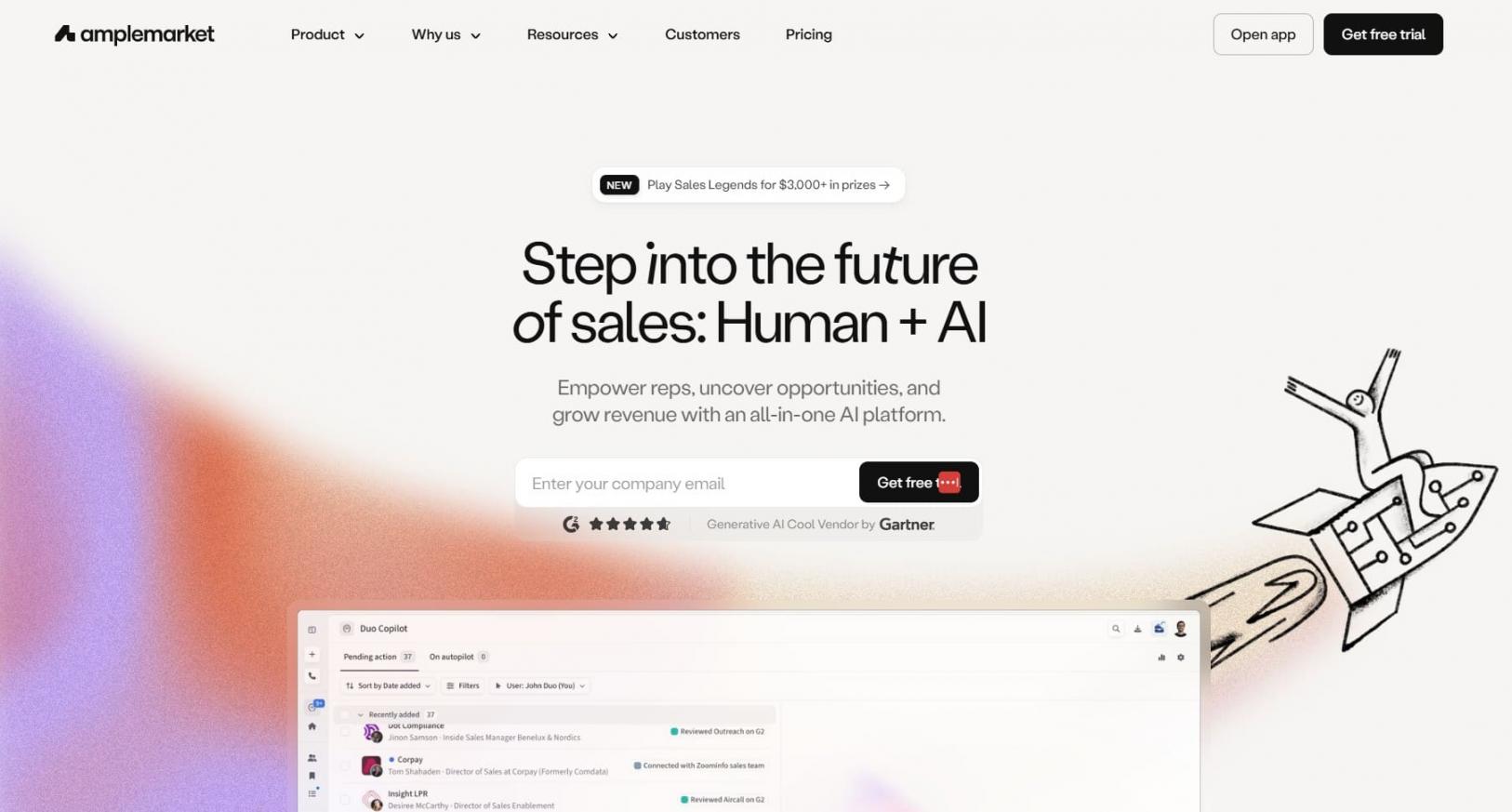
Image via Amplemarket
Amplemarket is an AI-powered sales engagement platform that combines contact data, buying signals, and multi-channel sales outreach. Mid-market and enterprise outbound teams use it to act on intent, not guesswork.
The platform's biggest strength is signal-based selling. Instead of cold outreach, sales managers track customer interactions, deal risks, and engagement metrics tied to real buying signals.
This predictive revenue system helps teams focus on potential customers most likely to convert. Outreach spans multiple channels, including email, calls, and LinkedIn. This way, sales leaders can scale effective sales engagement strategies, rather than researching leads or juggling tools.
Amplemarket is perfect for teams running outbound sales at scale. Once you’ve set it up, it prioritizes accounts and keeps outreach organized and consistent. Its users give it a strong 4.6-star rating on G2, with many praising its efficient workflows and AI-powered automation.
Key Features
- Built-In Data: Contacts plus buying and job-change signals.
- Multichannel Sequences: Email, LinkedIn, and calls.
- Deliverability Suite: Validation and inbox health
- AI Copywriter: Signal-based message drafting
- Analytics: Sequence and signal reporting
Pros
- Strong intent and signal data built in
- AI personalization grounded in real signals
- One tool for data and engagement
Cons
- A higher entry price than SMB tools
- It's not priced per single seat
- Best value needs a real outbound motion
Pricing
- Startup: $600/month (billed annually)
- Growth: Custom pricing
- Elite: Custom pricing
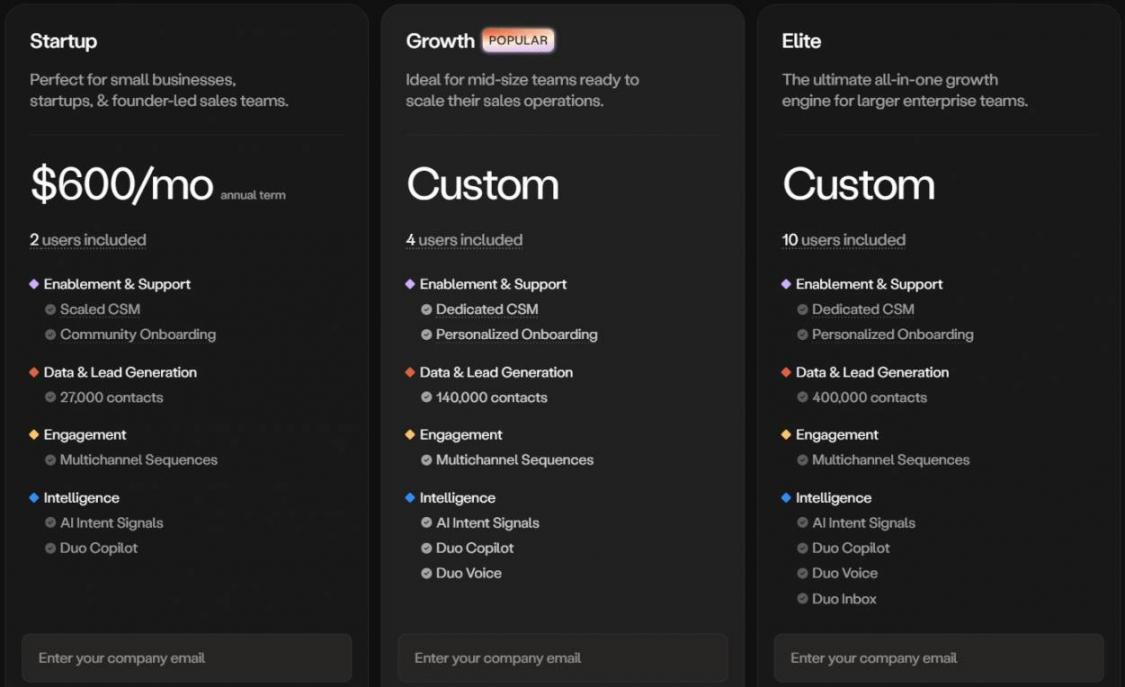
Image via Amplemarket
Tool Level
- Intermediate to Advanced
Usability
- Initial setup takes some planning, but most teams are productive after a short onboarding period. This sales engagement platform rewards teams that invest time in configuring buying signals and ideal customer profiles.
Pro Tip: Consider triggering sequences off job-change signals. Reaching a buyer in their first weeks in a role can sharply increase reply rates.
Sales Engagement Platform vs CRM and Other Sales Tools
A CRM is your system of record, and a sales engagement platform is your system of action. Most teams run both, because they solve different problems.
Your CRM stores contacts, deals, and history. Meanwhile, your sales engagement platform is what sends emails, schedules calls, and keeps deals moving. One remembers, the other does.
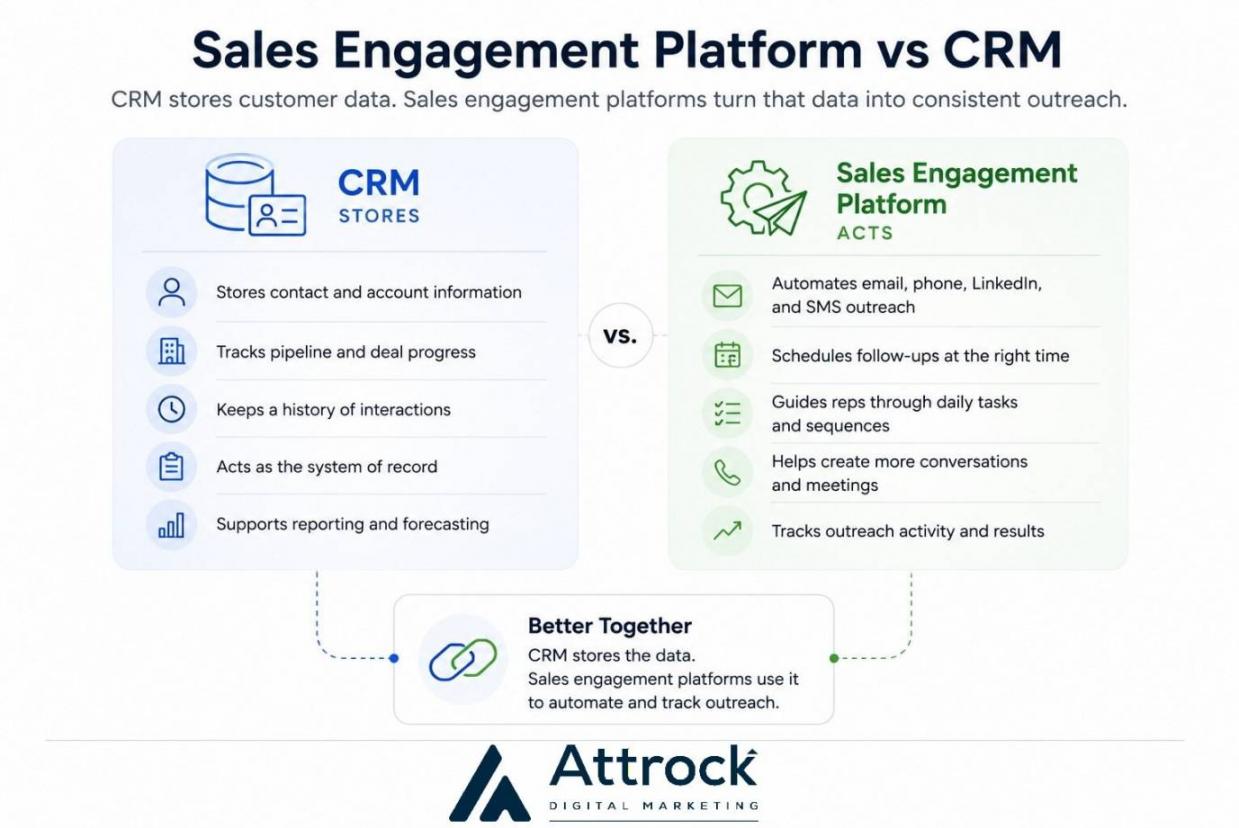
Image via Attrock
The two overlap, so it’s easy to get them confused. So, if you need a single source of truth, choose a CRM. Then, add an engagement platform once manual outreach starts slowing your team down.
Since the category gets crowded, I've provided a clean map below. Use it to help your sales and marketing teams avoid buying two tools that do the same job.
| Tool type | What it is for | Example tools | When you need it |
|---|---|---|---|
| Sales engagement platform | Automating and tracking multichannel outreach | Salesloft, Outreach, Apollo.io | You run active outbound or follow-up at scale |
| CRM | Storing contacts, deals, and pipeline history | HubSpot, Salesforce, Pipedrive | You need one source of truth for customer data |
| Conversation intelligence | Recording and analyzing sales calls | Gong, Salesloft (built-in) | You coach reps on real call data |
| Cold email tool | High-volume email sending and deliverability | Instantly, Saleshandy | Email is your only channel and volume is high |
| Sales enablement | Content, training, and rep readiness | Seismic, Highspot | You equip reps with decks and playbooks |
How to Choose the Best Sales Engagement Platform for Your Business
To choose the right platform, match it to your sales process and existing tools, not the longest feature list. The best sales engagement platform for a three-rep startup rarely suits a 100-rep enterprise. A startup needs speed and affordable pricing, while an enterprise needs stronger controls, reporting, and user management.
Start with where your team already lives. If your reps run on Gmail, a Gmail-native tool wins. If you sit inside Salesforce, a native add-on saves you months of setup.
Choose Your Sales Engagement Platform
By team size:
- 1 to 3 reps: Apollo.io or Mixmax
- 4 to 20 reps: Sales Hub or Reply.io
- 20 to 100 reps: Salesloft or Klenty
- 100-plus reps: Outreach or Salesloft
By sales motion:
- High-volume outbound: Outreach or Apollo.io
- Multichannel with deep personalization: Reply.io or Amplemarket
- Inbound and nurture: HubSpot Sales Hub
By existing stack:
- On HubSpot CRM: Sales Hub
- On Salesforce: Salesforce Sales Engagement or Salesloft
- On Google Workspace: Mixmax
Before you sign, ask five questions. They protect your budget and your adoption rate.
- What's the real cost per seat, including dialer and data add-ons?
- Will my reps actually adopt it, or fight it?
- Does it sync cleanly with my current CRM?
- What happens to the price at renewal in year three?
- How hard is it to migrate out if it fails?
When comparing platforms, focus on the total cost of ownership. Add the per-seat price, dialer and data add-ons, and any onboarding fees before making a decision. A low starting price can hide higher long-term costs.
Ease of adoption matters too. If a platform takes days to learn, busy reps may stop using it. After a 30-day trial, review your sales funnel metrics to see whether the platform improves results.
Trends Shaping Sales Engagement Platforms in 2026
The category is changing fast, and three trends will shape your sales engagement strategy this year. Agentic AI, better but reduced outreach, and tool consolidation are reshaping sales engagement, so factor them into any purchase.
Agentic AI is moving from an add-on to a core capability. More than half of sellers have already used AI agents, per the previously cited Salesforce report. What's more, nearly nine in ten plan to do so by 2027.
The AI SDR market alone is projected to grow from about $4.1 billion to $15 billion by 2030, according to MarketsandMarkets. Expect every platform to ship deeper AI drafting and research. The practical effect: reps spend less time writing first drafts and more time on live conversations.
Less outreach, but better targeting. Buyers are tired of spray-and-pray sequences. About 61% of B2B buyers now prefer a rep-free experience. Meanwhile, 73% avoid suppliers that send irrelevant outreach, according to a 2025 Gartner survey. Signal-based, personalized sequences now outperform high-volume outreach. Tools that identify buying intent before reps reach out will continue to gain an edge.
Sales teams are reducing tool sprawl and consolidating their tech stacks. Sales teams often juggle multiple tools to close a deal, and many reps feel overwhelmed by the stack. Salesforce reports that sales professionals use an average of eight tools, while 42% say the number of tools makes their job harder. For this reason, all-in-one platforms are gaining ground as businesses cut redundant software to protect sales performance and budgets.
The buying question is shifting from “best point tool” to “fewest tools that still cover the job.” For many teams, that favors an all-in-one over three best-of-breed point tools.
Agentic AI is the defining shift. It's moving from a bonus feature to the core engine that drafts, researches, and prioritizes outreach inside every major platform.
FAQ
Q1. What's a sales engagement platform?
A. A sales engagement platform helps sales teams automate and manage outreach across email, phone, LinkedIn, and SMS. It organizes those touchpoints into sequences and tracks every interaction. It also works alongside your CRM to reduce manual work.
Q2. What's the difference between a sales engagement platform and a CRM?
A. A CRM stores customer information, deal history, and pipeline data. Meanwhile, a sales engagement platform uses that information to automate outreach and guide you through follow-ups. Most sales teams use both together.
Q3. Is HubSpot a sales engagement platform?
A. Yes. HubSpot Sales Hub provides sales engagement features, including sequences, email tracking, a dialer, and analytics, natively inside its CRM. That makes it both a CRM and an engagement tool in one platform.
Q4. What's the difference between sales engagement and sales enablement?
A. Sales engagement focuses on helping reps reach prospects through emails, calls, and automated sequences. Sales enablement gives reps the content, training, and coaching they need to sell effectively. They serve different purposes but work well together.
Q5. How much does a sales engagement platform cost?
A. Sales engagement platforms range from about $15 to $59 per user per month for SMB tools. They can go up to custom enterprise quotes for Outreach, Salesloft, and Salesforce. Watch for add-ons like dialers, which raise the real total cost.
Q6. Do I need both a CRM and a sales engagement platform?
A. Yes, you do. A CRM will store your customer data and deal history, while a sales engagement platform will help with outreach and follow-ups. An even better choice to cover both aspects, especially for smaller teams, is an all‑in‑one platform like HubSpot Sales Hub.
Q7. What's the best free sales engagement software?
A. Apollo.io offers the strongest free plan, combining a B2B contact database with basic sequencing at no cost. It lets small teams prospect and run outreach before committing to a paid tier.
Q8. Between Salesloft vs Outreach, which is better?
A. Both are enterprise leaders. Salesloft is best for user adoption, coaching, and conversation tracking. Outreach is best for large-scale outbound operations, complex workflows, and deep analytics. Choose Salesloft for coaching, Outreach for sheer scale.
Q9. What's the best sales engagement platform for a small business?
A. Small businesses will find the best, low-friction picks to be HubSpot Sales Hub, Apollo.io, and Mixmax. Sales Hub offers all-in-one simplicity, Apollo offers value with data, and Mixmax fits Gmail-native teams.
Q10. What features should a sales engagement platform have?
A. A sales engagement platform should have multichannel sequences, a built-in dialer, email tracking, clean CRM sync, deliverability tools, analytics, and AI assistance. The best fit weights those features toward your actual sales motion and channels.
Conclusion
The best sales engagement platform must align with your sales process and existing tools, not necessarily the one with the longest feature list.
I found HubSpot Sales Hub to be the strongest all-rounder. Salesloft and Outreach led the enterprise market, while Apollo.io was the best value pick.
Pick two finalists, run a short trial with real reps, and watch adoption before you commit. The right tool should feel obvious within a week.
Ready to start? Try HubSpot Sales Hub free and see how fast your team gets up and running.
If you'd rather pour your energy into pipeline management, my team can help you turn these tools into booked meetings. Explore our lead generation services to put a real system behind your outreach.
Disclaimer: This content contains some affiliate links for which we will earn a commission (at no additional cost to you). This is to ensure that we can keep creating free content for you.