Missed follow-ups, scattered client data, and delayed responses often lead to lost deals and, ultimately, lost commissions. The best CRM for real estate, such as HubSpot CRM, helps you close those gaps by keeping all leads, messages, and tasks in one organized system.
HubSpot CRM lets you track deals, store contact details, and record every interaction with buyers and sellers. It also combines contact management, pipeline tracking, email automation, and reporting in one place.
If you are a realtor looking for an efficient way to manage your pipeline and protect your revenue, this is for you. Keep reading to learn the tools that made our list of the best CRM for real estate.
Disclaimer: This content contains some affiliate links for which we will earn a commission (at no additional cost to you). This is to ensure that we can keep creating free content for you.
How We Chose the Best CRM for Real Estate
To ensure you end up with the right CRM for your real estate clients, here are the factors we considered when compiling our list.
- IDX Integration: Internet data exchange (IDX) integration connects your CRM to live property listings. The best CRM for real estate, such as HubSpot, can sync listings in real time so you can match buyers with active homes without switching tools.
- Property Management: Property management features help you track leases, tenant details, and maintenance tasks in one place. The best CRM for real estate should let you store property records alongside client data so you don’t lose context during follow-ups.
- Commission Tracking: Commission tracking keeps your earnings transparent across deals and agents. The best CRM for real estate should log deal value, split percentages, and payout timelines so you always know what you’ve earned.
- Integration With Existing Tools: Your CRM should integrate with all the tools you use so that everything is linked to a single record. The best CRM for real estate, such as HubSpot, connects marketing activity with your contact database, keeping records accurate.
- Lead Source Attribution: The best CRM for real estate should track each source so you can see which channels bring serious buyers or sellers. HubSpot gives clear reporting on this, so you can focus your time on sources that lead to closed deals.
- Listing Lifecycle: This helps you follow a property from listing to closing without missing steps. The best CRM for real estate should clearly show each stage, including listing, showing, offer, and closing. This structure helps you stay organized and keeps clients informed at every step.
The Best CRM for Real Estate Comparison Table
If you’re in a rush, here’s a quick breakdown of the best CRM for real estate options for your consideration.
| Tool | Key Features | Best For | Free Plan | Starting Price |
|---|---|---|---|---|
| HubSpot CRM | Customizable pipeline tracking | Agencies and scaling teams | ✅ | $15/month/seat |
| Lofty | AI-driven lead nurturing | Teams focused on AI integration | ❌ | Custom pricing |
| Wise Agent | Transaction management tools | Solo agents and small teams | ❌ | $49/month |
| Realvolve | Workflow automation for follow-up | Process-driven agents | ❌ | $69/month |
| Close CRM | Built-in calling system | Sales-focused teams | ❌ | $49/month/seat |
| IXACT Contact CRM | Automated drop campaigns | Automation-focused teams | ❌ | Custom pricing |
| Sierra Interactive | IDX website lead capture | Teams focused on online lead generation tools | ❌ | $359.95/month |
| CINC Pro | Behavior-based lead scoring | Teams handling paid leads | ❌ | Custom pricing |
| Rechat | Marketing design studio | Marketing-focused teams | ❌ | Custom pricing |
| Top Producer | Market snapshot reports | Individual agents | ❌ | Custom pricing |
| RealNex | Property data integration | Commercial real estate teams | ❌ | $224/month |
| BoomTown | Lead generation websites | Growth-focused teams | ❌ | Custom pricing |
| REsimpli | Lead source tracking | Investors and agencies | ❌ | $199/month |
| Follow Up Boss | Lead distribution | Brokerages | ❌ | $69/month/user |
| Real Geeks CRM | IDX website integration | Small to medium-sized teams | ❌ | Custom pricing |
15 Best CRM for Real Estate for Realtors
If you want to get the most out of your real estate business, here’s the complete list of the best CRM for real estate platforms you should use.
1. HubSpot CRM
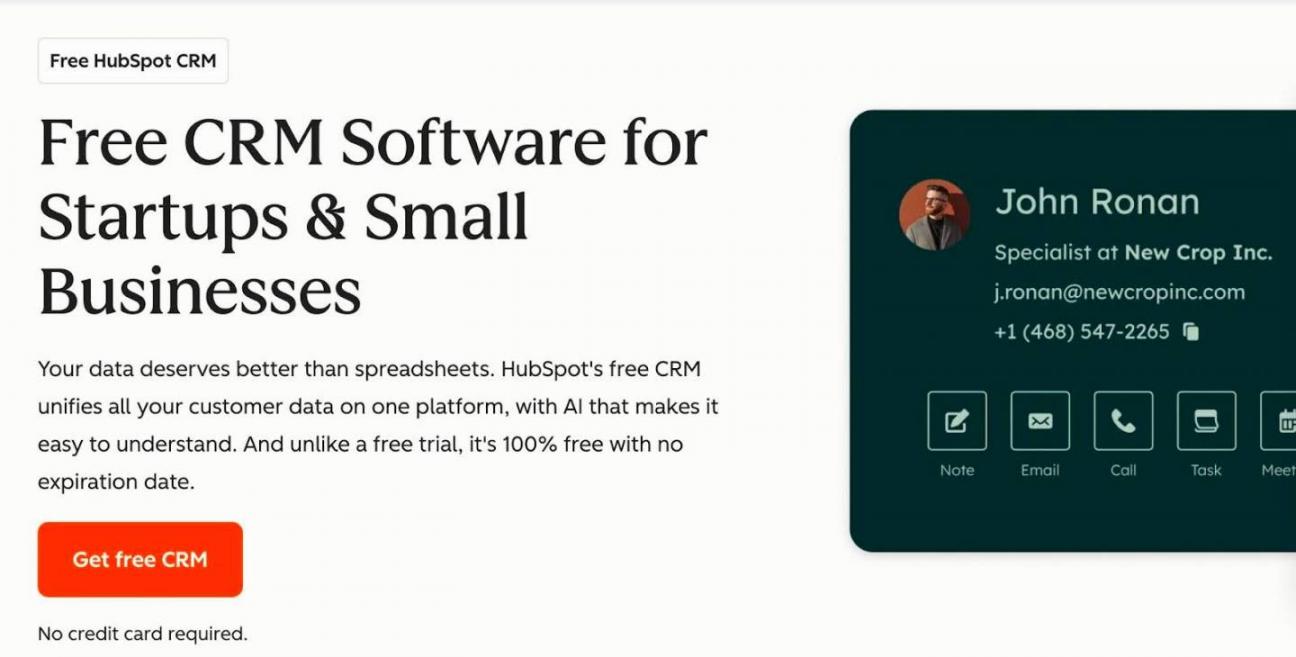
Image via HubSpot CRM
HubSpot stands out as the best CRM for real estate because it keeps all the key real estate interactions in view. Its lead management structure logs each touchpoint and keeps conversations visible. This ensures you always know the next step.
HubSpot CRM also offers automation for routine real estate tasks. For example, you can set follow-ups and task reminders that trigger at the right time. Automating follow-ups after site visits ensures you don’t accidentally forget crucial conversations.
There’s also integration support for over 2,000 apps. This makes HubSpot a flexible real estate option for sales teams that use other tools and apps. You also get detailed reporting and pipeline views that show deal stages and trends so that you can identify bottlenecks and make faster decisions.
Key Features
- Central contact records
- CRM import capabilities
- Email tracking and logging
- App marketplace access
- Breeze AI assistant for faster responses
- Shared inboxes for managing client inquiries
Pros
- Efficient data synchronization
- Flexible HubSpot mobile app
- Free plan available
- A fast AI content generator
- Ready-to-use email templates
Cons
- You need premium plans to unlock more features
- Costs increase as you scale
Pricing
- Free
- Starter: $15/month/seat
- Professional: $890/month
- Enterprise: $3,600/month
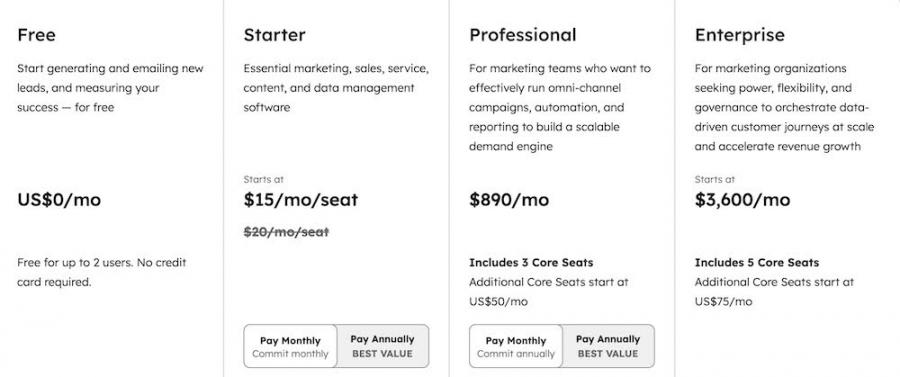
Image via HubSpot CRM
Tool Level
- Beginner
Usability
- HubSpot CRM has a simple layout with clear menus that guide you without confusion.
Pro Tip: Use workflow automation to assign follow-ups after each status change so no lead goes cold.
2. Lofty
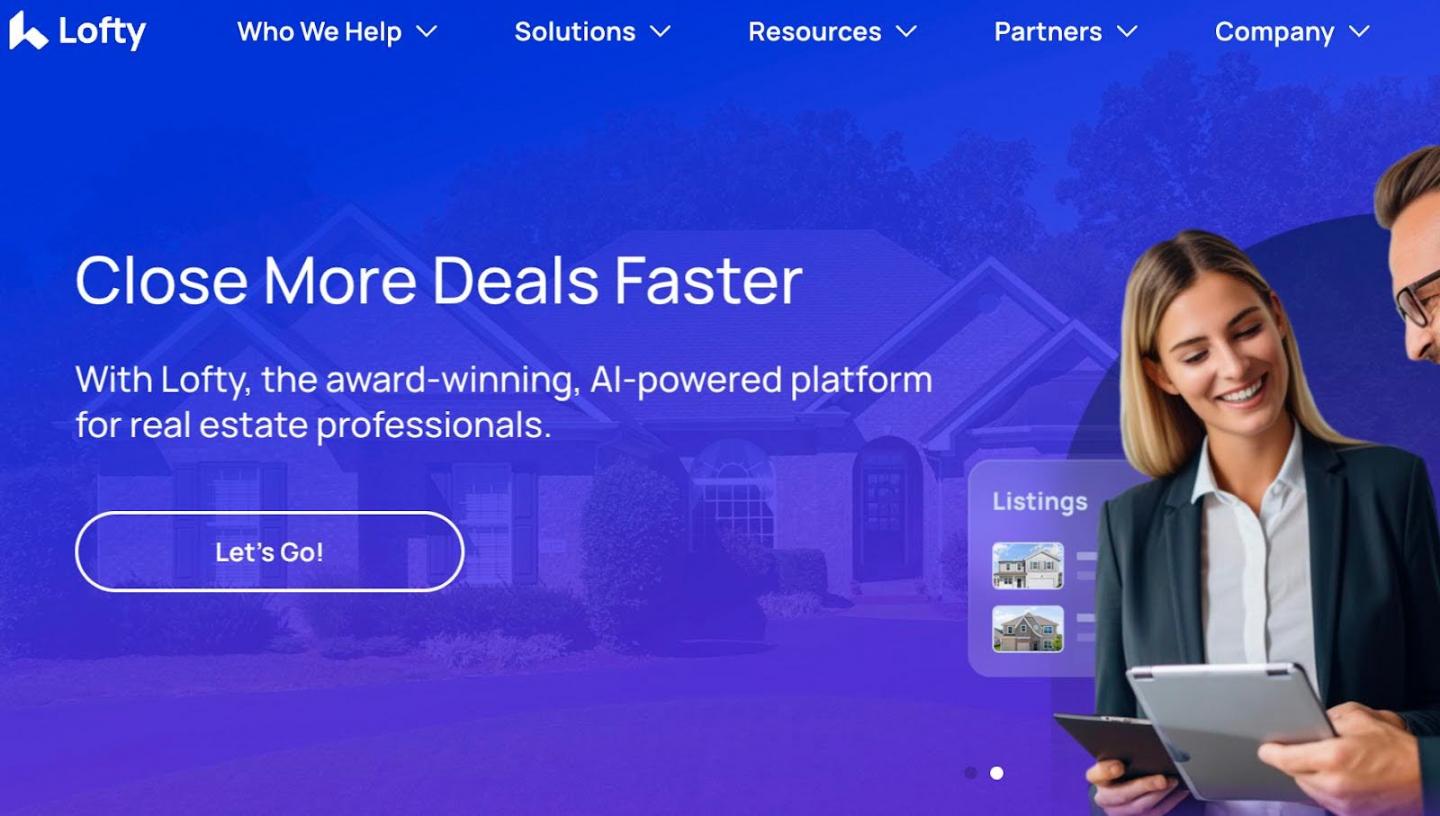
Image via Lofty CRM
Lofty CRM keeps all your real estate marketing efforts in one place from your first contact with potential buyers.
Its lead management setup makes it one of the best CRM for real estate as it ranks and sorts inquiries from prospects. This allows you to see priority leads and maintain conversations with prospective house buyers actively.
The platform also ensures all the contact data you’ve collected stays unified across the entire system. You can open a profile and review details, past messages, and behavior signals in one view, allowing you to respond with clarity.
Lofty’s integration gives you access to a wide range of external tools like Microsoft Tools, Gmail, and more. However, the level of integration isn’t as wide, which limits its ability to handle real estate agencies that use multiple tools.
Key Features
- Lead analysis and scoring
- Smart suggestions
- Site activities tracking
- Listing management
- Performance reporting and analysis
- Agentic AI system for automation
Pros
- Clear lead prioritization
- Strong data visibility
- Insightful reporting views
- AI assistant for repetitive tasks
Cons
- Initial setup is complex
- Inconsistent customer support
Pricing
- Custom pricing
Tool Level
- Expert
Usability
- Lofty CRM has a complex setup process, and using it requires a significant level of knowledge on how top real estate CRMs and related sales tools work.
Pro Tip: Use lead scoring to rank contacts by activity so you focus on high-intent leads first and keep your pipeline active.
3. Wise Agent
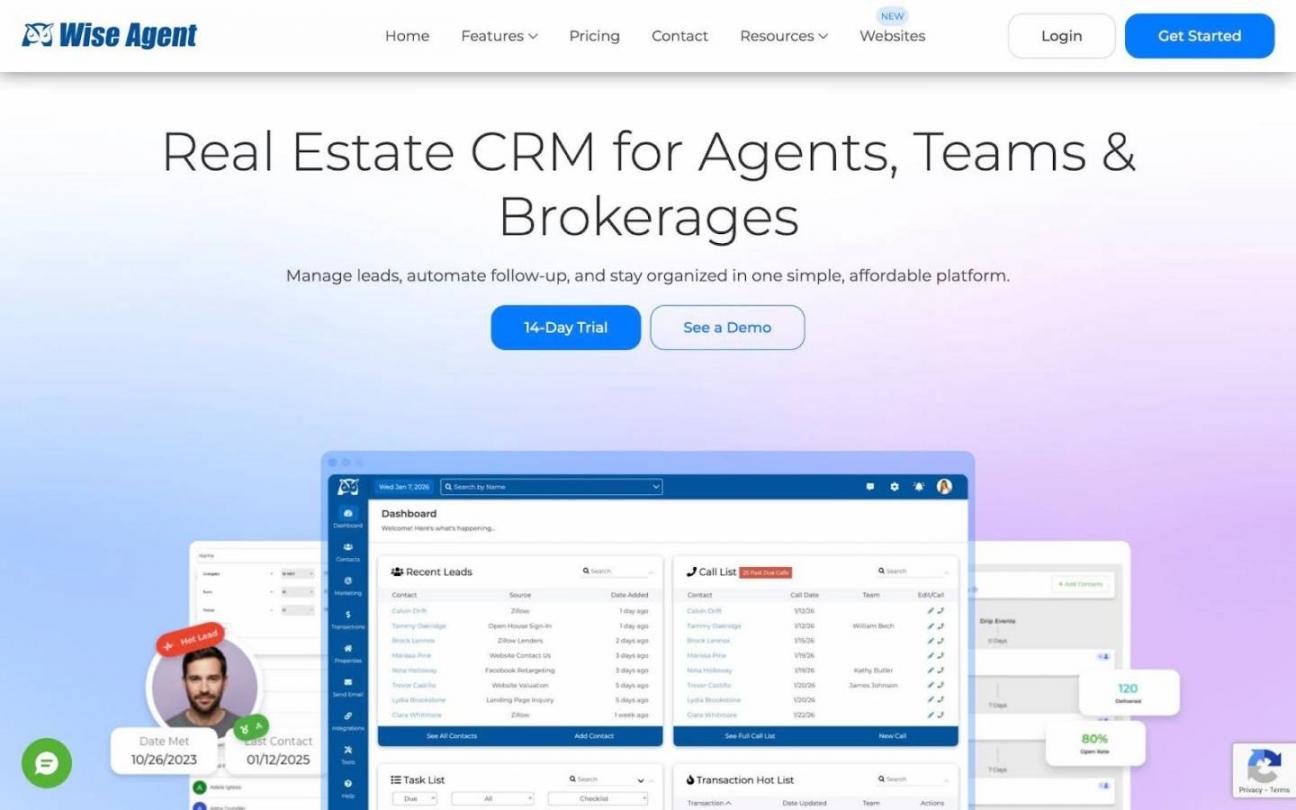
Image via Wise Agent
Wise Agent CRM keeps outreach and tracking tightly connected by capturing leads, logs, and interactions at crucial moments. It’s one of the best CRM for real estate when it comes to keeping track of a prospect's journey from inquiry to purchase.
You can manage contact data in one place with full visibility into calls, emails, and notes. There’s built-in automation that handles follow-ups, email sequences, and task alerts. This keeps your pipeline active without your constant input.
Wise Agent also combines marketing, sales forecasting, and service tools in one system. This setup keeps messaging consistent while giving you control over multiple workflows.
Although Wise Agent offers reporting and analytics, it doesn’t provide the same level of forecasting as HubSpot, which offers a minute-by-minute update of all sales activities.
Key Features
- Deal and pipeline management
- Contact tagging system
- Appointment scheduling
- 360-degree contact view
- Landing page and form builders
- Social plugins
Pros
- Unified communication tools
- Flexible tagging system
- All-in-one functionality
- One-click integrations
- Affordable pricing
Cons
- Limited reporting and analytics
- Outdated interface design
Pricing
- Monthly: $49/month
- Annual: $499/year
- Enterprise: Custom
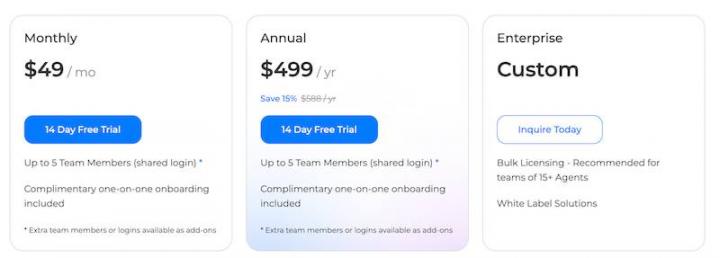
Image via Wise Agent
Tool Level
- Intermediate
Usability
- Wise Agent CRM may lack a modern-looking interface, but its functionality is easy enough for intermediate users.
Pro Tip: Use contact tagging to group leads by status so you can trigger targeted follow-ups and keep communication structured.
4. Realvolve
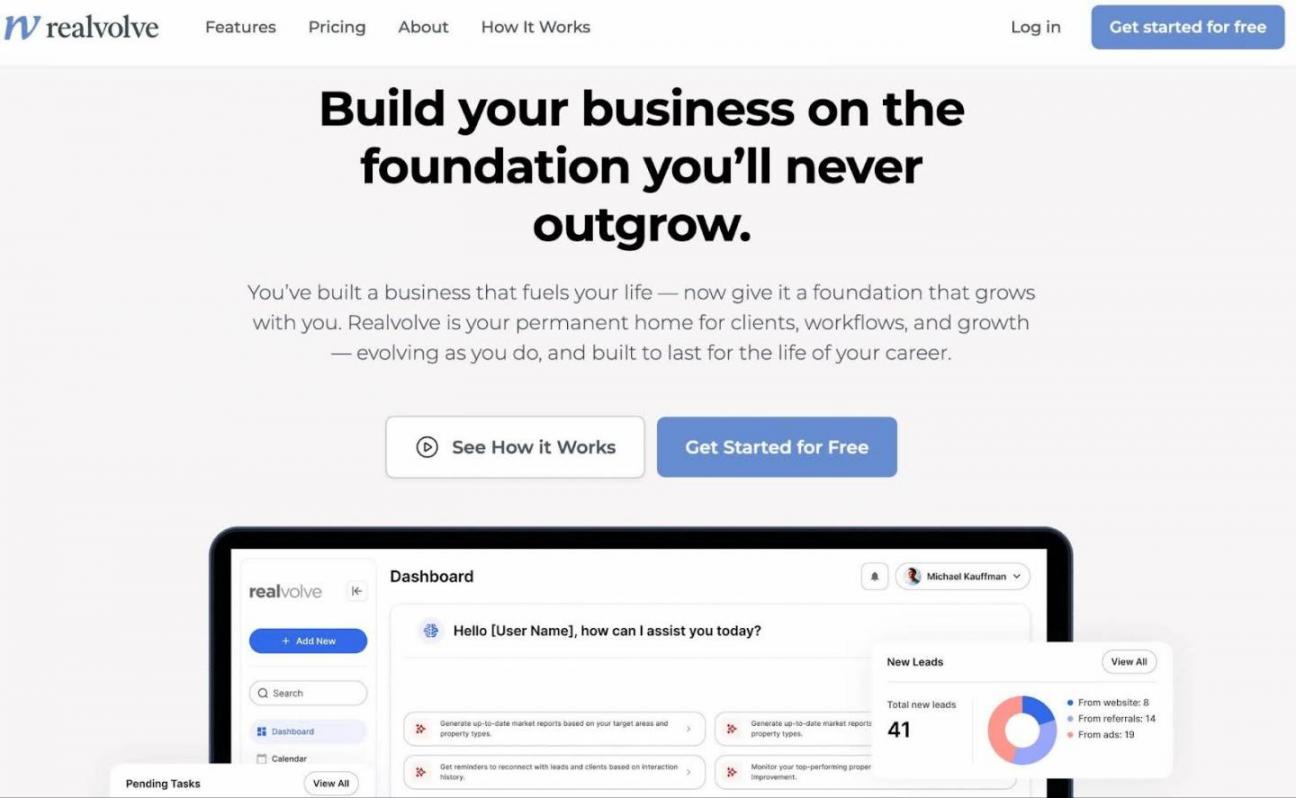
Image via Realvolve
Realvolve is one of the best CRM for real estate because it connects contacts, tasks, and timelines for easy access by all team members. It keeps every lead linked to a clear process without losing context across deals.
You can access contact data with detailed records that store notes, history, and communication. There’s automation for ensuring task sequences and follow-ups are timely, which keeps activity consistent.
Realvolve focuses heavily on workflow automation, which reduces manual work if you handle large volumes of inquiries. This reduces the risk of missed steps and keeps operations running smoothly.
Key Features
- Task and activity management
- Full contact history
- Smart task tracking
- Seamless messaging
- Custom process templates
- Email integration
Pros
- Clear task tracking
- Central contact records
- Customizable templates
- Native mobile apps
Cons
- Limited third-party integrations
- Higher pricing compared to some alternatives
Price
- Essential: $69/month
- Professional: $119/month
- Smart Start Coaching: $2,499 one time fee
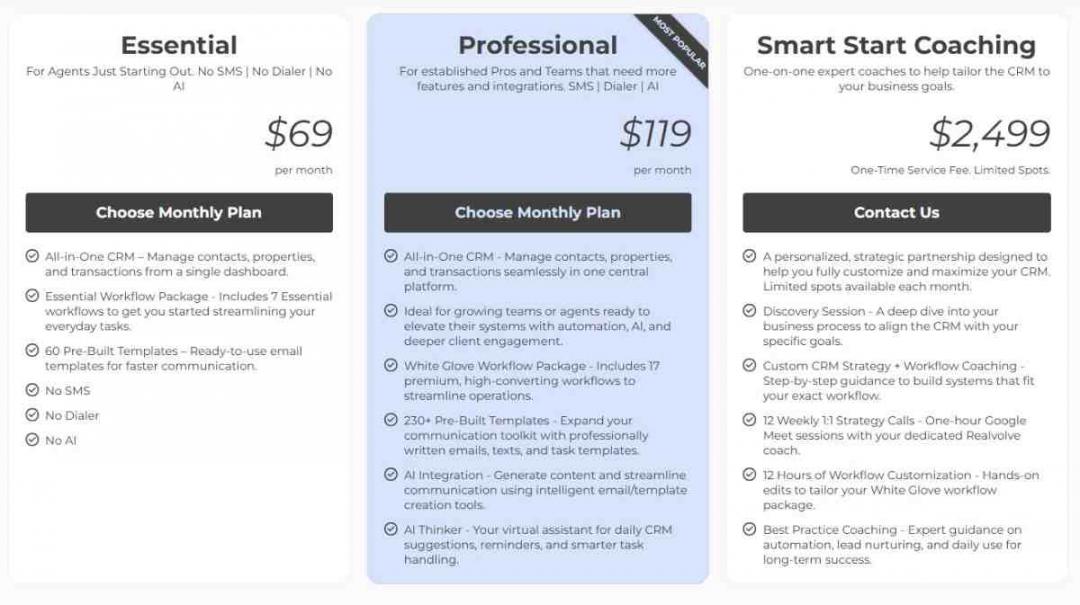
Image via Realvolve
Tool Level
- Intermediate
Usability
- If you’ve ever handled real estate CRM tools before, then navigating Realvolve will be easy.
Pro Tip: Use workflow templates to map each deal stage so tasks trigger in order and keep every process aligned without manual tracking.
5. Close CRM
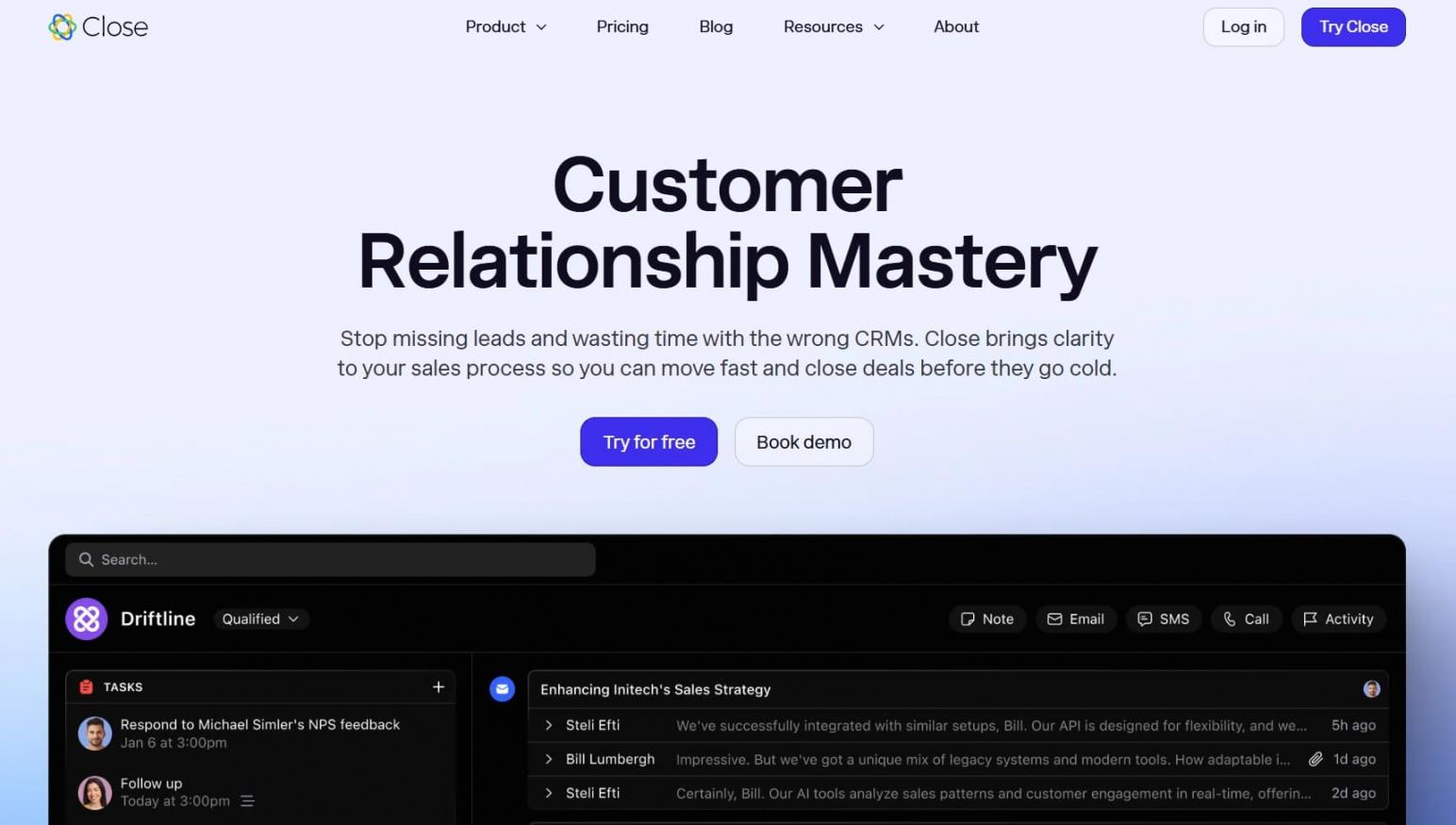
Image via Close CRM
Close CRM keeps calls, emails, and messages in one space, making it a strong choice for managing conversations without switching tools. It’s one of the best CRM for real estate for tracking conversations likely to convert into a sale.
To achieve this, Close CRM uses built-in calling and email syncing to keep outreach consistent. You also get detailed pipeline views showing deal stages, helping you monitor progress and identify delays.
Compared to HubSpot, Close CRM focuses heavily on communication without marketing tools for closing sales. If you want a tool that goes beyond touching bases with potential buyers, then go with HubSpot for its marketing automation and branding.
Key Features
- Built-in calling system
- Email sync and tracking
- Pipeline management
- Lead activity timeline
- Shared inbox
Pros
- Fast communication tracking
- Strong activity logging
- Centralized outreach tools
- Sales automation features
Cons
- Limited marketing capabilities
- Fewer native integrations
Pricing
- Essentials: $49/month/seat
- Growth: $109/month/seat
- Scale: $149/month/seat
- Custom pricing for large teams
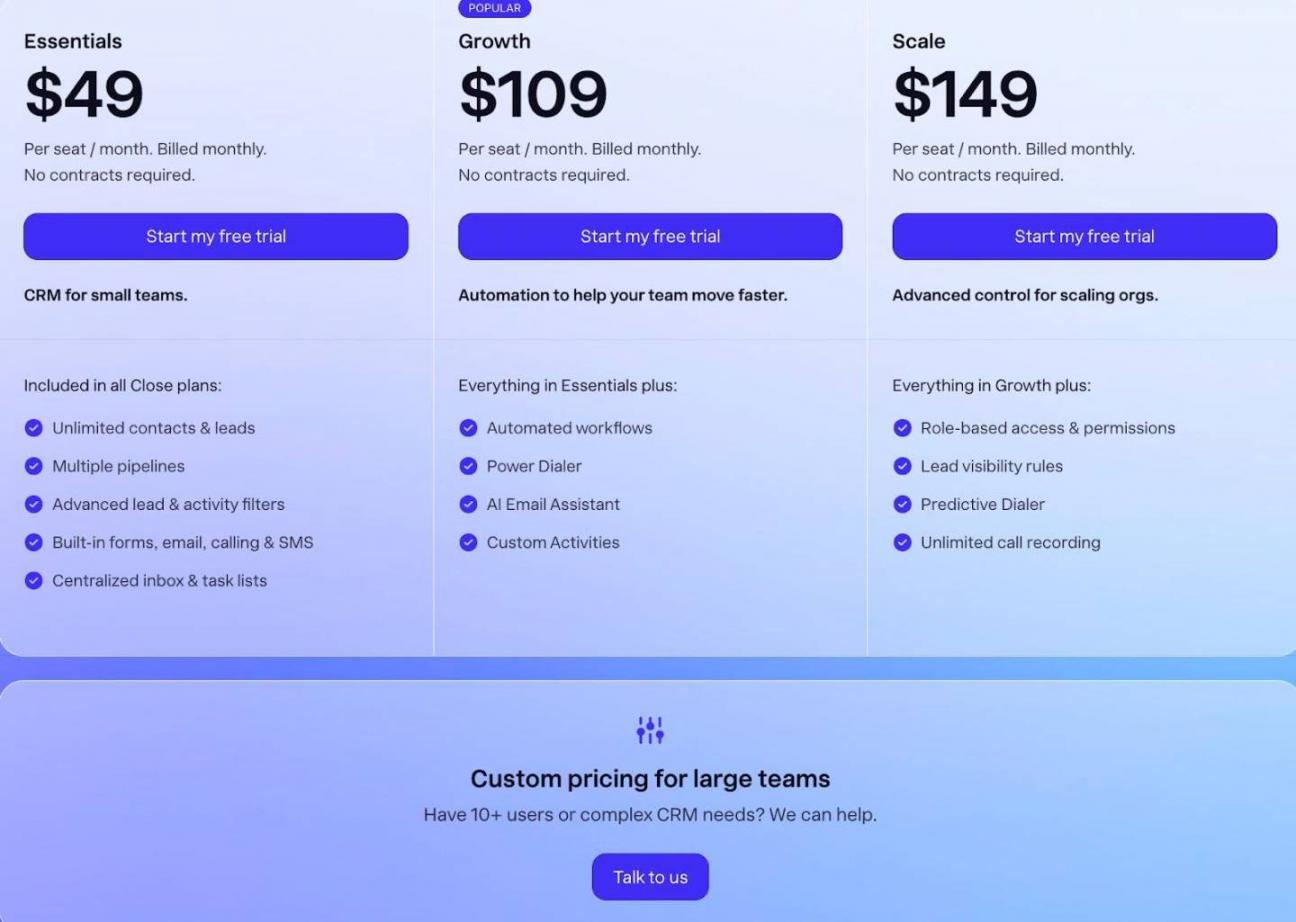
Image via Close CRM
Tool Level
- Intermediate
Usability
- Close CRM is user-friendly and easy to learn and use, with a sharp focus on communication with prospects.
Pro Tip: Use built-in calling to log every conversation instantly so your records stay current and your follow-ups stay aligned.
6. IXACT Contact CRM
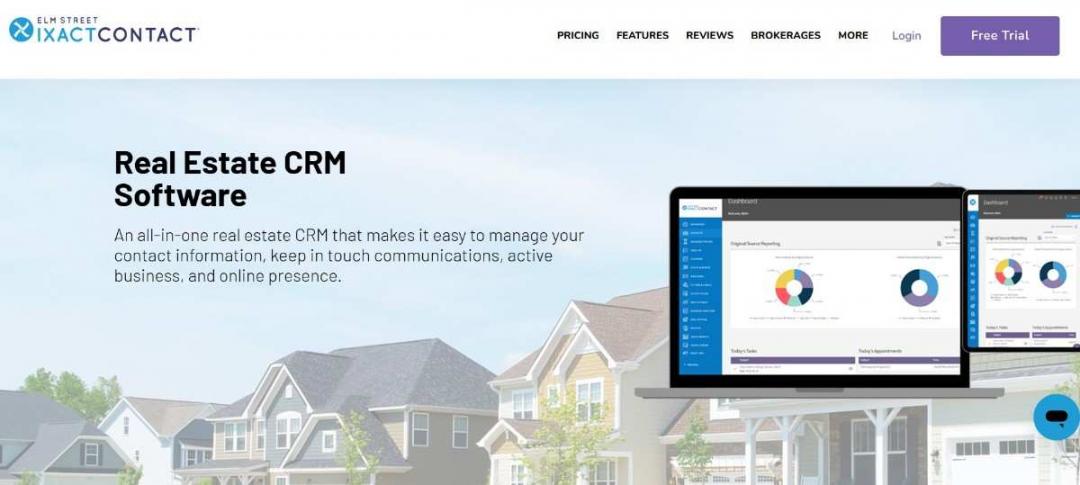
Image via IXACT Contact CRM
Consistency in follow-ups is a key feature of the best CRM for real estate, and IXACT Contact CRM meets that requirement. It focuses on repeat engagement that keeps you connected with leads and past clients without losing track of timing.
You can manage contacts with full records that include notes, history, and reminders in one place. The system also schedules follow-ups and automates outreach, reducing the need for constant manual intervention.
While IXACT Contact CRM leans on automated email marketing campaigns, HubSpot CRM provides deeper automation control and more detailed reporting. This gives HubSpot the edge with stronger oversight across the board.
Key Features
- Contact and history tracking
- Automated email campaigns
- Task and calendar sync
- Pipeline tracking
- Lead capture tools
- Mobile app with Google Sync
Pros
- Strong follow-up structure
- Clear contact organization
- Focus on long-term engagement
- Built-in reminders
Cons
- Additional CRM features cost extra
- Limited reporting and analytics
Pricing
- Custom pricing
Tool Level
- Beginner
Usability
- IXACT Contact CRM has a beginner-friendly layout with actions that follow a logical path for daily use.
Pro Tip: Use automated email campaigns to stay in touch at set intervals so your contacts remain active without constant manual input.
7. Sierra Interactive
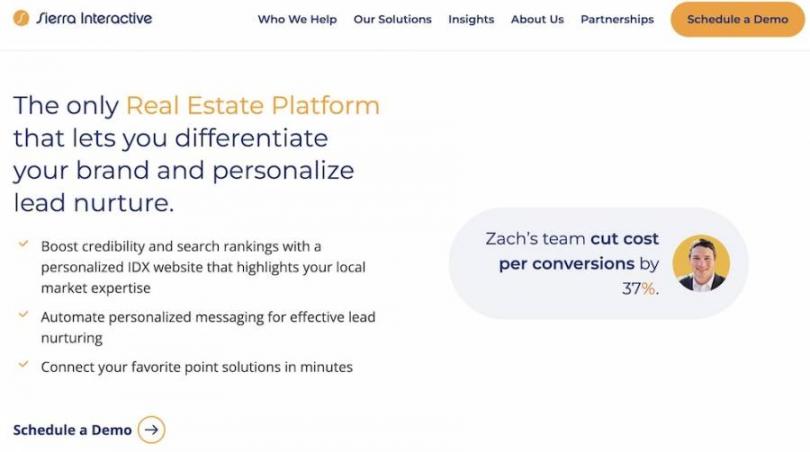
Image via Sierra Interactive CRM
Sierra Interactive CRM approaches real estate like a live system you can shape in real time. It offers internet data exchange (IDX) websites that can capture search behavior, then route it into a built-in CRM that tracks every click, search, and revisit.
You also manage property listings, lead routing, and follow-up from one place. The platform logs calls, texts, and emails, then ties them to each contact record. This keeps your pipeline organized and your response time sharp.
As one of the best CRM for real estate, Sierra Interactive CRM excels in behavioral lead tracking by identifying active buyers. HubSpot, on the other hand, centers on behavioral tracking across all touchpoints, not just leads. This makes it a better automation logic option than Sierra Interactive CRM.
Key Features
- IDX website with lead capture
- Behavioral tracking
- Built-in calling and texting
- Lead routing and task management
- Email and SMS follow-up tools
- Digital ad management
Pros
- Accurate lead intent tracking
- Unified dashboard for sales activity
- Reliable IDX integration
- Fast lead response tools
Cons
- Setup requires time
- Lacks a dedicated mobile app
Pricing
- Starter Package: $359.95/month
- Essential Package: 474.95/month
- Growth Package: 724.95/month
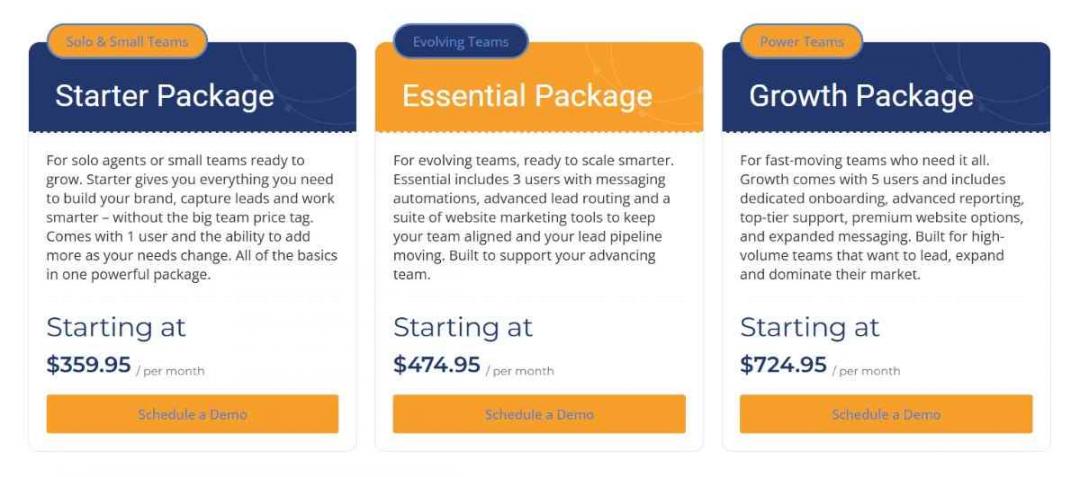
Image via Sierra Interactive CRM
Tool Level
- Intermediate
Usability
- Sierra Interactive stays focused on maintaining the steady flow of deals through all stages and can be handled by intermediate users.
Pro Tip: Use behavioral alerts to trigger instant follow-up. Set rules that notify you when a lead revisits listings, then respond within minutes to increase engagement.
8. CINC Pro
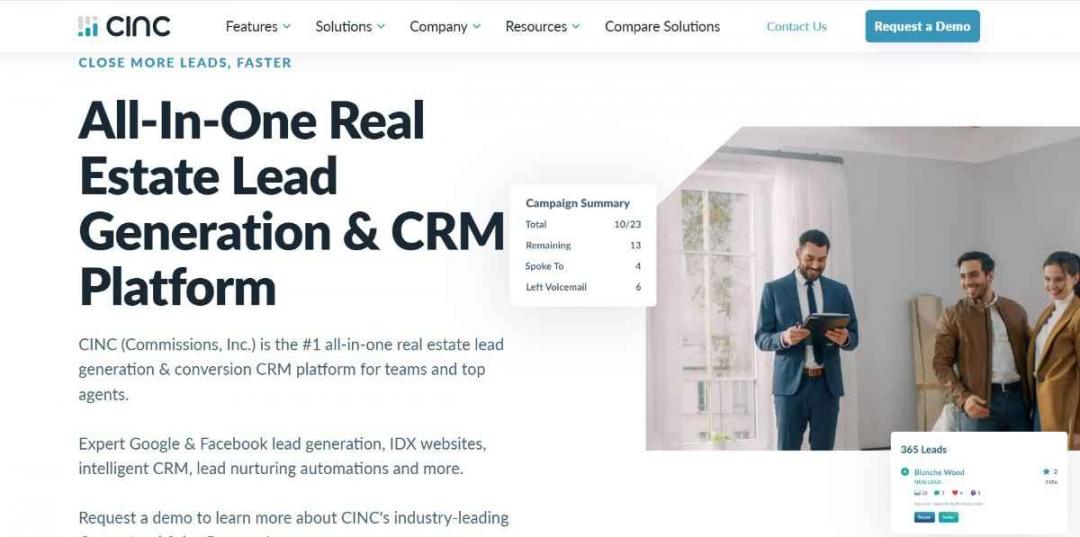
Image via CINC Pro CRM
CINC Pro CRM is a lead generation engine that keeps real estate agents in constant motion, and that’s why it’s among the best CRM for real estate. You capture viable leads through paid ads and IDX sites, then track every action within a single system.
You manage follow-up with built-in texting, calling, and email tools that log every touchpoint. The platform also scores leads based on behavior, then pushes hot prospects to the top of your queue.
Key Features
- IDX websites with lead capture
- Behavior-based lead scoring
- Built-in calling and texting
- Automated follow-up campaigns
- Team lead routing and tracking
Pros
- Strong lead prioritization
- Centralized communication tools
- Clear activity tracking
- Reliable ad integration
- Scales well for growing teams
Cons
- Steep learning curve
- Too costly for small companies
Pricing
- Custom pricing
Tool Level
- Expert
Usability
- CINC Pro is best suited for large real estate teams with experience using CRM tools. It has a steep learning curve and takes time to configure.
Pro Tip: Use lead scoring rules to sort contacts by activity. Focus daily outreach on top-scoring leads to keep your pipeline active.
9. Rechat
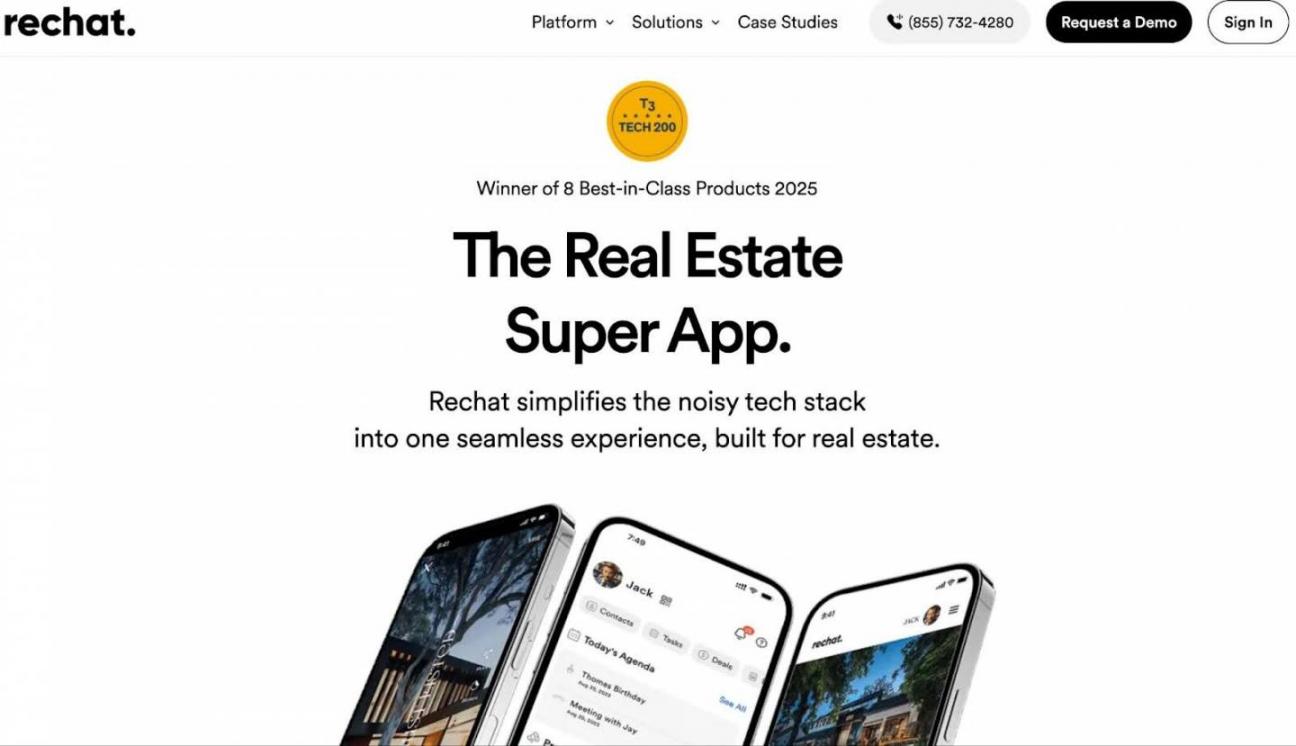
Image via Rechat
Next on our list of the best CRM for real estate is Rechat. It’s a CRM that provides a centralized platform for handling your deals, contacts, and marketing. You manage listings, tasks, and client data in a single space that keeps your process structured.
You can also create and send marketing content directly from the platform. It links email campaigns, design tools, and contact records, so every message ties back to your pipeline.
As for tracking and reporting, Rechat’s capabilities are basic when compared to HubSpot. Rechat only covers basic metrics, while HubSpot goes further with customizable dashboards that allow you to add and remove reports to fit current data.
Key Features
- Contact and deal management
- Built-in email marketing tools
- Design studio for campaigns
- Task and workflow tracking
- Lucy AI assistant
Pros
- Unified marketing and CRM workflow
- Clean deal tracking system
- AI-assisted content creation
- Good team collaboration
Cons
- Limited advanced reporting
- Occasional email delivery delays
Pricing
- Custom pricing
Tool Level
- Intermediate
Usability
- Rechat has an organized interface with clearly labeled functionalities. It can be used by real estate businesses to manage active listings and campaigns.
Pro Tip: Use the design studio to align campaigns with deal stages. Create targeted emails linked to each stage, so your messaging stays relevant and timely.
10. TopProducer
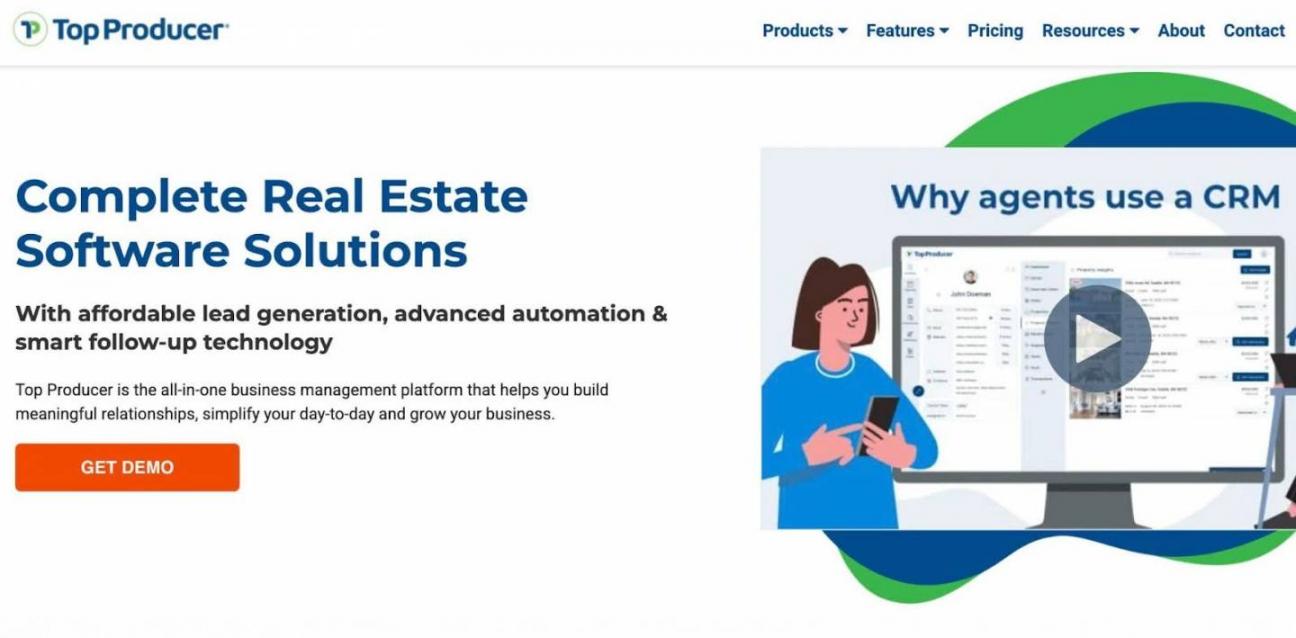
Image via TopProducer
TopProducer is another reliable solution in our list of the best CRM for real estate. It functions like a structured hub for managing client relationships. It helps you organize contacts, track deal stages, and plan follow-ups from a single dashboard.
This helps you stay consistent with outreach and avoid missed opportunities.
The platform also tracks interaction history and schedules tasks tied to each contact. This keeps your workflow steady and gives you a clear path from first contact to closing.
TopProducer CRM handles growing databases and agent activity within its real estate focus. However, HubSpot fits growing teams better with wider business functions and integrations.
Key Features
- Contact and lead management
- Automated follow-up reminders
- Market snapshot reports
- Listing and transaction tracking
- Email campaign tools
- AI Author engagement assistant
Pros
- Strong contact organization
- Consistent follow-up tracking
- Built-in market insights
- Stable performance over time
Cons
- Outdated interface
- Requires a mandatory 12-month contract
Pricing
- Custom pricing
Tool Level
- Beginner
Usability
- TopProducer CRM is suitable for beginners and works for individual agents and small startups building steady sales pipelines.
Pro Tip: Use follow-up reminders to maintain contact frequency. Set task schedules for each lead so you stay consistent and keep your pipeline active.
11. RealNex
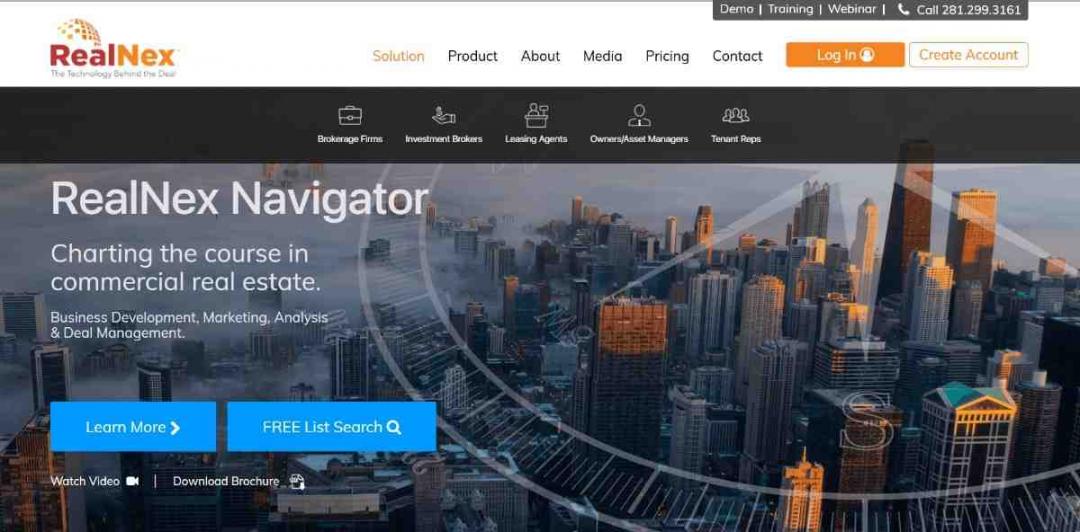
Image via RealNex CRM
RealNex CRM is one of the best CRM for real estate for managing contacts, properties, and listings in one connected system that reflects real market activity.
You can also access prospecting tools, property data, and marketing automation within the same platform. The system links listings to contacts and tracks interactions, so you always know which prospects are linked to specific properties.
RealNex CRM stores contacts alongside property data and deal records. HubSpot CRM, on the other hand, offers deeper segmentation and cleaner data structuring, which is ideal for large and diverse contact databases.
Key Features
- Contact and property management
- Prospecting and lead generation
- Listing database integration
- Marketing and email tools
- Deal and pipeline tracking
Pros
- Property data access
- Integrated prospecting tools
- Clear deal tracking
- Unified contact and listing view
- Strong commercial real estate workflows
Cons
- Limited customization options
- Occasional syncing issues
Pricing
- NavigatorPRO: $224/month
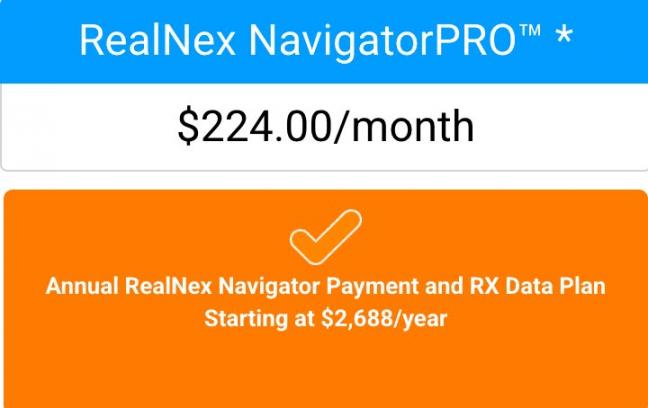
Image via RealNex CRM
Tool Level
- Intermediate
Usability
- RealNex takes some time to understand initially, but once set up, it becomes manageable for teams familiar with real estate workflows.
Pro Tip: Use prospecting tools to filter active opportunities. Focus on high-activity segments and update contact records often to keep your pipeline accurate.
12. BoomTown
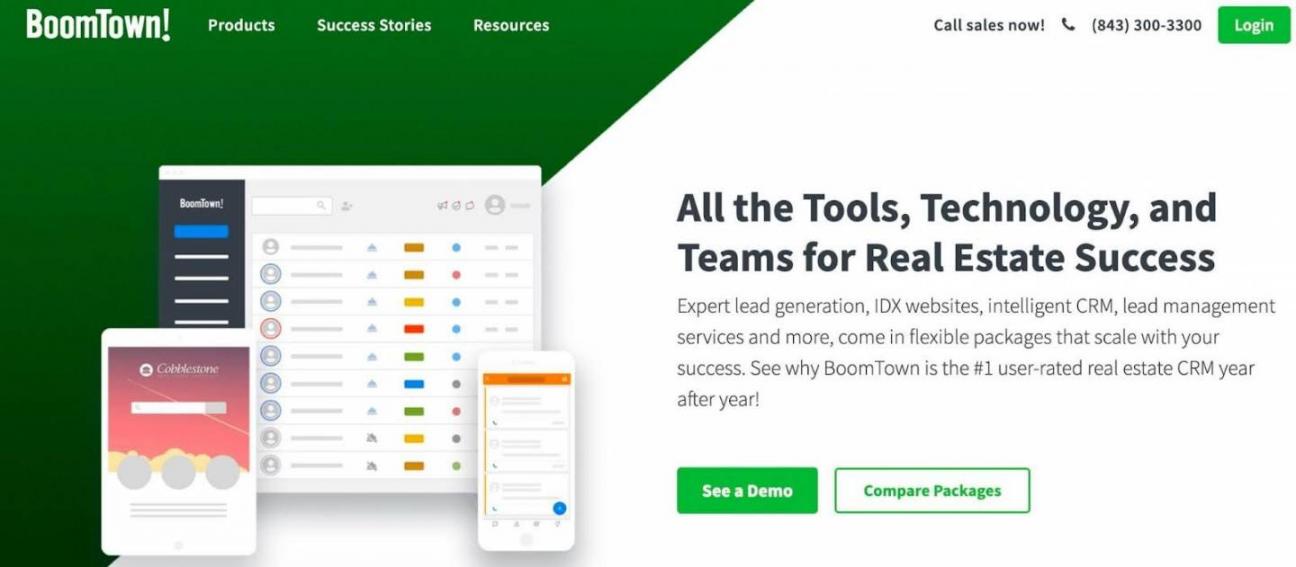
Image via BoomTown CRM
BoomTown CRM approaches real estate operations, such as lead generation and follow-up, as a unified system. Its tracking capabilities make it one of the best CRM for real estate agencies handling large housing portfolios.
It captures leads through websites and paid campaigns, then tracks every action inside the CRM. This gives you a clear path from first click to active conversation.
You also manage outreach through automated texting, email, and calling tools that respond based on lead behavior. The system scores contacts and highlights those showing strong intent.
BoomTown is built specifically for real estate, which makes it powerful within that niche. However, it lacks flexibility for businesses that need CRM capabilities beyond real estate operations.
Key Features
- Lead capture websites and ad tools
- Behavior-based lead scoring
- Automated follow-up campaigns
- Team lead distribution
- Mobile-ready property websites
- Integrations with third-party tools
Pros
- Clear lead prioritization
- Supports team collaboration
- Handles high lead volumes
- Includes training resources
Cons
- Onboarding is intense due to many features
- Limited customization
Pricing
- Custom pricing
Tool Level
- Intermediate
Usability
- BoomTown is an intermediate-level real estate CRM. There’s training required, and it works for teams that manage extensive real estate lead pipelines.
Pro Tip: Use lead scoring to rank contacts by activity. This helps you focus daily outreach on top-ranked leads to keep your pipeline moving.
13. REsimpli
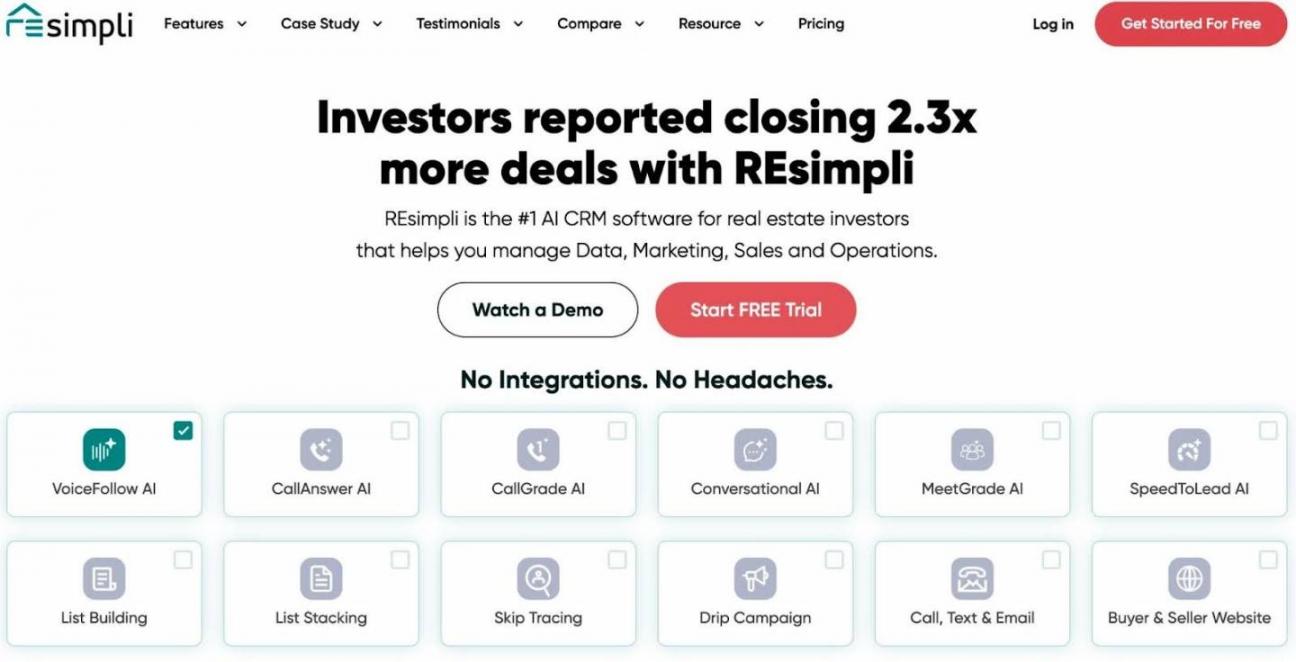
Image via REsimpli CRM
Next on our list of the best CRM for real estate is REsimplie. It connects lead generation, deal tracking, and financial performance into a single workflow. You can track where each lead came from, how they respond, and how close they are to closing.
You can also manage calls, texts, and campaigns while linking each action to pipeline stages. The system records activity in real time and connects it to revenue outcomes. This helps you see which efforts bring results and where your process slows down.
Although all REsimpli plans come bundled with Live Zoom and chat, it is still costlier than most real estate CRM alternatives. It’s a good fit for established real estate agencies that have already scaled up and have a big budget.
Key Features
- Lead source tracking
- Built-in calling, texting, and logging
- Call, text, and email support
- KPI dashboards
- Revenue and expense tracking
- Gmail integration
Pros
- Clear connection between marketing and revenue
- Centralized activity tracking
- Built-in financial visibility
- Reduces reliance on multiple tools
- Works seamlessly with Gmail
Cons
- Limited integrations
- Higher pricing compared to alternatives
Pricing
- Basic: $199/month
- Pro: $399/month
- Enterprise: $849/month
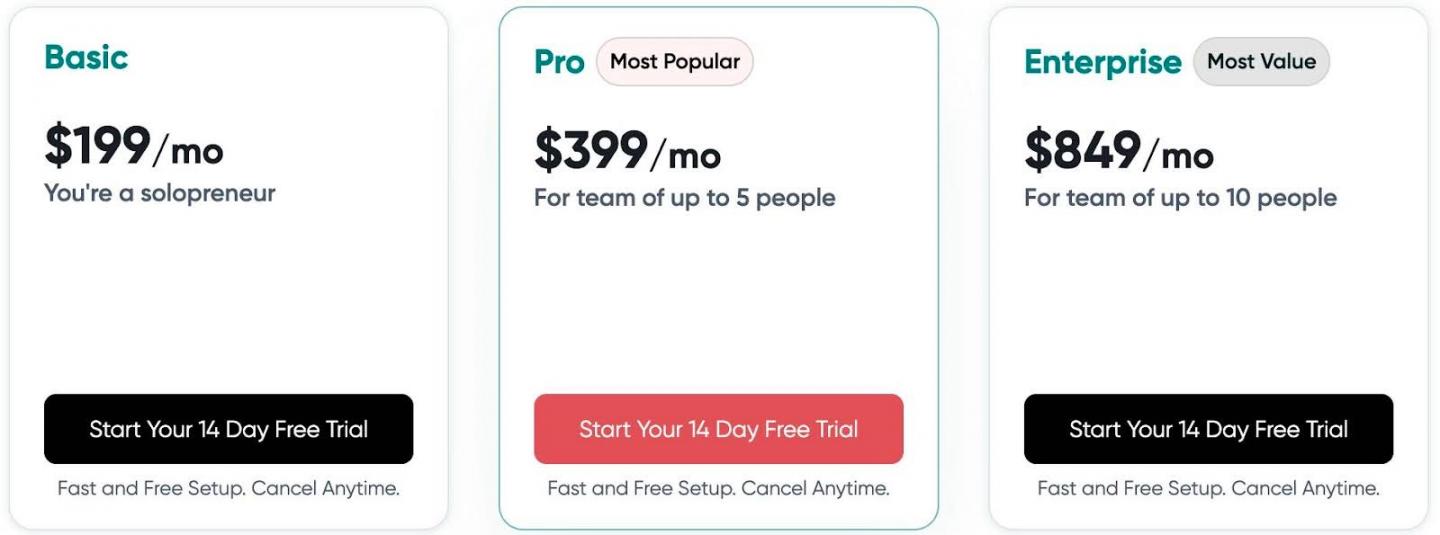
Image via REsimpli CRM
Tool Level
- Intermediate to Advanced
Usability
- REsimpli requires time to configure and learn, making it better suited for experienced teams focused on performance tracking and ROI.
Pro Tip: Use lead source tracking to rank channels by closed deals. This shifts your budget toward top performers and cuts low-return sources.
14. Follow Up Boss
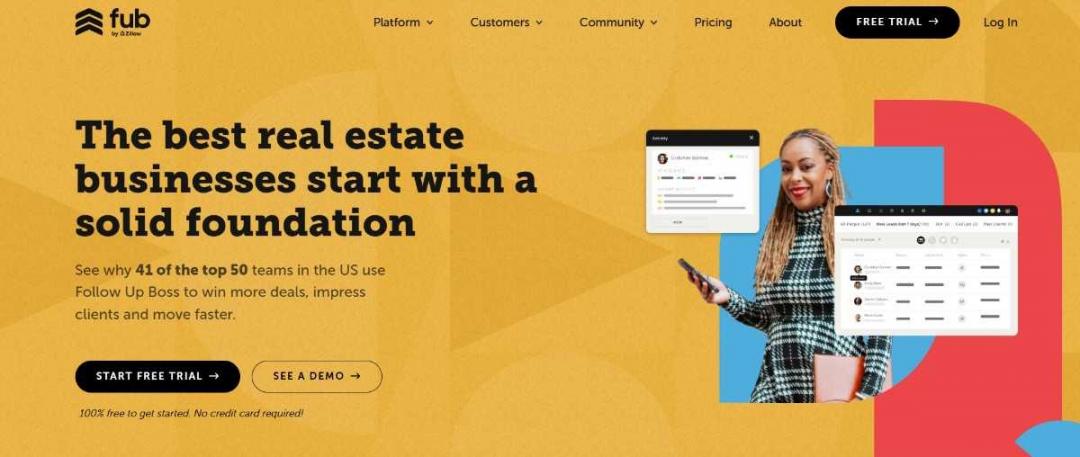
Image via Follow Up Boss
Follow Up Boss CRM keeps your lead flow organized from the moment it enters your system. It’s one of the best CRM for real estate because it captures leads from multiple sources and then routes them into a single dashboard. This gives you a clear view of conversations, response times, and deal progress.
The system tracks lead status and assigns tasks based on engagement. This helps you stay consistent with outreach while keeping your pipeline active and structured.
When it comes to ease of use, Follow Up Boss CRM keeps its layout clean and focused on daily tasks. You also get 250+ integrations, not as many as HubSpot, but enough to connect commonly used real estate apps.
Key Features
- Lead capture and distribution
- Over 250 integrations
- Activity tracking with timelines
- Task and follow-up management
- Customer portals
- Smart lists for prospects
Pros
- Strong lead organization
- User-friendly mobile app
- Reliable support
- Flexible customization options
Cons
- Expensive plans
- Limited advertising tools
Pricing
- Grow: $69/month/user
- Pro: $499/month/user
- Platform: $1000/month/user
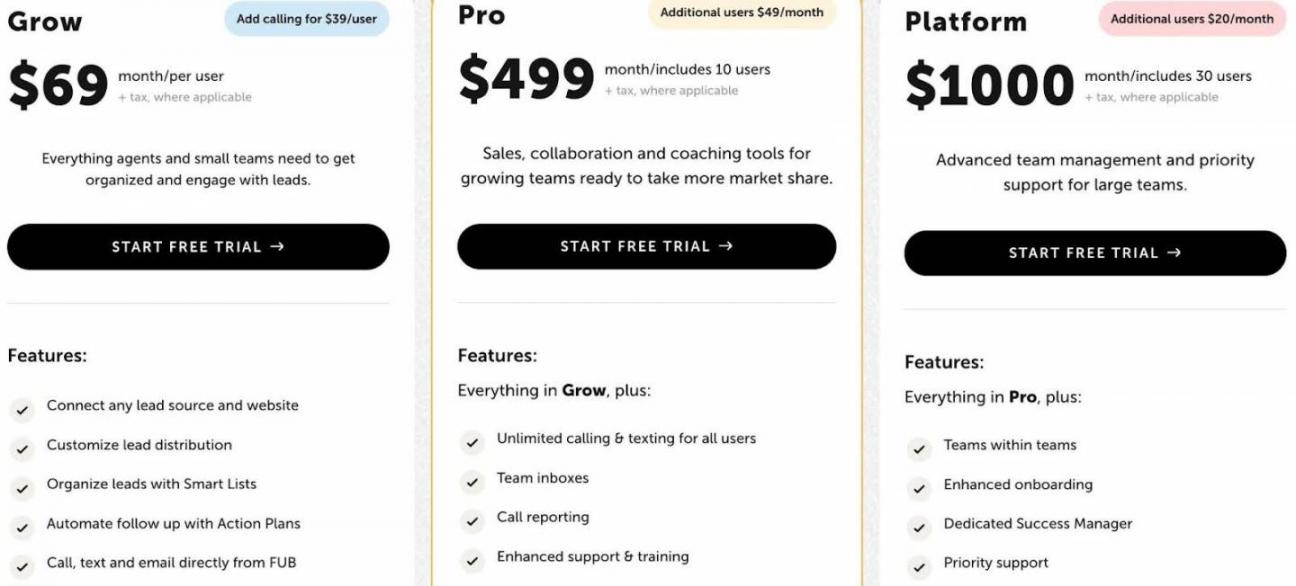
Image via Follow Up Boss
Tool Level
- Beginner
Usability
- Follow Up Boss is a beginner-friendly customer relationship management software for real estate. The interface is task-focused and ideal for teams prioritizing follow-ups.
Pro Tip: Use activity timelines to review lead history before outreach. This keeps your client communications relevant and consistent.
15. Real Geeks CRM
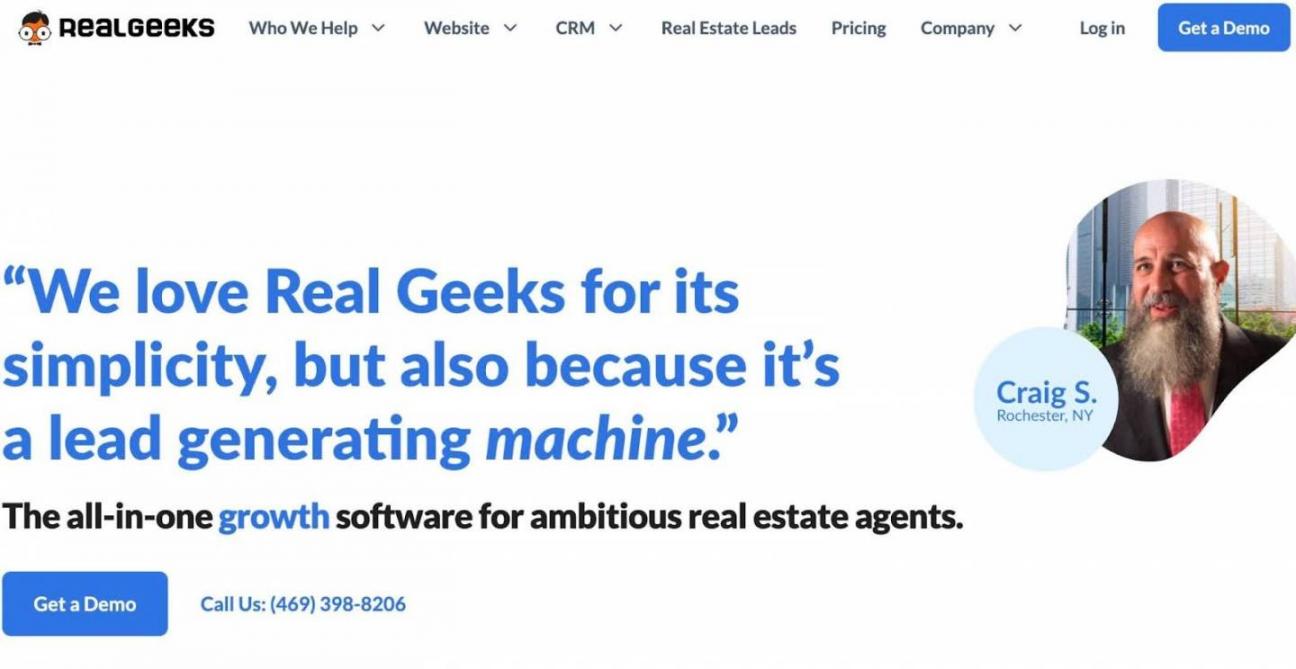
Image via Real Geeks CRM
Real Geeks CRM connects your lead capture and follow-up, and this is what makes it one of the best CRM for real estate. You collect leads through built-in IDX websites, then track searches, clicks, and return visits inside the CRM.
You can also manage outreach through automated emails and texts that respond to user behavior. The system logs every action and updates the lead status based on engagement.
This helps you stay consistent with follow-up while keeping your pipeline active and accurate.
Key Features
- IDX websites with lead capture
- Behavior tracking and alerts
- Lead manager with activity tracking
- CRM and marketing integration
- Automated email and text follow-up
Pros
- Clear lead behavior tracking
- Built-in website and CRM connection
- Consistent follow-up automation
- Good pipeline visibility
Cons
- Limited to real estate use cases
- Outdated interface design
Pricing
- Custom pricing
Tool Level
- Intermediate
Usability
- Real Geeks CRM provides simple functionalities that experienced teams can navigate without issues. It’s designed for teams focused on online lead generation.
Pro Tip: Set up behavior alerts to trigger instant follow-ups when a lead returns to listings. Quick responses can significantly improve engagement and conversion rates.
FAQ
Q1. What is CRM software for real estate?
A. CRM software for real estate acts as your centralized command center. It stores all client and property details in one place. You can track every interaction, from the first call to the closing table.
Real estate CRMs like HubSpot automate follow-ups and reminders. This keeps your deals organized and your business relationships strong.
Q2. What is the best free CRM for real estate?
A. HubSpot CRM is the best free option for real estate professionals. It gives you a complete view of your contacts and deal stages at no cost. You can log emails and calls directly within the platform. It handles your task management without forcing you to upgrade.
Q3. What are the 4 types of CRM?
A. The following are the four main types of CRM:
- Operational CRMs: They streamline your daily workflows and automate marketing tasks.
- Analytical CRMs: They dig into your customer data to spot trends and client patterns.
- Collaborative CRMs: They improve communication by sharing client info across your team.
- Strategic CRMs: They focus on building long-term loyalty and strong client relationships.
Q4. How does the best CRM for real estate help manage leads?
A. A real estate CRM captures leads directly from your website and listing portals. It then automatically assigns them to you or a team member. For instance, HubSpot CRM tracks every lead's activity, like email opens and site visits, and reminds you when to call or text.
Q5. What features should the best CRM for real estate include?
A. The best CRM for real estate has the following features:
- Contact management for storing detailed buyer and seller histories
- Lead capture tools for pulling new contacts directly from your marketing channels
- Automated follow-up sequences for keeping you in touch without the manual work
- Pipeline management that lets you visually track every deal's progress
- Reporting tools for showing you which activities actually produce results
Choose HubSpot CRM for Efficiency
Real estate demands speed, clarity, and consistent follow-up. The best CRM for real estate is the one that keeps all three under control without friction. Many of the tools on this list handle specific tasks well, but most limit how deeply you can track performance across the full sales cycle.
HubSpot CRM remains our best real estate CRM software. It brings everything into one place, so you can manage contacts, track deals, automate tasks, and review results without gaps. This level of visibility helps you move faster and make better decisions at every stage.
If you want the best CRM software for real estate that stays reliable as your workload increases, start with HubSpot CRM. It gives you a strong, scalable foundation for managing your entire real estate workflow.
Disclaimer: This content contains some affiliate links for which we will earn a commission (at no additional cost to you). This is to ensure that we can keep creating free content for you.