- Enablement is a system, not a content dump. Strategy is what connects the parts.
- Define the metric before you build the program. No baseline means no proof.
- Leading indicators predict results. Lagging indicators prove them.
- Track both. AI is now table stakes for sales enablement in 2026, not a nice-to-have.
- Pilot with one segment before you scale across the whole team.
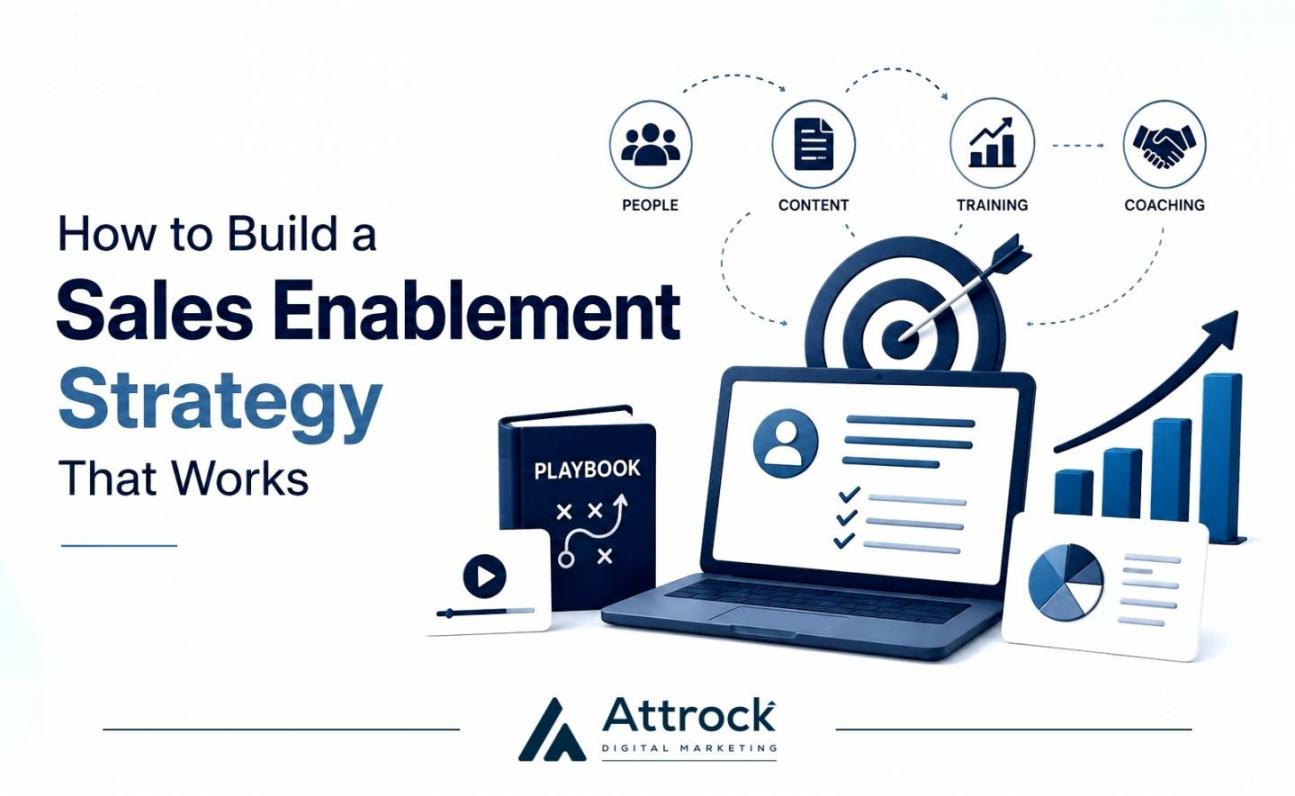
A sales enablement strategy is your documented plan for giving sales reps the content, training, tools, and processes they need to win more deals. Get it right, and selling stops being guesswork. Reps ramp faster, follow a repeatable motion, and spend more of their week actually selling instead of hunting for a slide deck.
To build one, set goals, audit your process, define your ICP, create content and training, choose tools, and then pilot and scale your program. I have helped B2B and SaaS teams build sales enablement programs for years, and these eight steps consistently deliver results.
Here is the problem they solve. Salesforce research shows that reps spend only about 40% of their week selling, while the rest goes to admin work, meetings, and searching for content. A real strategy gives that time back. Let me show you how to build one, step by step.
Disclaimer: This content contains some affiliate links for which we will earn a commission (at no additional cost to you). This is to ensure that we can keep creating free content for you.
Table of Contents
What Is a Sales Enablement Strategy?
A sales enablement strategy is a documented plan that provides the sales team with the content, training, tools, processes, and metrics needed to engage buyers and close deals. In short, it turns scattered selling into a repeatable, measurable system.
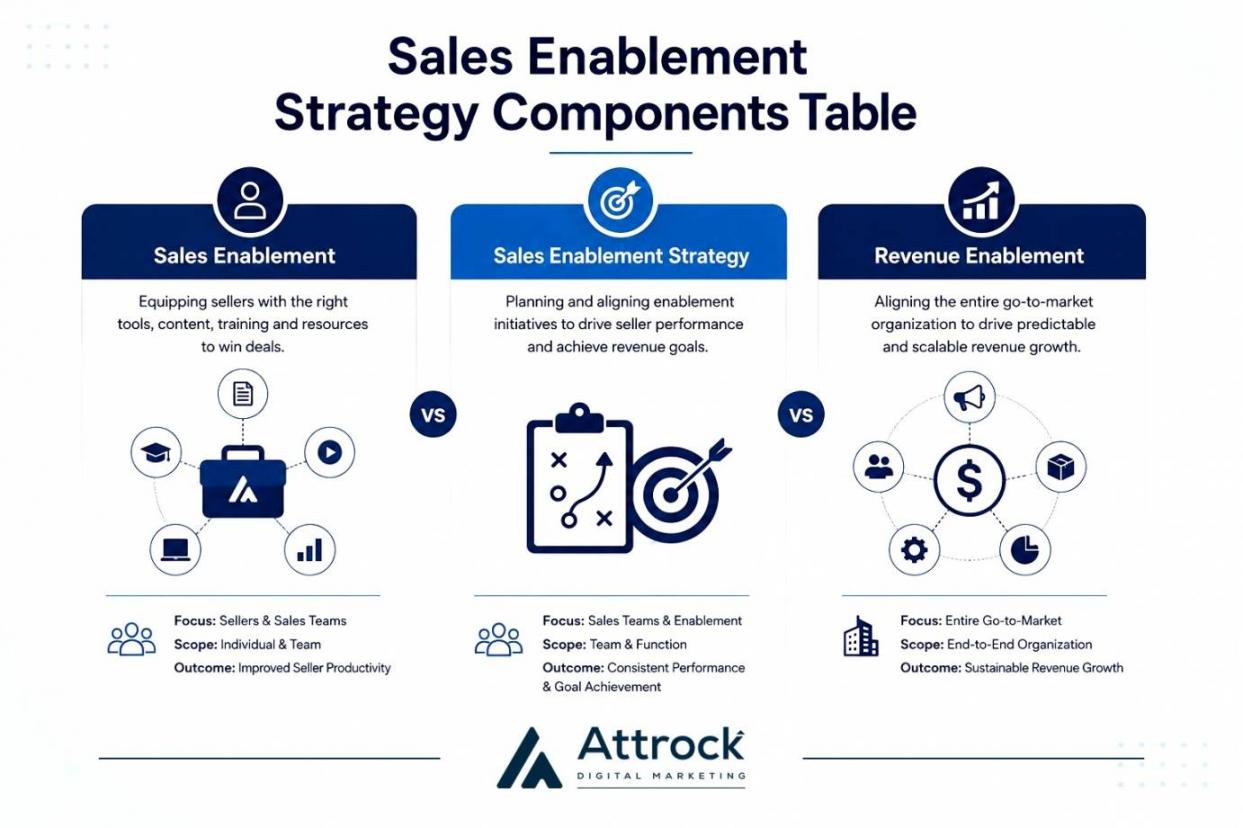
These three terms are often confused, but each serves a different purpose. Sales enablement is the function: the ongoing work of equipping reps. A sales enablement strategy is the plan that directs the work. Revenue enablement extends these practices across sales, marketing, and customer success teams.
Every strong strategy rests on a few core components. You do not need all of them on day one, but you should understand how each component supports the strategy.
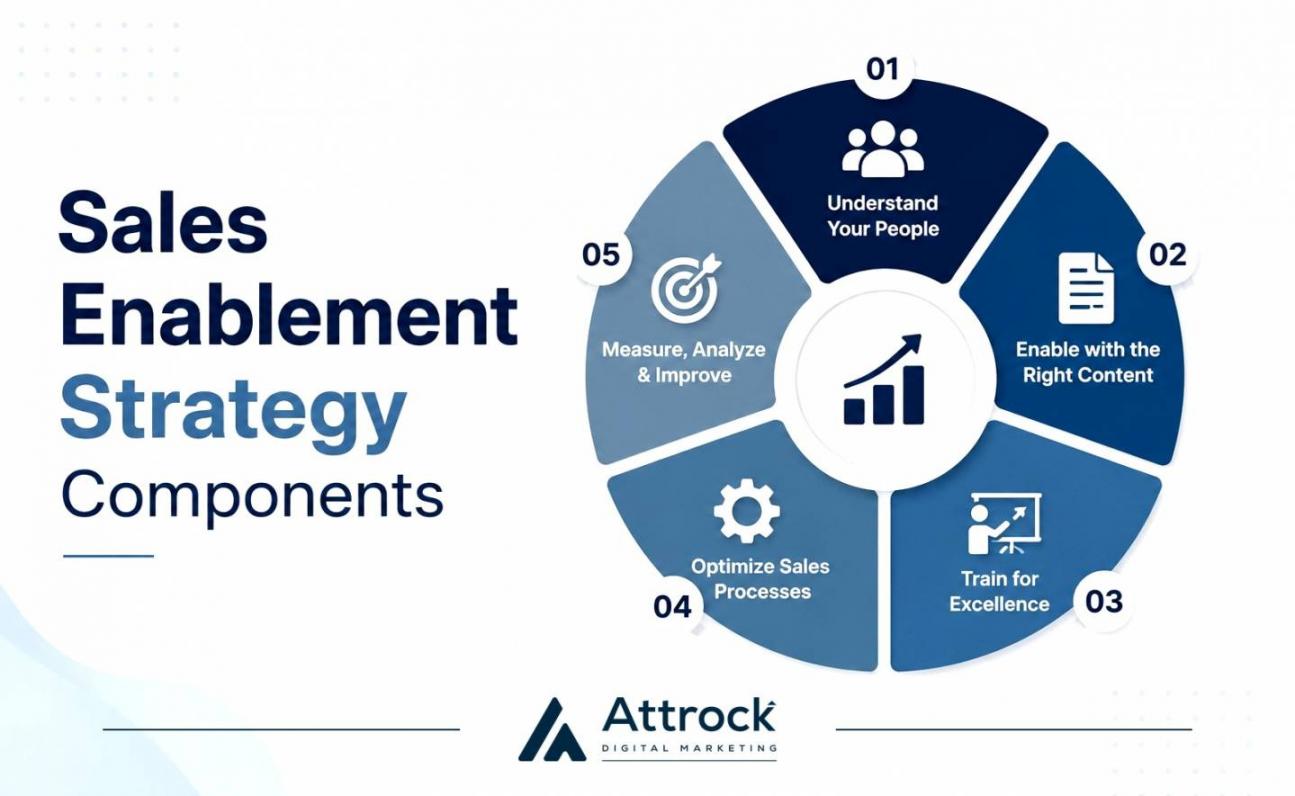
| Component | What it covers | Example artifact |
|---|---|---|
| Content | Buyer-facing and internal selling assets | One-pagers, case studies, battle cards |
| Training and coaching | Skills, ramp, and ongoing development | Onboarding program, recorded call reviews |
| Tools and tech | The systems that deliver and measure enablement | CRM, sales enablement software, conversation intelligence |
| Process | How selling actually runs, stage by stage | Sales process map, playbooks |
| Sales and marketing alignment | Shared goals, ICP, and clean handoffs | SLAs, shared definitions, content requests |
A sales enablement strategy is the documented plan and system, content, training, tools, process, and metrics that equips reps to engage buyers and close deals predictably.
Why a Sales Enablement Strategy Matters
A sales enablement strategy matters because it turns scattered, rep-by-rep selling into a repeatable system that lifts win rates, quota attainment, and ramp speed. Without one, your best practices live in your top rep’s head and leave when they do.
The buying side has gotten harder, which raises the stakes. Gartner finds the average B2B buying group now spans six to ten stakeholders, and 67% of buyers say they prefer a rep-free experience for at least part of the journey. Reps cannot rely on improvisation in these conversations. They need tested content and a clear process behind them.
The payoff shows up across the funnel. A documented strategy improves rep productivity by reducing the time spent searching for content and information. It shortens ramp for new hires. It tightens sales and marketing alignment so leads do not fall through the cracks. It also improves key sales metrics, including win rate, quota attainment, and sales cycle length.
Recent research highlights these benefits. In Highspot’s State of Sales Enablement 2025, 84% of executives said AI-strengthened enablement is driving performance, and 61% of B2B leaders are investing more in enablement this year. Teams using AI-powered enablement saw a 24% increase in rep quota attainment and a 22% lift in average deal size.
Operating without a formal strategy also creates challenges. The Sales Enablement Collective’s 2025 Landscape Report found that 61% of enablement professionals name “measuring impact” as their single biggest challenge, often because they launched without a baseline. A good strategy fixes that on day one.
A sales enablement strategy matters because it makes selling repeatable and measurable, lifting win rate, quota attainment, and ramp speed while reducing the time reps waste not selling.
How to Build a Sales Enablement Strategy in 8 Steps
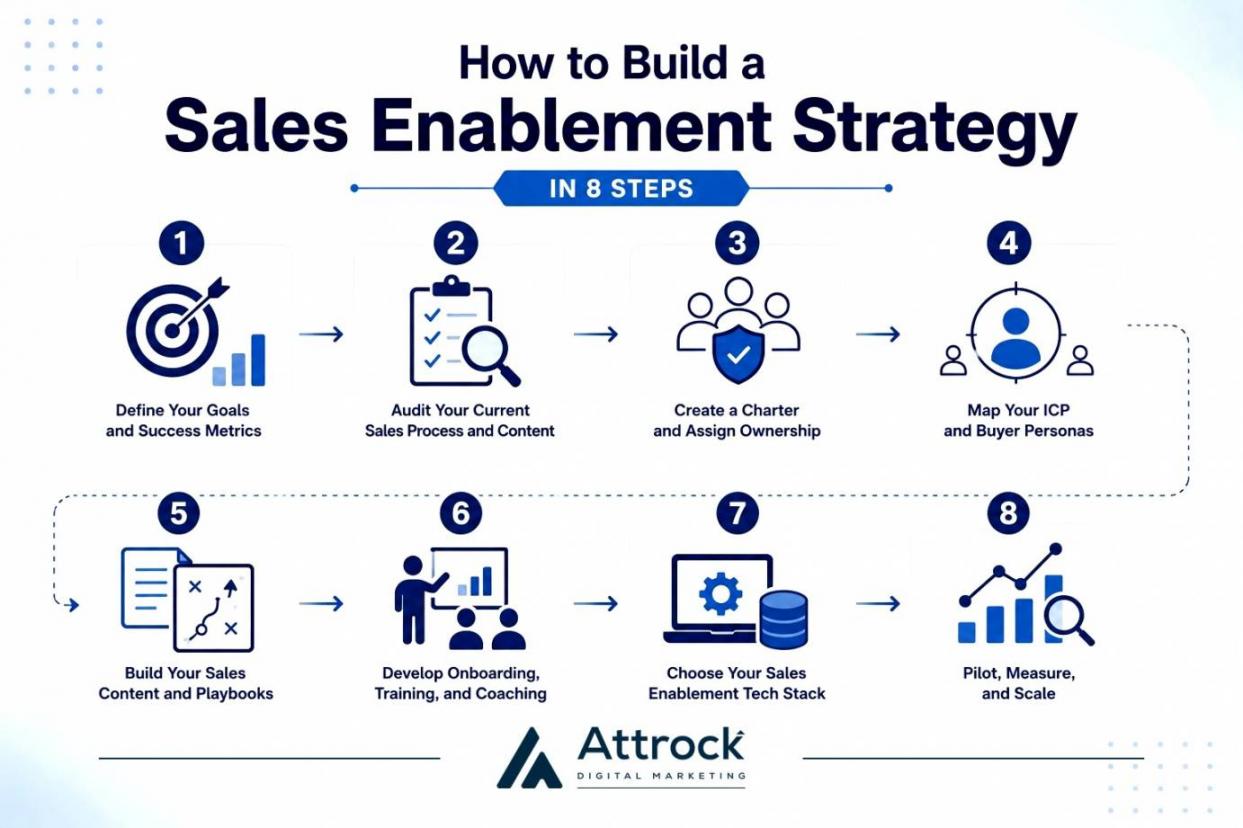
To build a sales enablement strategy, follow eight steps: define goals, audit your process, create a charter, map your ICP, build content and playbooks, train reps, select tools, and then pilot, measure, and scale. Each step builds on the previous one, so avoid jumping straight to software selection.
Before you start, get a few prerequisites in place. They help turn a strategy into an actionable program instead of a forgotten presentation.
Before You Start, You’ll Need:
- An executive sponsor who will defend the program when priorities shift.
- A baseline of key metrics, including win rate, ramp time, quota attainment, and sales cycle length.
- A cross-functional owner to coordinate sales, marketing, and revenue operations.
- Access to your CRM and an inventory of your existing sales content.
In short, build your strategy in order: goals and baselines first, technology last. Jumping ahead to software before you have a defined process just automates the chaos.
1. Define Your Goals and Success Metrics
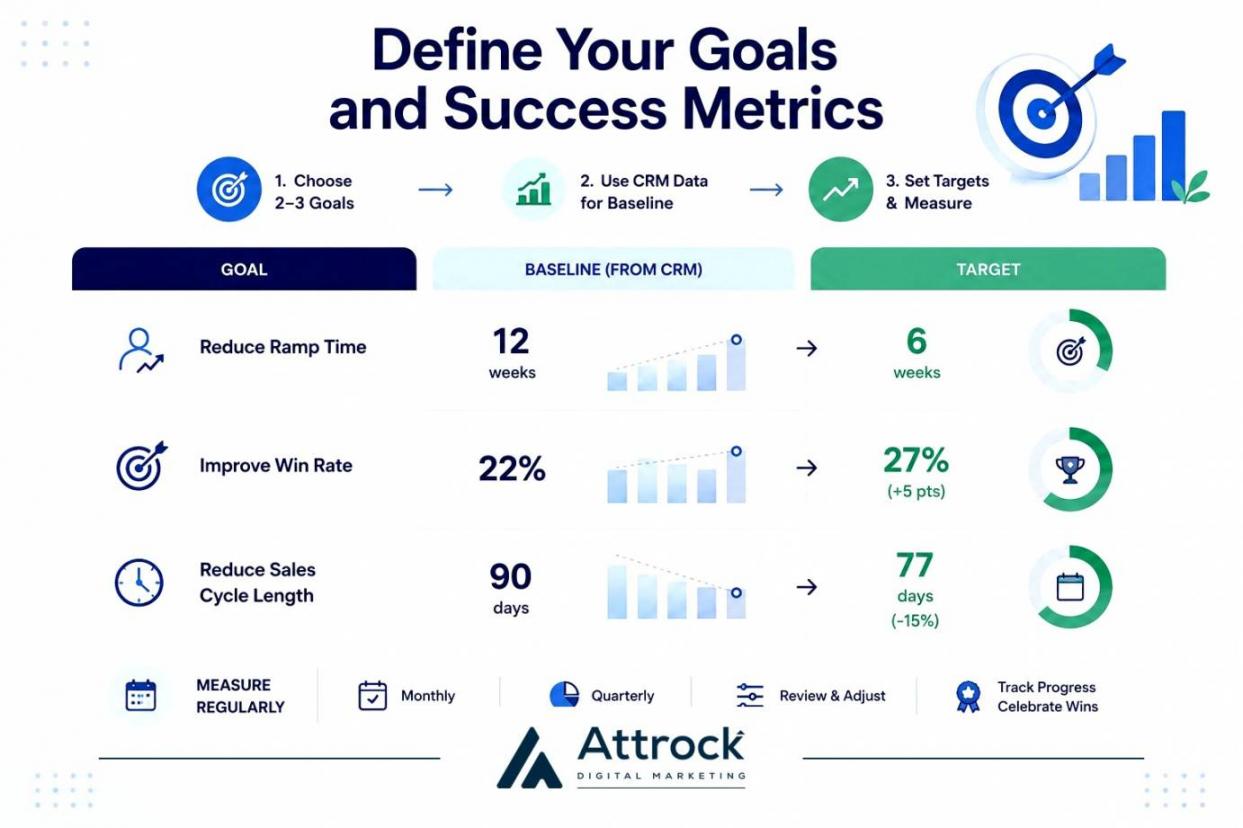
Start by choosing two or three measurable goals, because a strategy without targets becomes difficult to measure or improve. Vague aims like “help reps sell more” cannot be proven or funded.
Tie each goal to a business outcome and a number. For example, you might aim to cut ramp time from 12 weeks to 6, improve win rate by 5 points, or reduce the sales cycle length by 15%. Pull your current baseline from your CRM first so you can measure progress over time.
Pull your current baseline from the CRM first, so you can show movement later. CRM reporting tools such as HubSpot Sales Hub can help teams track baseline metrics and monitor progress.
Then agree on how you will measure each goal and how often. Write the targets down and get your sponsor to sign off. These targets become the foundation for the rest of the strategy.
Pro Tip: Pick one primary metric per goal. When everything is a priority, reps optimize for nothing.
2. Audit Your Current Sales Process and Content
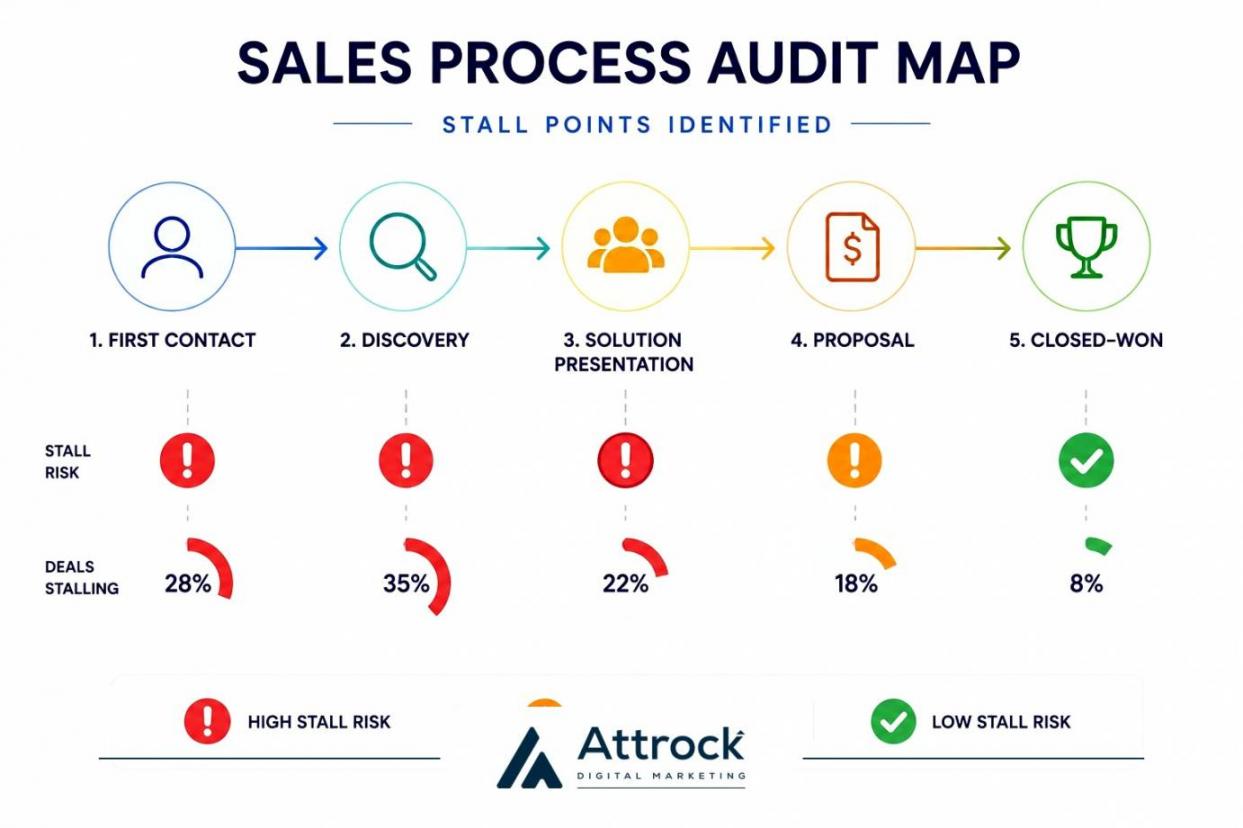
Map your current sales process before making changes. You cannot fix what you have not documented. Most teams discover their “process” varies wildly from rep to rep.
Review each stage from first contact to closed-won deals and identify where opportunities stall. Talk to reps about where they lose momentum. Then inventory your sales content, identify what gets used, and flag outdated or ineffective assets.
This audit becomes your roadmap for improvement. It tells you which playbooks to write, which content to retire, and which process steps need a fix.
Pro Tip: Review CRM stage conversion rates to identify where deals drop off. The largest drop-off often highlights where enablement can deliver the fastest improvements.
3. Create a Charter and Assign Ownership
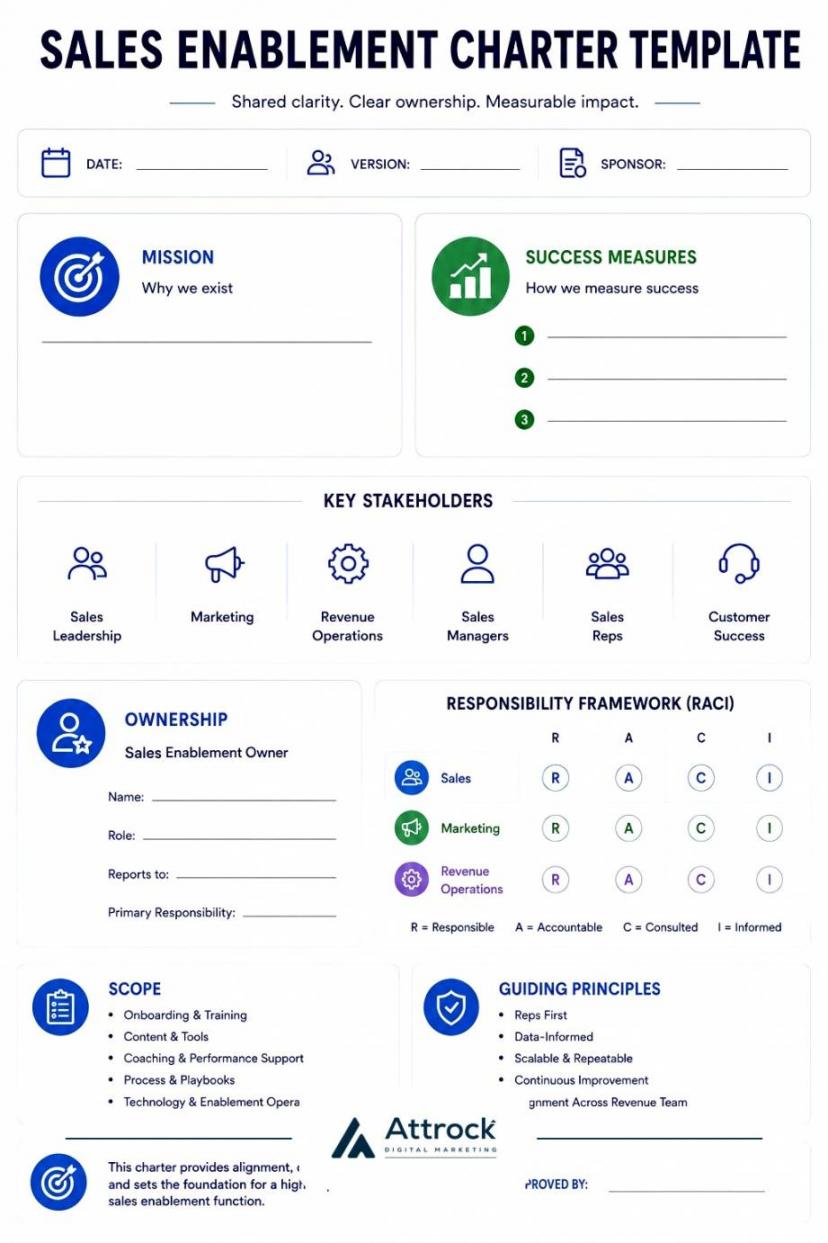
Describe the mission, key players, and success metrics in a one-page charter. Shared clarity helps prevent ownership conflicts that can derail enablement efforts. The charter provides guidance when priorities conflict.
Then decide who owns the sales enablement team and program. In smaller companies, one person may handle multiple roles. Define a simple responsibility framework across sales, marketing, and revenue operations so everyone understands their role.
Clear ownership helps address accountability issues in enablement programs. Many programs drift because no single person is accountable for outcomes. Name that person now.
Pro Tip: Keep the charter to a single page. If it needs a meeting to explain, it is too complex to follow.
4. Map Your ICP and Buyer Personas
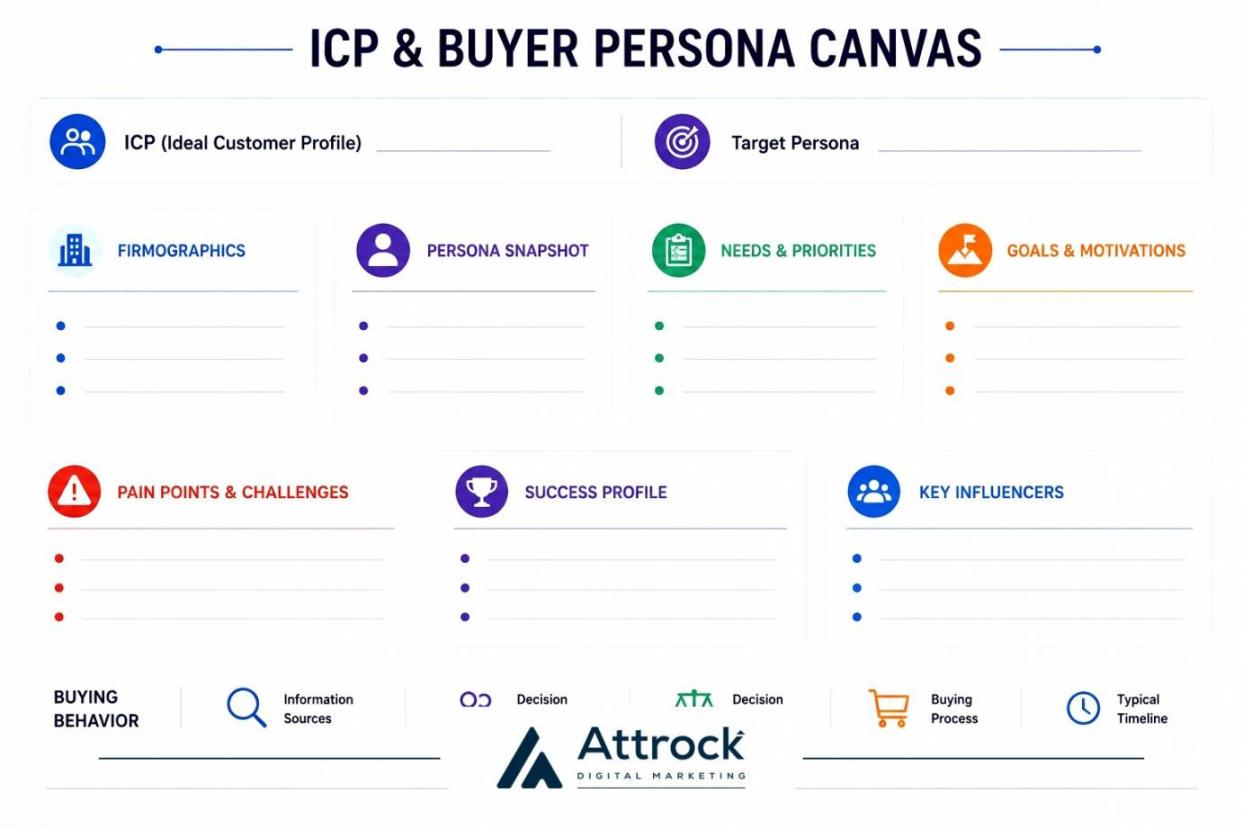
Next, define your ideal buyer personas and customer profiles so your training and content reflect real customers rather than assumptions. Generic enablement produces generic reps.
Document who you sell to, including your ideal customer profile and the buyer personas within the buying group.
Capture their goals, concerns, and the queries they ask at each stage of the buying journey. Use insights from won and lost deals to validate these findings instead of relying only on internal assumptions.
Use these personas to guide your content and coaching plans. A buyer persona that never reaches a rep is wasted work.
Pro Tip: Interview three recent customers. Their language often becomes a highly effective email and call opener.
5. Build Your Sales Content and Playbooks
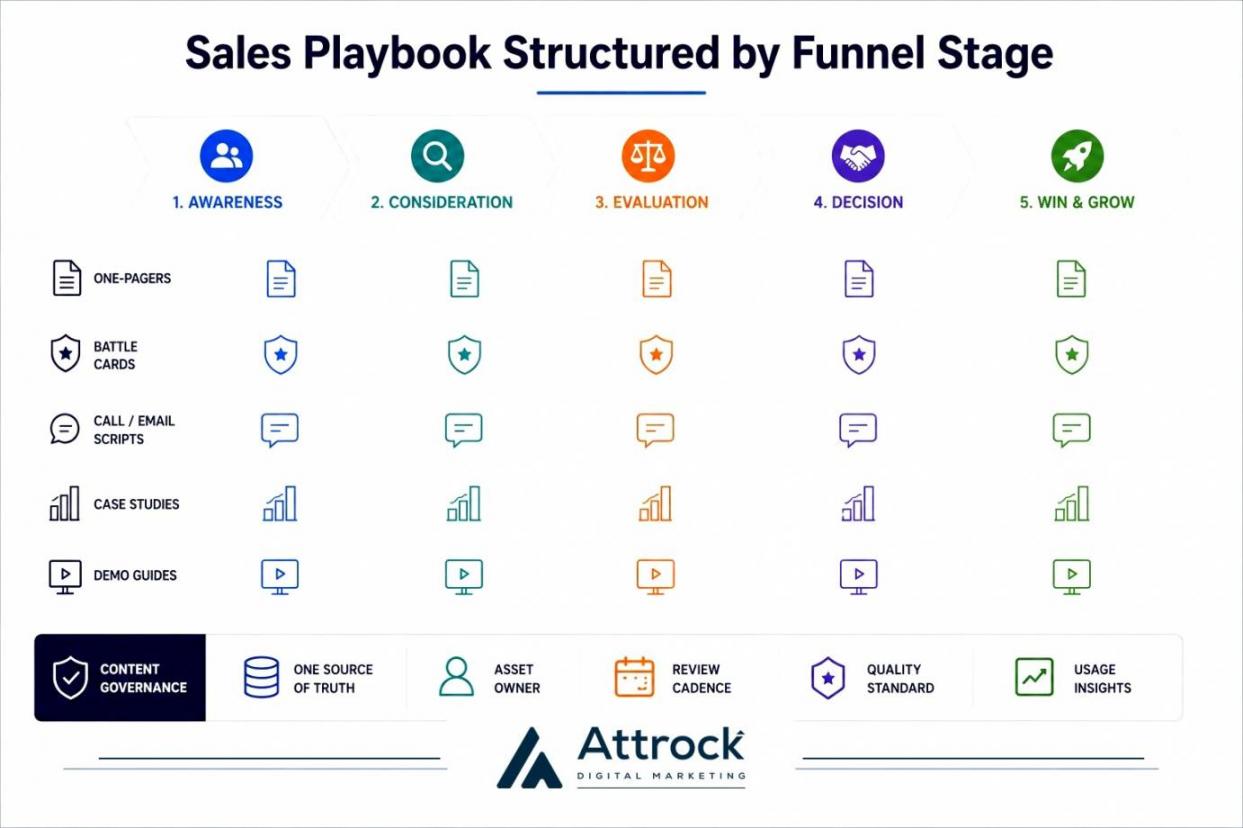
Build the sales content and playbooks reps use during live deals. Well-organized assets turn strategy into daily behavior. This is often the most visible part of your enablement program.
Create the core set: one-pagers, battle cards, call and email scripts, case studies, and demo guides. Organize them by sales stage and persona so reps find the right asset in seconds. Then set governance: one source of truth, an owner for each asset, and a review date.
Governance matters more than volume. Outdated battle cards can hurt deals, so plan how content will stay current before publishing it.
Pro Tip: Create a basic stage-by-stage “what to send when” map. It consistently outperforms a 200-file folder.
6. Develop Onboarding, Training, and Coaching
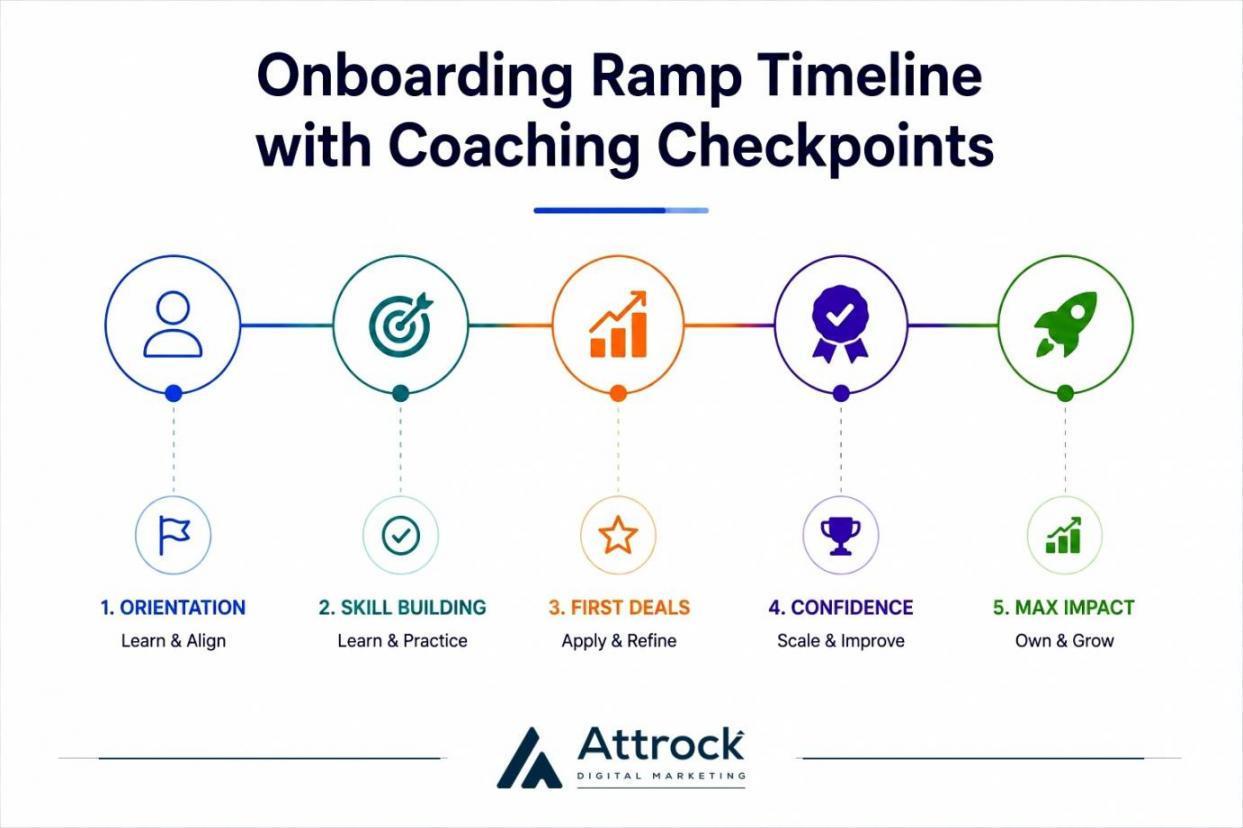
Build an onboarding and coaching program because one-time training fades quickly. Ongoing coaching helps new skills become lasting habits. Effective sales training isn't a one-time event — it's an ongoing practice.
Create a structured onboarding plan for new reps with clear milestones and a process for certifying their sales pitch. Support your broader sales team with ongoing training through role-playing sessions, recorded call reviews, and manager-led coaching based on real deals. Build a library of successful sales calls so reps can learn from your team's most effective conversations.
Make managers central to coaching and development. Research shows that consistent manager-led coaching often delivers better results than occasional team-wide training.
Pro Tip: Make your top reps record their best calls. Peer examples often have a greater impact than formal training courses.
7. Choose Your Sales Enablement Tech Stack
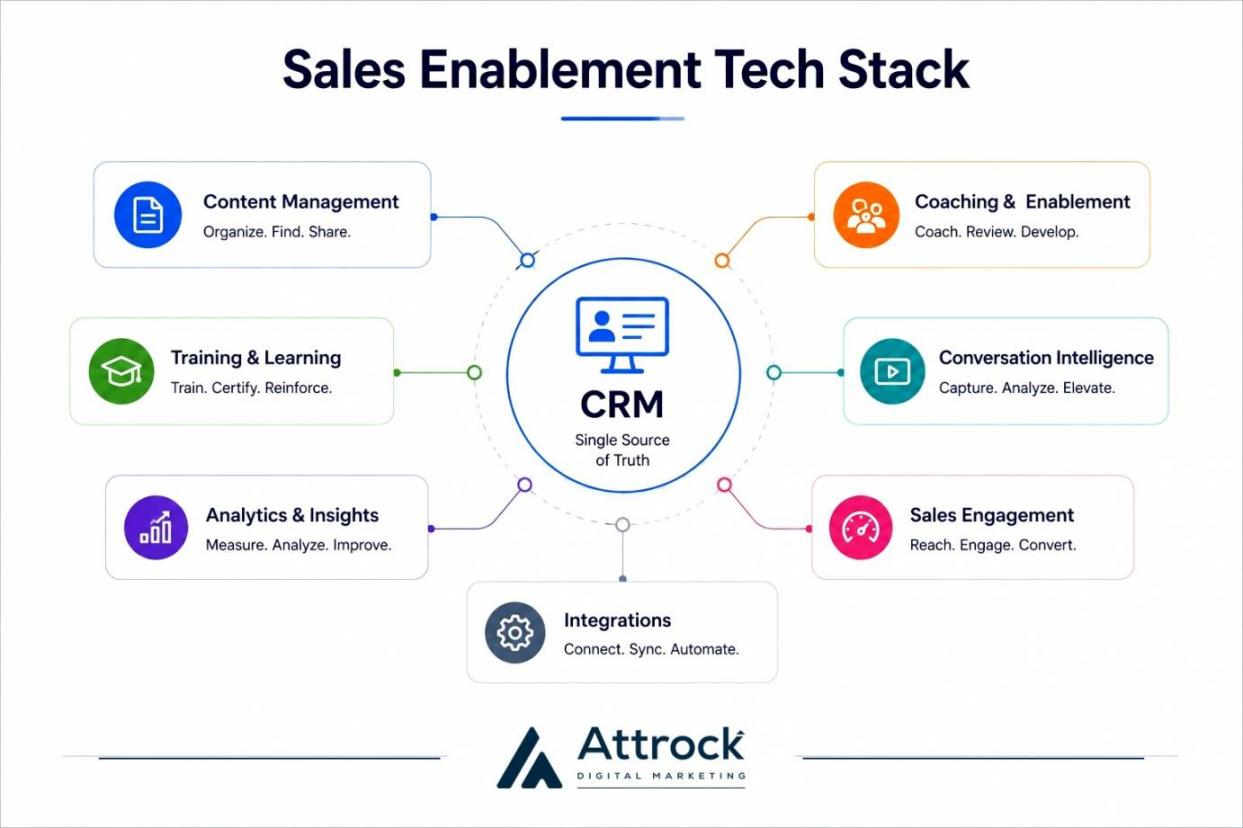
Choose a tech stack that fits your process, with the CRM as the foundation. Add tools only when they solve a specific problem. Buying software before you have a process just automates the chaos.
A typical stack has four layers: a CRM as the system of record, an enablement or content platform, conversation intelligence to analyze calls, and AI assistance to surface content and coach reps.
HubSpot Sales Hub and HubSpot Smart CRM can support CRM and enablement needs, while HubSpot’s Breeze adds AI-powered sales assistance. Other tools may better suit different team sizes and budgets, so choose sales enablement software based on your needs rather than vendor popularity.
Keep it lean. Tool sprawl can create complexity, so add new tools only when they address a clear business need.
Pro Tip: Before buying anything, ask which metric the tool moves. If reps cannot answer, skip it.
8. Pilot, Measure, and Scale
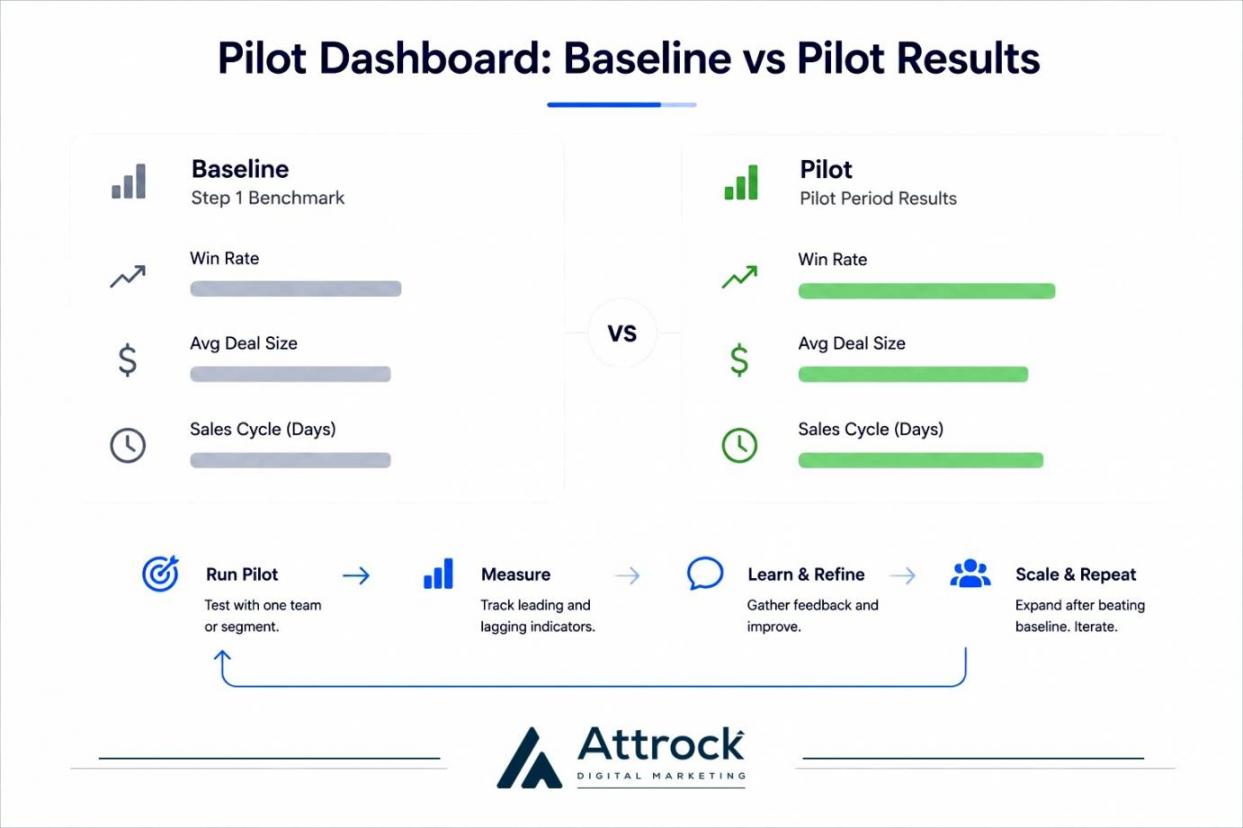
Pilot your strategy with one team or segment before a full rollout. A controlled test helps identify problems while they are still easy to fix. A full rollout can make it harder to identify what is working.
Run the pilot for a set period against the baseline from Step 1. Measure the leading and lagging indicators, gather rep feedback, and refine the content and process. Once the pilot beats the baseline, expand it to the wider team after resolving any issues.
Treat this as a loop, not a finish line. Revisit your strategy regularly and adjust it as market conditions and performance data change.
Pro Tip: Pick a pilot team that is good but not your best. If it works for them, it scales.
A 30/60/90-Day Rollout Cadence
If you are starting from scratch, this cadence keeps the first quarter focused.
| Timeframe | Focus | Output |
|---|---|---|
| Days 1–30 | Goals, baseline, audit, charter | Signed charter and baseline metrics |
| Days 31–60 | ICP, core content, onboarding v1 | Playbook and a working content library |
| Days 61–90 | Pilot with one team, measure, refine | Pilot results and a scale decision |
How to Measure Your Sales Enablement Strategy
Measure your sales enablement strategy by tracking leading indicators such as ramp time and content usage alongside lagging outcomes like win rate and quota attainment. Then attribute the results to your program. Leading metrics tell you if the program is working now. Lagging metrics prove it later.
Split your metrics into the two groups, so you always have visibility into performance. Leading indicators move first and predict results. Some lagging metrics may appear sooner or later, depending on the sales cycle.
| Leading indicators (predict) | Lagging outcomes (prove) |
|---|---|
| Ramp time to first deal | Win rate |
| Content usage and adoption | Quota attainment |
| Training completion and certification | Average deal size |
| Rep activity and pipeline created | Sales cycle length |
| Coaching sessions completed | Revenue and retention |
To estimate ROI, compare your baseline to performance after 60 to 90 days and evaluate the impact your program contributed. The Sales Enablement Collective’s 2025 report shows where teams focus: content adoption (50%), quota attainment (43%), win rate (42%), and revenue generated (38%) are the most-tracked metrics.
One caution on attribution. Enablement rarely moves a number alone, so report your contribution honestly and pair it with the leading indicators that show cause. Be ready for the alignment gap too: that same report found fewer than half of enablement teams, around 44%, are aligned with senior leadership on which metrics matter.
In my experience, the teams that get attribution right agree on the scorecard with leadership before launch. They do not wait for the first board review to discover the gap.
Measure your sales enablement strategy with leading indicators (ramp, content usage, activity) and lagging outcomes (win rate, quota attainment, cycle length), then attribute the change against a baseline.
How AI Is Reshaping Sales Enablement in 2026
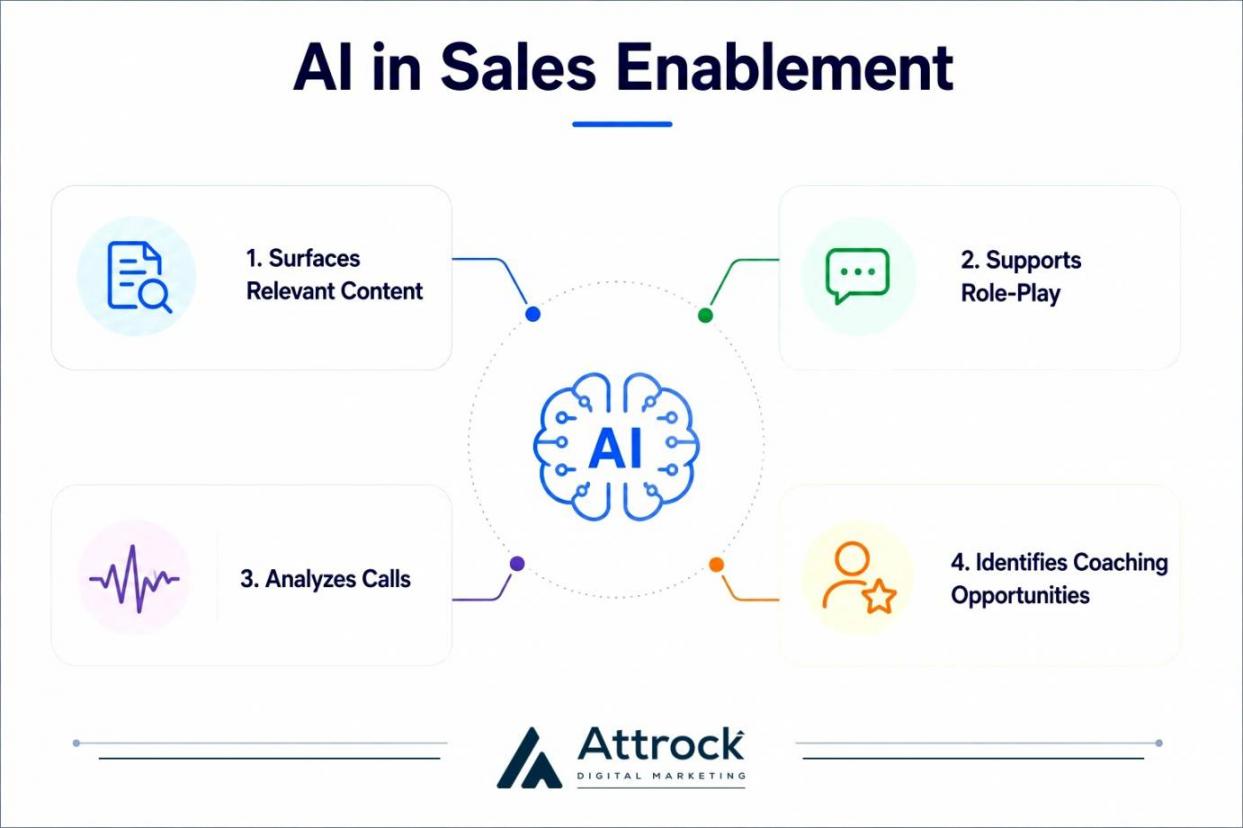
AI is reshaping sales enablement by surfacing content, powering role-play, analyzing calls, and giving managers data-backed coaching insights. By 2026, AI has become an expected part of many sales enablement programs.
The adoption data is striking. In Highspot’s State of Sales Enablement 2025, 90% of companies have implemented AI or plan to this year, and 84% of executives credit AI-strengthened enablement with driving performance. Nearly half are prioritizing AI to sharpen messaging and positioning.
In practice, AI shows up in four places. AI surfaces relevant content, supports role-play, analyzes calls, and identifies coaching opportunities for managers. Tools such as HubSpot Breeze bring several of these capabilities into the CRM — including AI-powered deal insights, automated content surfacing, and real-time coaching alerts — though the underlying functionality matters more than the vendor.
Keep judgment in the loop. AI assists the rep and the manager, but it does not replace product knowledge, discovery skill, or trust. Use it to sharpen a strong process, not to replace one.
AI is reshaping sales enablement by surfacing content, supporting coaching, analyzing calls, and helping teams improve performance while human judgment remains essential.
Common Sales Enablement Mistakes to Avoid
The most common sales enablement mistakes include launching without goals, treating training as a one-time event, allowing content to become outdated, and skipping measurement entirely. Each mistake reduces the impact of your enablement efforts.
Here are the failure modes I see most, and the fix for each:
- No goals or baseline. Set two or three measurable goals and capture the baseline before you build. Without it, you can never prove impact.
- One-time training programs. Replace single onboarding bursts with ongoing coaching and reinforcement so skills actually stick.
- Stale content and no governance. Assign an owner and a review date to every asset. An outdated battle card can negatively affect important deals.
- No executive sponsor. Secure a leader who defends the program when priorities shift, or it gets cut in the first crunch.
- Too many overlapping tools. Add software only when a clear gap demands it, and tie every tool to a metric it moves.
- Scaling before piloting. Test with one team first. Rolling out company-wide before validating the program can increase problems at scale.
The thread connecting all of these is measurement. The 2025 Landscape Report found 61% of enablement pros struggle most with proving impact, which usually traces back to a missing baseline.
Avoid the common sales enablement mistakes by setting goals and a baseline, coaching continuously, governing content, securing a sponsor, keeping the stack lean, and piloting before you scale.
FAQ
Q1. What is a sales enablement strategy?
A. A sales enablement strategy is a documented plan that equips reps with the content, training, tools, and processes they need to engage buyers and close deals. It also defines the metrics you will use to prove the program works.
Q2. What are the main components of sales enablement?
A. The core components are content, training and coaching, tools and technology, a defined sales process, and sales and marketing alignment. Strong strategies connect these parts into one system rather than treating them as separate projects.
Q3. How do you build a sales enablement strategy?
A. Build a sales enablement strategy by setting goals, auditing your process, assigning ownership, mapping your ICP, creating content, training reps, choosing tools, and then piloting and measuring results. Each step feeds the next.
Q4. Who owns the sales enablement strategy?
A. Ownership varies by company size, but one person should be accountable for outcomes. In larger teams a dedicated enablement leader owns it. In smaller companies, a sales or revenue operations leader often owns it with clearly defined responsibilities.
Q5. What is the difference between sales enablement and sales operations?
A. Sales enablement equips reps to sell through content, training, and coaching. Sales operations focuses on systems, process, and data that keep the engine running. Revenue enablement extends both across the full go-to-market team, including customer success.
Q6. What KPIs should you track for sales enablement?
A. Track leading indicators such as ramp time, content usage, and training completion alongside lagging outcomes like win rate, quota attainment, deal size, and sales cycle length. Balance both for a true picture.
Q7. How do you measure sales enablement ROI?
A. Capture a baseline before launch, then compare performance after 60 to 90 days. Isolate the change your program drove, pair it with leading indicators that show cause, and report your contribution honestly rather than claiming full credit.
Q8. What tools do you need for a sales enablement strategy?
A. At minimum, you need a CRM as your system of record. Many teams use platforms such as HubSpot Sales Hub to combine CRM, reporting, and enablement capabilities. Many teams add a content or enablement platform, conversation intelligence to analyze calls, and AI assistance. Start lean and add tools only when a clear gap demands one.
Q9. How long does it take to see results from sales enablement?
A. Leading indicators like content usage and ramp can move within 30 to 90 days. Lagging outcomes like win rate and quota attainment usually take one to two quarters to show clearly, since deals need time to cycle through.
Q10. How is AI used in sales enablement?
A. AI surfaces the right content inside the rep’s workflow, runs realistic role-play for practice, transcribes and scores calls through conversation intelligence, and flags coaching moments for managers. It augments rep judgment rather than replacing it.
Q11. How can a small team start sales enablement without a dedicated function?
A. Start lean. Assign a part-time owner, set one or two goals, document your sales process, and build a small core of playbooks and call examples. Many small teams can run an effective enablement program from their CRM before hiring a dedicated enablement leader.
Conclusion
A sales enablement strategy is what turns scattered selling into a system your whole team can repeat. Set clear goals and establish a baseline. Build the content and training reps actually use, choose a lean tech stack, then pilot and scale based on the results. Doing these things consistently can improve win rates, ramp time, and quota attainment.
The best first move is small: pick your primary metric and capture your baseline this week. Everything else builds from there.
When you are ready to support your team with CRM and AI capabilities, explore HubSpot Sales Hub and HubSpot Smart CRM. And if you would rather have experts build the pipeline behind your strategy, explore Attrock’s lead generation services.
Disclaimer: This content contains some affiliate links for which we will earn a commission (at no additional cost to you). This is to ensure that we can keep creating free content for you.