- Seismic (Including Highspot): Enterprise content management and governance at scale.
- Mindtickle: Rep readiness, onboarding, and certification.
- HubSpot Sales Hub: Teams that want enablement inside the CRM they already run.
- Showpad (Including Bigtincan): Field sales and regulated verticals.
- Gong: Conversation intelligence and deal visibility.
Sales enablement software centralizes the content, training, and coaching your reps use to sell. It adds the governance and measurement a CRM can’t provide alone. There’s no single winner here. The right pick depends on your headcount and your industry.
Two recent changes make many 2026 rankings unreliable. The sales enablement market has seen major consolidation. Seismic completed its merger with Highspot on August 18, 2026, while Showpad absorbed Bigtincan last October. Yet, many published lists still rank these brands as separate competitors.
I reviewed 17 pages ranking for this term to build this guide. Fourteen were listicles that included vendors I could compare. I also checked every vendor’s live pricing page. Four of the five sales enablement software platforms on this list publish no pricing at all.
Disclaimer: This content contains some affiliate links for which we will earn a commission (at no additional cost to you). This is to ensure that we can keep creating free content for you.
Table of Contents
What Is Sales Enablement Software?
Sales enablement software is the system that stores, governs, and measures what your reps sell. It works separately from the CRM, which stores your deals and customer records. A CRM records what happened in a deal. Sales enablement strategy guides what a rep should send next and tracks whether that content worked.
If you’re choosing a system for managing deals, start with a CRM for lead management instead.
Gartner doesn’t call this market sales enablement anymore. Its category name is Revenue Enablement Platforms. It defines six mandatory capabilities:
- Digital content or asset management
- Guided selling
- Integration and platform
- Learning, practice and coaching
- Buyer engagement analytics
- Analytics and insights
These six capabilities provide a checklist when comparing sales enablement software tools. Some platforms cover three or four areas well, then offer limited support for the rest.
Each capability connects to a stage in building a sales pipeline. Guided selling is the capability buyers often misunderstand. It means the software recommends the next action instead of leaving the decision to the rep.
The demand side explains why sales enablement software exists. Gartner 2026 Sales Survey found that 67% of B2B buyers prefer a rep-free experience. When buyers self-serve, your sales content has to do more of the selling.
Sales enablement software manages sales content, guides rep actions, and measures content performance. It supports the selling process while your CRM manages deals and customer records.
What Changed in 2026 That Sales Enablement Software Rankings Missed?
Two of the four vendors this category treated as separate leaders are no longer separate.
Seismic completed its merger with Highspot on 18 August 2026. The combined company operates under the Seismic name, led by Seismic CEO Rob Tarkoff. It now serves 2,500 customers and 3.5 million users. Highspot’s site stays live and still sells under its own name.
Vector Capital also completed its acquisition of Showpad on October 30, 2025. Showpad then merged with Bigtincan under the Showpad brand. The combined business reports more than 2,000 customers across 50 countries.
Here’s why it matters commercially. Of the 17 sales enablement software rankings I read, one reflected the Seismic deal. G2 still lists Seismic and Highspot as two separate products. Sales enablement software platforms you’re weighing as rivals may now share a roadmap and a renewal conversation.
Ask every vendor which product survives, what migration looks like, and what happens to your price.
Seismic and Highspot merged on 18 August 2026. Showpad and Bigtincan merged in October 2025. Verify roadmap and renewal terms before signing anything.
Do You Need A Platform, Or Is Your CRM Already Enough?
Teams under 50 reps don’t need standalone sales enablement software solutions yet. The real question isn’t which platform wins. It’s whether the gap between your CRM and a platform is one you feel this quarter.
Three capabilities are often missing from core CRM systems. These are the clearest reasons to consider a dedicated sales enablement software platform.
- Content Governance: Someone must approve sales collateral before reps use it with buyers. Someone must also remove outdated assets and track what remains active. None of the 17 pages reviewed explained the process clearly. It’s important for financial services and life sciences teams that face stricter requirements for managing sales content.
- Readiness and Certification: Reps need more than coaching notes on recorded calls. Readiness tools can include scorecards, role-play, certifications, and proof that reps deliver the required pitch. Meanwhile, dedicated sales coaching platforms can provide more coaching features.
- Buyer-Facing Rooms: These shared spaces give buyers and sellers a single place for plans, content, tasks, and next steps. They replace scattered email threads with a shared view of the deal. CRM tools don’t include native buyer rooms.
Your answer should start with these three gaps before you consider a list of software features. Below is a breakdown of how standalone sales enablement software solutions differ from native CRM platforms.
| Capability | CRM-Native | Standalone Platform |
|---|---|---|
| Deal, contact, sales pipeline record | Yes | No |
| Sales content storage and tracking | Usually | Yes |
| Approval workflow on collateral | Rarely | Yes |
| Content expiry and audit trail | No | Yes |
| Rep certification and role-play | No | Yes |
| Native buyer rooms | No | Usually |
| Content influence on revenue | Rarely | Yes |
If none of those three describes your problem, your CRM is probably enough. Salesforce 2026 State of Sales Report found that 84% of teams without an all-in-one platform plan to consolidate. Smaller teams get further with CRM tools for small businesses and CRM automation tools.
A standalone platform makes sense when your CRM lacks content governance, rep readiness, or buyer-facing rooms. If none of those gaps affect your sales process, your CRM may be enough.
How Can You Choose the Best Sales Enablement Software?
I scored this shortlist on four weighted criteria, and I’d suggest you use the same four. The four criteria showed differences between these sales enablement software vendors that standard feature lists often miss.
I’ve included every score so you can see how each vendor reached its final position.
- Category consensus, 30 points. How often each vendor appeared across the 14 ranked listicles I reviewed.
- Coverage of Gartner’s six mandatory capabilities, 30 points. How closely each vendor matches Gartner’s published capability standard.
- Pricing transparency, 20 points. Whether you can find the cost without speaking to sales.
- Fit for a 5-to-200-rep team, 20 points. Contract shape, seat minimums, and buyability at that size.
| Tool | Consensus /30 | Capabilities /30 | Pricing /20 | SMB Fit /20 | Total |
|---|---|---|---|---|---|
| Seismic (incl. Highspot) | 30 | 28 | 2 | 8 | 68 |
| Mindtickle | 30 | 22 | 0 | 10 | 62 |
| HubSpot Sales Hub | 19 | 15 | 20 | 20 | 74 |
| Showpad (incl. Bigtincan) | 27 | 25 | 2 | 10 | 64 |
| Gong | 19 | 16 | 2 | 12 | 49 |
The table explains why HubSpot sits third rather than first. It scores lowest on category breadth but leads on pricing and team fit.
Five Questions to Ask Before You Shortlist
Here are five questions worth asking before you choose any sales enablement software:
- Which of governance, readiness, or buyer rooms am I actually solving?
- Who inside my company owns content taxonomy after launch?
- What does year one cost, including onboarding and non-selling seats?
- Does the vendor train its own AI models on my content, and can I turn that off?
- If this vendor merges or is acquired, what’s my exit?
Choice Framework
Your needs should determine which vendors make the shortlist, rather than the size of their feature list.
- Regulated industry or field sales? Prioritize strong content governance and offline access, with Showpad or Seismic as the first options to assess.
- Onboarding lots of reps, or launching a new pitch? Focus on readiness and training features, with Mindtickle or Gong as a strong starting point.
- Already on a CRM you like, under 100 reps? Start with HubSpot Sales Hub if you want to extend your existing CRM before adding another platform.
- None of the above feels urgent? Skip all five and revisit next quarter.
If your main problem is sales pipeline, then focus on lead scoring tools first. Sales enablement can improve how reps handle qualified opportunities, but it cannot create demand on its own.
A weak pipeline will not improve because your team has better content or training. Start by improving lead generation, scoring rules, and the number of qualified opportunities entering the sales process.
B2B lead generation tools can help your team find and qualify more potential buyers. Once enough qualified leads enter the pipeline, a sales enablement strategy can improve the next steps.
Score on consensus, capability coverage, pricing transparency, and fit for your size. Then match your shortlist to the specific sales problem you need to solve.
What Are the Best Sales Enablement Software Tools?
The five sales enablement software platforms I’d shortlist in 2026 are Seismic, Mindtickle, HubSpot, Showpad, and Gong. The ranking follows the scoring method above, not an overall quality judgment. Each review uses the same structure, covering features, pros, cons, pricing, fit, and setup effort.
Several other sales enablement software companies came close but did not make the shortlist. Allego, Spekit, Guru, and Mediafly were the closest contenders.
| # | Tool | Best For | Starting Price (Monthly) | G2 Rating | Free Plan |
|---|---|---|---|---|---|
| 1 | Seismic (including Highspot) | Enterprise content and governance | No public pricing | 4.7 (3,011) | No |
| 2 | Mindtickle | Rep readiness and certification | No public pricing | 4.7 (2,400) | No |
| 3 | HubSpot Sales Hub | Enablement inside your CRM | $20/seat/month (Starter) | 4.4 (13,922) | Yes |
| 4 | Showpad | Field sales and regulated industries | No public pricing | 4.6 (1,909) | No |
| 5 | Gong | Conversation intelligence | No public pricing | 4.7 (6,679) | No |
G2 ratings were checked on 29 August 2026. Highspot keeps a separate G2 profile under Seismic, rated 4.7 from 1,206 reviews.
1. Seismic (Including Highspot)
Image via Seismic
Start with Seismic when content volume and governance are your main concerns. This sales enablement software platform completed its Highspot merger on August 18, 2026. It now serves 2,500 customers and 3.5 million users.
Seismic offers the strongest governance setup among the five platforms reviewed. Its tools cover content approval, version control, and content expiry. Regulated teams may find that level of control especially useful.
Key Features
- Content Management and governance: Approval workflows, version control, and content expiry.
- Buyer Engagement Analytics: Shows what buyers opened and for how long.
- Aura AI: Content recommendation and generation inside the seller’s workflow.
- Digital Sales Rooms: Buyer-facing spaces with engagement tracking.
- Content-to-Revenue Reporting: Ties asset usage to closed deals.
Pros
- The deepest governance layer here, covering approval and even versioning.
- Handles large content libraries without forcing teams to manage assets across separate systems.
- Supports strict content controls for teams with complex approval
Cons
- Post-merger roadmap uncertainty is real since Highspot’s standalone future isn’t stated publicly
- No published pricing anywhere, so buyers must request a quote
- The platform may feel too complex for smaller sales teams
Pricing
Seismic publishes no pricing information, so every figure is quote-only. Highspot still lists Good, Better, and Best separately, all behind “Contact sales.”
Tool Level
- Mid-market and enterprise, realistically from 100 reps upward
Usability
- Seismic offers many features, but smaller teams may need time to set up and manage the platform
Pro Tip: Build clear content categories and approval rules before uploading your sales library to Seismic.
2. Mindtickle
Image via Mindtickle
Mindtickle is the sales enablement software for improving rep skills more than managing a large content library. It appeared in 11 of the 14 rankings I reviewed. That puts it among the most frequently listed platforms in this category.
The tool focuses on sales readiness, training, coaching, and rep performance. Content management is available, but it is not the platform’s main strength. Teams with frequent hiring or regular sales training may get more value from its readiness tools.
Key Features
- Readiness Scoring: Tracks certification paths, assessments, and skill development for each rep.
- AI Role-Play: Creates simulated buyer conversations for reps to practise before live calls.
- Conversation Intelligence: Analyzes sales calls and feeds findings into coaching platforms.
- Content Management: Stores sales assets and training materials in one central library.
- Compliance Coverage: Supports requirements across regulated industries, including HIPAA and FINRA.
Pros
- Its trust center states that customer data is never used to train or improve AI models.
- Onboarding and certification are first-class, not bolted onto a content tool.
- Compliance breadth works well for regulated employers.
Cons
- Content governance is thinner than what sales enablement software like Seismic or Showpad offer.
- It publishes no pricing page at all, so budgeting requires a sales call.
- Certification content requires ongoing work from internal training teams.
Pricing
There’s no pricing page to check. The URL routes to a demo request.
Tool Level
- Mid-market and enterprise, weighted toward companies hiring steadily.
Usability
- Reps can follow structured learning paths, while managers handle most content setup.
Pro Tip: Run one team through a full certification path before buying seats for everyone.
3. HubSpot Sales Hub
Image via HubSpot
HubSpot Sales Hub is the sales enablement software option for teams already using HubSpot CRM. It adds sales tools without requiring reps to learn another platform or manage another login. That can reduce the work involved in rolling out a new system across a sales team.
It is also the only tool in this comparison with public, checkable per-seat pricing. A free tier is available for up to two users, which gives smaller teams a low-cost starting point. Its CRM for SaaS companies also covers sales, marketing, and customer data in one system.
Key Features
- Playbooks: Provides guided call scripts with structured note capture on Professional and Enterprise.
- Documents: Lets reps share content while tracking views and sending notifications.
- Sequences: Supports multi-touch sales cadences, with sending limits based on the plan.
- Conversation Intelligence: Records, transcribes, and organizes sales conversations for coaching.
- AI Guided Selling: Suggests next actions based on buying signals and customer activity.
- Sales Content Analytics: Reports on performance for templates, documents, and sequences.
Pros
- Published pricing, which no other vendor in this comparison offers.
- A genuinely free tier for up to two users, and a $7 annual Starter seat.
- Nothing new to adopt if reps already work in HubSpot, removing the commonest cause of enablement failure.
- 13,922 G2 reviews, far more third-party feedback than any alternative here.
Cons
- No approval workflow on sales content as HubSpot’s approvals cover quotes, deals, and marketing assets, not documents or playbooks.
- No native buyer rooms and no rep certification, so two of Gartner’s six capability areas go unserved.
- It may use your data to train its own AI tools.
Pricing
- Free, which covers two users
- Starter: $20/seat/month
- Professional: $100/seat/month
- Enterprise: $150/seat/month
Professional adds a required one-time $1,500 onboarding fee, and Enterprise requires a $3,500 fee.
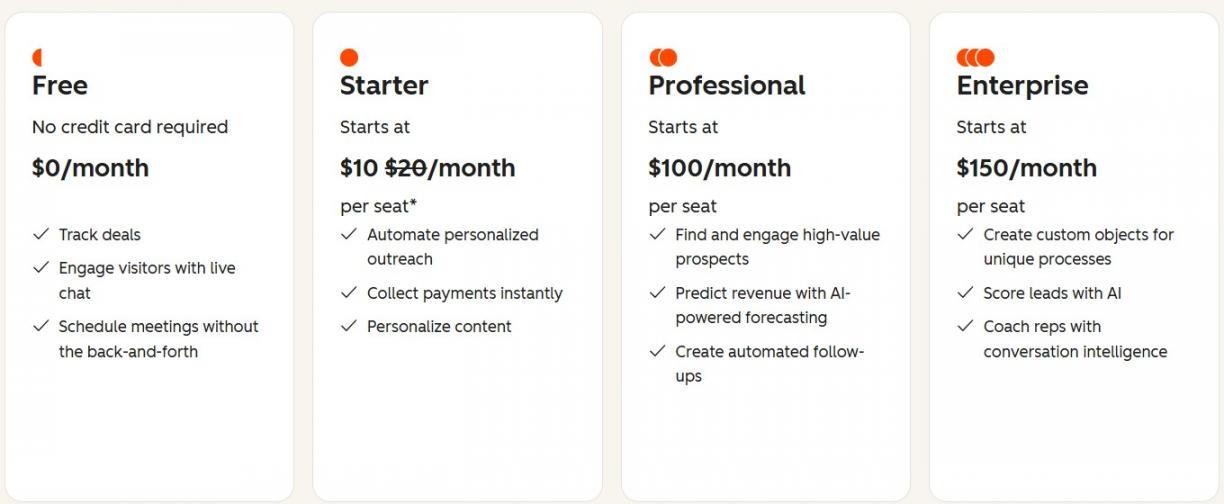
Image via HubSpot
Tool Level
- SMB through mid-market, strongest between 5 and 100 reps.
Usability
- HubSpot has the lowest setup friction, and existing users can access sales productivity tools from the same workspace.
Pro Tip: Check the five-playbook cap against your product and segment count before committing on the Professional plan.
4. Showpad (Including Bigtincan)
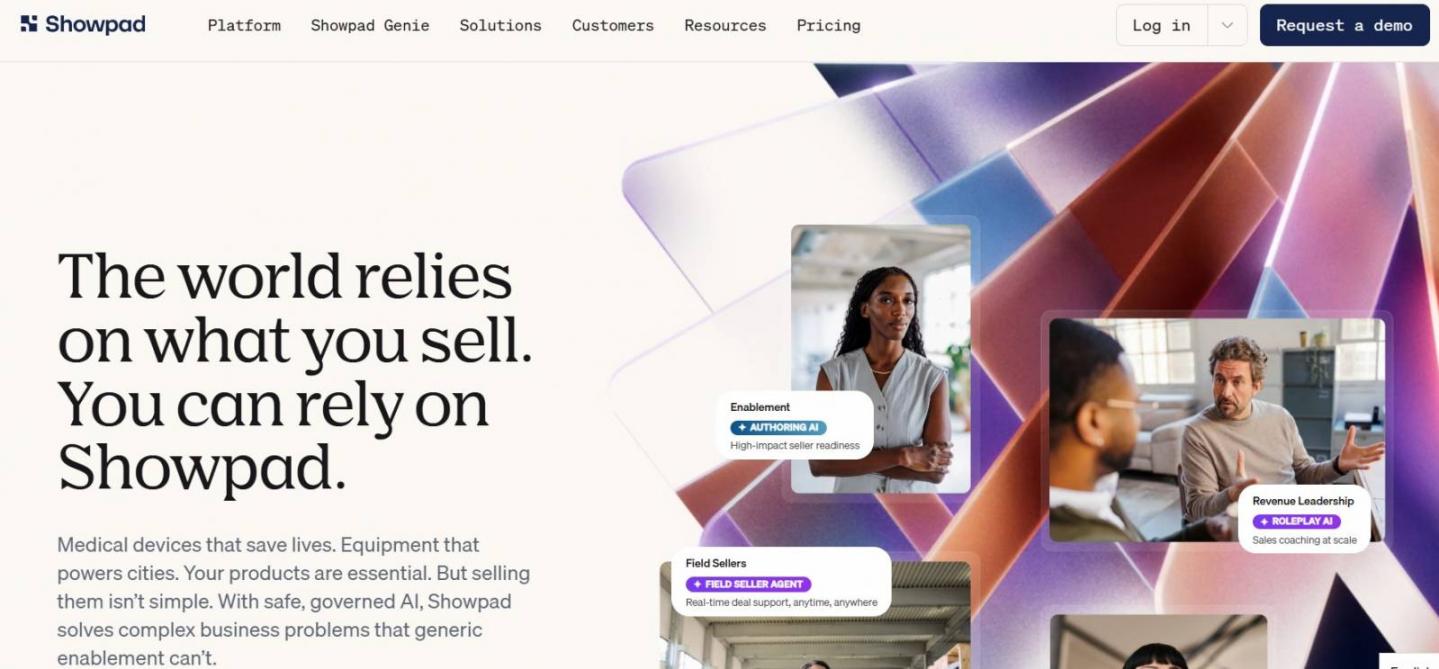
Image via Showpad
Showpad suits industries where sales content must meet strict review and compliance requirements. Reps can access approved materials while meeting with customers away from the office. Showpad merged with Bigtincan under Vector Capital ownership on October 30, 2025.
The combined business reports over 2,000 customers across 50 countries. The merger brings content management, training, and mobile sales automation tools under the Showpad brand. Its mobile app supports offline access, while content controls help teams manage approved materials.
Key Features
- Offline-Capable Mobile App: Gives reps access to sales content without an internet connection.
- Content Governance: Provides approval and compliance controls for customer-facing materials.
- Coaching and Training: Combines rep practice and certification with the content library.
- Buyer Engagement Tracking: Shows which content prospects view after receiving it.
- Digital Sales Rooms: Creates shared spaces for buyers and sellers to manage deal content.
- Content Analytics: Tracks content use and engagement across the sales process.
Pros
- The best sales enablement software for regulated selling and physical products.
- Offers mobile and offline handling which CRM-native options don’t attempt.
- The Bigtincan merger brings its mobile content capabilities into Showpad.
Cons
- Its published AI guarantee covers third-party models only, and says nothing about its own.
- No published pricing on any of its three tiers.
- Its merger with Bigtincan is recent, so probe feature parity directly.
Pricing
Showpad does not publish prices for its Professional, Advanced, or Expert plans. All three require a quote, and licensing is per user.
Tool Level
- Mid-market and enterprise, weighted to field and regulated teams.
Usability.
- The rep experience is built around quick access to approved content, while admins manage governance and compliance.
Pro Tip: Confirm how Showpad handles your customer content when its own AI features process or analyze it.
5. Gong
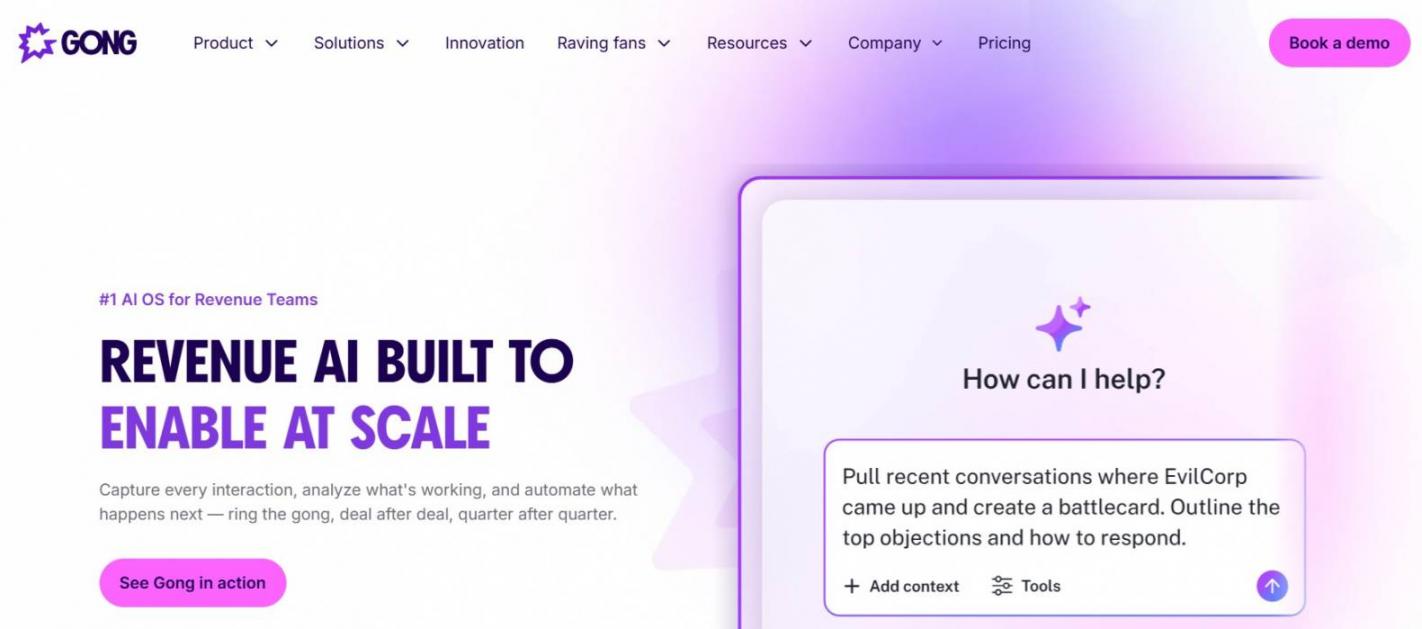
Image via Gong
Gong is suited for teams that need better visibility into what buyers and reps say during sales conversations. Its main strength is conversation intelligence rather than content management. The platform records calls, analyzes deal conversations, and flags churn risks across the pipeline.
Managers can use those insights to coach reps and review stalled opportunities. Gong also supports sales forecasting based on deal activity and conversation data. Treat Gong as a complement to a content management platform rather than a replacement for one.
Key Features
- Call Recording And Transcription: Records and transcribes sales calls, meetings, and related communications.
- Deal Intelligence: Identifies deal risks from conversation and activity data.
- Coaching Workflows: Provides scorecards and shareable call moments for rep coaching.
- Forecasting: Uses deal activity and conversation data to support sales forecasts.
- Pipeline Insights: Highlights changes and risks across active opportunities.
Pros
- A flat published commitment that your data never trains generative models.
- Its trust center lists ISO/IEC 42001 for AI management, which few vendors hold.
- Helps sales leaders review pipeline activity from more than CRM fields.
Cons
- Gong is not a content platform, so it cannot solve collateral management problems.
- No published pricing, and a platform fee sits on top of per-user licensing.
- Like HubSpot, it’s absent from Gartner’s Revenue Enablement Platforms market.
Pricing
Gong publishes no rates. It licenses per user, then adds a platform fee based on users supported. The total therefore scales with headcount twice.
Tool Level
- Mid-market and enterprise teams whose deals are won on calls.
Usability
- Gong is straightforward for reps to use but managers need a clear process for reviewing and applying its insights.
Pro Tip: Confirm your call volume justifies the platform fee at your team size before buying.
FAQ
Q1. What are the pillars of sales enablement?
A. Gartner defines six mandatory capabilities for its Revenue Enablement Platforms market. These include digital content management, guided selling, integration, learning, buyer engagement analytics, and insights. Content management organizes approved materials, while guided selling recommends the next action. Learning, practice, and coaching build rep skills, while analytics measure buyer engagement and content performance.
Q2. What is the difference between a CRM and sales enablement software?
A. A CRM software stores deal record, and this includes contacts, pipeline stages, and activity history. Sales enablement software manages the content and training reps use throughout the sales process. A CRM software can store sales content, but content management is not its main purpose. In contrast, enablement platforms focus more on rep readiness, content use, and sales performance.
Q3. What is a sales enablement tool?
A. It is any tool that helps sales reps to find, use, and improve the material they sell with. That would include content libraries, training and certification platforms, coaching tools, and buyer-facing deal rooms. Sales enablement managers use such tools to oversee programs, content, training, and performance measurement.
Q4. Is HubSpot a sales enablement platform?
A. HubSpot is a CRM with several features that support sales enablement activities. Its sales tools include playbooks, documents, sequences, and conversation intelligence. However, Gartner does not list HubSpot as well as Gong in its Revenue Enablement Platforms market. HubSpot lacks some capabilities found in dedicated enablement platforms. These include content approval workflows, content expiry, rep certification, and native buyer rooms. Those capabilities are a major selling point for many dedicated sales enablement platforms.
Q5. What are examples of sales enablement tools?
A. The platforms compared here include Seismic, Mindtickle, HubSpot Sales Hub, Showpad, and Gong. Other frequently ranked options include Highspot, Allego, Spekit, Guru, and Mediafly. Several of these platforms also appear within Gartner's Revenue Enablement Platforms market. Allego, Spekit, and Mediafly are among the vendors Gartner includes in that category. Seismic, Showpad, and Mindtickle also appear within Gartner's market definition.
Q6. Which sales enablement software is the best?
A. It would depend on which problem you have to solve. For instance, Seismic works well for governance, while Mindtickle focuses on sales readiness. HubSpot offers CRM-native simplicity and more straightforward pricing than many other platforms. While Showpad suits regulated selling, Gong focuses on call visibility. There’s no single sales enablement software that leads on every criteria.
Q7. What are the best AI tools for sales enablement?
A. Every vendor here uses AI features now, so the more useful question is what each does with your content. Mindtickle and Gong both publish flat commitments never to train models on customer data. Seismic permits feedback to improve its own models. HubSpot may train its own models, with that setting on by default. Compare each vendor's data policies before choosing an AI-powered sales enablement software.
Q8. What does sales enablement do?
A. Sales enablement helps reps have access to the right materials, skills, and guidance. Gartner found that 67% of B2B buyers prefer a rep-free buying experience. Because of this trend, the importance of useful, accurate, and accessible sales content has increased. Enablement keeps that content organized, current, and available when reps need it. It also provides data about how buyers interact with shared materials.
Q9. How do you choose sales enablement software?
A. You can start by identifying the main enablement problem that your team wants to solve. That problem can be content management, training, coaching, or even buyer engagement. Then, you compare platforms based on the capabilities your team needs. Pay attention to your team size, industry, sales process, as well as your existing technology stack. Pricing also matters, especially when vendors require custom quotes or enterprise contracts.
Q10. How much does sales enablement software cost?
A. The pricing for sales enablement software is different based on the vendors and the product tiers. For example, HubSpot publishes its price, and the entry plan starts at $20/seat/month. Others tools provide pricing only after a sales conversation. Features, users, integrations, and contract terms can all affect the final cost. Small teams should choose tools with transparent pricing and simpler plans.
Q11. How long does it take to implement sales enablement software?
A. A typical implementation can take between 2-8 weeks, and it depends on the platform and project scope. Simple deployments can take 2-4 weeks. Complex enterprise rollouts, on the other hand, can take 6-8 weeks or longer. Existing CRM and other system integrations can also extend the timeline. Content migration may take longer when materials are spread across several systems. Teams should also allow time for training, testing, and user adoption.
Q12. Can sales enablement software integrate with a CRM?
A. Yes. Sales enablement platforms can integrate with CRM systems. The integration helps connect sales content and rep activities across both platforms. It can also reduce duplicate data entry and keep sales workflows connected. Some integrations include Salesforce, HubSpot, Microsoft Dynamics, and other sales platforms. The integrations that are available would depend on the vendor and subscription plan.
Final Thoughts
The honest answer on sales enablement software is simple. Most teams under 50 reps should extend the startup CRM software they already own before buying anything new. Above that headcount, or inside a regulated industry, the governance and readiness gap becomes obvious. Then, sales enablement software can be considered.
Use these two questions to assess every vendor call. What happens to your renewal after the merger? Does your content train their AI? No sales enablement software vendor puts either answer on its pricing page.
If your CRM is where you’d rather solve this, start with HubSpot Sales Hub. Try the free tier before you commit to a seat count.
If the real gap is pipeline rather than content, that’s what my team does. Have a look at Attrock’s lead generation services.
Disclaimer: This content contains some affiliate links for which we will earn a commission (at no additional cost to you). This is to ensure that we can keep creating free content for you.