For most marketing teams, HubSpot Marketing Hub is the better choice in the HubSpot vs Pardot comparison.
Its user-friendly interface and all-in-one platform make it easy to launch campaigns quickly. Meanwhile, Pardot, now called Marketing Cloud Account Engagement (MCAE), is best suited for enterprise teams already deep in the Salesforce ecosystem.
HubSpot stands out for small to medium-sized businesses that want fast setup, intuitive tools, and accessible reporting. Pardot, by contrast, offers advanced analytics and tight Salesforce CRM integration, but with a steeper learning curve.
In short, choose HubSpot if you want simplicity and speed. But if you need enterprise-level Salesforce alignment, go with Pardot.
In this HubSpot vs Pardot guide, we compare features, pricing, and ease of use to help you pick the right tool fast.
Disclaimer: This content contains some affiliate links for which we will earn a commission (at no additional cost to you). This is to ensure that we can keep creating free content for you.
HubSpot vs Pardot (MCAE): The Summary Box
| HubSpot Marketing Hub | Pardot (Marketing Cloud Account Engagement) |
 |  |
| HubSpot Marketing Hub is a user-friendly, all-in-one marketing platform with built-in CRM. It’s designed for inbound marketing, lead generation, and fast-growing teams. It combines marketing, sales, and service tools in one place for easier campaign management and better visibility. Best for: Small to mid-sized teams that want fast setup, lower complexity, and strong ROI. | Pardot is Salesforce’s B2B marketing automation tool, with deep Salesforce CRM and Sales Cloud integration. This makes it ideal for enterprise teams already invested in the Salesforce CRM ecosystem. Pardot is built for advanced lead scoring and account-based marketing. Best for: Large B2B teams already using Salesforce that need complex automation and detailed reporting. |
HubSpot Marketing Hub
- HubSpot Marketing Hub is a user-friendly, all-in-one marketing platform with built-in CRM. It’s designed for inbound marketing, lead generation, and fast-growing teams. It combines marketing, sales, and service tools in one place for easier campaign management and better visibility. Best for: Small to mid-sized teams that want fast setup, lower complexity, and strong ROI.
Pardot (Marketing Cloud Account Engagement)
- Pardot is Salesforce’s B2B marketing automation tool, with deep Salesforce CRM and Sales Cloud integration. This makes it ideal for enterprise teams already invested in the Salesforce CRM ecosystem. Pardot is built for advanced lead scoring and account-based marketing. Best for: Large B2B teams already using Salesforce that need complex automation and detailed reporting.
HubSpot vs Pardot: Product Ratings
| HubSpot | Pardot (MCAE) | |
| Overall | ||
| Support | ||
| Features | ||
| User-Friendliness | ||
| Value for Money |
HubSpot
- Overall:
- Support:
- Features:
- User-Friendliness:
- Value for Money:
Pardot (MCAE)
- Overall:
- Support:
- Features:
- User-Friendliness:
- Value for Money:
Pros and Cons: HubSpot Marketing Hub
| Pros | Cons |
| Built-in CRM connects marketing, sales, and customer data in one platform | Advanced features like automation workflows and custom reporting require higher-tier plans |
| Very user‑friendly interface with simple setup | Scaling costs rise with contact list growth and feature usage |
| Strong marketing automation tools for drip and email campaigns | |
| Excellent for inbound marketing and lead generation | |
| Easy to sync data across Sales Hub, Operations Hub, and Service Hub | |
| HubSpot Academy provides free training resources |
Pros
- Built-in CRM connects marketing, sales, and customer data in one platform
- Very user‑friendly interface with simple setup
- Strong marketing automation tools for drip and email campaigns
- Excellent for inbound marketing and lead generation
- Easy to sync data across Sales Hub, Operations Hub, and Service Hub
- HubSpot Academy provides free training resources
Cons
- Advanced features like automation workflows and custom reporting require higher-tier plans
- Scaling costs rise with contact list growth and feature usage
Pros and Cons: Pardot (MCAE)
| Pros | Cons |
| Deep Salesforce CRM and Sales Cloud integration | Steep learning curve compared to HubSpot’s simpler interface |
| Advanced reporting, lead scoring, and account engagement | Complex implementation and setup make onboarding slower |
| Strong B2B automation and drip campaigns | No free plan and a higher starting price than the HubSpot platform |
| Excellent for complex or enterprise B2B sales cycles | Heavy reliance on the Salesforce ecosystem |
| Not ideal for small teams or businesses without Salesforce |
Pros
- Deep Salesforce CRM and Sales Cloud integration
- Advanced reporting, lead scoring, and account engagement
- Strong B2B automation and drip campaigns
- Excellent for complex or enterprise B2B sales cycles
Cons
- Steep learning curve compared to HubSpot’s simpler interface
- Complex implementation and setup make onboarding slower
- No free plan and a higher starting price than the HubSpot platform
- Heavy reliance on the Salesforce ecosystem
- Not ideal for small teams or businesses without Salesforce
Pricing Details: HubSpot Marketing Hub
| Plan | Cost (Per Month) |
| Free | — |
| Starter | Starts at $15/seat/month |
| Professional | Starts at $890/month |
| Enterprise | Starts at $3,600/month |
- Free: —
- Starter: Starts at $15/seat/month
- Professional: Starts at $890/month
- Enterprise: Starts at $3,600/month
Pricing Details: Pardot (MCAE)
| Plan | Cost (Per Month) |
| Demo | — |
| Growth+ | $1,250/org/month |
| Plus+ | $2,750/org/month |
| Advanced+ | $4,400/org/month |
| Premium+ | $15,000/org/month |
- Demo —
- Growth+ $1,250/org/month
- Plus+ $2,750/org/month
- Advanced+ $4,400/org/month
- Premium+ $15,000/org/month
Verdict: In the HubSpot vs Pardot comparison, HubSpot Marketing Hub is the best choice for most teams. It offers faster setup, lower complexity, and better time-to-value without relying on Salesforce.
Pick HubSpot if you want an all-in-one platform that helps you launch and scale quickly. Choose Pardot if you’re deeply invested in the Salesforce ecosystem and need advanced marketing automation for complex sales cycles.
Who is it For?
| HubSpot | Pardot (MCAE) |
| Small to mid-sized marketing teams | Enterprise B2B marketing teams |
| Companies focused on inbound marketing | Organizations already using Salesforce CRM |
| Teams that want one platform for marketing tools | Organizations needing advanced automation and sales alignment |
HubSpot
- Small to mid-sized marketing teams
- Companies focused on inbound marketing
- Teams that want one platform for marketing tools
Pardot
- Enterprise B2B marketing teams
- Organizations already using Salesforce CRM
- Organizations needing advanced automation and sales alignment
HubSpot vs Pardot (MCAE): Feature Comparison
| HubSpot | Pardot | ||
| Intuitive Interface | |||
| Pre-Built Workflow Templates | |||
| UI and Usability | Visual Campaign Builder | ||
| Mobile App Access | |||
| Easy Onboarding (No Consultant Required) | |||
| Email Builder | |||
| Landing pages and forms | |||
| Lead Scoring and Grading | |||
| Core Marketing Capabilities | Multi-Channel Automation | ||
| Drip Campaigns and Journey Builder | |||
| Business Units for Multi-Brand Management | |||
| Custom Reports and Dashboards | |||
| Attribution Reporting | |||
| Analytics and Reporting | Predictive Analytics with AI | ||
| Native Google Analytics Integration | |||
| AI Content Generation | |||
| AI Campaign Insights | |||
| AI Tools and Integrations | Predictive Send Time Optimization | ||
| App Marketplace & Native Integrations | |||
| Free Training Academy | |||
| Free Certification | |||
| Support and Resources | Live Chat/Email Support | ||
| Community Forum | |||
| Implementation Consultants Available | |||
| Free Plan/Trial | |||
| Pricing and Access | Demo Availability | ||
| Custom Plans |
HubSpot
- UI and Usability
- Intuitive Interface
- Pre-Built Workflow Templates
- Visual Campaign Builder
- Mobile App Access
- Easy Onboarding (No Consultant Required)
- Core Marketing Capabilities
- Email Builder
- Landing pages and forms
- Lead Scoring and Grading
- Multi-Channel Automation
- Drip Campaigns and Journey Builder
- Business Units for Multi-Brand Management
- Analytics and Reporting
- Custom Reports and Dashboards
- Attribution Reporting
- Predictive Analytics with AI
- Native Google Analytics Integration
- AI Tools and Integrations
- AI Content Generation
- AI Campaign Insights
- Predictive Send Time Optimization
- App Marketplace & Native Integrations
- Support and Resources
- Free Training Academy
- Free Certification
- Live Chat/Email Support
- Community Forum
- Implementation Consultants Available
- Pricing and Access
- Free Plan/Trial
- Demo Availability
- Custom Plans
Pardot
- UI and Usability
- Intuitive Interface
- Pre-Built Workflow Templates
- Visual Campaign Builder
- Mobile App Access
- Easy Onboarding (No Consultant Required)
- Core Marketing Capabilities
- Email Builder
- Landing pages and forms
- Lead Scoring and Grading
- Multi-Channel Automation
- Drip Campaigns and Journey Builder
- Business Units for Multi-Brand Management
- Analytics and Reporting
- Custom Reports and Dashboards
- Attribution Reporting
- Predictive Analytics with AI
- Native Google Analytics Integration
- AI Tools and Integrations
- AI Content Generation
- AI Campaign Insights
- Predictive Send Time Optimization
- App Marketplace & Native Integrations
- Support and Resources
- Free Training Academy
- Free Certification
- Live Chat/Email Support
- Community Forum
- Implementation Consultants Available
- Pricing and Access
- Free Plan/Trial
- Demo Availability
- Custom Plans
Verdict: HubSpot clearly wins the HubSpot vs Pardot comparison for most marketing teams. It delivers faster onboarding, easier campaign execution, and quicker ROI with far less technical overhead.
While Pardot (MCAE) offers strong reporting and Salesforce integration, it comes with higher complexity, longer setup time, and heavier system dependence. For most businesses, the HubSpot platform provides a more practical, scalable, and cost-effective solution.
Disclaimer: This content contains some affiliate links for which we will earn a commission (at no additional cost to you). This is to ensure that we can keep creating free content for you.
Table of Contents
Detailed Review: HubSpot Marketing Hub
HubSpot Marketing Hub wins the HubSpot vs Pardot comparison for teams that need results without technical overhead. It’s the better choice for small to mid‑sized teams that want quick wins in inbound marketing without heavy IT support.
UI and Usability
HubSpot offers a built‑in CRM alongside its marketing tools, giving teams a unified view of contacts and campaigns. Unlike Pardot, which requires Salesforce expertise, HubSpot’s built-in CRM means you can manage contacts and campaigns in one place from day one.
Key features include:
- Built-in tips guide users through setup. They reduce onboarding time compared to Pardot’s more technical setup.
- Drag-and-drop editors for emails, landing pages, forms, and websites let you build campaigns visually. They let teams build assets quickly without coding.
- Intuitive breadcrumb navigation keeps you oriented within deep tool layers without hitting “back.” Easily jump between workflows, lists, and campaigns.
- “One-click” clone feature duplicates complex emails or workflows instantly. This saves hours when scaling similar campaigns across segments.
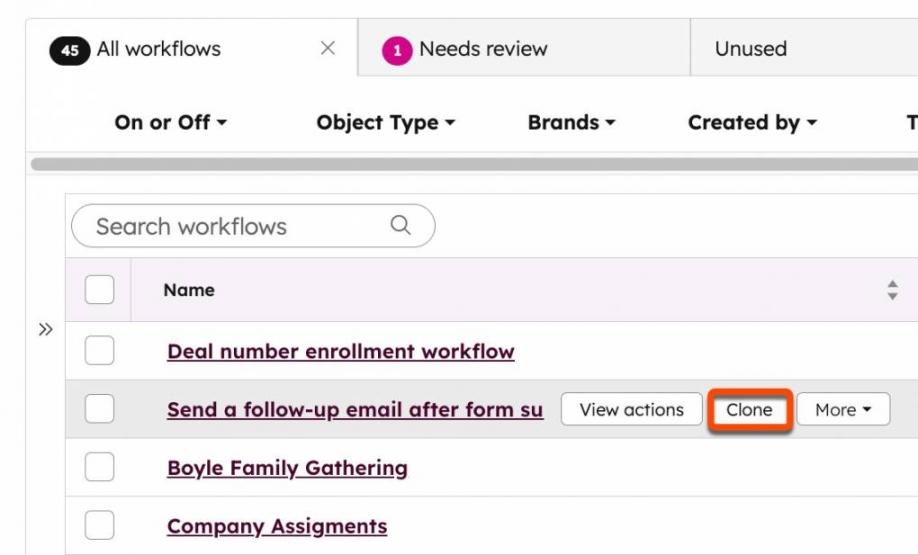
Image via HubSpot
- Customizable dashboards allow teams to track campaigns in real time. You can adapt views and layouts, plus resize widgets and group metrics to your liking.
- Smart content personalizes website pages and emails based on smart rules and visitor data. Complex rule-building, like in Pardot, isn’t necessary.
- HubSpot Academy offers free training and certifications. Pardot training is free, but certifications are generally paid.
Marketing Automation Capabilities
HubSpot’s automation tools are easier to set up, faster to deploy, and don’t lock you into Salesforce. Meanwhile, Pardot offers competitive features, but requires technical resources to implement.
As such, HubSpot Marketing Hub pulls ahead in the HubSpot vs Pardot debate. Here’s how it helps improve lead generation and generate ROI faster:
- Multi-step nurture sequences guide prospects from awareness to purchase with automated email series. HubSpot’s visual workflow builder makes these campaigns faster to launch than Pardot’s Engagement Studio.
- Behavioral enrollment triggers automatically add contacts to workflows based on form submissions or email clicks. Unlike Pardot, a Salesforce admin isn’t needed to map these triggers.
- If/then branching logic creates different paths within single workflows. This ensures contacts get diverse content based on their property values or engagement.
- Content Remix repurposes single assets (like a blog post) into social media posts, email newsletters, or landing pages in seconds. This feature saves time and offers flexibility that Pardot lacks.
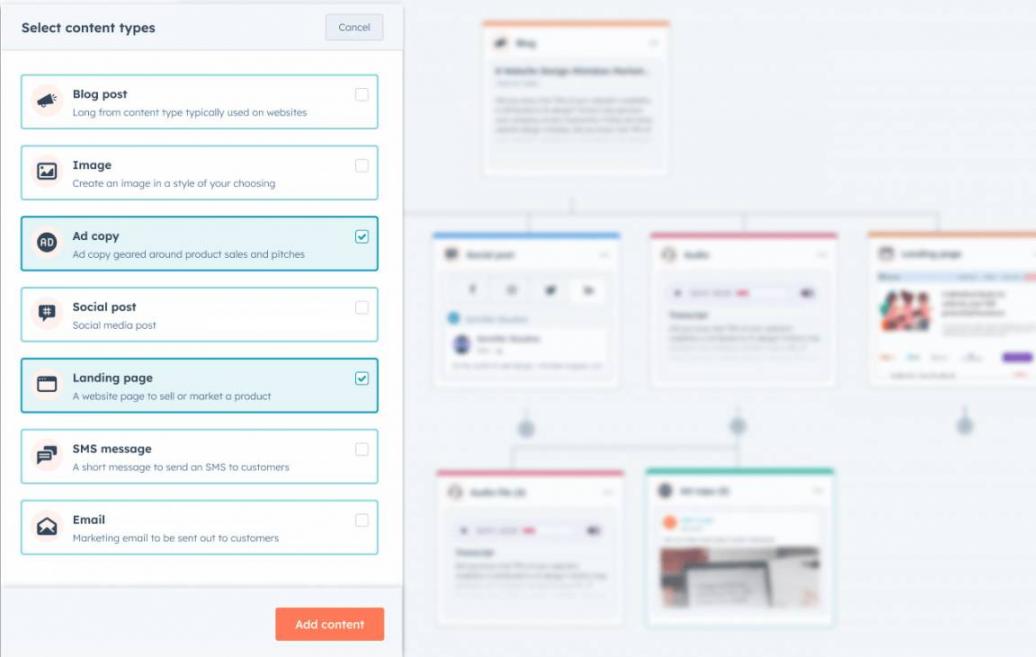
Image via HubSpot
- AI-powered lead scoring assigns values based on user behavior and demographics (like job title). The HubSpot platform’s scoring is easier to configure, helping your team focus on the right prospects.
- Breeze Social Media Agent (HubSpot’s AI agent) analyzes your industry and past performance to draft and schedule posts automatically. You must manually draft content and schedule with Pardot.
- Ad Management centralizes Google, Facebook, and LinkedIn campaigns so you can track which ads convert to customers. Other than a Google Ads Connector, Pardot requires third-party integrations for similar visibility.
- A/B testing splits email subject lines, CTA buttons, and more to optimize engagement. HubSpot’s testing setup is visual and self-serve, while Pardot’s requires more manual configuration.
Analytics and Reporting
Marketing leaders need detailed reports to prove ROI and adjust their marketing strategy. When comparing HubSpot vs Pardot, HubSpot’s analytics win for being easier to access, faster to set up, and simpler to act on.
With the HubSpot platform, you can track performance, prove ROI, and fix marketing funnel leaks without waiting on a BI team. Its analytics capabilities include:
- Custom dashboards and reports display the metrics that matter most to your marketing teams in real-time. Unlike Pardot, which requires Salesforce report builder knowledge, HubSpot's dashboards are drag-and-drop.
- Campaign analytics measure how email campaigns, landing pages, and ads work together to drive results. This unified view helps teams optimize faster than Pardot’s more fragmented reporting.
- Attribution reporting shows which marketing channels contribute most to customer acquisition and revenue. Both platforms offer this, but HubSpot's multi-touch models are more accessible.
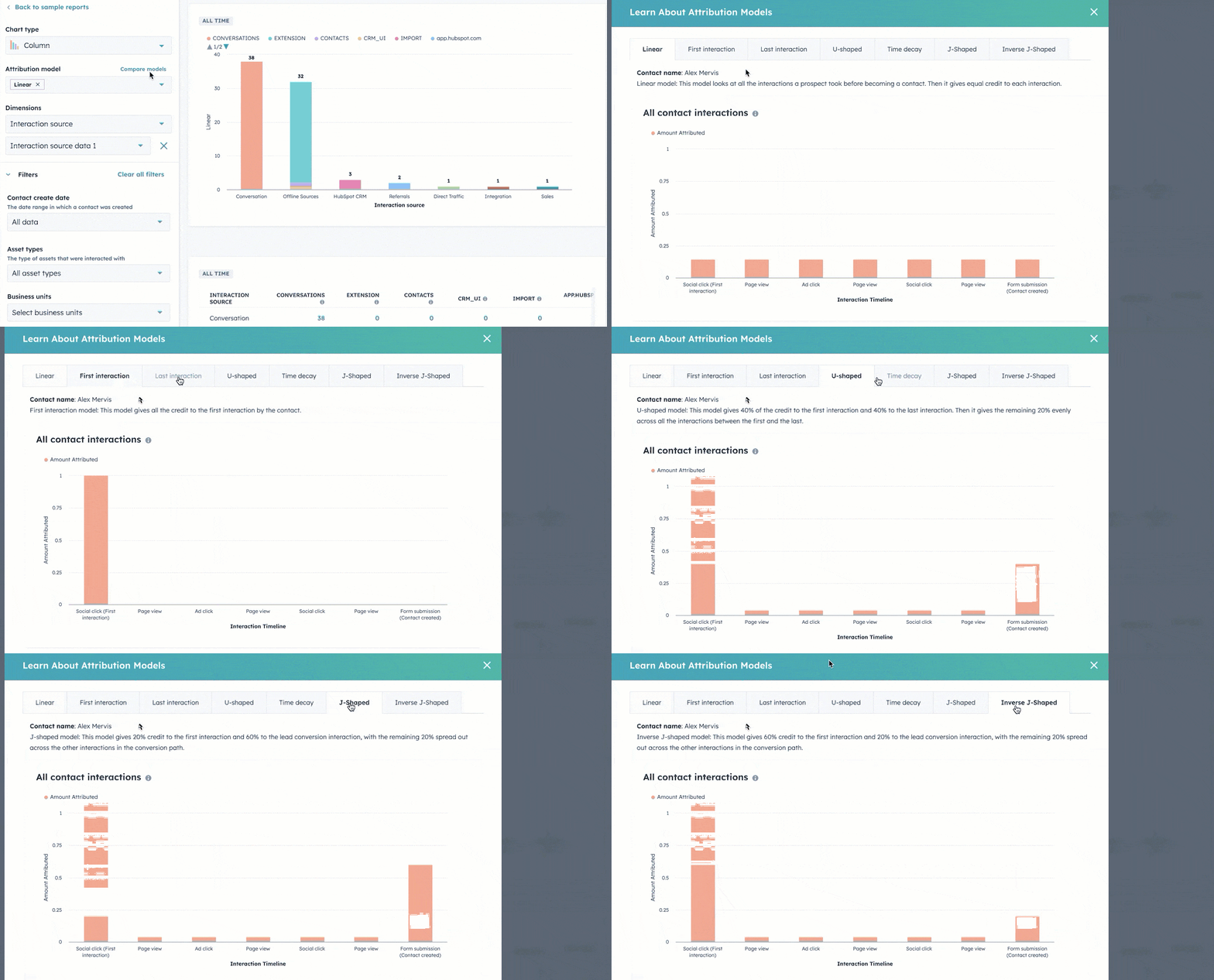
Image via HubSpot
- Traffic analytics identify where visitors come from and track how sources convert over time. While HubSpot tracks this with zero configuration required, Pardot is more technical and involves building a Salesforce Campaigns report.
- Contact analytics show individual lead behavior, including page views, email opens, and form submissions. This timeline view is clearer in HubSpot than in Pardot’s prospect activity logs.
- Google Analytics integration adds deeper insights into website traffic and user behavior alongside HubSpot’s native data. It offers HubSpot full behavioral and lifestyle tracking, compared to the primarily first-touch UTM data in Pardot.
Detailed Review: Pardot
Pardot (Marketing Cloud Account Engagement) is Salesforce’s enterprise-grade B2B marketing automation platform.
In a direct HubSpot vs Pardot comparison, Pardot delivers strong functionality. However, its technical setup and reliance on Salesforce slow down onboarding and day-to-day execution.
This makes Pardot ideal for enterprise teams already embedded in the Salesforce ecosystem, especially those running account-based marketing (ABM) strategies at scale.
UI and Usability
In the HubSpot vs Pardot UI comparison, Pardot’s interface comes off as more technical and less intuitive. The Salesforce MCAE interface follows the Lightning Experience design, which benefits existing Salesforce users. Marketing teams outside the Salesforce ecosystem face a steeper learning curve.
- Lightning App Builder allows admins to customize page layouts and components for specific business needs. This flexibility requires technical skills, unlike Marketing Hub’s drag-and-drop simplicity.
- Engagement Studio provides visual workflow building for “if/then” branching logic, complex drip campaigns, and customer journeys. It’s powerful but slower to configure than HubSpot’s workflow builder.
- Enhanced folder sharing organizes emails, lists, and forms into hierarchies with strict permissions. Unlike HubSpot’s global search, finding assets across folders can be cumbersome.
- Business Units allow large enterprises to manage separate brands, regions, or product lines in isolated environments. This niche strength is valuable for complex organizations but unnecessary for most smaller teams.
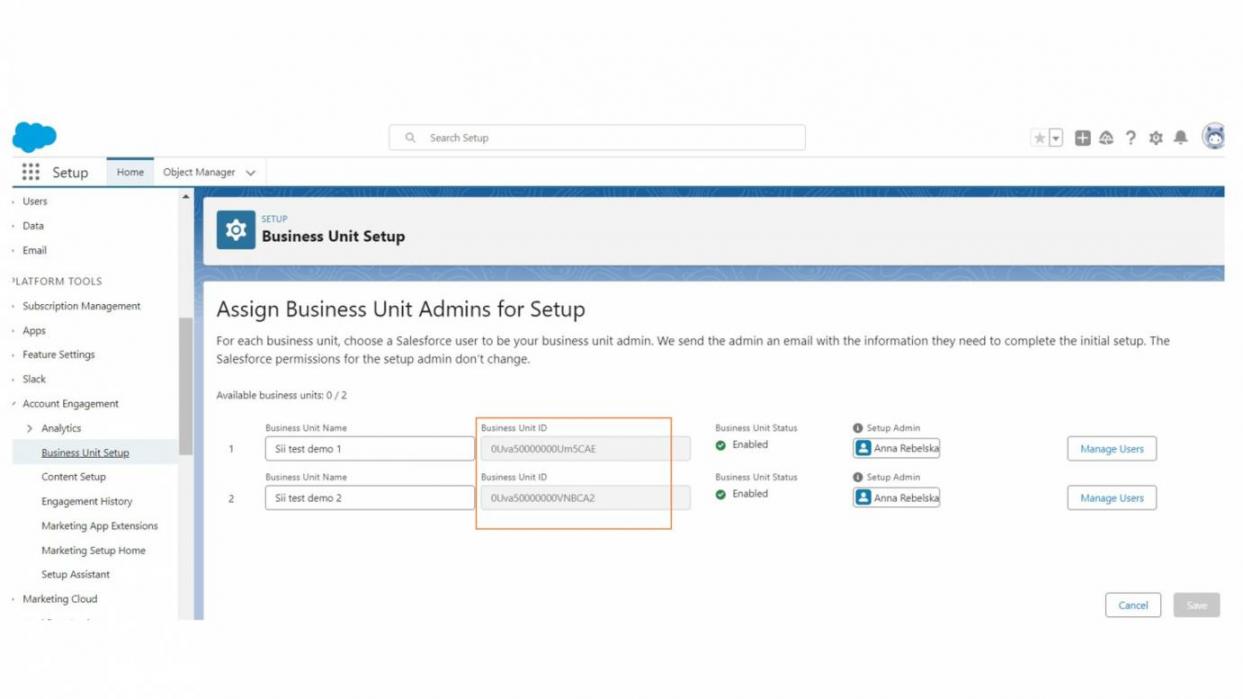
Image via Sii
- Connector setup requires technical configuration to sync data between Sales Cloud and Account Engagement properly. HubSpot’s built-in CRM eliminates this complexity.
- Setup Assistant guides new users through initial configuration, but it assumes familiarity with Salesforce architecture. Marketing Hub, by contrast, is designed for marketers without technical backgrounds.
- Trailhead training offers certification courses for Pardot and Salesforce. While valuable, the learning curve is significantly steeper than HubSpot’s faster, beginner-friendly training.
Marketing Automation Capabilities
Pardot handles complex account-based marketing strategies across multiple channels with deep Salesforce integration. However, when comparing HubSpot vs Pardot, Pardot requires more technical setup, longer implementation time, and ongoing admin support.
- Einstein Lead Scoring uses AI to rank prospects based on engagement and intent signals. However, setup and tuning require Salesforce expertise, unlike HubSpot’s simpler configuration.
- Agentforce Campaign Creation (Pardot’s AI agent) builds email campaigns using natural-language prompts. While the interface is conversational, setting up the underlying “actions” and “topics” for the agent requires technical knowledge.
- Lead nurturing and scoring processes rank and send prospects on automated, personalized journeys. Both HubSpot and Pardot offer this, but Pardot uses a Scoring + Grading framework to separate interest vs fit.
- Engagement Studio enables multi-step programs with branching logic based on user behavior and demographics. It offers more control, but takes longer to build than HubSpot's visual workflows.
- Completion Actions trigger automated workflows when prospects take specific actions, such as form submissions or page visits. These are powerful but require careful setup to avoid workflow errors.
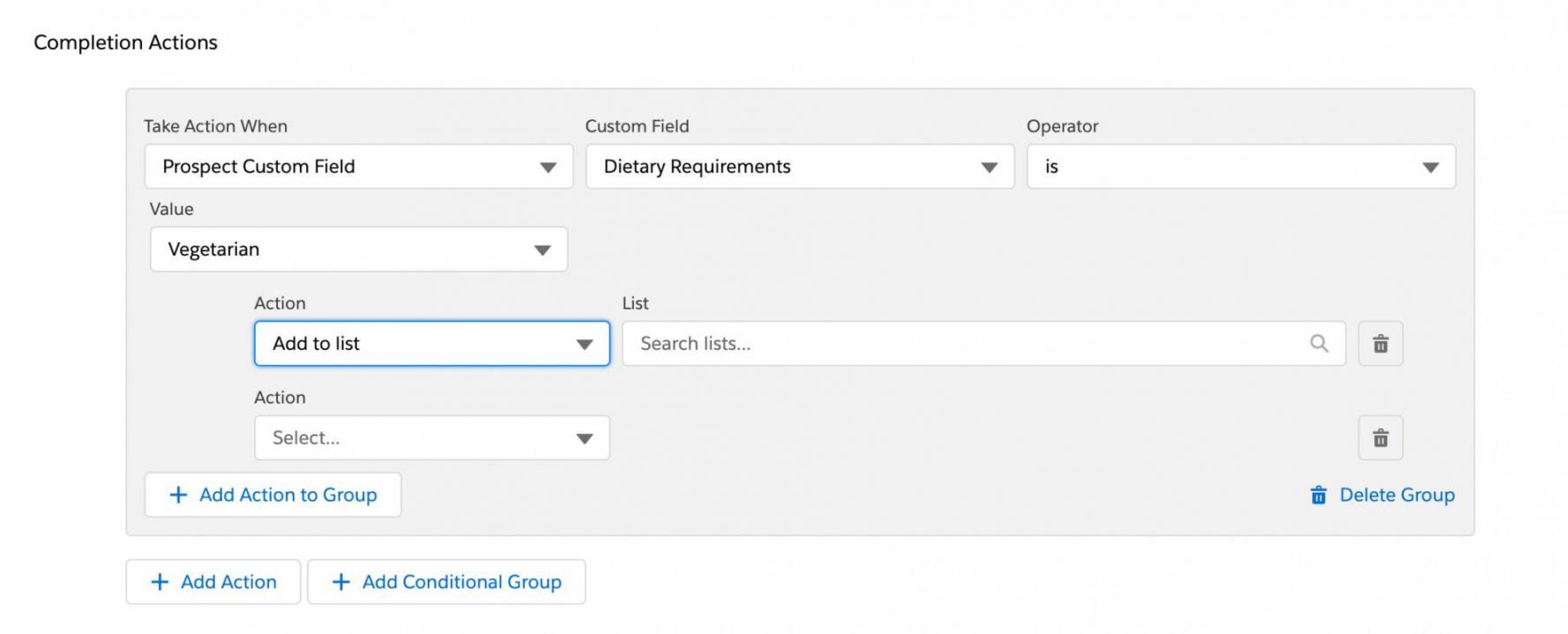
Image via Salesforce Ben
- External Activities connect third-party tools, such as webinar platforms, to trigger automated marketing responses. This requires technical mapping that HubSpot’s native integrations often simplify.
- Sales Alerts notify sales reps when prospects are highly engaged, show strong intent, or are ready to convert. These alerts support sales alignment, though they do rely on accurate Salesforce data syncing.
- Integration with Salesforce Data Cloud helps build richer audience segments using multiple data sources. This is valuable mainly for teams already invested in Salesforce infrastructure.
- Dynamic Lists update automatically as prospects meet segmentation criteria for targeted email campaigns. HubSpot’s active lists work similarly with less configuration overhead.
- SMS and WhatsApp add‑ons support two-way mobile messaging inside customer journeys. These require additional Salesforce licensing that increases the total cost.
Analytics and Reporting
Marketing Cloud Account Engagement provides enterprise-level analytics through Salesforce’s reporting infrastructure. In the HubSpot vs Pardot analytics contest, Pardot offers deeper data layers but requires more technical skills to access insights quickly.
- B2B Marketing Analytics dashboards connect campaign performance to pipeline and campaign ROI metrics. Setup requires Salesforce admin support and takes longer than HubSpot's pre-built dashboards.
- Salesforce reports provide customizable views of lead progression and conversion rates across business units. This flexibility comes at the cost of complexity and slower report creation compared to HubSpot.
- AI-powered Multi-Touch Attribution provides native models like Einstein Attribution to measure marketing impact. While HubSpot and Pardot offer attribution, Pardot’s models integrate directly into Salesforce opportunity records.
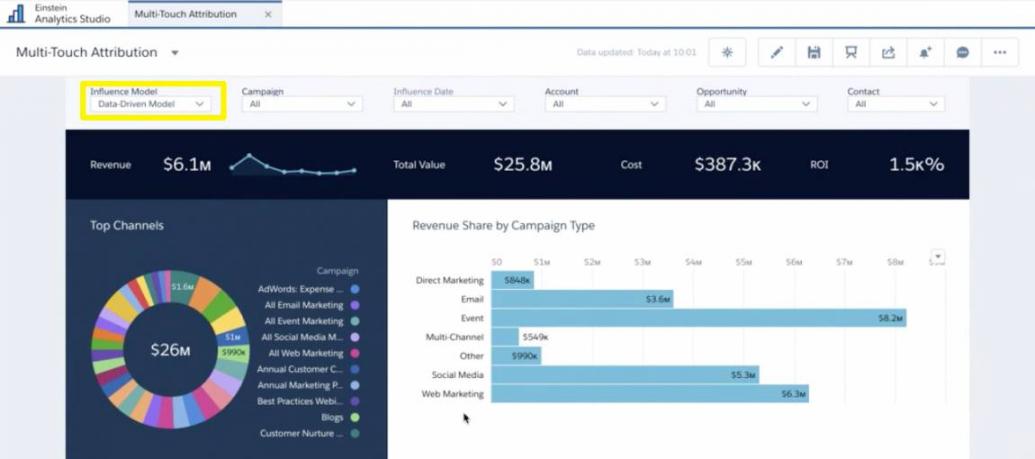
Image via Salesforce Ben
- Engagement history dashboards track email marketing metrics like opens and clicks, and website activity, showing how prospects interact with assets over time. HubSpot surfaces this data more clearly for non‑technical marketers.
- Account-Based Marketing reporting tracks account progression (lifecycle) and measures engagement at the account level for enterprise sales strategies. This is primarily valuable for large B2B teams running coordinated account plays.
- The Campaign Influence feature shows how many Pardot-driven marketing touches contributed to a single Opportunity (Deal). It’s a strong feature for enterprises tracking multi-touch journeys tied to deals.
HubSpot Pricing Plans
HubSpot Marketing Hub offers flexible pricing with a free tier that helps small teams start quickly. Paid plans scale with advanced automation, reporting, and integrations.
- Free
- Starter: Starts from $20/month per seat
- Professional: Starts from $890/month
- Enterprise: Starts from $3,600/month
Additional marketing contacts and seats cost extra beyond the included amounts.
Pardot Pricing Plans
Pardot (MCAE) pricing requires annual contracts and Salesforce CRM as an additional cost. The platform has no free tier, and it targets enterprise marketing teams with larger budgets.
- Growth+: $1,250/month
- Plus+: $2,750/month
- Advanced+: $4,400/month
- Premium+: $15,000/month
When comparing HubSpot vs Pardot pricing, HubSpot offers lower entry costs and a free plan, making it ideal for smaller teams. Pardot, on the other hand, is designed for enterprise organizations with larger budgets and complex Salesforce environments.
FAQ
Q1. What’s the difference between HubSpot vs Pardot?
A. The main difference between HubSpot vs Pardot is ease of use and focus. Marketing Hub is the better choice for most teams thanks to faster onboarding and an all-in-one platform with native CRM integration.
Pardot (Marketing Cloud Account Engagement) is designed for B2B marketing teams using the Salesforce CRM. Its complexity, however, makes it less practical for smaller or mid-sized businesses.
Q2. Is HubSpot better than Pardot for small businesses?
A. Yes, HubSpot is better for small and mid-sized teams. It has a free plan, simple setup, and strong marketing tools for lead generation and email campaigns.
Most marketing teams can start creating campaigns within hours, while Pardot often requires weeks of training and consultant support.
Q3. Between HubSpot vs Pardot, which platform has better email marketing features?
A. HubSpot provides simpler email building with drag-and-drop tools and higher send limits. Pardot offers powerful predictive features through Einstein AI but requires technical expertise for complex campaigns.
Q4. How do the integration processes compare between HubSpot vs Pardot?
A. HubSpot offers “plug-and-play” integration with its native Smart CRM, requiring almost no technical setup.
Pardot (MCAE), built on the Salesforce core, provides deeper data syncing but requires technical mapping and configuration to function correctly with Sales Cloud.
Q5. Is Pardot the same as Marketing Cloud Account Engagement?
A. Yes, Pardot is now called Marketing Cloud Account Engagement (MCAE). It’s Salesforce’s B2B marketing automation platform focused on lead nurturing and account engagement.
HubSpot vs Pardot: Which Marketing Platform Wins?
HubSpot Marketing Hub is the better choice for most marketing teams.
It offers superior value with the native CRM integration, user-friendly tools, and transparent pricing. This makes it accessible for small to mid-sized businesses.
Pardot (MCAE) serves enterprise organizations already invested in the Salesforce ecosystem. It’s a good fit for teams needing advanced reporting and complex automation workflows.
Choose HubSpot Marketing Hub for a simple setup and fast implementation, all-in-one marketing tools, and straightforward pricing. Go with Pardot if you’re an enterprise team with Salesforce CRM, technical resources, and budget for extra costs like Data Cloud and Einstein features.
Disclaimer: This content contains some affiliate links for which we will earn a commission (at no additional cost to you). This is to ensure that we can keep creating free content for you.