Free email marketing platforms for small businesses aren't all built the same way. Some cap your contacts before your list has a chance to grow. Others lock basic automation behind a paywall.
If you're looking for a platform that covers email marketing, a full CRM, and landing pages at no cost, HubSpot is the strongest starting point. It's the only free plan on this list that offers a complete marketing and contact management system.
This guide covers 13 free email marketing platforms for small businesses. For each tool, you'll find what the free plan includes, which features stand out, and what you'll pay as your list starts to grow.
Disclaimer: This content contains some affiliate links for which we will earn a commission (at no additional cost to you). This is to ensure that we can keep creating free content for you.
How We Chose These Free Email Marketing Platforms for Small Businesses
Every free email marketing platform for small businesses on this list was evaluated against the same five criteria:
- Free Plan Generosity: You want a free plan that gives you real room to work with. We looked at contact limits, monthly send caps, and whether core features like email automation are included at no cost. HubSpot's free plan is the benchmark here. It includes email, CRM, forms, and live chat without a time limit.
- Core Email Marketing Features: You need more than a basic send button to run effective email campaigns. We looked for a drag-and-drop email editor, pre-designed email templates, list segmentation, and reporting on the free tier. These are among the core email marketing tools every small business needs to get started. HubSpot includes all of these core features on its free plan.
- Automation Access: You shouldn't have to pay just to send a welcome email to a new subscriber. We confirmed whether each platform includes basic email marketing automation, such as welcome sequences and simple drip flows, on its free tier. Some platforms removed automation tools from their free plans in 2025, and that matters when you're conscious of costs.
- CRM and Contact Management: Managing contacts effectively goes beyond storing email addresses. You need visibility into interactions, engagement, and lifecycle stages. We looked at whether each platform goes beyond list storage to offer customer relationship management features. HubSpot is the only tool here that includes a full CRM at no cost.
- Scalability: You want to know what you'll actually pay at 2,000, 5,000, and 10,000 contacts. A generous free plan means little if the first paid tier is a steep jump. We checked how pricing scales and whether the upgrade path makes sense for a small business marketing strategy.
Best Free Email Marketing Platforms for Small Businesses: Comparison Table
Here's a side-by-side look at all 13 free email marketing platforms for small businesses before we get into the full reviews. HubSpot leads the table because it's the only platform that combines email marketing, a full CRM, and lead capture tools at no cost:
| Platform | Free Plan Limits | Key Free Features | Paid Plans Start At |
|---|---|---|---|
| HubSpot | 1,000 contacts, 2,000 email sends/month | All-in-one free plan: full CRM, email marketing, live chat, landing pages, and forms—no tool juggling required | $15/seat/month |
| Mailchimp | 250 contacts, 500 emails/month | Drag-and-drop editor, basic templates, basic reporting | $13/month |
| Brevo | 300 emails/day, 2,000 contacts | Automation workflows, built-in CRM, templates, and segmentation | $9/month |
| Zoho Campaigns | 2,000 contacts, 6,000 emails/month | Native Zoho CRM sync, templates, basic segmentation | $4/month |
| MailerLite | 500 contacts, 12,000 emails/month | Automation builder, landing pages, forms, pop-ups | $10/month |
| Omnisend | 250 contacts, 500 emails/month | Ecommerce automation flows, product recommendations, and revenue tracking | $16/month |
| Sender | 2,500 contacts, 15,000 emails/month | Automation workflows, pop-ups, drag-and-drop editor | $10/month |
| AWeber | 500 contacts, 3,000 emails/month | AI Newsletter Assistant, autoresponders, landing pages | $15/month |
| Kit | 10,000 contacts, unlimited emails | Landing pages, forms, one automation and email sequence | $39/month |
| Klaviyo | 250 contacts, 500 emails/month | AI marketing, advanced segmentation, SMS credits included | $20/month |
| EmailOctopus | 2,500 contacts, 10,000 emails/month | Drag-and-drop editor, basic drip sequences, basic reporting | $10/month |
| Benchmark Email | 500 contacts, 2,500 emails/month | Drag-and-drop editor, basic automation, reporting | $19/month |
| SendPulse | 500 contacts, 15,000 emails/month | Email, SMS, and web push in one platform, basic automation | $12/month |
HubSpot gives small businesses everything they need to get started, including email marketing, contact management, and lead capture, all on a free platform.
13 Best Free Email Marketing Platforms for Small Businesses Reviewed
HubSpot leads this list as the most complete free email marketing platform for small businesses. While the 12 tools that follow offer permanent free plans, none match its combination of email marketing, CRM, and lead capture in a single system at no cost.
1. HubSpot
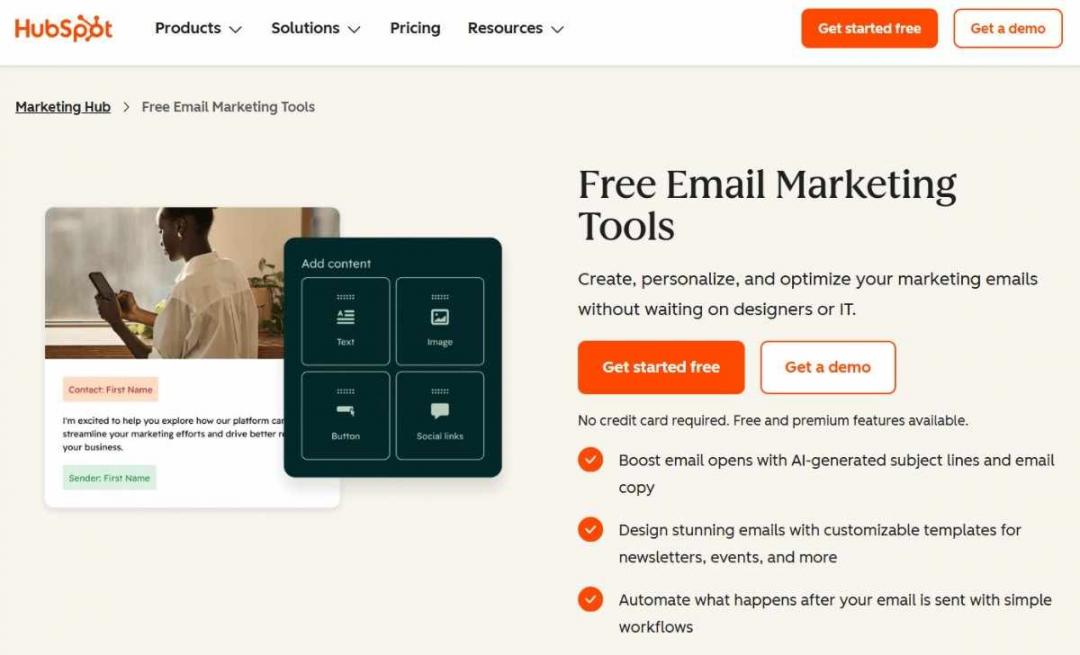
Image via HubSpot
HubSpot's Marketing Hub is the most complete free email marketing platform for small businesses available today. Its free plan includes tools that most platforms reserve for paying customers.
What’s more? Over 238,000 businesses worldwide use it to manage their digital marketing and customer data in one place.
HubSpot also doubles as one of the best lead generation software options at no cost. This comes with forms, live chat, and landing pages all feeding directly into its Smart CRM.
What's new with HubSpot?
In November 2025, HubSpot launched a full-canvas email editor that puts your audience, subject line, and email body in one view. In February 2026, its Claude connector was expanded to let users create CRM records and log notes directly from Claude's chat window.
Key Features
- A/B testing on subject lines and content helps you send emails that consistently perform better
- Email health insights catch deliverability issues early, so more emails reach the inbox
- Contact segmentation filters your list by lifecycle stage and behavior for more targeted sends
- Campaign analytics tracks email marketing metrics like open rates, so you know what's working
- Send time optimization delivers each email when that specific contact is most likely to open it
Pros
- No other platform on this list offers a complete CRM on its free plan
- Email, CRM, forms, live chat, and landing page optimization all come standard at no cost
- The free plan supports up to 2 users, making it workable for small teams
Cons
- The free plan supports only one automated action per form submission
- Marketing Hub Professional unlocks advanced automation and reporting—available at $890/month for teams ready to scale
Pricing
- Free: 2,000 email sends/month and CRM
- Starter: $15/seat/month, removes branding and adds basic segmentation and workflows
- Professional: $890/month, full automation, A/B testing, 3 seats included
- Enterprise: $3,600/month, advanced reporting, predictive lead scoring, 5 seats included
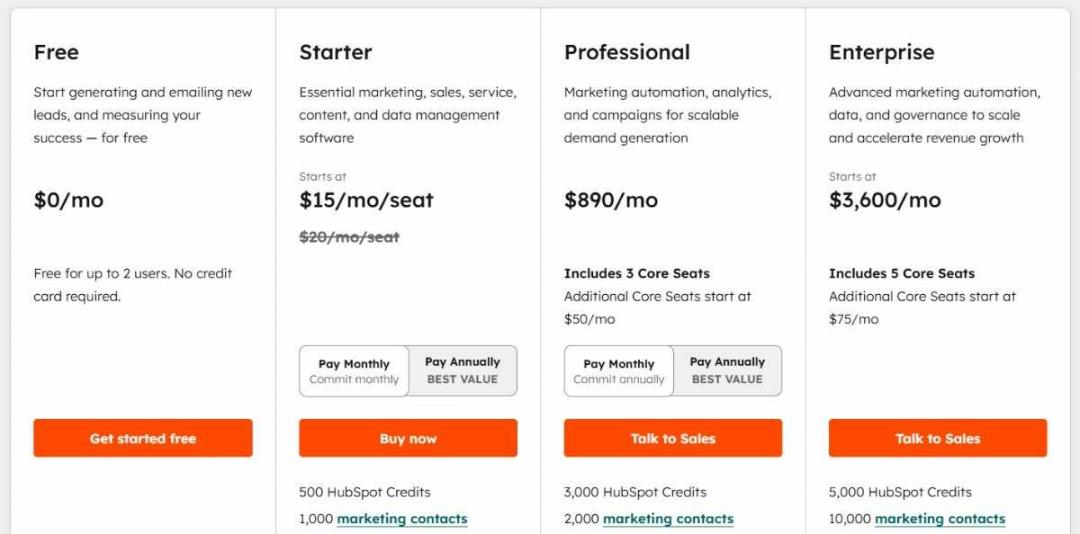
Image via HubSpot
Tool Level
- Beginner to Advanced
Usability
- Intuitive setup with guided onboarding
Best For: Small businesses that want email marketing, a full CRM, and lead capture in one free platform
2. Mailchimp
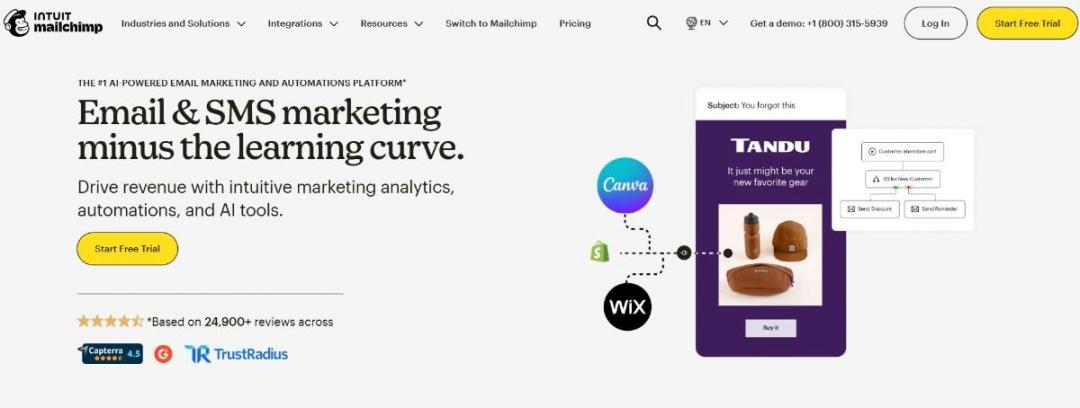
Image via Mailchimp
Mailchimp remains one of the most recognized names in email marketing services, with over 11 million users worldwide. Its free plan covers 250 contacts and 500 emails/month, making it suitable for very small lists.
Unlike HubSpot, which combines email with a full CRM and lead capture tools, Mailchimp focuses primarily on email design and campaign creation. Its email editor is well-regarded for its ease of use.
Mailchimp's Creative Assistant generates on-brand email templates by pulling colors, fonts, and imagery directly from your website. This saves you significant time on design without needing a dedicated designer.
Key Features
- Customer Journey Builder maps automated email sequences based on subscriber behavior and actions
- Native integrations connect Mailchimp to Shopify, WooCommerce, and 300+ other tools
- Drag-and-drop editor lets you build professional emails without any coding knowledge
- Subject line helper provides real-time feedback to improve email open rates
Pros
- The drag-and-drop editor is one of the most polished and beginner-friendly on this list
- A massive integrations list makes it easy to connect with your existing tools and platforms
- A large user community means tutorials, email templates, and answers are easy to find online
Cons
- Mailchimp removed all automation from its free plan in June 2025, meaning you can't send a single welcome email without upgrading to a paid tier
- Unsubscribed contacts still count toward your billing limit on all paid plans, unlike other Mailchimp alternatives
Pricing
- Free: 250 contacts, 500 emails/month
- Essentials: $13/month for 500 contacts
- Standard: $20/month, adds up to 200 automation flows
- Premium: $350/month for 10,000+ contacts
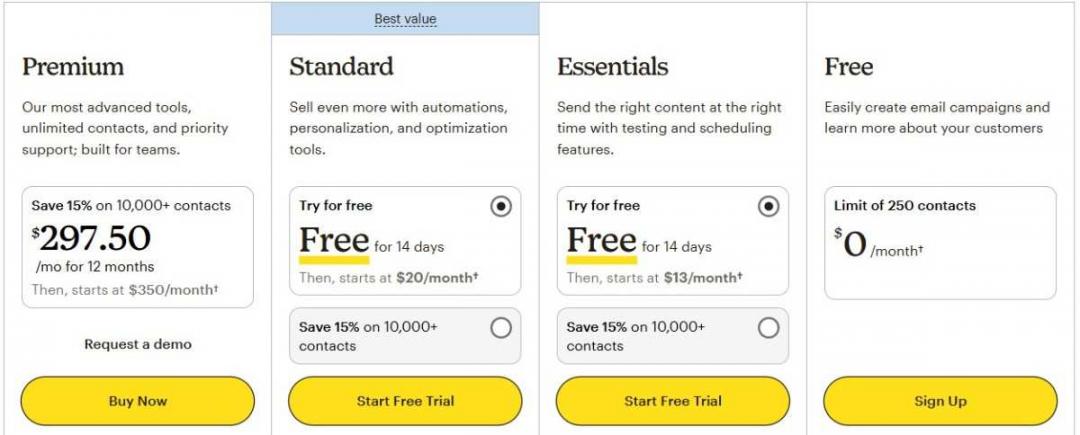
Image via Mailchimp
Tool Level
- Beginner to Intermediate
Usability
- Clean, beginner-friendly interface with a minimal learning curve
Best For: Small businesses looking for a polished email editor with strong third-party integrations
3. Brevo
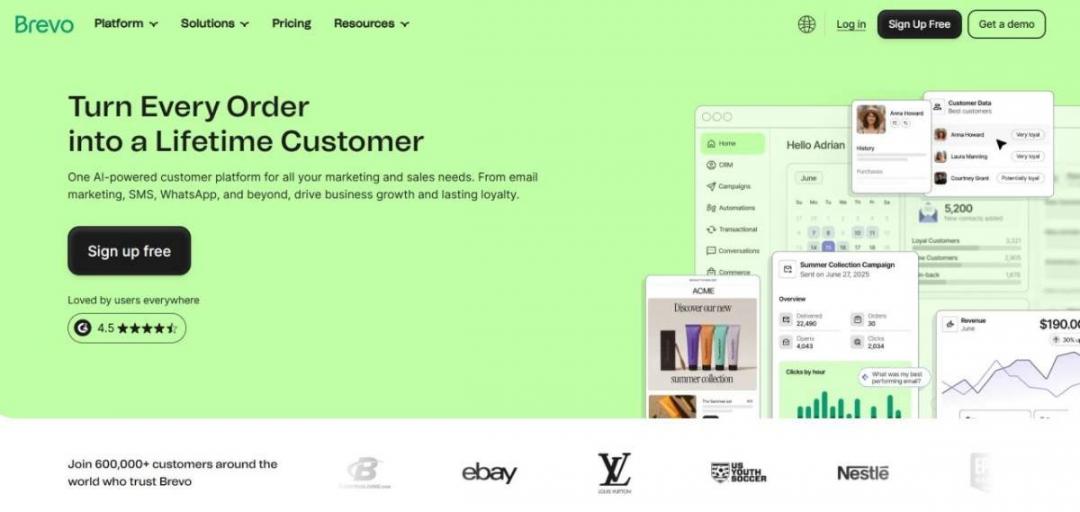
Image via Brevo
Brevo takes a different approach by pricing based on email volume instead of contact count. Its free plan stores up to 100,000 contacts and allows 300 emails/day. For a business with a large list that emails infrequently, this model offers more value than most email marketing software.
After an October 2025 restructuring, Brevo moved landing pages to paid tiers. However, its free plan still includes basic automation workflows and a built-in CRM.
Unlike HubSpot, Brevo doesn't include a full CRM or lead capture tools on its free plan.
Key Features
- Multi-channel campaigns let you reach contacts via email, SMS, and WhatsApp on paid plans
- Real-time reporting shows campaign performance as emails land in subscribers' inboxes
- Transactional emails handle order confirmations and password resets on paid plans
- Heat maps on paid tiers show which sections of your emails get the most clicks
Pros
- Stores up to 100,000 contacts on the free plan, the highest contact storage limit on this list
- Basic automation workflows are included on the free plan at no cost
- Paid plans start at $9/month, making Brevo one of the most affordable upgrades here
Cons
- The daily cap of 300 emails makes the free plan impractical for high-frequency senders
- No landing pages following restructuring, compared to HubSpot's generous free plan
Pricing
- Free: 300 emails/day, up to 100,000 contacts
- Starter: $9/month for 5,000 emails/month
- Business: $18/month for advanced marketing automation
- Professional: $499/month for advanced reporting and analytics
- Enterprise: Custom pricing
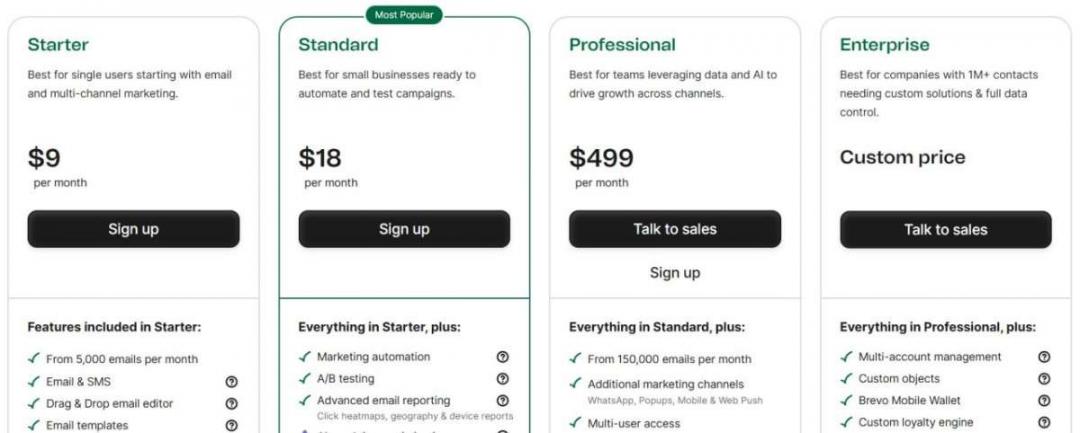
Image via Brevo
Tool Level
- Beginner to Intermediate
Usability
- Straightforward dashboard with moderate setup time
Best For: Businesses with large contact lists
4. Zoho Campaigns
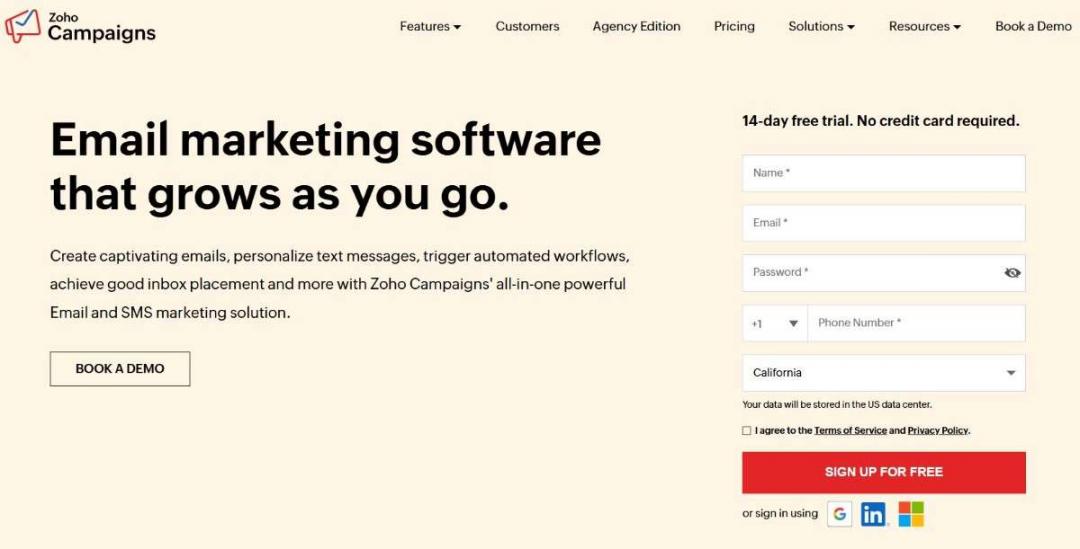
Image via Zoho Campaigns
Zoho Campaigns is the email marketing product within the broader Zoho ecosystem. If you’re already using Zoho CRM, connecting email marketing campaigns to existing contact records takes minutes. Also, no manual data entry is required.
But for teams not already in the Zoho ecosystem, HubSpot CRM offers a more complete free plan. It offers built-in CRM, email, and lead capture tools that don't require a separate product suite.
Zoho Campaigns has one of the lowest starting paid prices among the free email marketing platforms for small businesses on this list. Combining it with the right B2B marketing tools can extend its value well beyond email.
Key Features
- Native Zoho CRM sync pulls contact data and deal activity directly into your email campaigns
- Territory-based audience segmentation groups your list by region for location-specific campaigns
- Campaign comparison reports measure performance across multiple campaigns side by side
- Social media ads integration lets you run coordinated campaigns across email and paid channels
Pros
- Native integration with Zoho CRM and 45+ other Zoho products requires no third-party connectors
- Paid plans start at $4/month, the lowest starting price among all paid plans on this list
- The platform supports unlimited email sends on paid plans with no hidden monthly caps
Cons
- Zoho Campaigns offers limited value as a standalone tool outside the Zoho ecosystem
- The template library is smaller than platforms like HubSpot
Pricing
- Forever Free: 500 contacts, 6,000 emails/month
- Standard: $4/month for unlimited sends for 500 contacts
- Professional: $6/month for advanced drag-and-drop workflows
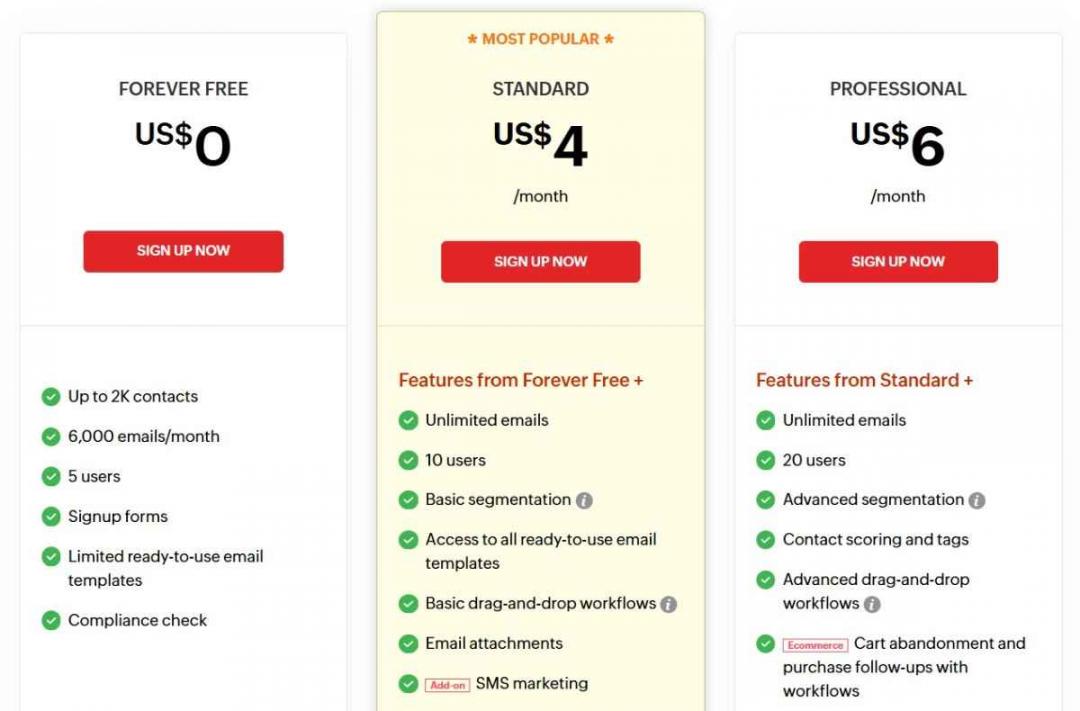
Image via Zoho Campaigns
Tool Level
- Beginner
Usability
- Easy for existing Zoho users and moderate setup for teams new to the Zoho ecosystem
Best For: Small businesses already using Zoho CRM or other Zoho products
5. MailerLite
Image via MailerLite
MailerLite's free plan gives you 500 subscribers and 12,000 emails/month, with email automation and landing pages included at no cost.
The free tier was reduced from 1,000 to 500 subscribers in September 2025, so existing users with larger lists will need to upgrade. That said, MailerLite offers more on its free plan than most tools in its price range.
The platform lets you sell digital products and paid newsletter subscriptions directly through your account. This makes it a practical choice for creators and small businesses building revenue streams alongside their email marketing efforts.
Unlike HubSpot, MailerLite doesn't include a built-in CRM, so contact management stays limited to list-level data.
Key Features
- Automation builder sends welcome sequences and drip campaigns without requiring a paid upgrade
- The website builder lets you create a basic business site alongside your email campaigns
- RSS campaigns automatically send emails when you publish new blog or podcast content
- Click maps show exactly which links in your emails get the most engagement
Pros
- Automation and landing pages are both accessible on the free plan without upgrading
- MailerLite only charges for active subscribers, so unsubscribed contacts don't affect your bill
- Paid plans start at $10/month with unlimited email sends and no hidden caps
Cons
- No pre-designed email templates are available on the free plan
- The account approval process is stricter than most free email marketing platforms for small businesses
Pricing
- Free: 500 subscribers, 12,000 emails/month
- Growing Business: $10/month for 500 subscribers and unlimited emails
- Advanced: $20/month with custom HTML and smart sending
- Enterprise: Custom pricing for 100,000+ subscribers
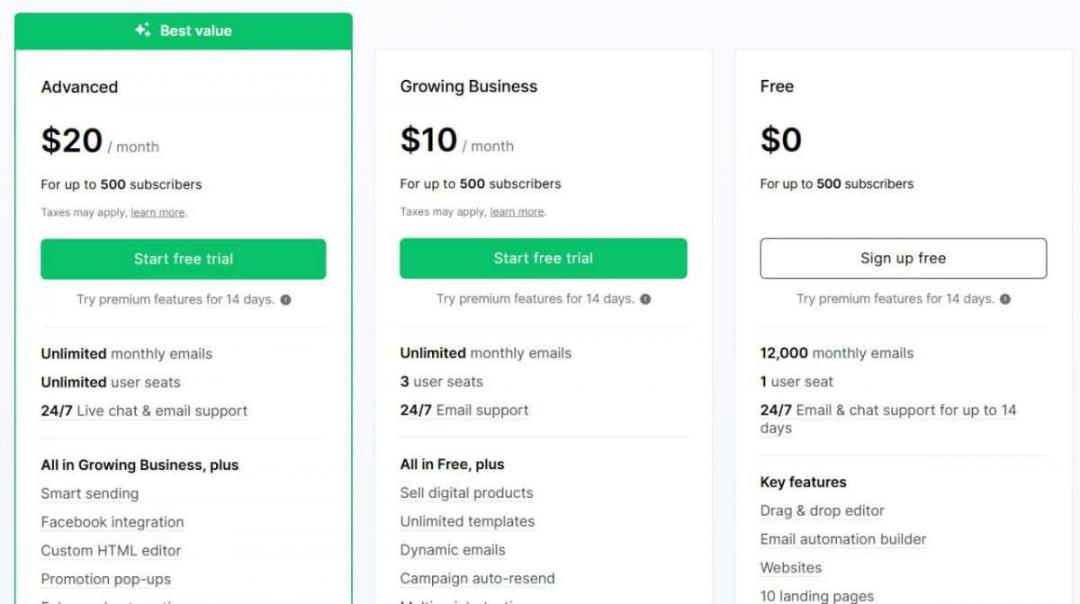
Image via MailerLite
Tool Level
- Beginner
Usability
- One of the cleanest interfaces on this list of free email marketing platforms for small businesses
Best For: Small businesses and creators wanting automation and landing pages on a free plan
6. Omnisend
Image via Omnisend
Omnisend is purpose-built for ecommerce businesses. It includes pre-built advanced automation flows and product recommendation blocks that most platforms lock behind paid tiers.
This makes it one of the strongest free email marketing platforms for small businesses getting started.
Unlike HubSpot CRM, Omnisend doesn't offer a full customer relationship management system. It's focused on ecommerce workflows rather than broad contact management.
It's built for ecommerce businesses of all sizes and works best when combined with SEO tools and strategies to drive more organic traffic to your store.
Key Features
- Exit-intent forms capture visitors about to leave your store before they close the tab
- Order confirmation transactional emails are sent automatically after every completed purchase on paid plans
- Audience segmentation splits your list by purchase history, browsing behavior, and engagement
- A/B testing compares subject lines and email content to identify what drives more conversions
Pros
- Pre-built ecommerce automation tools are accessible on the free plan without upgrading
- Revenue attribution reports show which campaigns and flows generate actual sales
- Native integrations with Shopify, WooCommerce, and BigCommerce
Cons
- The 250-contact free plan limit is low for any store actively growing its list, compared to HubSpot’s generous 1,000/month offering
- SMS credits are capped on lower tiers—high-volume senders can exhaust their allowance quickly, adding unexpected costs
Pricing
- Free: 250 contacts, 500 emails/month
- Standard: $16/month for 6,000 emails/month
- Pro: $59/month for unlimited emails and priority support
- Custom pricing
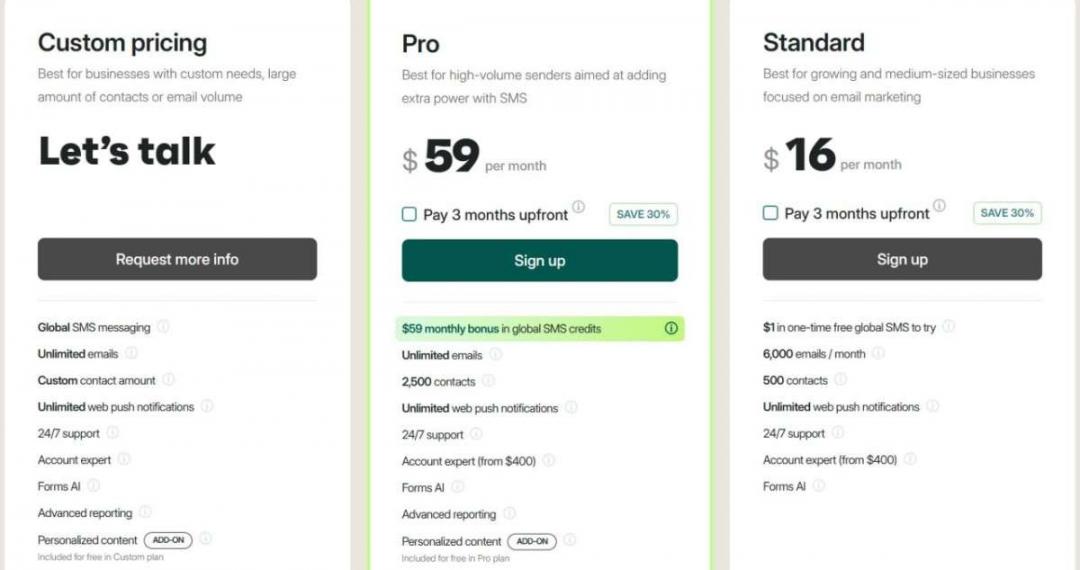
Image via Omnisend
Tool Level
- Beginner to Intermediate
Usability
- Ecommerce setup is fast with native integrations
Best For: Ecommerce platforms wanting advanced automation and product-focused emails.
7. Sender
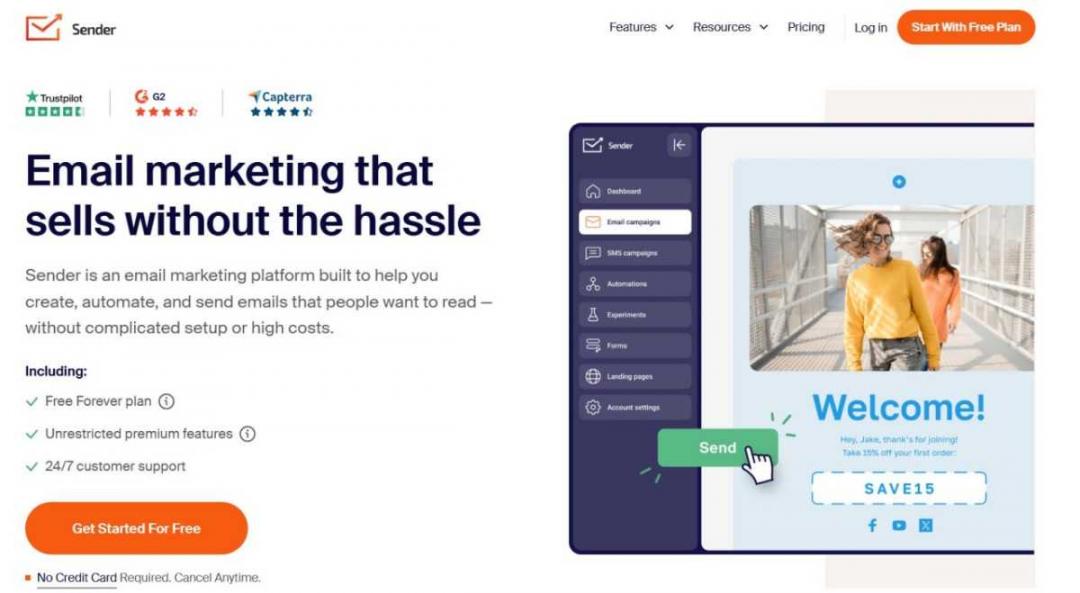
Image via Sender
This free email marketing platform for small businesses supports 2,500 subscribers and 15,000 emails/month. This gives small businesses ample room to send campaigns before hitting a paywall.
For a team sending a weekly newsletter to 1,000 subscribers, that's enough headroom to run campaigns for months without spending anything.
Automation and pop-ups are both included on the free plan. This means you can automate email campaigns and build a basic lead capture system without touching your budget.
Key Features
- Countdown timers drive urgency in promotional emails, helping improve click-through rates on time-sensitive offers
- Behavior-based marketing automation triggers emails based on subscriber actions, reducing the need for manual sends
- Drag-and-drop newsletter builder lets you create campaign emails quickly using pre-built content blocks
- SMS marketing on paid plans lets you reach subscribers via text alongside your email campaigns
Pros
- Sender's free tier gives small businesses meaningful send volume before any costs kick in
- Automation capabilities are fully accessible on the free plan without any paid upgrade
- Paid plans start at $8/month, making Sender one of the most affordable free email marketing platforms for small businesses
Cons
- No built-in CRM—contact data stays limited to list-level information, unlike HubSpot
- Design options are more limited compared to more visually focused platforms like HubSpot
Pricing
- Free: 2,500 subscribers, 15,000 emails/month
- Standard: From $10/month
- Professional: From $20/month with advanced features
- Enterprise: Custom quote
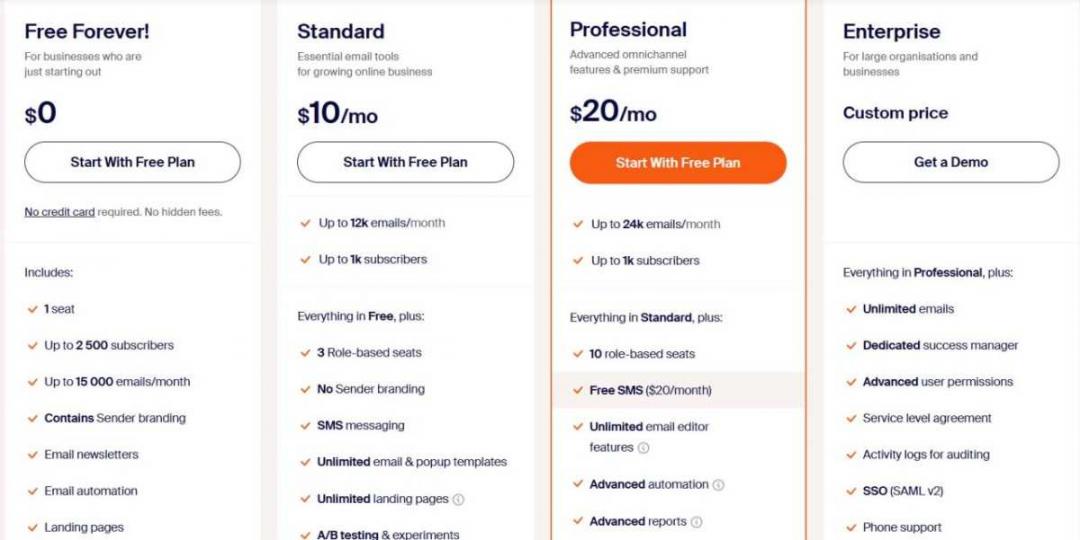
Image via Sender
Tool Level
- Beginner
Usability
- Very simple interface
Best For: Small businesses needing the highest free send volume
8. AWeber
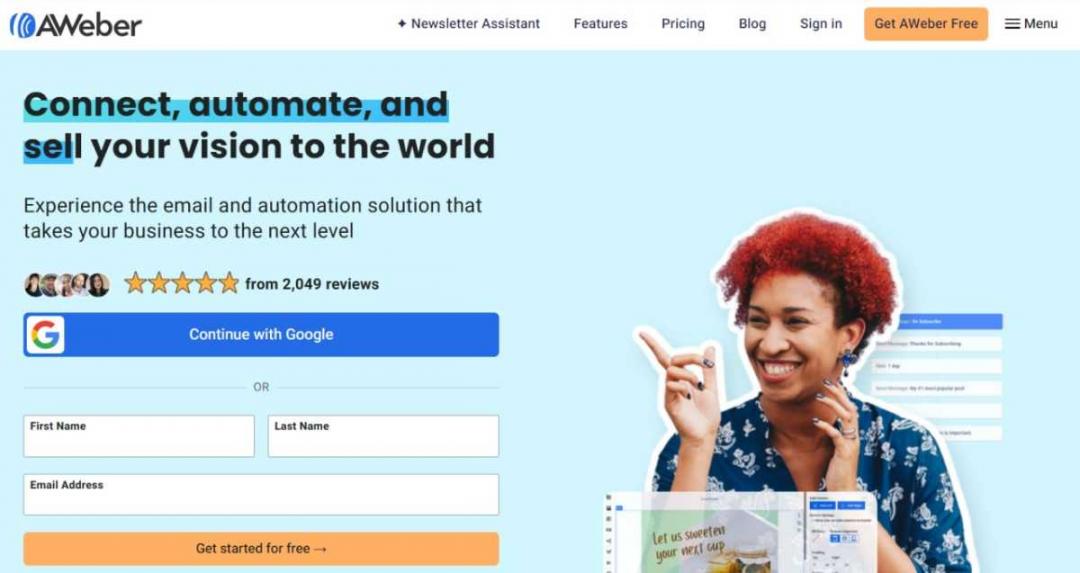
Image via AWeber
AWeber is a well-established email marketing tool built for creators and solopreneurs who want reliable delivery without a steep learning curve.
The platform's AI Newsletter Assistant is the distinctive feature that sets it apart from other free email marketing platforms for small businesses. The AI Newsletter Assistant generates weekly newsletter drafts based on your past writing style and a brief input. This gives you a starting point rather than a finished product.
However, unlike HubSpot, AWeber doesn't include a built-in CRM. So you'll need a separate tool to track contact history, deals, and sales activity as your list grows.
Key Features
- Autoresponder sequences deliver a series of pre-written emails to new subscribers automatically
- Subscriber tagging lets you group contacts by behavior and interests, so you can send more targeted campaigns without managing multiple lists
- Sales automation measures revenue generated from your email campaigns on paid plans
- AMP emails let subscribers complete actions like surveys directly inside the email, reducing friction and improving response rates
Pros
- AI Newsletter Assistant drafts weekly email content in your writing style
- AWeber maintains strong email deliverability rates, backed by decades of sender reputation management and dedicated infrastructure
- Phone, chat, and email support are all available on paid plans around the clock
Cons
- Not an all-in-one platform—you'll need separate tools for CRM, landing pages, and lead management as you scale
- No built-in CRM—AWeber doesn't track deals, contact history, or sales activity the way HubSpot does
Pricing
- Free: 500 subscribers, 3,000 emails/month
- Lite: $15/month for up to 500 subscribers and A/B testing
- Plus: $30/month for up to 500 subscribers and advanced analytics
- Done For You: $30/month for hands-off email marketing setup in 7 days
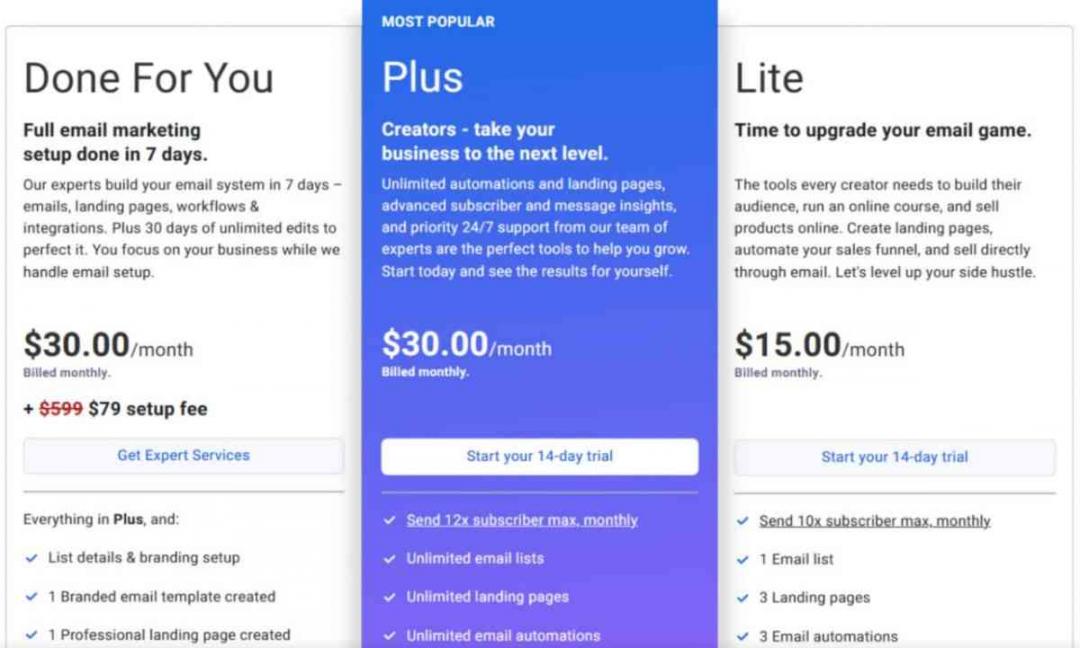
Image via AWeber
Tool Level
- Beginner
Usability
- Simple and well-documented interface with responsive support
Best For: Creators and solopreneurs wanting reliable delivery and AI-assisted newsletter writing
9. Kit
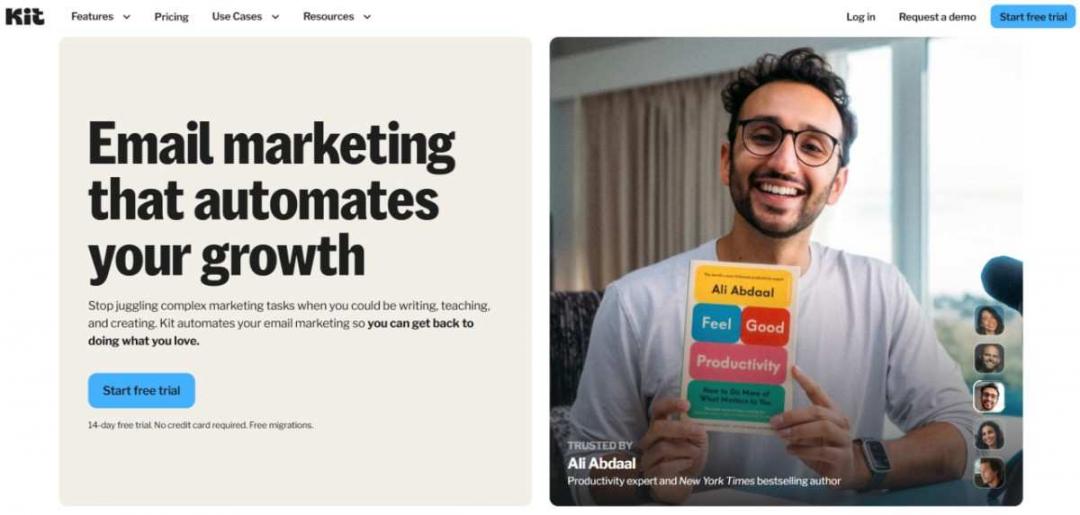
Image via Kit
Kit’s free plan is among the most contact-generous options on this list. It’s purpose-built for bloggers, content creators, and independent publishers.
Kit's subscriber tagging system replaces the traditional multi-list model. Instead of creating separate lists for each audience segment, you tag subscribers and let those tags control what they receive. This keeps your contact management simple as your list grows.
It works especially well for creators who use content and newsletters as their primary audience-building channel. But Kit doesn't include a built-in CRM. So, unlike HubSpot, you won't be able to track contact history or sales activity from the same platform.
Key Features
- Visual workflow editor maps out subscriber journeys using simple if-then logic
- Sponsor network connects creators with brands looking to advertise in newsletters
- Referral system rewards existing subscribers for bringing in new readers, helping you grow your list through word of mouth
- Deliverability reporting breaks down inbox placement rates across major email providers
Pros
- Kit's free plan supports up to 10,000 subscribers, a meaningful head start for creators growing an audience before monetizing
- Selling digital products and paid subscriptions is possible directly through your Kit account
- The single-list tagging system keeps contact management simple as your audience grows
Cons
- Limited utility outside of content creation—it lacks the ecommerce and all-in-one features that tools like HubSpot offer
- Kit is designed for creators and has fewer third-party integrations than other tools like HubSpot
Pricing
- Free: 10,000 subscribers and unlimited emails
- Creator: $39/month for unlimited automations and RSS campaigns
- Pro: $79/month for advanced reporting and priority support
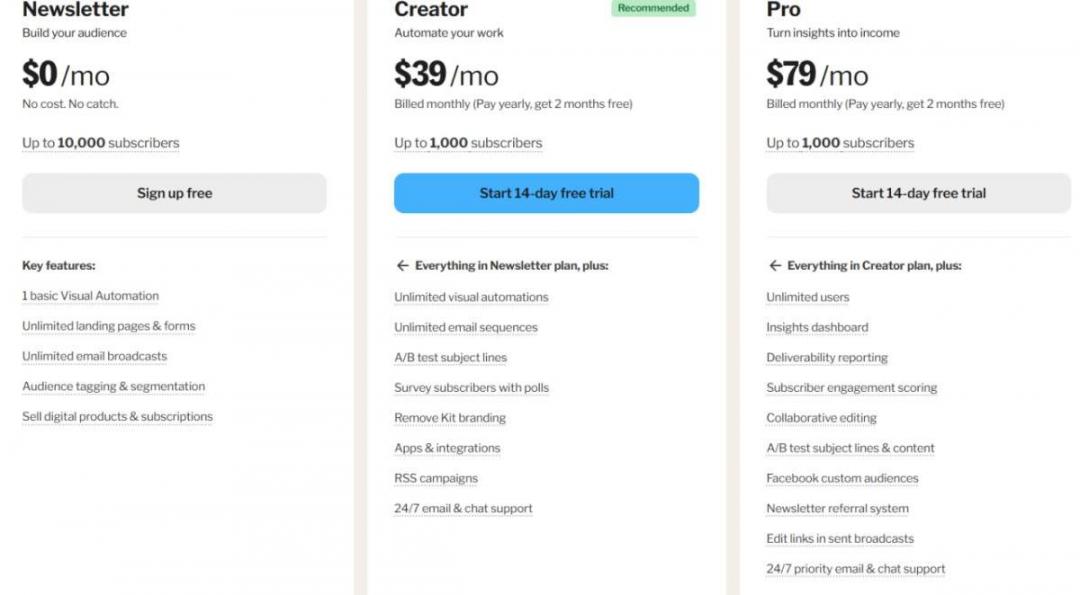
Image via Kit
Tool Level
- Beginner to Intermediate
Usability
- Clean and minimal interface designed specifically for non-technical creators
Best For: Bloggers, newsletter writers, and content creators growing a subscriber base
10. Klaviyo
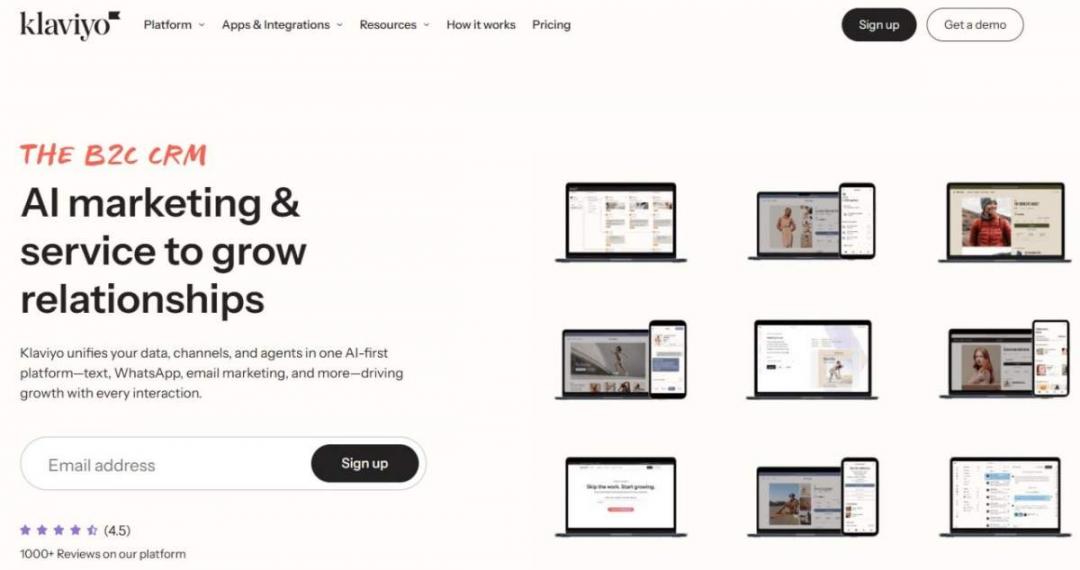
Image via Klaviyo
Klaviyo is a data-driven email platform for ecommerce businesses. Its free plan includes 250 contacts and 500 emails/month, along with access to advanced segmentation and automation.
Klaviyo goes deep on ecommerce data, which is its primary strength, though it doesn't match HubSpot's breadth across marketing, CRM, and lead capture.
The platform uses website tracking to follow what each contact browses, clicks, and buys, then uses that data to trigger targeted email flows.
Key Features
- Predictive analytics estimates each customer's lifetime value and likely next purchase date, helping you prioritize high-value segments
- Pre-built flow library provides free templates for common ecommerce scenarios
- Dynamic product blocks automatically pull relevant product recommendations into each email
- Multi-variate testing compares different subject lines and content variations simultaneously
Pros
- Advanced segmentation and automation flows are accessible on the free plan
- Predictive analytics and customer lifetime value scoring are included across all paid plans
- Klaviyo integrates deeply with Shopify, making it a strong fit for stores already running on that platform
Cons
- The 250-contact free plan limit means most stores will need to upgrade relatively quickly, compared to HubSpot’s generous free plan
- All active profiles count toward your billing limit, including unsubscribed contacts, unless deleted
Pricing
- Free: 250 contacts, 500 emails/month, 150 SMS credits
- Email: From $20/month for 251–500 active profiles
- Email and SMS: From $55/month, combines email and SMS in one plan
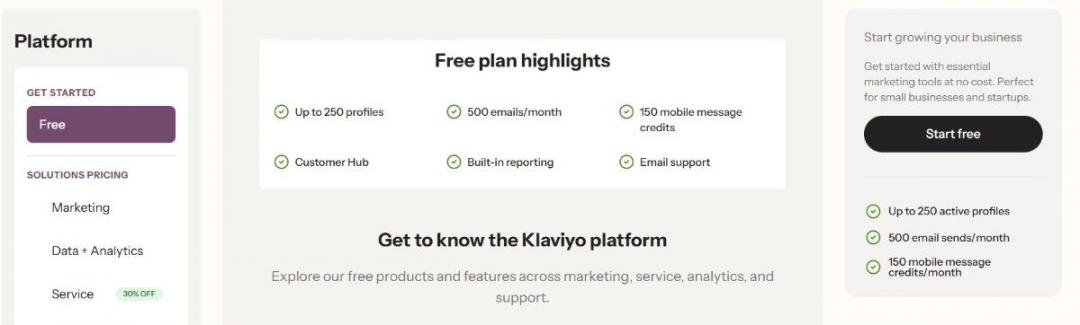
Image via Klaviyo
Tool Level
- Intermediate to Advanced
Usability
- Feature-rich interface with a moderate learning curve
Best For: Ecommerce brands looking for free email marketing platforms for small businesses with advanced segmentation
11. EmailOctopus
Image via EmailOctopus
EmailOctopus is built for simplicity. It skips the CRM, advanced automation, and complex workflows that tools like HubSpot offer. It suits free email marketing platforms for small businesses or solo operators who need to send newsletters consistently and don't yet need automation or CRM functionality.
EmailOctopus supports Amazon SES integration. This lets technical users send very high email volumes at a fraction of standard platform costs. If you’re already running AWS infrastructure, this is a meaningful cost advantage.
Unlike HubSpot, EmailOctopus doesn't include a CRM, automation depth, or lead capture tools—it's built purely for sending campaigns.
Key Features
- Embedded sign-up forms collect new subscribers directly from your website or landing page
- Subscriber tagging groups contacts by shared traits, so you can send more relevant campaigns to different segments
- Drip campaigns deliver a series of automated emails to new subscribers over time
- Campaign performance reports track opens, clicks, bounces, and unsubscribes per send
Pros
- No time limit on the free plan—you can use the free tier indefinitely without being pushed toward a paid upgrade
- Amazon SES integration lets technical users route emails through their own AWS infrastructure, significantly reducing per-email costs at scale
- Straightforward interface with one of the fastest setup times on this list
Cons
- Limited segmentation and automation depth compared to other tools on this list
- EmailOctopus branding appears on all emails sent from the free plan
Pricing
- Free: 2,500 contacts, 10,000 emails/month
- Pro: From $10/month, removes branding, increases contact, and send limits
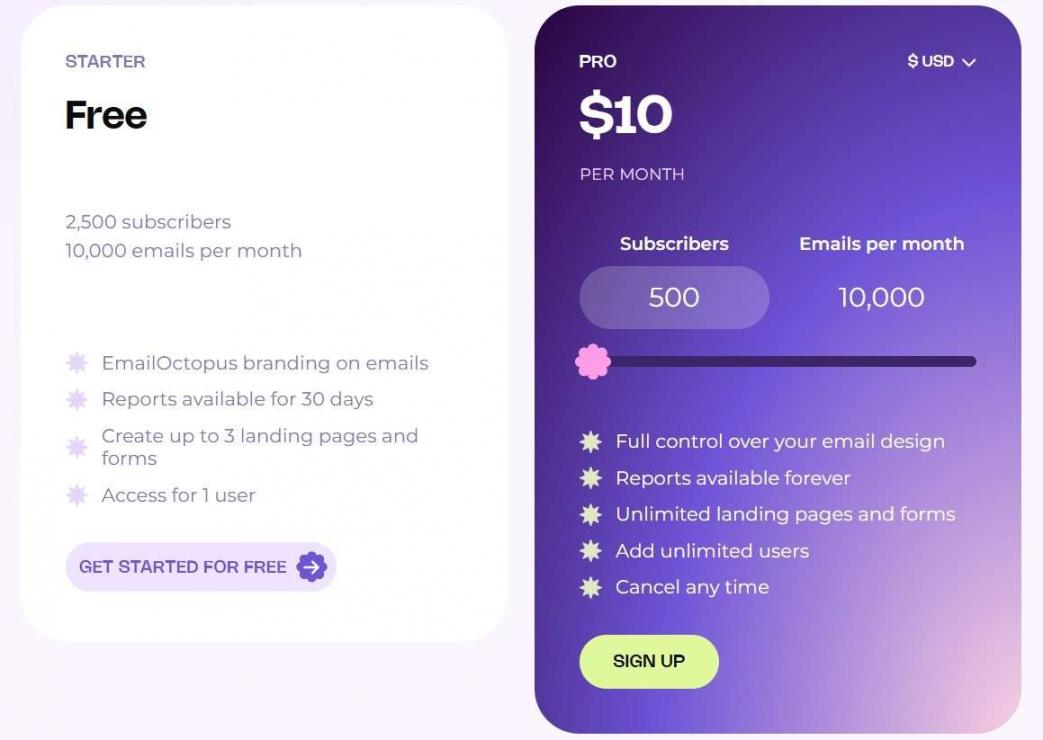
Image via EmailOctopus
Tool Level
- Beginner
Usability
- Minimal interface with fast setup times
Best For: Small businesses needing simple newsletter campaigns on a tight budget
12. Benchmark Email
Image via Benchmark Email
Benchmark Email serves over 150,000 businesses in more than 15 languages. This makes it a practical choice for non-English-speaking teams or businesses with international audiences. It's approachable for first-time users with no prior email marketing experience.
Benchmark Email's Smart Content feature uses AI to generate a first-draft email copy from a short campaign description. This is useful for getting started quickly, though the output typically needs finetuning before sending.
Unlike HubSpot CRM, Benchmark Email doesn't offer a built-in CRM or lead capture tools. Consequently, it works best as a standalone email sending tool rather than a full marketing platform.
Key Features
- Inbox checker previews how your email renders across different email clients before sending
- Drag-and-drop editor builds responsive emails that display correctly on mobile and desktop
- Engagement scoring assigns activity scores to each subscriber, helping you identify your most engaged contacts and re-engage inactive ones
- Google Analytics integration connects email marketing campaigns directly to your web analytics reports
Pros
- Smart Content generates AI-assisted email copy directly inside the campaign builder
- The platform is available in multiple languages, making it accessible for non-English-speaking teams
- The free plan includes basic automation for welcome emails without requiring an upgrade
Cons
- The free plan caps you at 500 contacts, which limits its usefulness for growing lists
- Reporting depth on lower tiers is less detailed than on several other platforms on this list
Pricing
- Free: 500 contacts, 2,500 emails/month
- Pro: $19/month for advanced automation and A/B testing
- Enterprise: Custom pricing for 100,000+ contacts
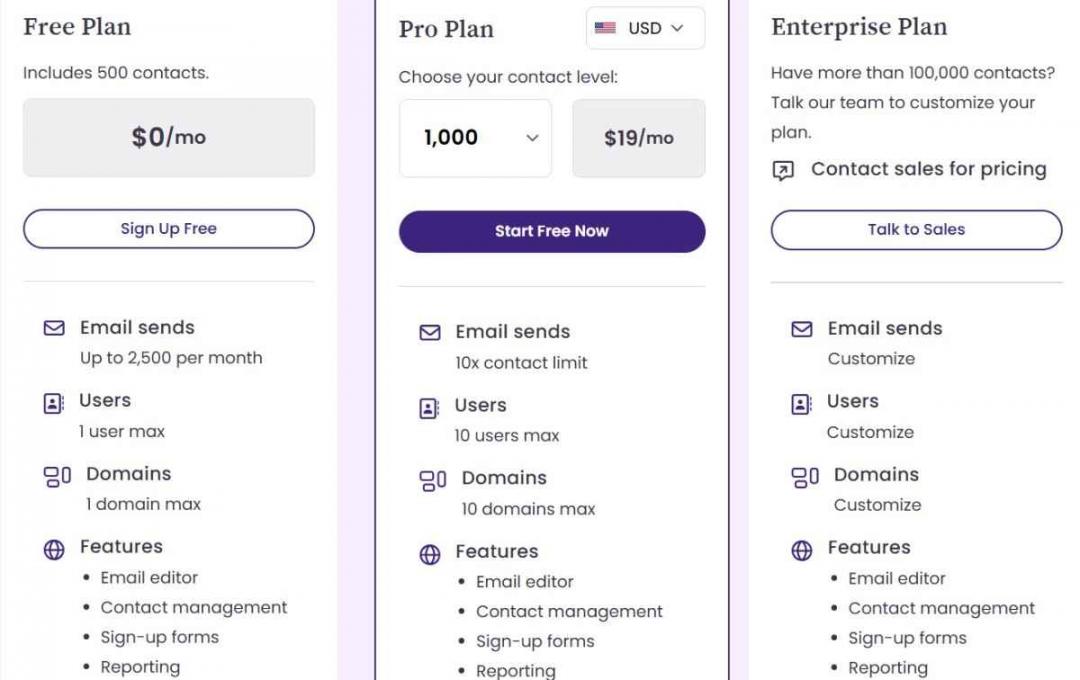
Image via Benchmark Email
Tool Level
- Beginner
Usability
- Clean and approachable interface with a short learning curve
Best For: International teams looking for free email marketing platforms for small businesses
13. SendPulse
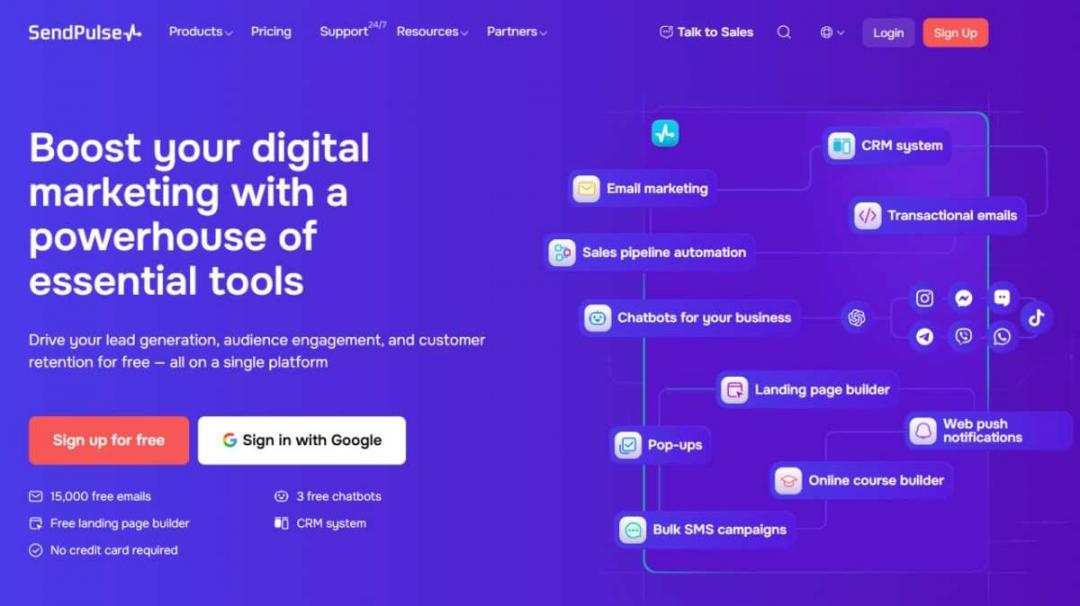
Image via SendPulse
SendPulse integrates web push notifications, SMS marketing, and email into a single dashboard. For small businesses, its free tier provides a higher send volume than many other free email marketing platforms for small businesses.
Through Automation 360, SendPulse allows you to design sequential workflows across push alerts, SMS, and email. For instance, you can automatically send a follow-up text to a subscriber who hasn't opened your latest email.
However, this multi-channel approach increases complexity, requiring more monitoring and setup time than tools focused on a single channel.
It is important to note that SendPulse focuses on multi-channel messaging rather than contact management. It lacks the built-in CRM and lead management capabilities found in HubSpot’s all-in-one platform.
Key Features
- Chatbot builder automates responses on Facebook Messenger and Telegram—useful for teams that handle customer queries across social channels
- Web push notifications reach subscribers directly in their browser on desktop and mobile
- Subscription forms collect new contacts with customizable pop-ups and embedded sign-up forms
- Email verifier checks your contact list for invalid addresses before sending campaigns
Pros
- The free plan includes email, SMS, and web push notifications across one unified dashboard
- Automation 360 supports multi-channel workflows at no cost
- The chatbot builder adds a conversational marketing automation channel
Cons
- SendPulse doesn't offer contact history, deal tracking, or sales pipeline management, unlike HubSpot
- Advanced features and detailed reporting require a paid plan upgrade
Pricing
- Free: 500 contacts, 15,000 emails/month
- Standard: From $12/month
- Pro: From $14.40/month
- Enterprise: Custom quote
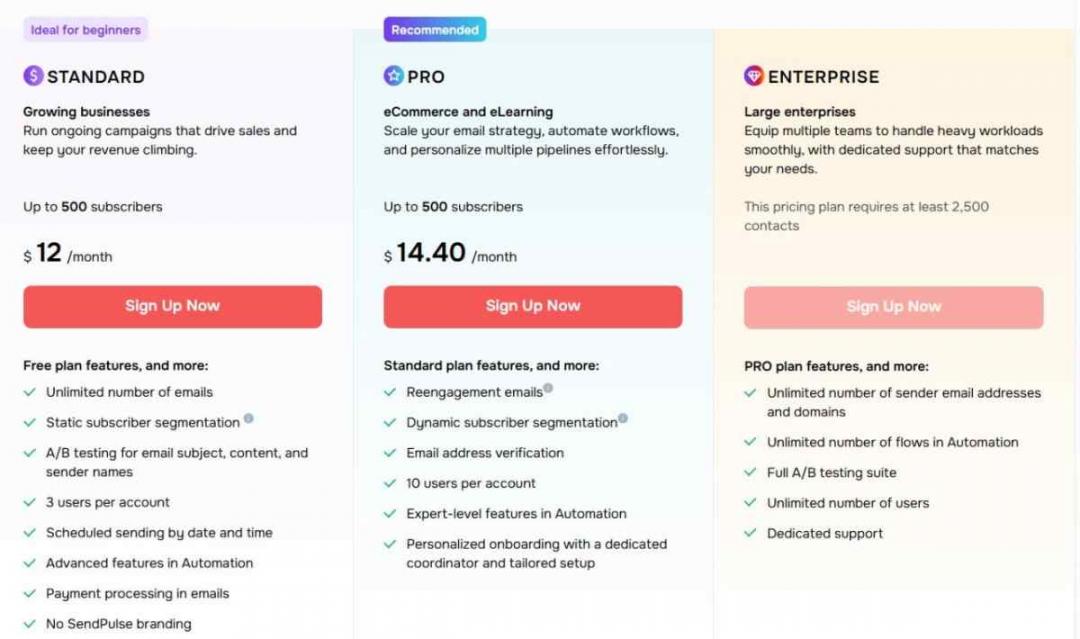
Image via SendPulse
Tool Level
- Beginner to Intermediate
Usability
- Moderate learning curve
Best For: Small businesses looking for free email marketing platforms for small businesses that cover email, SMS, and web push.
FAQ
Q1. What is the best free email marketing platform for small businesses?
A. HubSpot is the best free email marketing platform for small businesses that want email and CRM in one place. Its free plan includes 2,000 monthly emails, 1,000 contacts, landing pages, forms, and a full CRM. MailerLite and Brevo are strong alternatives.
Q2. Which free email marketing platform has the highest send limits?
A. Among free email marketing platforms for small businesses, Sender offers the highest free send volume. It provides 15,000 emails/month for up to 2,500 subscribers. MailerLite follows with 12,000 emails/month for 500 contacts.
HubSpot allows 2,000 emails/month across 1,000 contacts, making it the best email marketing software in terms of CRM support.
Q3. Can I run email automation on a free plan?
A. Yes. Several free email marketing platforms for small businesses offer email automation. HubSpot, MailerLite, Brevo, AWeber, and Sender all offer basic automation on their free tiers.
Q4. Is HubSpot's free email marketing plan genuinely free?
A. Yes. HubSpot's free plan includes email marketing, a full CRM, forms, live chat, and landing pages. Paid plans start at $15/seat/month.
Q5. What is the most affordable paid email marketing platform for small businesses?
A. Zoho Campaigns starts at $4/month, making it the lowest-priced paid plan on this list. Brevo starts at $9/month and is worth considering. Both offer free account options so you can test before committing.
Final Word
Start with HubSpot. It's the only free email marketing platform for small businesses that combines email, a full CRM, and lead capture tools in one system without forcing an upgrade.
If simplicity is what you want, MailerLite is worth a look. If you have a large contact list with low send frequency, Brevo works well. And if sending volume matters more, Sender covers 15,000 emails/month for free.
But for most small businesses planning to grow, HubSpot remains the most complete starting point.
Every platform on this list offers a permanent free plan. Choose based on your current needs, then scale as your list demands. Try HubSpot for free today.
Disclaimer: This content contains some affiliate links for which we will earn a commission (at no additional cost to you). This is to ensure that we can keep creating free content for you.