To rank in Perplexity, your content must answer common user queries, help build strong domain authority, and have an optimized structure. You need reliable AEO tools to help you track and improve your brand’s visibility in AI search.
But why does learning how to rank in Perplexity matter?
Potential customers now rely on AI-generated answers to find quick solutions instead of scrolling through multiple pages of links. This means traditional SEO ranking alone isn’t enough to guarantee traffic and conversions.
You must appear in both AI and traditional search engines to improve your brand’s online presence. In turn, this enhances your reach, builds trust, and increases traffic.
In this blog post, you’ll discover five proven strategies to rank in Perplexity. You’ll also see how Perplexity works and what makes it different from traditional SEO.
Disclaimer: This content contains some affiliate links for which we will earn a commission (at no additional cost to you). This is to ensure that we can keep creating free content for you.
Table of Contents
What Is Perplexity AI and How Does It Work?
Perplexity AI is an answer engine that provides direct, concise answers to user queries. It combines real-time indexing with large language models (LLMs) to read, understand, and summarize information.
When users ask a question, Perplexity scans trusted sources, pulls key points, and shows a simple answer with citations.
It chooses sources based on:
- Content freshness and accuracy
- Semantic relevance
- Domain authority and trustworthiness
Overall, Perplexity AI searches the web to provide direct answers from trusted, relevant, and fresh sources that match user intent.
How Does Perplexity Differ from Traditional Search Engines?
Unlike traditional search engines that return a list of links to websites, Perplexity provides clear, direct responses. Instead of leaving users to find their own answers, Perplexity pulls summaries after scanning top web pages.
Perplexity uses Natural Language Processing (NLP) to understand the intent behind user queries. On the other hand, traditional search engines focus more on keywords.
To learn how to rank in Perplexity, you must understand how it differs from traditional search engines. Check out the comparison table below for an overview:
| Feature | Perplexity | Traditional Search Engines |
| Output Style | Direct answers with citations | List of links |
| User Effort | Low (instant answers) | Higher (click and read) |
| Ranking Focus | Content clarity and relevance | Domain authority and technical SEO |
| Follow-Ups | Remembers your previous questions | Every search starts fresh |
| Optimization Strategy | Answer engine optimization (AEO) and generative engine optimization (GEO) | Search engine optimization (SEO) |
In essence, Perplexity AI provides simple, direct answers from relevant sources, whereas traditional search engines only list links to websites. As a result, AI search engines like Perplexity AI lower user effort.
Why Should You Rank in Perplexity?
Learning how to rank in Perplexity helps your brand gain more visibility, authority, and high-quality traffic. It’s more likely to appear in AI answers, where high-intent customers are seeking solutions.
Let’s look at these benefits more closely:
- Increased Visibility: In 2025, AI search traffic represented 8.2% of all searches. Perplexity alone received 780 million search queries in May 2025. By ranking on this AI search engine, you can get your brand in front of these potential customers.
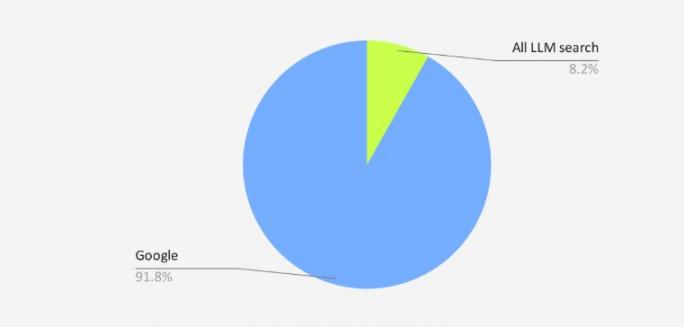
Image via Wix Studio
- Enhanced Brand Trust and Authority: When Perplexity cites your website content, it signals trust. Users are likely to see your website as a reliable, credible source of information rather than just another brand selling products.
- Increased High-Intent Traffic: People who use AI search engines often ask detailed questions. That means they already know what they’re looking for. If your brand appears in those answers, you attract quality leads who are ready to act.
- Higher Conversion Rates: According to a Microsoft Clarity study, referral traffic from Perplexity AI citations can convert up to seven times higher than traditional organic search traffic. In one case, brands using HubSpot AEO to rank in AI search engines grew AI-driven leads by 1,850%. Those leads converted at thrice the rate of traditional SEO.
- Competitive Edge: Most brands still focus only on traditional SEO rankings. However, learning how to rank in Perplexity is vital for those who want to establish visibility and authority before competitors catch up.
Essentially, when you rank in Perplexity, you increase brand awareness and build trust. This boosts high-intent traffic and conversions.
How To Rank in Perplexity: Tried and Tested Tips
In a nutshell, you must give clear, accurate answers, show strong expertise, engage in community forums, and optimize technical SEO elements. Learning how to rank in Perplexity and other AI search engines is pretty straightforward.
Let’s break down our best tips.
1. Optimize Content for Direct Answers
Brands that rank in Perplexity create answer-first content. This means giving readers an accurate, helpful answer to the main question within the first 50 words. Then, expand with details in the rest of the article.
Here are some tips to follow:
- Use short paragraphs (2-3 lines) that AI search engines can easily scan
- Use Q&A-style headings that match conversational queries
- Include lists, bullet points, and tables to improve scannability
AI models cite sources that get straight to the point without adding fluff or making readers dig for information.
You must also prioritize user intent. Think about the problem that the reader wants to solve and provide solutions or answers. When you match intent, your site is more likely to rank in Perplexity.
2. Build Topical Authority
One good post isn’t enough to rank in Perplexity. You must prove your expertise by creating a cluster of helpful content on a single subject. When you build your content strategy around related queries and topics, AI search engines see you as a reliable source.
Leverage tools like HubSpot AEO to identify high-volume AI queries and suggest specific content structures, such as blog posts, FAQs, and how-to guides. Start with a main topic; then, use content creation tools like Jasper to write several smaller, detailed posts that link back to it.
For example, if your main topic is AI search visibility, you can create content on:
- Answer engine optimization
- AI search trends
- Content structure for AI
- AEO vs SEO
Building strong topical authority through this approach is a key step when learning how to rank in Perplexity.
3. Build Domain Authority and Trust
Just like traditional Google rankings, you must prove that your domain is trustworthy to rank in Perplexity AI. A 2025 study shows that 25-30% of Perplexity’s citations overlap with traditional SERP results for the same query.
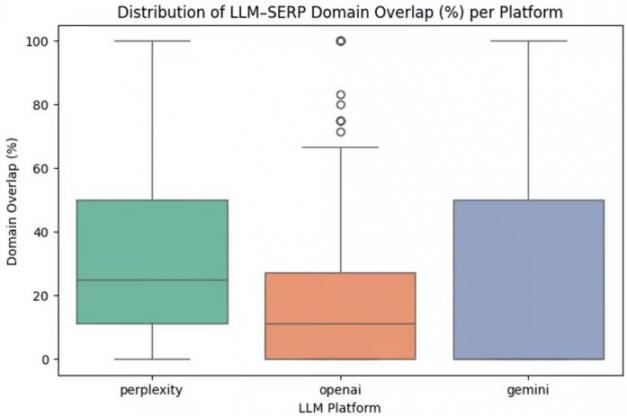
Image via Search Atlas
This shows that trust signals, such as high-quality backlinks, accuracy, and expertise, remain important. This also suggests that AI models cross-check facts and favor pages that cite verifiable data and expert opinions.
To rank in Perplexity, you must gain backlinks from reliable, trusted sources. When your site appears in reputable blogs, you build domain authority.
Here are more tips to increase domain authority:
- Support your claims with industry reports, government data, and academic research
- Publish original research from your own surveys and business data
- Contribute guest posts to authoritative sites
4. Add Structured Data and Schema Markup
Structured data and schema markup help AI search engines better read and understand your content. This makes it easy for them to extract the right answers to user queries and cite your content.
You can use schema markup for:
- FAQs
- Articles
- How-to guides
- Products
You don’t need to be a developer. All you need is a reliable schema markup generator to create the right schema type quickly.
You can also leverage HubSpot AEO to create easy-to-scan content structures for AI systems and large language models (LLMs).
5. Engage in Community Forums and Third-Party Sites
If you want to rank in Perplexity, don’t limit your efforts to your own site. Engage in areas where real conversations take place. This includes community forums, Q&A sites, and social media platforms.
AI models often pull answers from these spaces because they reflect real user queries and honest responses.
In fact, Reddit was among the most frequently cited sources across AI search tools in 2025. Perplexity alone accounted for 4% of those citations.
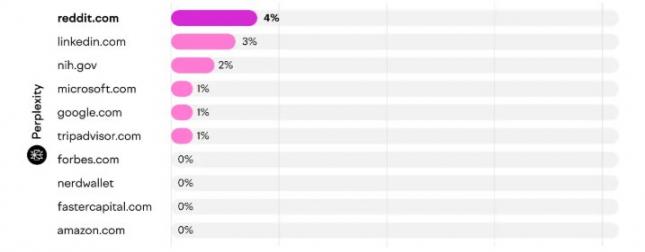
Image via Semrush
Follow these engagement tips to rank in Perplexity:
- Join relevant conversations in your niche
- Answer real user questions clearly and directly
- Share useful insights without promoting your brand or product
- Create helpful social media content and track topics with the most engagement
Use HubSpot AEO to identify the high-intent prompts your buyers are using. Alongside this, you can leverage social listening tools like Hootsuite to gauge brand sentiment. These insights will guide you in crafting content that aligns with Perplexity’s citation patterns.
To rank in Perplexity, you must write direct answers, build authority and trust, engage in community forums, and create a clean content structure.
FAQ
Q1. How do I rank in Perplexity AI?
A. You can earn more citations by following these steps:
- Focus on direct responses that match user intent
- Create topic clusters to improve content depth
- Enhance domain trust and authority
- Implement schema markup
- Contribute actively on community forums, social media, and Q&A sites
Q2. Can HubSpot AEO help me rank in Perplexity AI?
A. Yes, HubSpot AEO can guide you in creating content that fits AI search. It helps you track brand visibility, user sentiment, and mention depth. It also identifies content gaps and offers recommendations to fix them.
Q3. Is AEO different from traditional SEO?
Yes, traditional SEO focuses on driving traffic to your website by ranking a list of blue links. AEO prioritizes gaining direct citations from AI search engines.
Q4. How long does it take to rank in Perplexity?
The time it takes to rank in Perplexity depends on your effort and consistency. Since PerplexityBot indexes the web in real time, updated or fresh content can appear in AI answers within a few days.
Q5. Is Perplexity AI better than Google?
A. Both Perplexity AI and Google rankings are important for brand visibility. Perplexity AI is great for direct answers and citations, while Google is suitable for broad search results.
Learning how to rank in Perplexity is crucial for increasing your brand’s reach. Start by creating well-structured content that provides clear, no-fluff answers. Then, build strong topic coverage, cite credible sources, add schema markup, and stay active on forums and social media.
These steps help your brand become a verified entity that AI search engines are likely to cite in their answers. As a result, this increases your reach, builds trust, and boosts conversions.
Tools like HubSpot AEO support your AEO strategy by tracking brand mentions on AI search engines and providing data-driven suggestions for improvement.
Start your HubSpot AEO free trial and improve your Perplexity ranking today.
Disclaimer: This content contains some affiliate links for which we will earn a commission (at no additional cost to you). This is to ensure that we can keep creating free content for you.