The best marketing reporting software pulls performance data from every channel into one unified view. It helps you track what’s actually driving revenue. After thorough research and testing, my top 2026 picks are HubSpot Marketing Hub, AgencyAnalytics, and Whatagraph.
Your numbers probably live in several channels. Some of these platforms include Google Ads, Meta, LinkedIn, email, and your CRM. Stitching them into one report eats hours and leaves out important trends.
Most teams can’t prove what their budget actually returned. The data backs this up clearly. According to HubSpot's 2026 State of Marketing report, 33% of marketers struggle to measure marketing ROI.
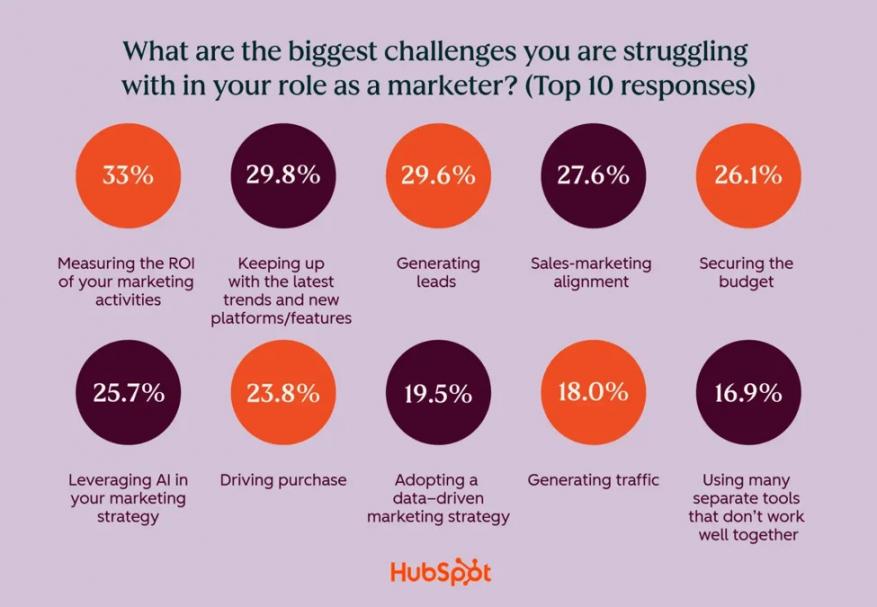
Image via HubSpot
The right marketing reporting software solves this problem by connecting your data and updating reports automatically. It gives you a clear view of your results and helps you spot what’s working quickly.
I reviewed and tested the leading marketing reporting software tools. Below, you’ll get a full comparison of their features, strengths, pricing, and best use cases.
Disclaimer: This content contains some affiliate links for which we will earn a commission (at no additional cost to you). This is to ensure that we can keep creating free content for you.
What is Marketing Reporting Software and How Does it Work?
Marketing reporting software automatically collects performance data from your marketing channels. Examples include ads, social media, SEO, email, and web. It turns that data into dashboards and shareable reports.
It works in three steps. First, you connect your data sources through native integrations. Second, the tool standardizes and blends that data so metrics line up across channels. Third, it builds live dashboards and scheduled marketing reports to share with your team or clients.
The payoff is time and trust. In Supermetrics' 2025 Marketing Data Report, 56% of marketers said they lack the time to analyze their data properly. Another 38% said they lack the tools to integrate and report on it. Automation closes both gaps.
Marketing Reporting vs. Marketing Analytics
These two get mixed up, so here is the clean line. Reporting tells you what happened. Analytics tells you why it happened and what to do next.
HubSpot’s 2026 State of Marketing Report shows that 7% of businesses didn’t achieve their marketing goals.
Analytics digs into which channel slipped and whether your spend or your landing page caused it. Most marketing tools here do reporting well and give you the raw material for analytics. The thinking is yours.
It connects your channels, blends the numbers, and delivers an automated report. You stop building spreadsheets and start reading results.
How Did I Choose the Best Marketing Reporting Software?
I compared each marketing reporting software based on how it handles data analytics and daily workflows. I looked at data integrations, automation, customization, ROI tracking, customer reviews, pricing, and scalability.
My experience is practical. I've built reports a client reads in minutes and some that get ignored. The difference is rarely the chart library. It’s whether the data is trustworthy and the right metric is front and center.
So I gave weight to marketing reporting software that passed every criterion below:
- Data Integrations: Your marketing reporting software should connect with the tools you already use. I looked for solutions that pull data from channels like Google Analytics, social media, email marketing platforms, and CRM tools.
- Customization and White-Labeling: You want reports that look professional to your clients. I prioritized marketing reporting software that lets you customize dashboards and add your brand logo and colors.
- Automation Capabilities: Teams that use marketing automation save hours of manual data entry. I favored marketing reporting software that automatically updates dashboards and sends scheduled reports.
- ROI Metric Coverage: The best marketing reporting software proves your efforts actually bring in money. I picked tools that track your revenue, conversions, return on investment, return on ad spend, and other metrics.
- User Reviews: I didn’t just rely on my own experience. I read hundreds of customer reviews on sites like G2 and Capterra to understand tool performance. I picked marketing reporting software consistently praised for reliability and responsive customer support.
- Pricing and Scalability: I compared pricing plans, features, and overall value for money. The right marketing reporting software grows with you as you add more clients, data, and users. Its cost also remains predictable as you scale.
Quick Comparison of the Best Marketing Reporting Software
I compared the top nine marketing reporting tools at a glance. This quick table shows each tool’s use case, starting price, G2 rating, and free plan availability.
Click any tool to jump to its full review:
| Tool | Best for | Starting price | G2 rating | Free plan |
|---|---|---|---|---|
| HubSpot Marketing Hub | All-in-one marketing with native reporting | Free tools; Starter: $20/seat/month | 4.4/5 | ✅ |
| AgencyAnalytics | Agencies and white-label client reports | Core: $25/client/month | 4.7/5 | ❌ |
| Whatagraph | Cross-channel agency reporting | Max: $812/month (billed annually) | 4.5/5 | ✅ |
| Databox | KPI dashboards and scorecards | Analyst: $79/month | 4.4/5 | ✅ |
| DashThis | Simple automated dashboards | Individual: $54/month | 4.7/5 | ❌ |
| Supermetrics | Moving data into sheets and Business Intelligence (BI) | Starter: €49 ($57)/ month | 4.4/5 | ❌ |
| Improvado | Enterprise marketing data pipelines | Custom pricing | 4.4/5 | ❌ |
| Google Data Studio | Free dashboards on the Google stack | Google Data Studio Pro: $9/month | 4.4/5 | ✅ |
| Klipfolio | Custom metric dashboards | Base: $140/month | 4.5/5 | ❌ |
Pricing is verified on each platform's website as of July 2026.
Every marketing reporting software tool has its unique strengths. If you want one platform that combines multiple solutions, HubSpot Marketing Hub is a strong choice. It unifies marketing features, reporting, analytics, and CRM tools.
What are the 9 Best Marketing Reporting Software Tools?
Here are the nine tools in depth, each with features, honest pros and cons, verified pricing, and where it fits.
1. HubSpot Marketing Hub
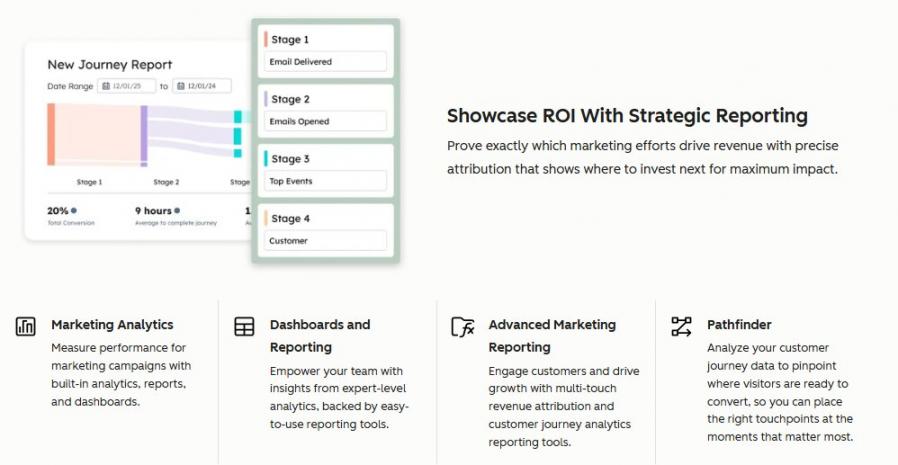
Image via HubSpot
HubSpot Marketing Hub is marketing reporting software built into a full marketing platform. It’s my top pick for teams that want their data and reports in one place. With this tool, you can manage campaigns and generate leads. You can also track customer journeys and create reports from a single dashboard.
This platform also offers deep ROI tracking. Campaign reporting and revenue attribution connect directly to the deals you close. In 2025, HubSpot customers increased their average deal amount by 27% in just 6 months.
Key Features
- Custom report builder: Build cross-object reports from your marketing, CRM, and sales data
- Marketing dashboards: Track email performance, website traffic, paid campaigns, and SEO strategies
- Campaign reporting: Measure assets, channels, and spend against specific campaigns
- Revenue attribution: A multi-touch model connects your marketing activities to lead generation, sales, and revenue
- Native CRM data: Reporting pulls from the same database as your marketing and sales
- Automated reports: Schedule reports to update automatically and share them with your team on a regular schedule
Pros
- Combines CRM, marketing tools, and reporting in one platform
- Reporting sits on top of your live CRM data, so attribution is built in
- Extensive template library and a gentle learning curve for non-analysts
- Scales from small businesses to enterprises
Cons
- Advanced reporting features sit in Professional and Enterprise plans
Pricing
HubSpot Marketing Hub offers a free plan, plus three paid plans:
- Free: $0/month
- Starter: $20/seat/month
- Professional: $890/month (includes 3 core seats)
- Enterprise: $3,600/month (includes 5 core seats)
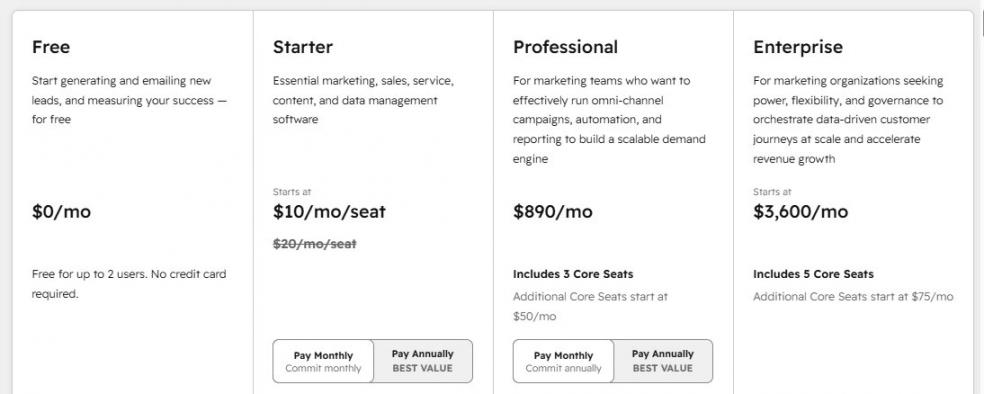
Image via HubSpot
Tool Level
- Beginner to Intermediate
Usability
- HubSpot’s marketing reporting software is easy to learn. Its interface is clean and organized, with simple navigation.
Pro Tip: Build one revenue-focused dashboard before the campaign views. When leaders see how marketing ties to sales pipelines, other features earn their budget.
Reporting runs on your live HubSpot CRM and campaign data. This means you get revenue attribution without adding a separate tool.
2. AgencyAnalytics
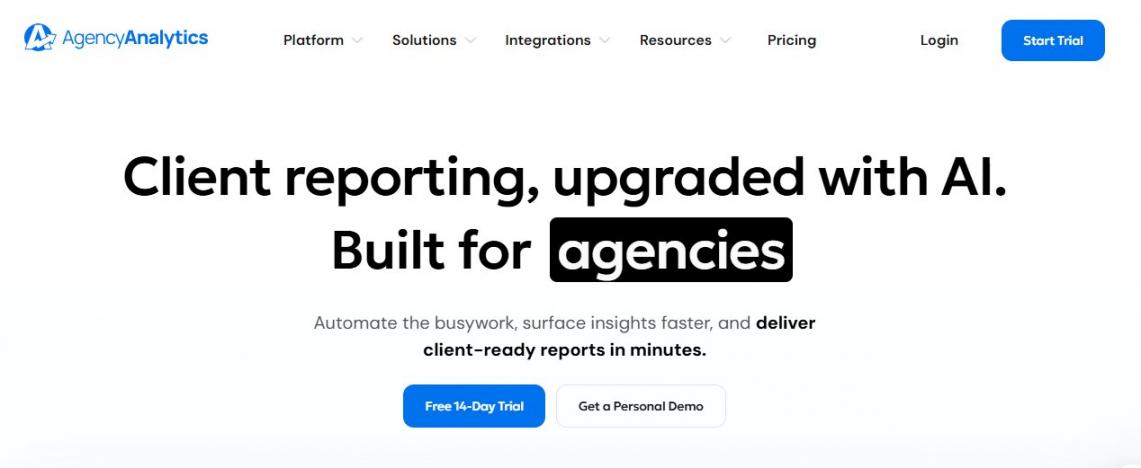
Image via AgencyAnalytics
As its name suggests, this marketing reporting software is designed specifically for agencies. It helps you manage many client accounts from one central platform.
AgencyAnalytics collects data from multiple marketing channels like Google Analytics, Facebook Ads, and SEO reporting platforms. You can then organize it into client dashboards and automatically send branded, professional reports.
Its goal-tracking and per-client KPI dashboards keep every account focused on outcomes.
Key Features
- 85+ integrations: Connect data from SEO, PPC, email marketing, and social media platforms in one place
- White-label dashboards: Add your marketing agency’s logo, colors, and domain to dashboards and reports
- Client portals: Give clients secure dashboards they can access whenever they need updates
- Automated reports: Schedule daily, weekly, or monthly reports without manual work
- Staff and client management: Control what your marketing teams and clients do with role-based access
- SEO monitoring: Track rankings, backlinks, site health, and keyword performance alongside your marketing metrics
Pros
- Works well for agencies managing multiple clients
- Ready-made reporting templates cut setup time for new clients
- Supports multiple platforms
Cons
- Per-client pricing can become expensive for agencies with many clients
- Some advanced integrations cost extra
- In-house teams with one brand pay for agency features they will not use
Pricing
AgencyAnalytics offers a 14-day free trial and two paid tiers for its marketing reporting software.
- Core: $25/client/month
- Enterprise: Custom pricing
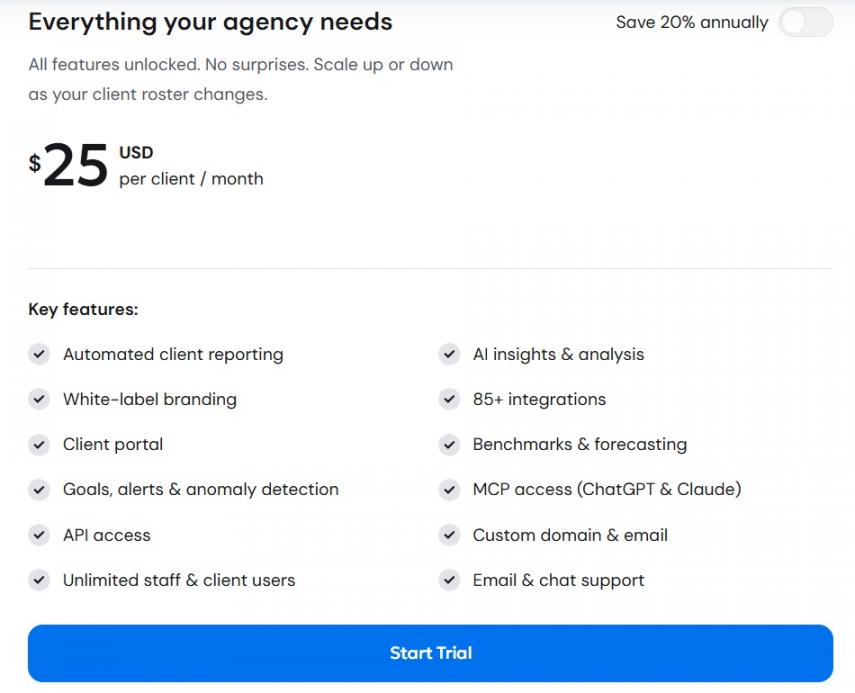
Image via AgencyAnalytics
Tool Level
- Intermediate
Usability
- This marketing reporting software is quick to launch. You can build client dashboards quickly without heavy technical skills.
Pro Tip: Set up one branded template for every service you offer. Then duplicate it for every new client to save hours of setup time.
White-label dashboards and client portals are native here. Your reporting looks like your brand, rather than a borrowed tool.
3. Whatagraph
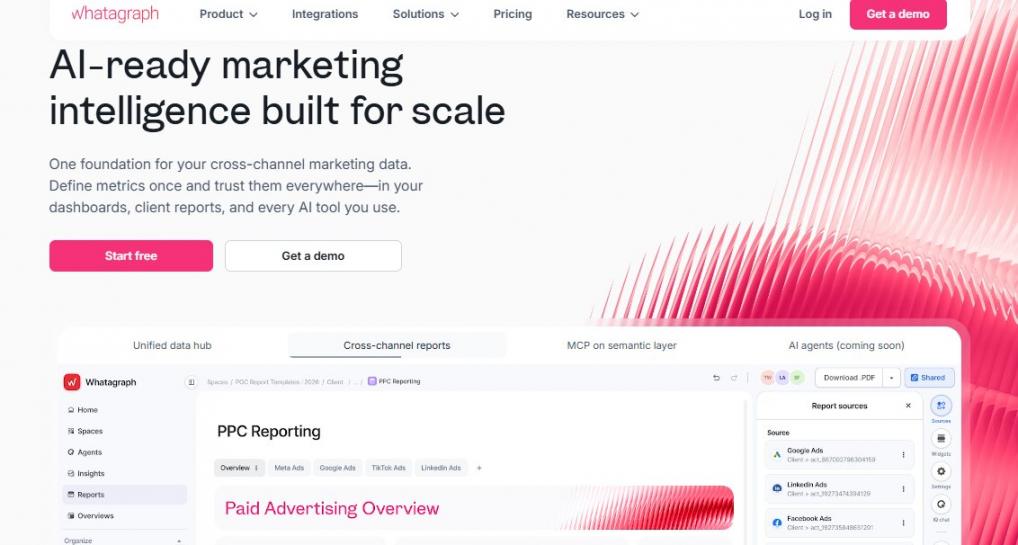
Image via Whatagraph
Whatagraph is a visual-first marketing reporting software. It turns messy data from multiple sources into clean charts and visual summaries that clients can understand.
This marketing reporting software ties your marketing spend to revenue across all channels. A client sees the entire marketing performance, rather than just one platform.
Key Features
- Cross-channel reports: Combine multiple data sources into one visual report
- Data warehouse transfer: Move all your blended marketing data into BigQuery or Google Sheets
- White-label options: Customize client reports with your brand’s logo and colors
- Templates: Save templates for different clients, campaigns, or departments to speed up reporting
- Account management view: Track multiple data sources and accounts across clients
- Visual report builder: Design professional reports using simple drag-and-drop widgets
Pros
- Genuinely fast to build a polished cross-channel report
- Visual report quality is high, which clients notice
- Helpful onboarding and support during setup
Cons
- Some advanced reports require extra setup
- Source-credit limits on lower tiers can pinch as you grow
- Fewer deep analytics features than enterprise marketing reporting software
Pricing
Whatagraph offers two paid plans:
- Free: $0/month
- Max: $812/month (billed annually)
- Prime: Personalized quote (billed annually)
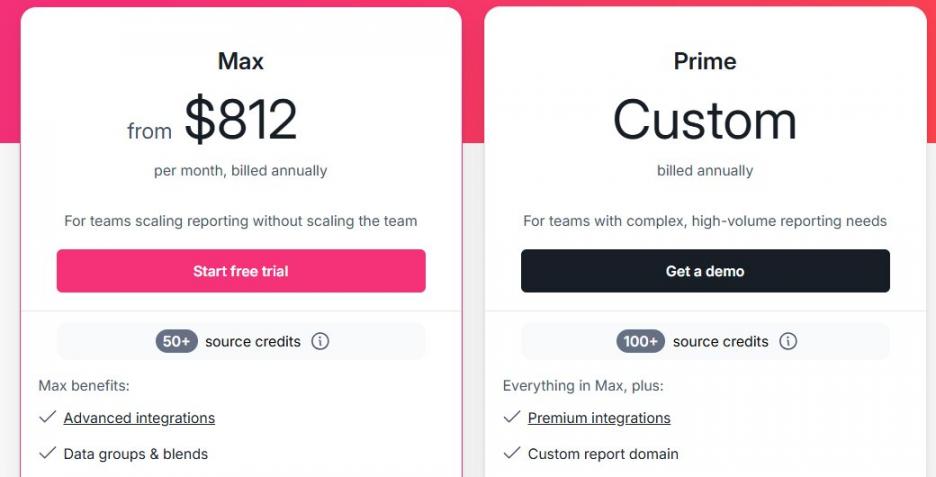
Image via Whatagraph
Tool Level
- Beginner to intermediate
Usability
- Whatagraph’s marketing reporting software is intuitive. Its templates do most of the heavy lifting.
Pro Tip: Use the warehouse transfer even if you don’t have a business intelligence (BI) team yet. Owning your blended data now saves a painful migration later.
It blends many sources into one branded report quickly. This is exactly what client-facing teams need most.
4. Databox
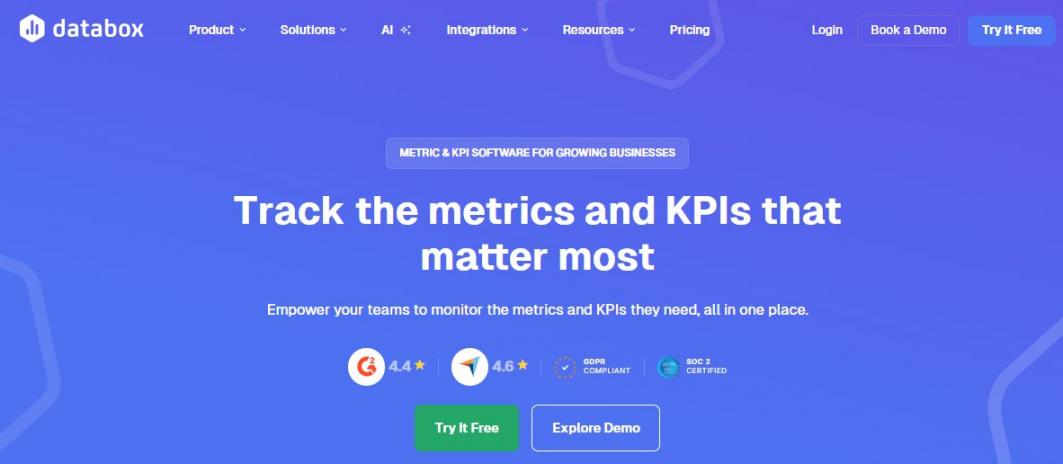
Image via Databox
If you want marketing reporting software that keeps things simple, Databox is worth considering. It turns your key metrics into live, easy-to-read scorecards.
The platform works well for businesses that want quick insights instead of detailed data analysis. It also offers a mobile app, so you can check your dashboards wherever you are.
Key Features
- Pre-built dashboards: Hundreds of ready-to-use templates designed for common marketing goals
- Goals and scorecards: Set targets for your performance metrics and monitor progress over time
- Metric alerts: Get pinged when a number moves out of range or hits a new target
- Multi-source boards: Combine data from Google Search Console, Google Analytics, CRM, and other channels in one place
- Mobile and TV views: Check live dashboards on your phone or cast them onto an office TV screen
Pros
- A generous free plan lets you test real dashboards before spending a dime
- Goal tracking tells you if you’re hitting targets or falling behind
- Convenient mobile experience
Cons
- Advanced reporting features require paid plans
- Limited customization compared to enterprise marketing reporting software
- Adding new data sources increases your costs over time
Pricing
Databox offers a free plan and four paid plans for businesses:
- Free: $0/month for 3 data sources and 1 user
- Analysts: $79/month for 5 data sources and 1 user
- Pro: $199/month for 3 data sources and unlimited users
- Growth: $499/month for 3 data sources and unlimited users
- Custom: Personalized quote (includes unlimited users)
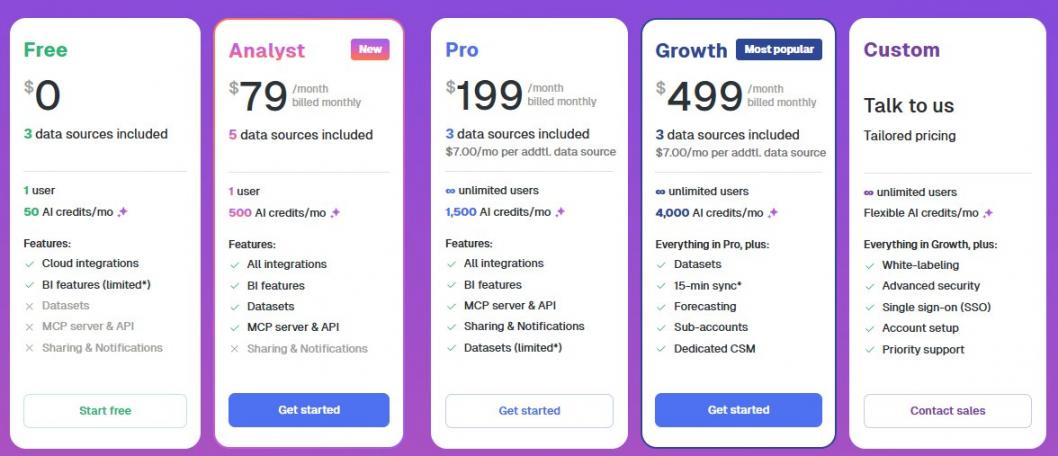
Image via Databox
Tool Level
- Beginner
Usability
- Easy-to-use marketing reporting software. Ready-made templates get you live in minutes.
Pro Tip: Build a single executive scorecard with five goal-tracked metrics. Share the dashboard with team leaders each week.
Goals and scorecards turn raw metrics into progress against targets, which is what keeps a team focused.
5. DashThis
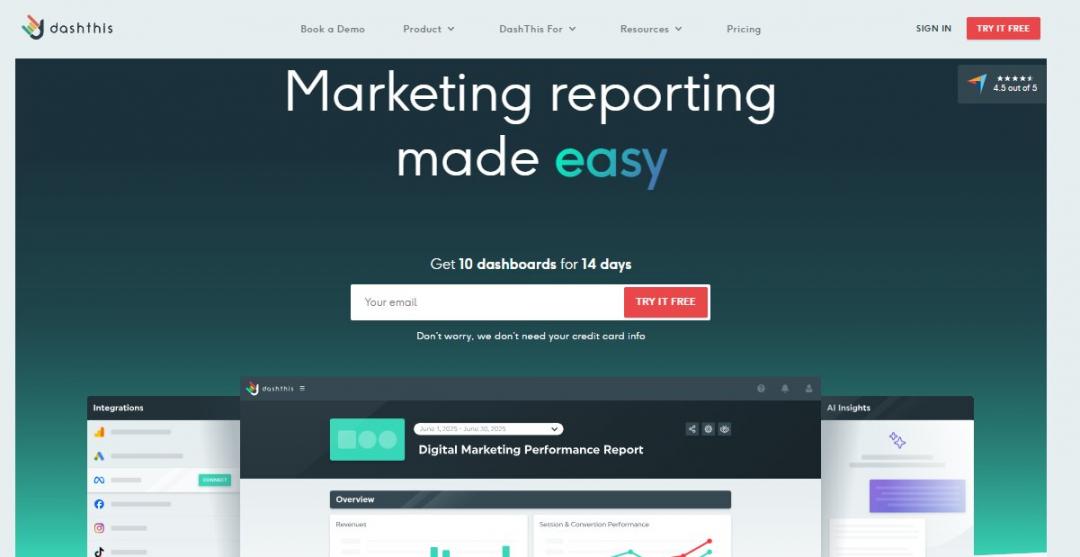
Image via DashThis
Want to automate the reporting process and save time? DashThis does the heavy lifting for you. Just choose a template, connect your data sources, and DashThis will update everything automatically.
This marketing reporting software works well for marketing agencies and freelancers who send regular reports to clients.
Key Features
- Automatic data collection: Pulls your numbers from 30+ marketing platforms and presents them in one simple report
- Preset dashboards: Choose templates for SEO, PPC, social media, and email marketing campaigns
- White-label reports: Add your branding to reports before sharing them with clients
- Scheduled sharing: Email reports on a set cadence
- Custom widgets: Create custom metrics for various marketing channels
Pros
- Among the fastest tools to get a working dashboard live
- Simple, focused interface with a low learning curve
- Responsive support during onboarding
Cons
- Pricing scales based on the number of individual dashboards you create
- Fewer deep customization options than heavier tools
- No permanent free plan, only a trial
Pricing
DashThis offers a 14-day free trial, plus four paid tiers:
- Individual: $54/month for 3 dashboards
- Professional: $164/month for 10 dashboards
- Business: $324/month for 25 dashboards
- Standard: $499/month for 50 dashboards
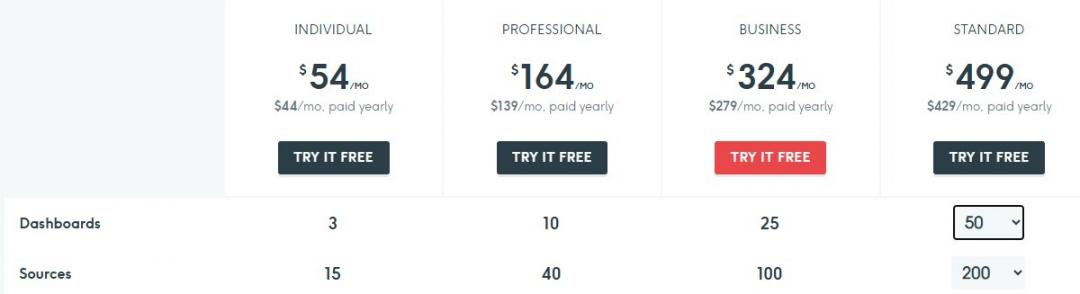
Image via DashThis
Tool Level
- Beginner
Usability
- Simple marketing reporting software that’s quick to set up.
Pro Tip: Match the number of your dashboards to clients before you buy. Because pricing is per dashboard, planning the structure first keeps the bill predictable.
It automatically gathers your data into ready-to-use layouts. You can have a working report ready to share in a few minutes.
6. Supermetrics
Image via Supermetrics
Supermetrics is a data pipeline rather than a traditional visual dashboard. It moves raw data from your platforms into Google Sheets, Looker Studio, BI tools, or a warehouse.
The marketing reporting software lets you build attribution or revenue reports your own way. This makes it suitable for small businesses, startups, and enterprises whose biggest challenge is collecting data.
Key Features
- 150+ data connectors: You can easily link to almost any marketing or sales platform on the web
- Destinations everywhere: Move your numbers to Google Data Studio, Sheets, Excel, BigQuery, and more
- Automatic data refreshes: Set daily or weekly updates, so your reports always stay current
- Data blending: Mix different data sources together into a single stream
- Governance controls: Manage who has access to data flows
Pros
- Works with existing reporting workflows
- Fits analysts and teams who want full control of the report
- Eliminates human copy-and-paste errors by automating data collection
Cons
- It moves data, but you still build the report yourself
- Costs rise with destinations and data volume
- Overkill for someone who just wants a ready dashboard
Pricing
Supermetrics offers four paid packages. The marketing reporting software provides pricing in Euros. US buyers should confirm the live exchange rate:
- Starter: €49 ($57)/month for 1 core destination
- Growth: €199 ($228)/month for 1 core destination
- Pro: €499 ($571)/month for 1 core destination
- Enterprise: Custom quote (multiple destinations)
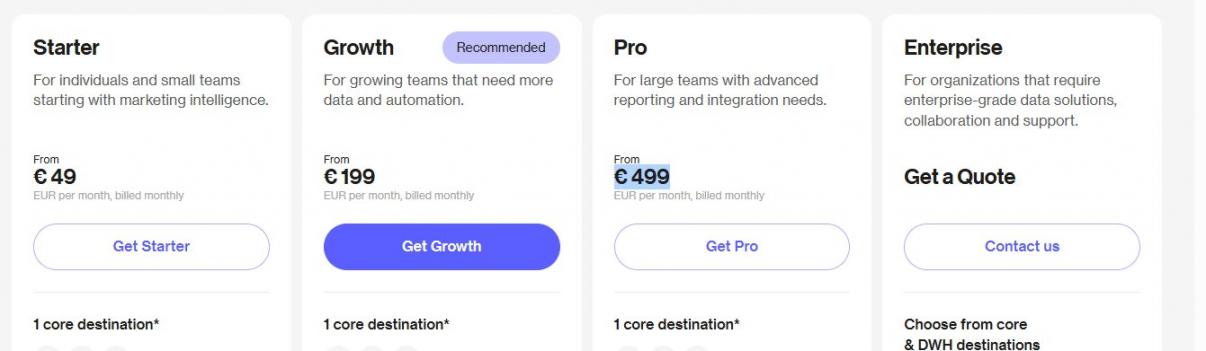
Image via Supermetrics
Tool Level
- Advanced
Usability
- Supermetrics is easy to connect. However, it’s more technical than many marketing reporting software platforms.
Pro Tip: Use Supermetrics alongside Data Studio to build a fully custom reporting system. It takes time to set up, but you get complete control and a low monthly bill.
The marketing reporting software pipes clean data anywhere you want it. Analysts can build the exact ROI reports they need.
7. Improvado
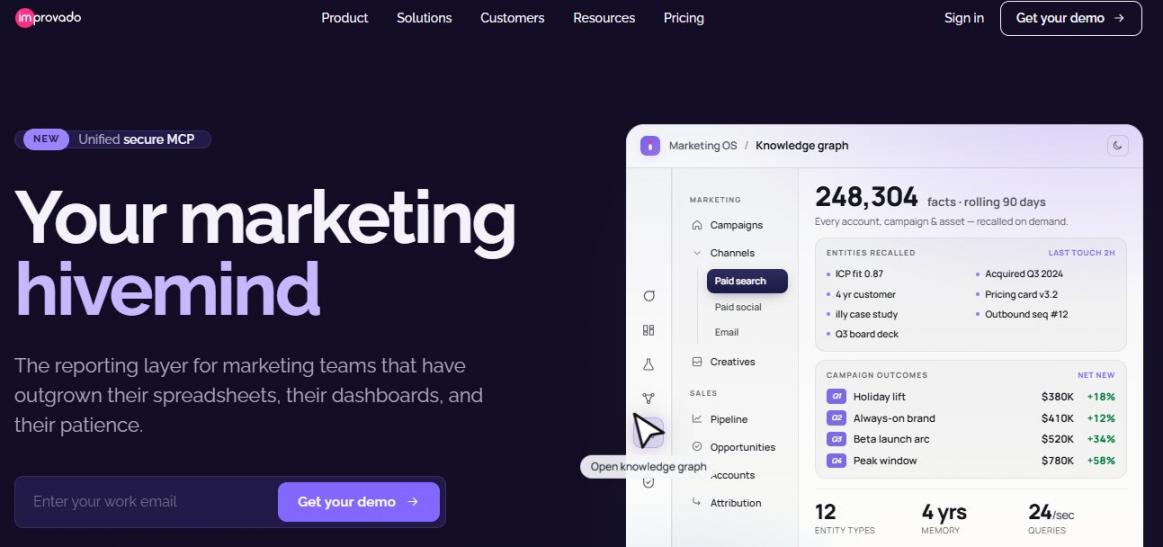
Image via Improvado
Improvado is enterprise-grade marketing reporting software. It’s built for large organizations managing data across many channels and ad platforms.
The platform collects raw marketing data, standardizes it, and prepares it for advanced reporting. It supports multiple integrations across advertising, CRM, analytics, and marketing automation platforms.
Key Features
- 500+ integrations: Collects data across hundreds of marketing, sales, and retail platforms
- Data transformation: Automatically cleans up and formats all your numbers before they reach your final report
- Enterprise dashboards: They handle large amounts of marketing data from multiple teams and regions
- Marketing data governance: Built-in security helps your business comply with strict privacy laws
- Marketing ROI reporting: Measures campaign performance, customer acquisition, and revenue across channels
Pros
- Handles large volumes of data without crashing, unlike lightweight marketing reporting software platforms
- Reliable data cleaning features
- Hands-on help with onboarding from real experts
Cons
- Pricing is custom and quote-only, so there is no quick self-serve start
- Setup requires technical knowledge
- Too heavy for startups and small businesses
Pricing
Improvado offers three paid packages, all with personalized quotes:
- Growth
- Advanced
- Enterprise
Tool Level
- Advanced
Usability
- Powerful reporting capabilities, but it requires onboarding support and a data owner.
Pro Tip: Bring your three hardest reporting questions to the demo. Improvado is worth the higher cost only if it solves what your current tool can’t.
The marketing reporting software securely manages high volumes of data. Your company gets one single, accurate view of your marketing success.
8. Google Data Studio (formerly Looker Studio)
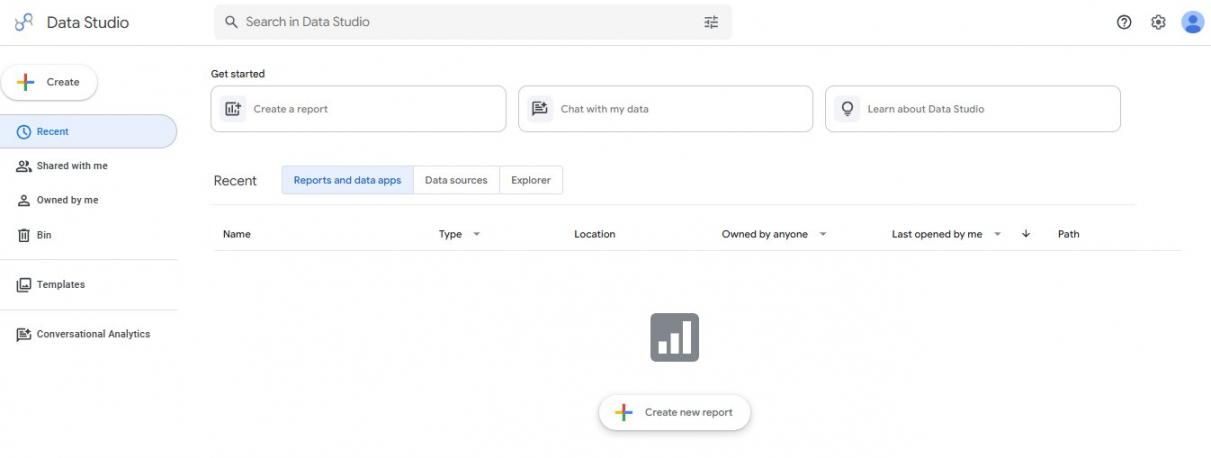
Image via Google Data Studio
If you’re looking for free marketing reporting software, Google Data Studio is worth considering. It suits teams already using other Google products. These include Google Analytics, Google Ads, Google Search Console, and Google Sheets.
The marketing reporting software helps you build revenue and conversion dashboards at no cost. You just need to connect your data. Then, you can build reports for SEO, paid ads, website traffic, email marketing, and other channels.
Key Features
- Free core product: You can design multiple dashboards at zero cost
- Native Google connectors: Sync with Google Analytics 4, Google Ads, Google Sheets, and BigQuery
- Flexible visualization: Switch colors, layouts, and chart styles to fit your reporting needs
- Easy sharing: Send reports using links like a Google Doc
- Community templates: A large library of free layouts built by other users provides a great starting point
Pros:
- The core product is free to use
- Deep, flexible customization
- Works well with Google Analytics and Google Ads
Cons:
- Connecting to non-Google sources requires you to pay for third-party partner connectors
- It can get slow with large or blended data sets
- Beginners need time to learn the tool
Pricing:
The core product is free. If you need to upgrade, Data Studio offers one paid plan:
- Data Studio Pro (Project subscription): $9/user/project/month
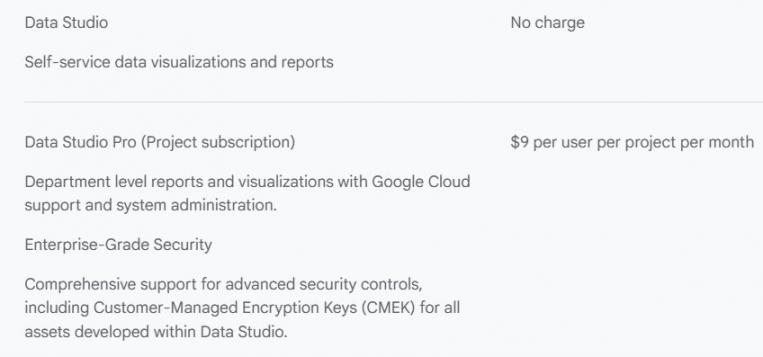
Image via Google Data Studio
Tool Level
- Intermediate
Usability
- This marketing reporting software is powerful once you learn it. Still, it requires more setup time than regular plug-and-play dashboards.
Pro Tip: Add a paid connector only for the non-Google sources you truly need. You keep the free core and pay just for the gaps.
The core product is free and native to Google's stack, so a capable ROI dashboard can cost nothing.
9. Klipfolio
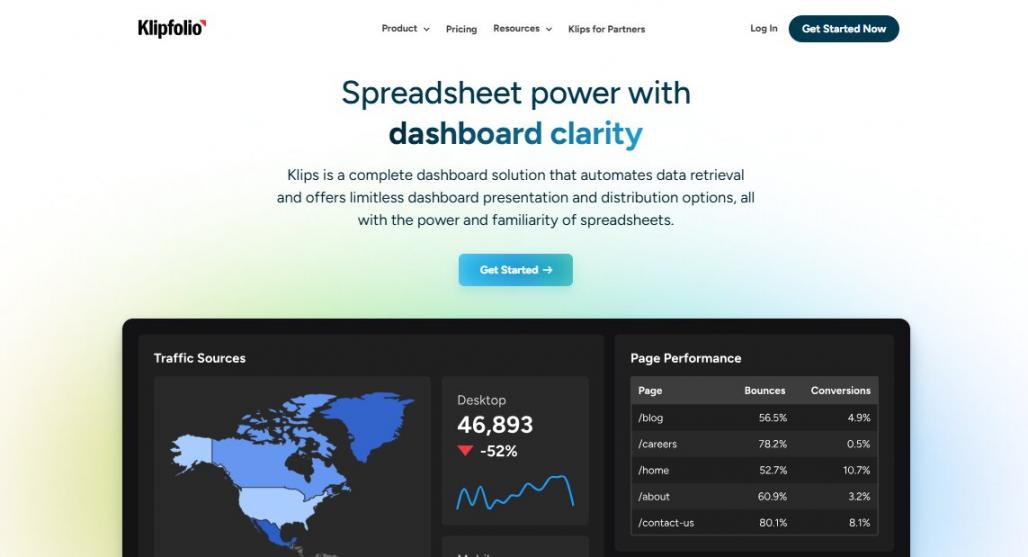
Image via Klipfolio
Klipfolio is marketing reporting software for teams that want fully custom metric dashboards. Its Klips and PowerMetrics features model the exact revenue metrics you care about, down to the calculation.
This marketing reporting software pulls your active numbers from social media, paid ads, and spreadsheets. You can then build custom reports that match your goals, rather than relying on fixed templates.
Key Features
- Custom Klips: Build dashboards with unique charts, tables, and visual blocks
- PowerMetrics: A metric-focused analytics product with a free tier
- Many data sources: Connect your marketing, sales, and finance data
- Custom formulas: You can calculate metrics exactly how you want to measure them
- Sharing and embedding: Publish dashboards anywhere, including your website, office TV, or mobile phone
Pros
- Deep customization for teams with specific metric needs
- A free PowerMetrics tier to start without cost
- Flexible enough to span beyond marketing data
Cons
- The customization power comes with a steeper learning curve
- Building Klips takes more effort than preset dashboards
- Expensive monthly add-on fees for full white-label branding or a custom domain link
Pricing
Klipfolio offers a free 14-day trial and four paid tiers for businesses:
- Base: $140/month for 3 dashboards
- Grow: $220/month for 10 dashboards
- Team: $350/month for 20 dashboards
- Team+: $690/month for 40 dashboards
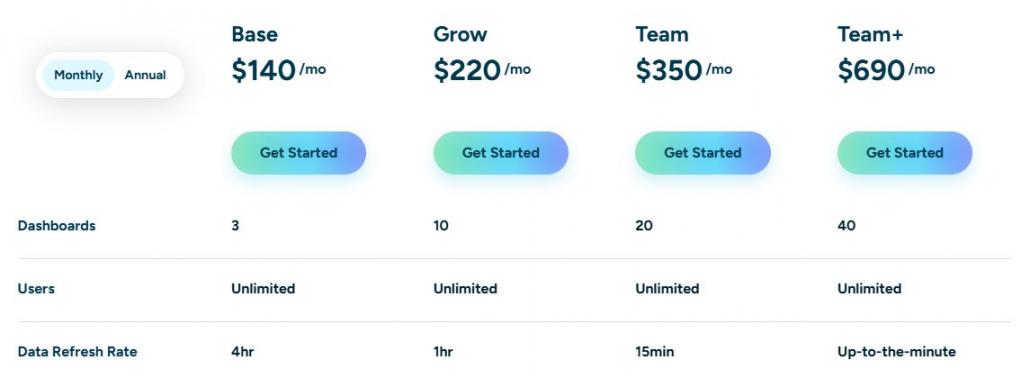
Image via Klipfolio
Tool Level
- Advanced
Usability
- Klipfolio has a steeper learning curve than other marketing reporting software options.
Pro Tip: Choose your key KPIs before building your dashboards. A focused dashboard is much easier to understand than one packed with every available metric.
Custom Klips and formulas let you build the exact ROI metric you measure. You never have to settle for close guesses.
Which Marketing Reporting Software Should You Choose?
The best marketing reporting software depends on your team, budget, and reporting needs. Here is a quick guide to help you decide:
- All-in-one platform: Choose HubSpot Marketing Hub if you want one solution with CRM, automation, and built-in reporting
- Agency reporting and white-label dashboards: Pick AgencyAnalytics, Whatagraph, or DashThis if you manage multiple clients
- Simple dashboards: Select Databox or Google Looker Studio if you want simple KPI tracking and reports
- Automated marketing data collection: If you use Google Sheets, Excel, or another BI platform, Supermetrics pulls data automatically
- Enterprise reporting and large datasets: Choose Improvado if your business manages data from many marketing platforms
- Highly customized dashboards: Pick Klipfolio if you need reports tailored to your business.
The Future of Marketing Reporting: AI and Automation
Marketing reporting is shifting from manual dashboards to on-demand answers.
Two big changes are already here. First, you can ask questions in conversational language. You just type a question like “show Q4 performance by channel.” The software then builds a custom preview for you in seconds.
Second, AI can write report summaries for you. It points out unusual trends and explains what they mean. It also suggests what you should do next. The report basically explains itself.
Pressure is already building, according to a previously mentioned Supermetrics study. The report shows that marketers now analyze 230% more data per query than they did in 2020. That’s too much data for any team to review by hand.
In 2026, the best marketing reporting software tools will turn complex data into clear, simple answers.
AI is replacing slow, manual dashboard building with conversational queries and auto-written updates. This approach ensures you get fast, helpful answers instead of just a bunch of confusing charts.
FAQ
Q1. What is marketing reporting software?
A. Marketing reporting software automatically collects performance data from your channels, such as ads, social, SEO, email, and web. It turns that data into dashboards and shareable reports. It replaces manual spreadsheet work with one connected, automated view.
Q2. What is the best marketing reporting software?
A. It depends on your job. HubSpot Marketing Hub is best for all-in-one teams. AgencyAnalytics and Whatagraph are best for agencies needing white-label reports. Google Data Studio is the best free option for Google-native teams.
Q3. What is the difference between marketing reporting and marketing analytics?
A. Reporting tells you what happened, such as leads, traffic, and spend. Analytics tells you why it happened and what to do next. Reporting software delivers the numbers, but the analysis and decisions are still yours.
Q4. Is there free marketing reporting software?
A. Yes. Google Data Studio is free for its core product, and Databox and Whatagraph offer free tiers. The usual catch is connector limits, since linking non-native sources often requires a paid add-on.
Q5. How much does marketing reporting software cost?
A. Entry pricing ranges from $44 to $120 per month. Most enterprise tools offer custom quotes. Check the pricing model before committing. Per-client, per-source, and per-dashboard plans scale very differently.
Q6. Does HubSpot have marketing reporting tools?
A. Yes. HubSpot Marketing Hub includes marketing analytics, a custom report builder, and dashboards. Advanced custom reports and multi-touch revenue attribution come with its higher tiers.
Q7. What should a marketing report include?
A. Include your goals and the KPIs that prove ROI by channel. Cover traffic, leads, cost per lead, conversions, and revenue or ROAS as well. Finally, add period-over-period change and a short set of takeaways.
Q8. What features should marketing reporting software have?
A. Look for broad data integrations, automated scheduling, white-label options, and flexible dashboards. Prioritize cross-channel attribution and solid data security, too. The right mix depends on whether you report to clients or your own team.
Q9. Can marketing reporting software automate client reports?
A. Yes. Tools like AgencyAnalytics, Whatagraph, and DashThis automate scheduled, white-label client reports. They also offer live client portals. These features help you avoid rebuilding the same report every month.
Final Thoughts
The right marketing reporting software turns scattered channel data into the few metrics that prove ROI. It runs automatically, on a schedule you can trust.
Pick by your audience and data sources first, and the choice gets simpler. Choose HubSpot for all-in-one teams, AgencyAnalytics or Whatagraph for agencies, and Looker Studio when budget rules.
Want a reporting setup that ties straight to your revenue? Try HubSpot Marketing Hub free and build your first revenue dashboard this week.
Prefer an expert to build the measurement system with you? My team offers data-driven SEO and reporting help.
Disclaimer: This content contains some affiliate links for which we will earn a commission (at no additional cost to you). This is to ensure that we can keep creating free content for you.