The best enterprise marketing software solutions help businesses manage campaigns, track leads, and centralize marketing data. Top options include HubSpot Marketing Hub, Agentforce Marketing, and Bloomreach.
They also provide accurate customer data and smart automation across every marketing channel.
However, choosing the right platform requires more than comparing features. You need a solution that fits your team size, sales process, reporting needs, and budget.
Some tools focus on AI-driven campaign management. Others stand out for customer journeys, email marketing, or CRM integration.
In this guide, we compare the top enterprise marketing automation software solutions. We’ll break down standout features, pricing, strengths, and weaknesses.
Disclaimer: This content contains some affiliate links for which we will earn a commission (at no additional cost to you). This is to ensure that we can keep creating free content for you.
How Did We Choose the Best Enterprise Marketing Software Solutions?
We chose the best enterprise marketing software solutions based on their automation capabilities, reporting tools, integrations, scalability, customer support, and overall long-term value.
Marketing software solutions come in varying capabilities and pricing. Here’s what to consider when selecting the best enterprise marketing software:
- Automation and AI Features: Automation can handle repetitive marketing tasks such as email sorting and lead scoring. The best enterprise marketing software solutions use AI to speed up marketing processes.
- Reporting and Analytics: Clear reporting and data analytics measure campaign results. The best enterprise marketing software solutions should give you real-time dashboards and reports. They should be easy to understand.
- Integration with Existing Tools: The best software solutions should integrate with the tools you already use. This includes CRMs, email platforms, analytics tools, and sales software. This reduces the cost of buying additional tools.
- Scalability for Growth: As your enterprise grows, so will your marketing needs. The best enterprise marketing software solutions should keep up with that growth. They should sustain your marketing strategies without added cost or strain.
- Customer Support and Training: You need fast support and clear training. This helps your team solve issues and improve customer satisfaction. The best enterprise marketing software solutions should include helpful customer portals.
- Pricing and Long-Term Value: Compare pricing against the features and tools offered. The best enterprise marketing automation tools should deliver strong marketing performance. There shouldn’t be any additional or hidden costs either.
How Do the Best Enterprise Marketing Software Solutions Compare?
We’ll explore the details of the best enterprise marketing software solutions in detail. But first, here’s a quick summary of each one.
| Software | Best For | Standout Features | Free Plan | Starting Price |
|---|---|---|---|---|
| HubSpot Marketing Hub | Growing enterprises that want marketing and CRM in one platform | AI customer agent, audience segmentation, personalization, advanced analytics | ✅ | $20/month per seat |
| Agentforce Marketing | Large enterprises running AI-driven and cross-channel campaigns | Agentic marketing, B2B automation, marketing analytics | ❌ | $25/month |
| Bloomreach | Ecommerce and retail brands focused on personalization | Loomi AI, omnichannel orchestration, web personalization | ❌ | Contact sales |
| Adobe Marketo Engage | B2B enterprises focused on lead management and attribution | Dynamic chat, lead intelligence, Marketo Measure analytics | ❌ | Contact sales |
| Netcore Marketing Automation | Brands focused on AI-powered engagement automation | Co-Marketer AI, decisioning agent, predictive insights | ❌ | Contact sales |
| Zeta Marketing Platform | Enterprises managing large customer data and omnichannel campaigns | Athena AI, customer data platform, predictive analytics | ❌ | Contact sales |
| Dotdigital | Ecommerce and B2C marketing teams | WinstonAI, ecommerce automation, customer data tools | ❌ | Contact sales |
| MoEngage | Mobile-first brands focused on customer retention | On-site messaging, personalization, customer analytics | ❌ | Contact sales |
| Sprinklr | Global brands managing social and advertising campaigns | Unified analytics, consumer intelligence, AI+ workflows | ❌ | Contact sales |
| Lark | Teams that want marketing collaboration and workflow management | Campaign planning hub, AI content creation, shared workspaces | ✅ | $7.2/month |
| TenonHQ | Regulated enterprises needing compliance-focused marketing | Shared data, compliance workflows, journey builders | ❌ | Contact sales |
| Act-On Marketing | Mid-sized and enterprise B2B marketing teams | Journey orchestration, AI marketing, CRM integrations | ❌ | $900/month |
| Insightly Marketing | Sales and marketing teams focused on lead nurturing | Dynamic segmentation, lead scoring, customer journeys | ❌ | $99/month |
What Are the 13 Best Enterprise Marketing Software for Your Business?
The best enterprise marketing software solutions for businesses include HubSpot Marketing Hub, Agentforce Marketing, Bloomreach, Adobe Marketo Engage, and other platforms that combine automation, analytics, personalization, and scalable campaign management.
We tested several enterprise marketing software to see what works best. Here are the best options that met our criteria.
1. HubSpot Marketing Hub
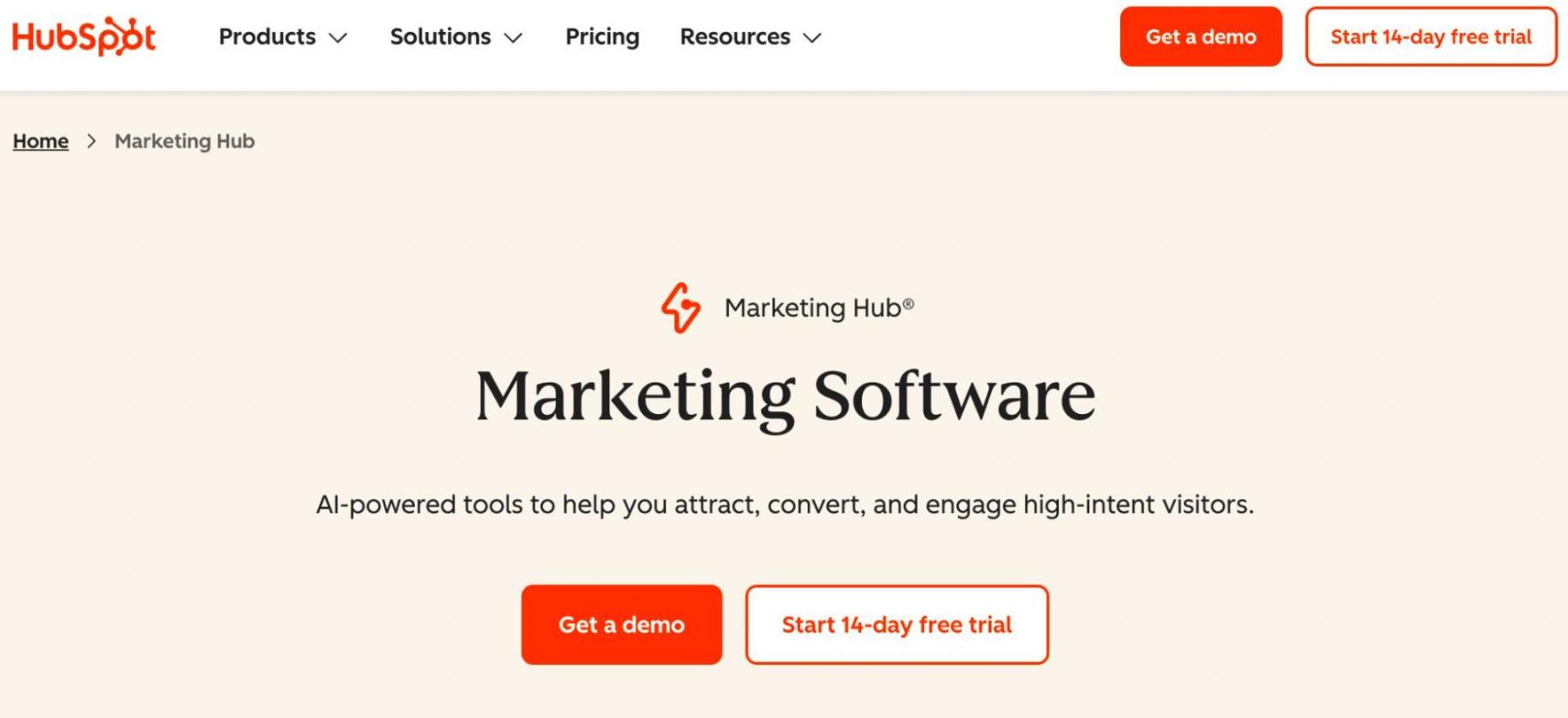
Image via HubSpot Marketing Hub
HubSpot Marketing Hub is the best enterprise marketing software solution. It combines campaign management, automation, customer data, and reporting into a single platform.
Its marketing features focus on personalization and lead generation. You can use forms to collect customer data through pop-ups and gated content.
There’s also audience segmentation. It groups contacts by behavior, lifecycle stage, or engagement. This ensures you only send relevant marketing emails and messages. You can also use this to tailor your web pages and CTAs to individual customers.
Thanks to its Breeze Customer Agent, HubSpot Marketing Hub also excels at customer engagement and reporting. This feature uses AI to answer customer questions automatically and route conversations faster.
You can also leverage social media management. Teams can schedule posts, monitor conversations, and track engagement across channels.
HubSpot Marketing Hub also provides marketing analytics and advanced reporting. These give you detailed campaign data, attribution reports, and revenue tracking.
Key Features
- Smart forms with lead tracking
- Audience segmentation
- AI customer support agent
- Multi-touch attribution and campaign analytics
- Custom dashboards
- Advanced reporting tools
- Personalized emails and landing pages
Pricing
- Free
- Starter: $10/month per seat
- Professional: $890/month (3 Core Seats included)
- Enterprise: $3,600/month (5 Core Seats included)
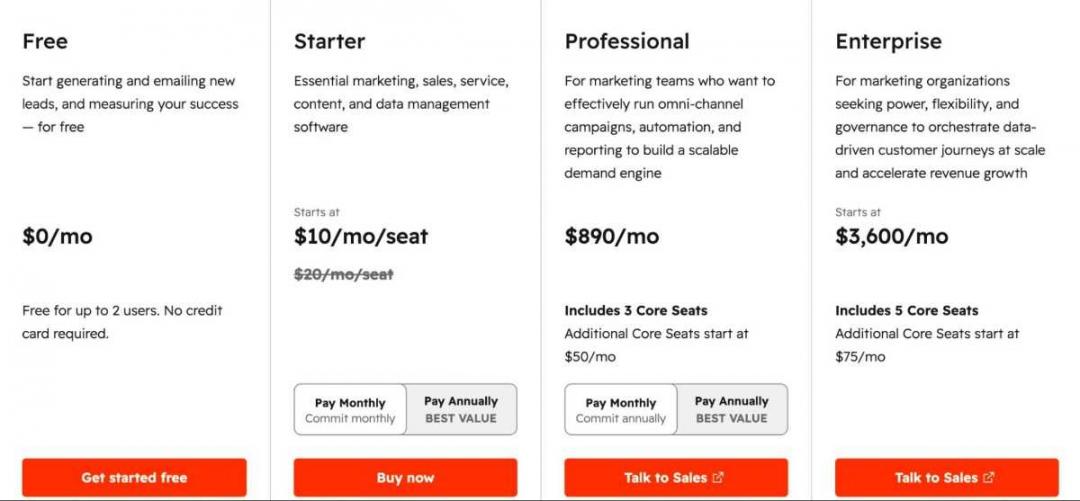
Image via HubSpot Marketing Hub
Pros
- Combines marketing, CRM, and automation
- Strong reporting tools
- Scales well for large marketing teams
- Personalization tools that improve engagement
- Affordable starter plans with a free version
Cons
- Mainly works best for enterprises already using HubSpot
- Advanced features cost more
Pro Tip: Use audience segmentation together with personalization workflows from the start. This allows you to send more relevant messages. It also improves lead quality without increasing ad spend.
2. Agentforce Marketing
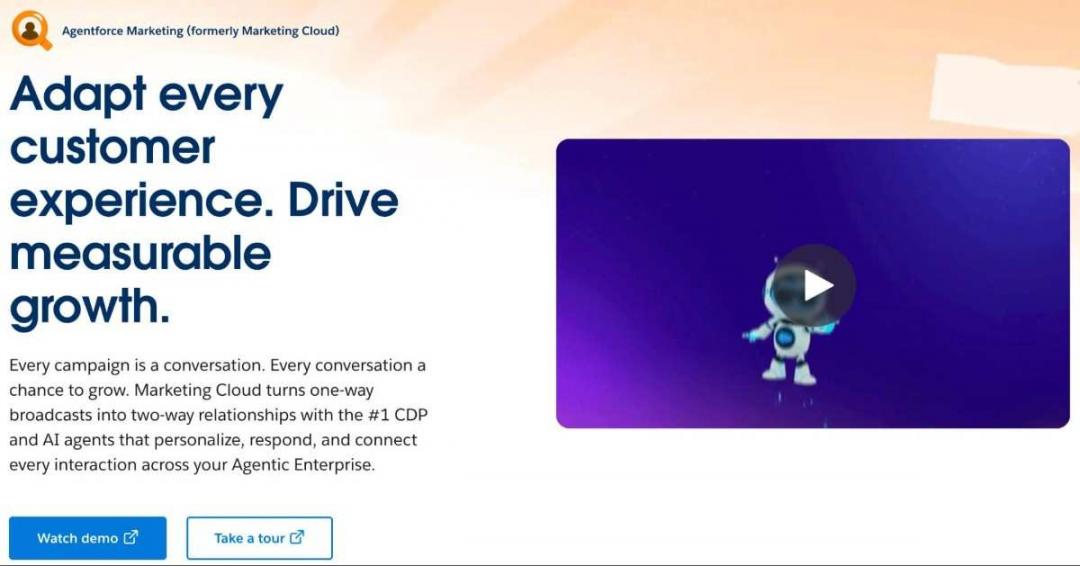
Image via Agentforce Marketing
Agentforce Marketing is a strong option for automation and centralized customer data management. It handles marketing through the Salesforce Marketing Cloud ecosystem.
Its biggest strength is AI-powered campaign execution through Agentic Marketing. You can use AI agents to build audiences and recommend campaign actions. It’s also helpful for automating repetitive tasks.
This marketing automation tool also performs well in cross-channel marketing. It helps you manage email, SMS, social, ads, and mobile messaging all in one place. That unified view helps you achieve timely sales forecasting.
Agentforce Marketing is among the best enterprise marketing software for B2B automation. You can grade interested customers and send automatic follow-up messages. The tool also automatically passes the best prospects straight to your sales team.
Key Features
- AI-powered campaign automation
- Cross-channel campaign management
- Lead scoring
- Real-time customer segmentation
- Multichannel messaging tools
- Marketing attribution reporting
- Salesforce CRM integration
Pricing
- Salesforce Starter: $25/month
- Marketing Cloud Next Growth Edition: $1,500/month
- Marketing Cloud Next Advanced Edition: $3,250/month
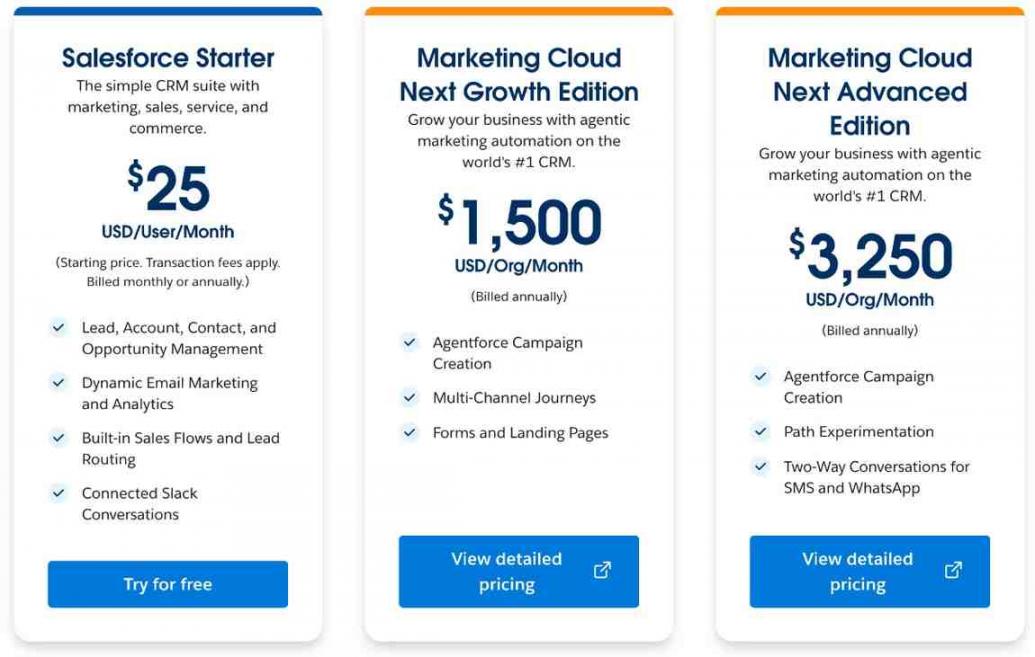
Image via Agentforce Marketing
Pros
- Reliable AI automation
- Connects marketing and sales data
- Handles large-scale customer databases
- Advanced reporting and attribution tools
- Good fit for account-based marketing
Cons
- Setup can take time
- High implementation costs
Pro Tip: Connect your sales and marketing teams inside Salesforce before building campaigns. This makes your marketing campaigns more targeted and speeds up sales follow-ups.
3. Bloomreach
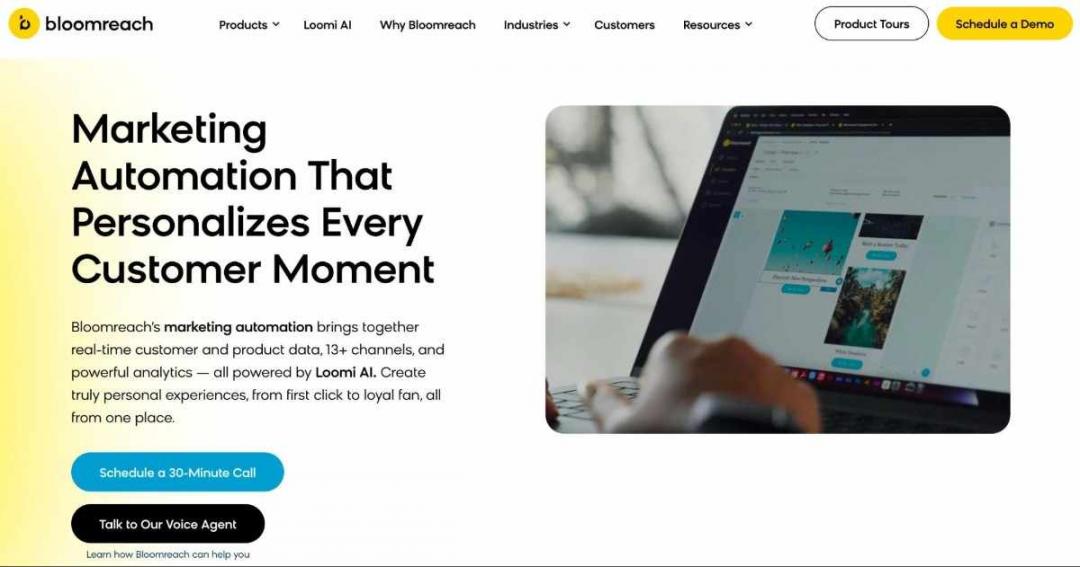
Image via Bloomreach
Bloomreach supports AI-driven personalization for marketing and customer engagement. It combines customer data, marketing automation, analytics, and commerce-focused marketing into a single platform.
This makes it one of the best enterprise marketing software options for businesses that want to improve customer experiences.
One of its standout tools is the Loomi marketing agent. It uses AI to help marketers create campaigns. The platform can also recommend content and automate customer interactions.
Bloomreach also delivers detailed customer intelligence through Loomi analytics. These track customer behavior, campaign performance, and buying patterns. With that data, you can make faster marketing decisions based on real data.
Bloomreach is also equipped with web personalization tools. They adjust website content based on customer behavior, interests, and purchase history.
The platform also offers omnichannel orchestration. This manages email, SMS marketing, mobile, and web campaigns. It unifies customer experiences across channels.
Key Features
- Real-time customer analytics
- Omnichannel campaign management
- Behavioral targeting capabilities
- Commerce-focused marketing workflows
- AI-powered campaign automation
- Dynamic website personalization
- Customer segmentation tools
Pricing
- Contact sales
Pros
- Good customer behavior tracking
- Centralizes all marketing channels
- Uses AI tools for personalization
- High-level personalization for campaigns
- Integrates with ecommerce platforms like Shopify
Cons
- Setup requires technical support
- Platform lock-in with complex migrations
Pro Tip: Start with verified customer data sources before launching campaigns. Bloomreach produces more accurate results when it has complete customer behavior data.
4. Adobe Marketo Engage
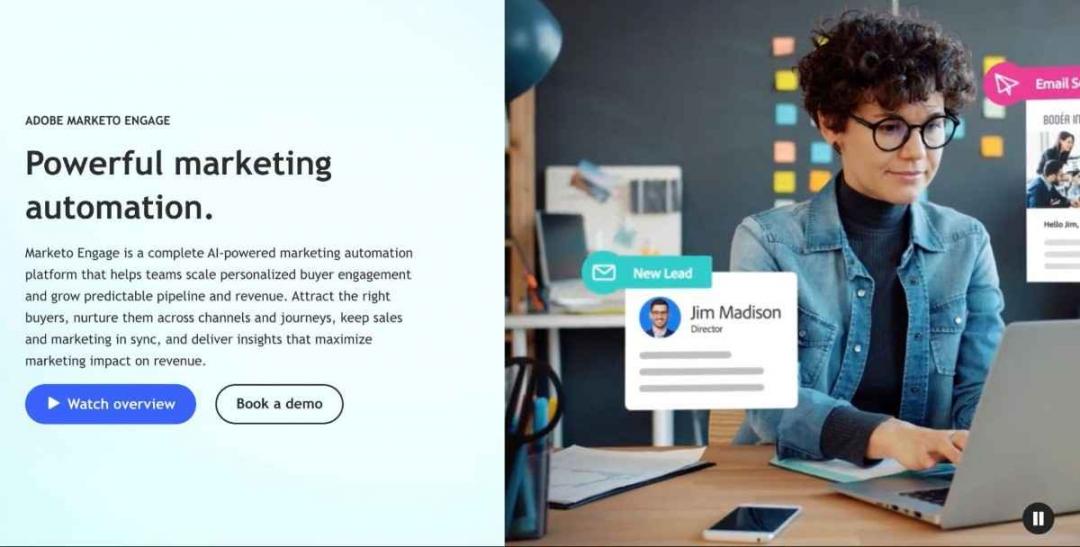
Image via Adobe Marketo Engage
Adobe Marketo Engage is a marketing software for lead management and revenue tracking. You can manage customer journeys across email, web, events, and sales channels.
It’s one of the best enterprise marketing software for companies with long buying cycles. This is due to its profiles and audience features. You can use these to group your customers based on how they interact with you and what they buy.
There’s also Adobe Dynamic. It’s a feature that adds AI-powered chat experiences that answer customer questions. It also qualifies leads and routes prospects to sales teams faster.
Additionally, you can use marketing analytics to track campaign performance across multiple channels. It also offers sales intelligence and engagement that helps reps prioritize active prospects.
Key Features
- Advanced audience segmentation
- AI-powered website chat
- Lead scoring and nurturing workflows
- Revenue attribution reporting
- Sales engagement tracking
- Multichannel campaign automation
- Account-based marketing capabilities
Pricing
- Contact sales
Pros
- Lead management and automation tools
- Detailed campaign and revenue reporting
- Good alignment between marketing and sales
- Flexible workflows for marketing campaigns
Cons
- Heavily relies on experienced administrators
- Advanced features cost extra
Pro Tip: Build shared lead scoring rules with your sales team first. This helps marketing and sales teams improve campaigns using the same qualification criteria.
5. Netcore Marketing Automation
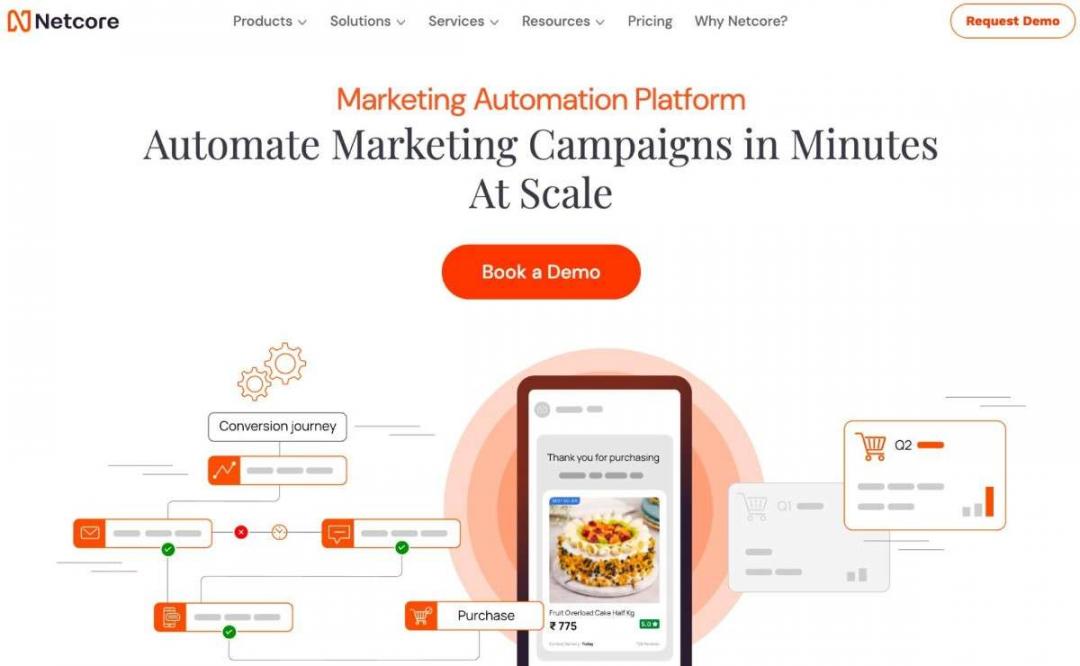
Image via Netcore Marketing Automation
Netcore Marketing Automation Platform primarily focuses on AI-driven customer engagement and campaign optimization. It uses predictive analytics to generate targeted marketing campaigns.
Some of its notable AI features include Netcore Co-Marketer. Netcore Co-Marketer is a smart assistant that helps you brainstorm marketing ideas. It also helps you segment customers and write tailored messages for each group.
There’s also Insights Agent, which analyzes campaign data and customer behavior patterns. It helps you spot what drives engagement before performance drops. This can speed up decision-making by reducing reliance on manual report reviews.
Netcore also performs well in campaign orchestration and customer journey management. It uses its Decisioning Agent tool to determine the best message and the optimal time to send it.
The Decisioning Agent tool also decides whether to use email, text, or social media for each customer. You can coordinate campaigns across multiple channels from a centralized dashboard.
Key Features
- AI-powered campaign recommendations
- Predictive customer behavior analysis
- Cross-channel campaign orchestration
- Personalized messaging automation
- AI-driven engagement optimization
Pricing
- Contact sales
Pros
- Reliable AI tools for marketing campaigns
- Supports multichannel marketing
- Handles large customer bases
- Helpful real-time analytics
Cons
- AI features require considerable training
- Too technical for small enterprises
Pro Tip: Feed your customer data from every channel into Netcore. Do this before building campaigns to improve the accuracy of AI decisioning tools.
6. Zeta Marketing Platform
Image via Zeta Marketing Platform
The next best enterprise marketing software solution is Zeta Marketing Platform. This platform is built for omnichannel marketing execution. It integrates analytics, segmentation, and activation into one unified system.
The AI capabilities of this system are very effective for big marketing teams. For example, it has a super-smart tool that uses AI to predict when customers are ready to buy. This tool also helps you find new ways to sell to them.
The platform also offers Athena by Zeta. It helps your marketing teams automate campaign decisions, audience targeting, and content recommendations. This reduces guesswork and helps teams react faster to customer signals.
Zeta also performs strongly in campaign coordination and measurement. Its all-in-one feature lets you manage your emails, phone messages, social media, and websites. This allows you to handle all your ads from one single place.
Key Features
- Analytics and attribution tracking
- Unified customer data platform
- Cross-channel customer journey tracking
- AI-powered predictive marketing
- Omnichannel campaign activation
- Automated campaign recommendations
Pricing
- Contact sales
Pros
- Good analytics and attribution reporting
- Centralized campaign management
- AI-driven marketing targeting
- Scales well for growing enterprises
- Reliable customer support
Cons
- Technical with a steep learning curve
- Long implementation time
Pro Tip: Start by connecting customer touchpoints before building audience segments. This provides Zeta with complete data to improve predictive analysis.
7. Dotdigital
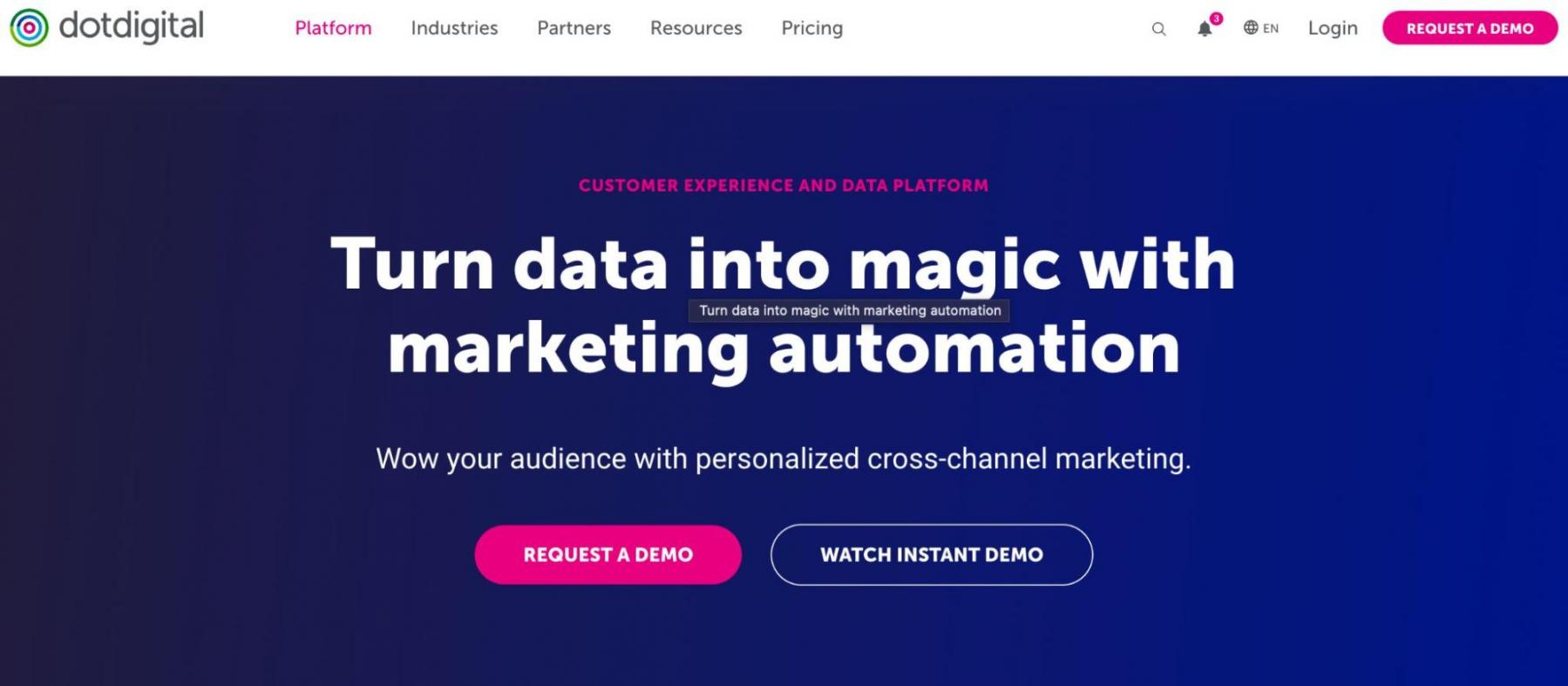
Image via Dotdigital
Dotdigital is built for businesses that want connected customer journeys. The platform handles customer engagement and marketing automation. This makes it a strong choice for retail, ecommerce, and B2C marketing teams.
It achieves a delicate balance of customer data, AI tools, and automation workflows. This makes it one of the best enterprise marketing software options.
Another helpful Dotdigital capability is customer data management. It offers customer data tools for collecting and organizing customer behavior. You can also check purchase history and engagement activity in unified profiles.
Dotdigital also gives marketers reliable AI and reporting tools for campaign optimization. Its WinstonAI tool can help generate subject lines and tailored messages. It also provides suggestions on the best time to send messages.
Additionally, there’s reporting with analytics. It tracks marketing campaign engagement and revenue attribution. This allows you to determine the areas that need improvement.
Key Features
- Unified customer data profiles
- Automated customer journey workflows
- Real-time reporting and analytics
- Omnichannel marketing automation
- Audience segmentation tools
- AI-powered content recommendations
Pricing
- Contact sales
Pros
- Reliable customer journey tools
- Flexible engagement tracking
- AI automation for repetitive tasks
- Connects customer data across channels
- Strong ecommerce and retail marketing capabilities
Cons
- Customization limits
- More expensive than most alternatives
Pro Tip: Pro Tip: Use unified customer data. This enables your team to easily access everything they need without switching tools. It speeds up your marketing processes.
8. MoEngage
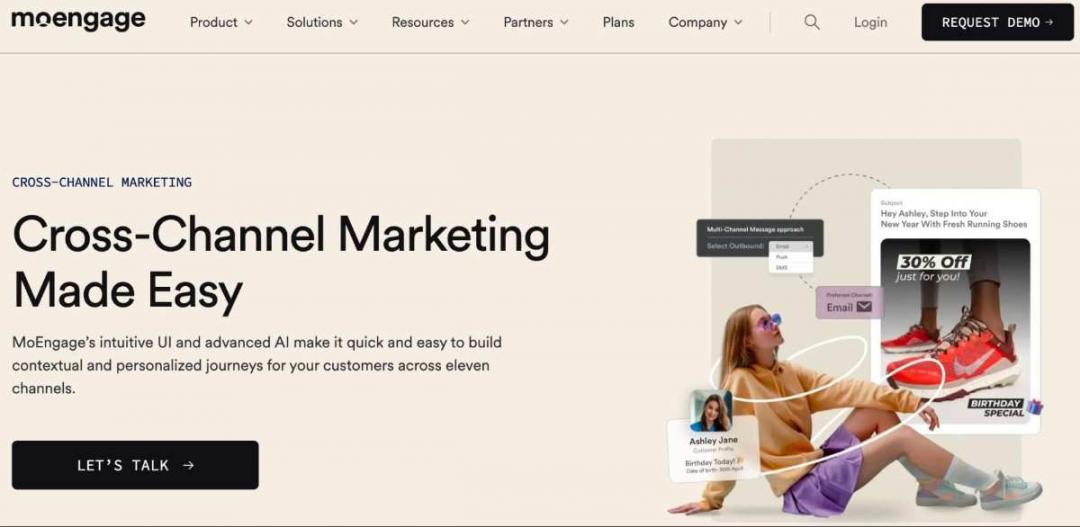
Image via MoEngage
MoEngage is built for brands looking for consistent customer engagement. It works across multiple marketing channels, such as web, apps, and email. It’s useful for ecommerce marketing, fintech, media, and mobile-first businesses.
You can use intelligent site messaging to display targeted messages on websites. This could be based on customer activity, browsing behavior, or purchase intent.
The platform also offers web and app personalization. It updates content automatically. This way, you can show people things they actually care about.
MoEngage also provides marketers with reliable reporting tools. It provides analytics and insights tools to track customer retention, engagement, and campaign performance. You can then use that data to automate journeys across email and mobile apps from one platform.
Key Features
- Cross-channel campaign automation
- Real-time customer personalization
- Intelligent website messaging
- Mobile and web engagement tools
- Customer behavior analytics
- Audience segmentation workflows
- Push notification and SMS automation
Pricing
- Contact sales
Pros
- Mobile and app marketing capabilities
- Personalization across customer touchpoints
- Real-time analytics improve campaign targeting
- Fits customer retention campaigns
- Multichannel engagement consistency
Cons
- Relies on third-party email service providers
- Cluttered dashboard
Pro Tip: Track customer activity across web and mobile channels. This allows MoEngage to capture behavior from every touchpoint. Use that to deliver relevant marketing messaging.
9. Sprinklr
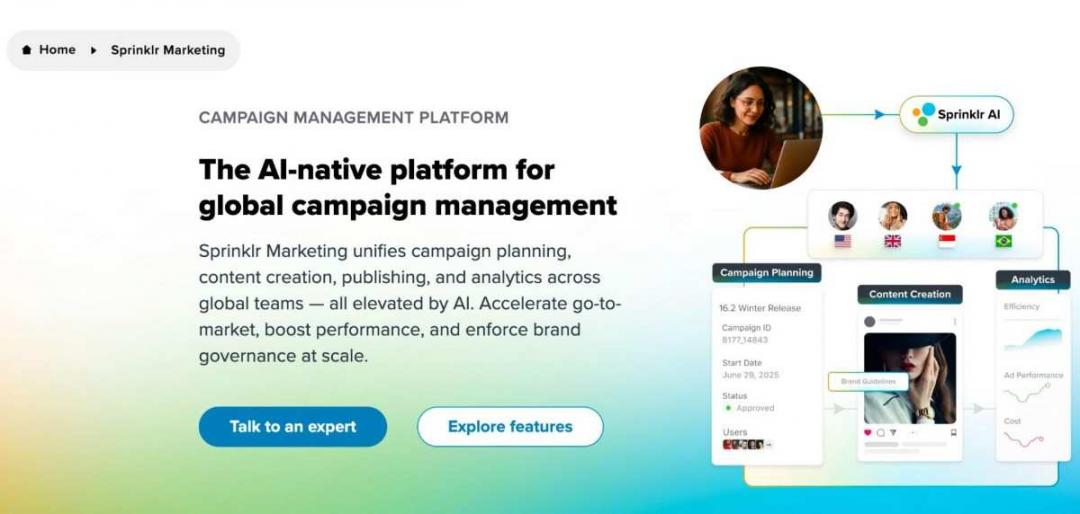
Image via Sprinklr
Sprinklr is marketing software designed for enterprises managing large-scale social media activities. This includes digital advertising and customer engagement campaigns. The platform combines campaign planning and content marketing.
You get campaign management for planning, approving, publishing, and tracking marketing content. It also includes social media advertising tools to help you run paid ads and pick the right audience. The tools also let you track how well those ads are doing.
Furthermore, Sprinklr performs strongly in analytics and AI-driven customer intelligence. Its unified analytics tools combine social, advertising, and engagement data into centralized reports.
To complement this, it offers consumer intelligence. This tracks customer sentiment, trends, and brand conversations across digital channels. The platform also includes Sprinklr AI+ to help with repetitive tasks. It suggests what to post next and helps you make better choices for your ads.
Key Features
- Cross-channel campaign management
- Social media management and advertising tools
- AI-powered workflow automation
- Centralized analytics dashboards
- Consumer sentiment tracking
- Content approval workflows
- Multi-platform publishing tools
Pricing
- Contact sales
Pros
- Strong social media and advertising management
- Centralized analytics across multiple channels
- AI tools to improve campaign efficiency
- Good collaboration features for large teams
- Enterprise-grade compliance
Cons
- Expensive plans
- Overkill for smaller marketing teams
Pro Tip: Use unified reporting dashboards to view all marketing data in one view. This helps your team spot performance changes much faster. You can then adjust your ads before they become too expensive.
10. Lark
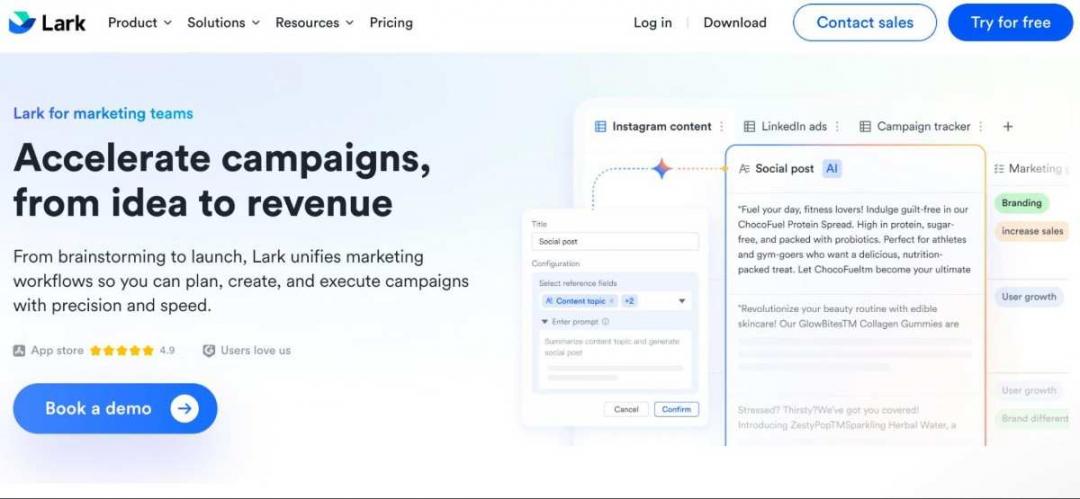
Image via Lark
Lark is a marketing team collaboration software. It helps marketing teams plan campaigns, create content, manage approvals, and track feedback.
That feature makes it one of the best enterprise marketing software options for businesses with many marketing departments.
One of Lark’s strongest marketing capabilities is its campaign planning hub. Teams can organize their ad calendars and assign tasks in a shared workspace. They can also track deadlines in the same place.
The platform includes AI content creation tools. They help marketers draft campaign copy, meeting summaries, reports, and brainstorming ideas faster. This reduces manual work and keeps projects moving without long review delays.
Lark also helps with performance marketing optimization through data sharing and feedback management. Its smart feedback insights tools collect comments, campaign updates, and team input. This helps marketers identify issues that need improvement.
The platform also combines built-in messaging, video marketing, and shared documents. This gives marketing teams a connected way to manage campaigns.
Key Features
- Campaign planning workspace
- AI-powered content generation
- Shared team collaboration tools
- Smart feedback tracking
- Workflow and approval automation
- Built-in messaging and meetings
- Real-time document collaboration
Pricing
- Starter: $0/user/month
- Basic: $7.2/user/month
- Pro: $14.40/user/month
- Enterprise: Custom pricing
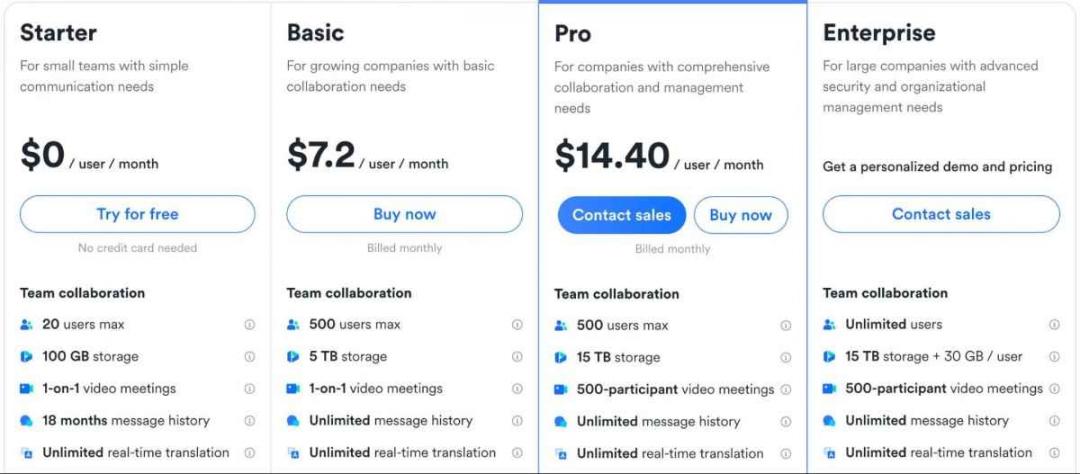
Image via Lark
Pros
- Affordable plans
- Collaboration features for distributed teams
- AI tools reduce repetitive content tasks
- Centralized campaign planning improves coordination
- Document and workflow management capabilities
Cons
- Basic marketing analytics
- Some integrations require complex setups
Pro Tip: Create shared campaign workspaces for every marketing project. This helps your team move projects forward with fewer delays. It also ensures nobody misses important updates.
11. TenonHQ
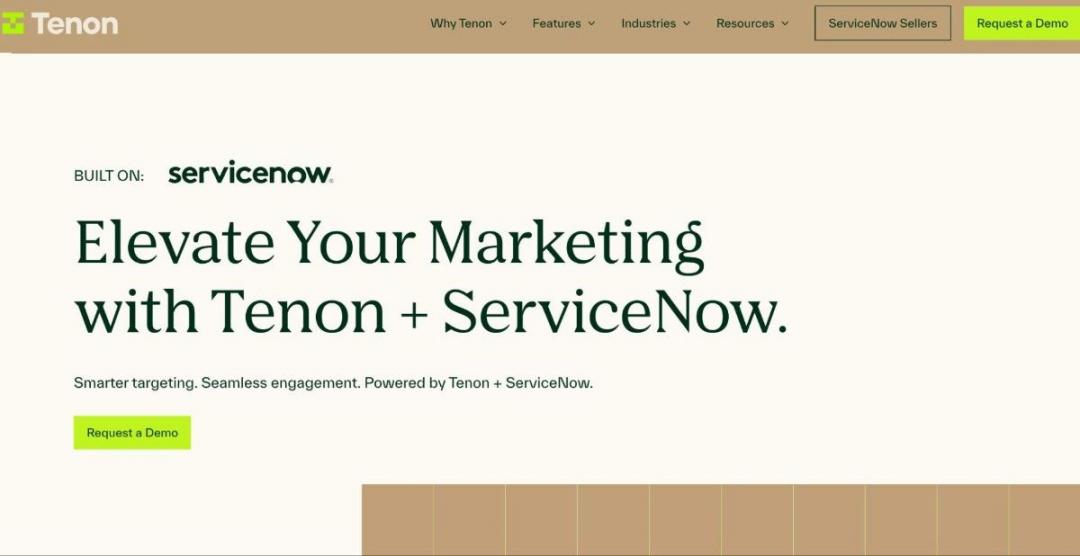
Image via TenonHQ
TenonHQ is built for regulated enterprises. It manages marketing campaigns through clear approval processes and audit visibility. It’s the best enterprise marketing software solution for businesses that need to meet HIPAA or GDPR requirements.
One of TenonHQ’s reliable features is its use of shared customer and campaign data across teams. Marketing, compliance, and sales departments can work from the same data environment. This reduces communication gaps and approval delays.
It also includes journey builders for engagement. This helps marketers automate customer journeys. Your teams can adjust messaging based on customer behavior and engagement activity.
TenonHQ also performs well in reporting and compliance oversight. Its marketing insights with reporting tools track campaign performance. It also monitors engagement metrics and customer activity.
Key Features
- Shared marketing and customer data
- Automated customer journey builder
- Campaign landing page creation
- Marketing analytics dashboards
- Compliance and approval tracking
- Cross-team collaboration workflows
- Multichannel engagement automation
Pricing
- Contact sales
Pros
- Shared data for team coordination
- Accurate journey automation tools
- Centralized reporting for campaign visibility
- Fits regulated enterprise environments
- Unified marketing with no data silos
Cons
- Platform lock-in with minimal flexibility
- Steep learning curve for new users
Pro Tip: Begin by building approval workflows in advance. This makes it easy for marketing, legal, and compliance teams to work together in TenonHQ. They can all use the exact same review process.
12. Act-On Marketing
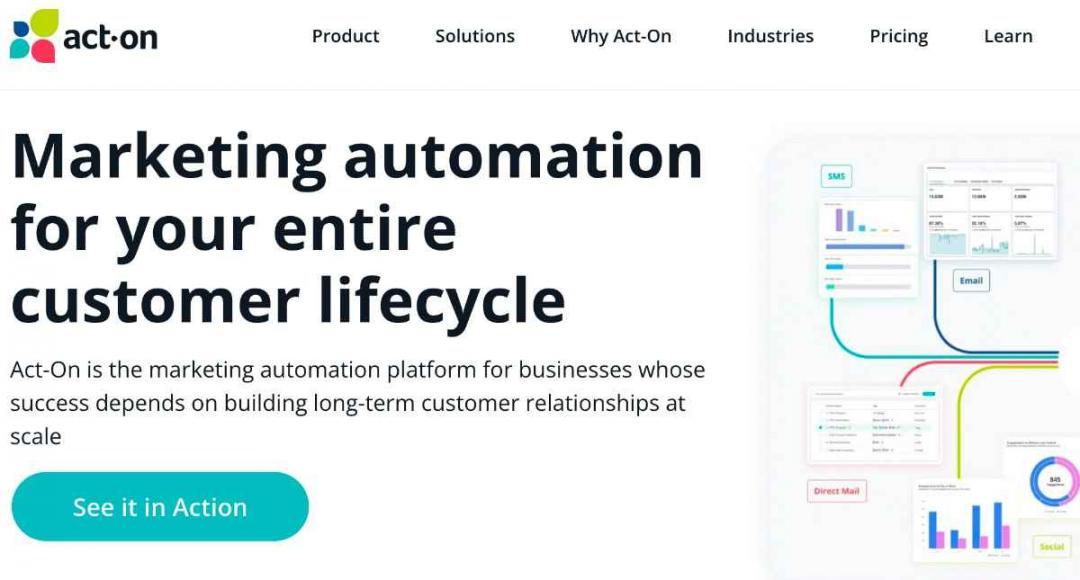
Image via Act-On Marketing
Act-On Marketing prioritizes building effective customer journeys. It achieves this through multichannel communication and AI-powered marketing workflows.
The platform offers customer journey orchestration. This automates customer interactions across the entire buying cycle.
The platform also includes multichannel marketing tools that help you coordinate campaigns. These tools work across email, landing pages, social media, SMS, and web channels.
Act-On Marketing also offers AI-driven optimization to help marketers improve content recommendations. It also helps improve segmentation and campaign timing. There’s reporting and analytics for tracking campaign performance and sales funnel activity in real time.
This sales automation platform also integrates with customer relationship management systems. It works with options like Salesforce through MarTech Stack integrations. These enable marketing and sales teams to keep customer data aligned.
Key Features
- Customer journey automation
- Multichannel campaign management
- AI-powered marketing insights
- Real-time analytics dashboards
- CRM and MarTech integrations
- Audience segmentation tools
- Automated email lead nurturing workflows
Pricing
- Professional: $900/month
- Enterprise: Custom pricing
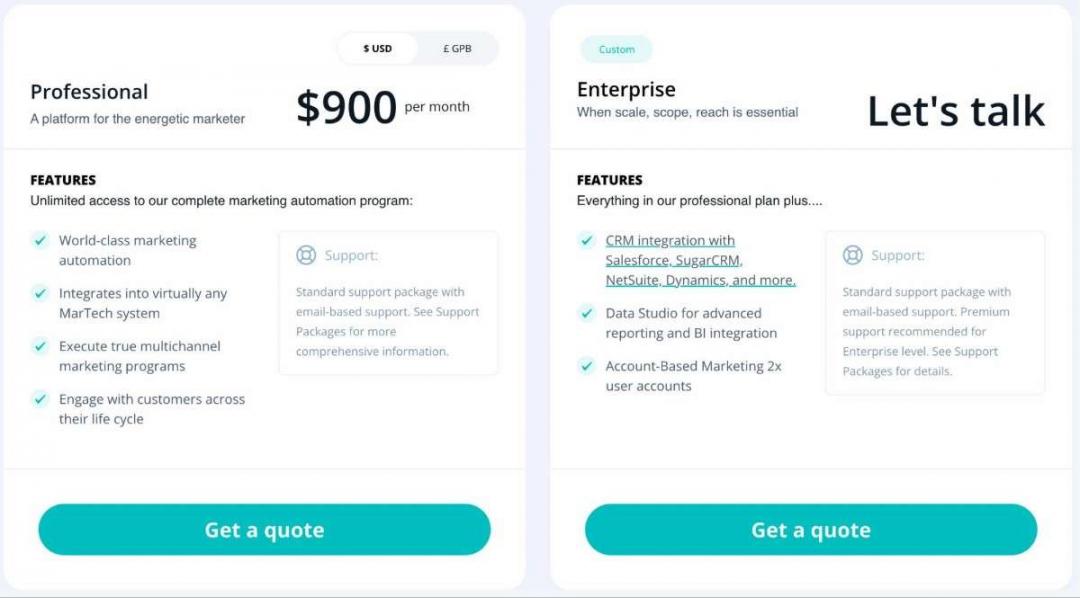
Image via Act-On Marketing
Pros
- Reliable customer journey orchestration tools
- Good multichannel campaign management
- Campaign targeting via AI
- Clear reporting for funnel visibility
- Integrates well with CRM platforms like Salesforce
Cons
- Expensive plans
- Lacks customization flexibility
Pro Tip: Connect your CRM and marketing channels before building automated journeys. When customer activity flows into one system, Act-On can trigger more accurate campaigns.
13. Insightly Marketing
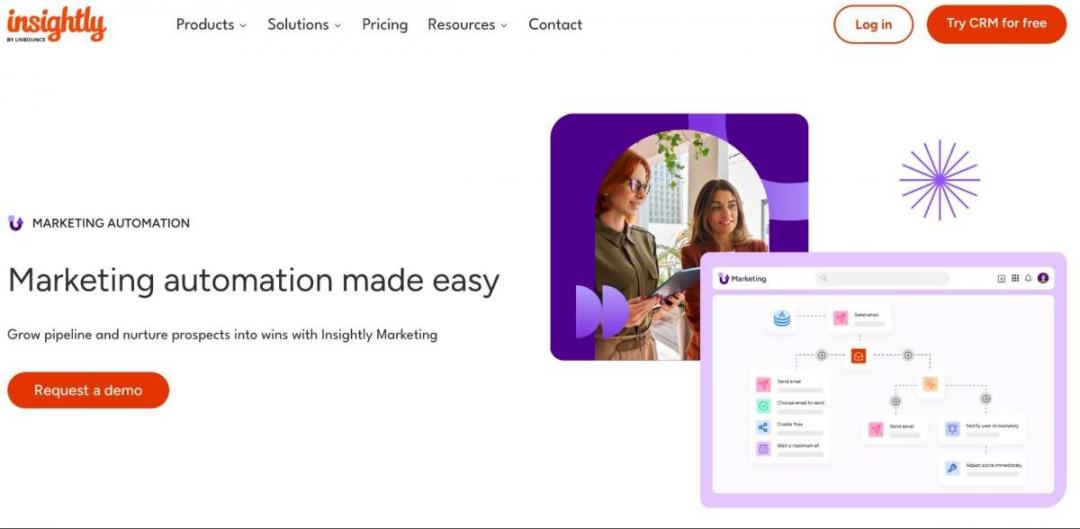
Image via Insightly Marketing
Insightly Marketing works best when your marketing teams need to act on the same customer data without delays. It tracks how people interact with your ads and updates your marketing strategy based on their behavior.
Its campaign automation tools help you guide buyers through the process. This makes it much easier to turn interested leads into real customers. For instance, with email marketing, you can create personalized campaigns.
Insightly also provides you with ready-made landing pages and forms. You can use these to connect directly to lead capture workflows. It also organizes prospect data without relying on separate systems.
There’s a customer journey builder that automates customer interactions across campaigns. This works alongside dynamic list segmentation, which updates lists in real time based on customer behavior.
The platform also includes lead scoring and grading. They enable sales teams to prioritize leads based on engagement activity and fit. All these combine to make Insightly one of the best enterprise marketing software solutions.
Key Features
- Automated customer journey workflows
- Personalized email marketing campaigns
- Dynamic audience segmentation
- Lead scoring and grading tools
- Landing page and form builders
Pricing
- Plus: $99/month
- Professional: $499/month
- Enterprise: $999/month
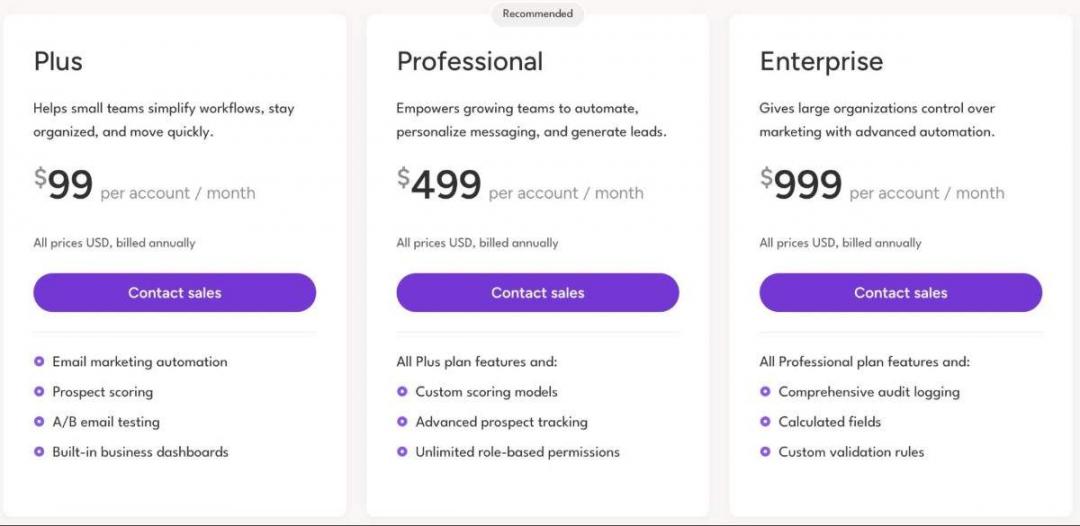
Image via Insightly Marketing
Pros
- Aligns marketing and sales data
- Provides lead scoring and qualification tools
- Dynamic segmentation for campaign targeting
- Offers customer journey automation
- Centralized lead tracking for visibility
Cons
- The initial implementation cost is high
- Doesn’t work well for social media marketing
Pro Tip: Connect your sales pipeline stages to your marketing automation. This allows Insightly to track both marketing engagement and sales simultaneously.
The best enterprise marketing software platforms include:
- HubSpot Marketing Hub – All-in-one platform for CRM, automation, personalization, and analytics.
- Agentforce Marketing – AI-powered Salesforce tool for cross-channel automation and sales alignment.
- Bloomreach – AI-driven ecommerce platform for personalization and customer journey optimization.
- Adobe Marketo Engage – B2B marketing automation for lead management, nurturing, and attribution.
- Netcore Marketing Automation – Predictive AI platform for campaign optimization and customer engagement.
- Zeta Marketing Platform – Unified AI system for omnichannel marketing and predictive targeting.
- Dotdigital – Ecommerce-focused automation platform for customer journeys and messaging.
- MoEngage – Real-time engagement platform for personalization across web, mobile, email, and apps.
- Sprinklr – Enterprise CX and social platform for publishing, ads, analytics, and sentiment tracking.
- Lark – Collaboration platform for campaign planning, workflows, and team coordination.
- TenonHQ – Compliance-first marketing platform for regulated workflows and audit-ready campaigns.
- Act-On Marketing – Marketing automation tool for journey orchestration, campaigns, and CRM integration.
- Insightly Marketing – CRM-based marketing platform for lead tracking, segmentation, and sales alignment.
FAQ
Q1. What is the best enterprise marketing software?
A. The best enterprise marketing software depends on your business size, marketing goals, and sales process. The best options include HubSpot Marketing Hub, Agentforce Marketing, and Bloomreach. They stand out because they combine automation, customer data, analytics, and campaign management.
Q2. Why do businesses use enterprise marketing software?
A. Businesses use enterprise marketing software to manage campaigns and customer data. They handle lead generation and reporting from one dashboard. This helps marketing and sales teams work faster and stay aligned.
Key benefits include:
- Better campaign tracking
- Automated email workflows
- Lead scoring and customer segmentation
- Real-time reporting
- Centralized customer data
Q3. What features should you look for in enterprise marketing software?
A. The best enterprise marketing software should include automation and analytics. CRM integration and multichannel campaign management are also crucial. These features help your team track customer activity and improve marketing performance.
Q4. Is enterprise marketing software worth the cost?
A. Enterprise marketing software can save time and improve marketing results when your team uses it correctly. The right platform helps you automate tasks and track campaign performance. Businesses need this to manage customer relationships more effectively.
Q5. How do you choose the right enterprise marketing platform?
A. Start by identifying your marketing goals, team size, and required integrations. The best enterprise marketing software should fit your workflows instead of forcing your team to change how they work.
Next, compare platforms based on:
- Reporting quality
- Automation tools
- CRM compatibility
- Customer support
- Scalability
Q6. How does enterprise marketing software improve customer targeting?
A. Enterprise marketing software collects customer behavior data from different sources. It uses this data to group customers based on interests, actions, and buying habits. This helps businesses send more relevant messages to the right audience.
Better targeting often leads to higher engagement and stronger customer relationships. In turn, this improves campaign performance across different marketing channels.
Q7. Is enterprise marketing software suitable for small businesses?
A. Enterprise marketing platforms work well for small businesses planning to scale operations. Many providers offer flexible pricing and modular features that businesses can expand over time.
Still, smaller companies should review costs and feature requirements carefully. Large enterprise platforms may include advanced tools that smaller teams do not need yet. This can increase expenses and slow adoption.
Q8. Can enterprise marketing software support multichannel campaigns?
A. Yes. Most enterprise marketing software supports multichannel campaigns from one dashboard. This keeps messaging consistent across customer touchpoints.
Multichannel management also improves campaign tracking. Teams can monitor performance across channels and compare results. This allows them to adjust marketing strategies faster.
Which Enterprise Marketing Software Is the Best Overall Choice?
HubSpot Marketing Hub is the best enterprise marketing software overall because it combines automation, personalization, CRM integration, analytics, and campaign management in a single platform.
The best enterprise marketing software offers automation, personalization, and cross-channel campaign management. All the marketing and sales tools on this list deliver value in different ways.
HubSpot gives marketing teams the tools they need to manage the entire customer journey efficiently. This includes audience segmentation, personalized campaigns, advanced analytics, and more. Businesses can centralize CRM data, automate workflows, and track campaign performance.
If you want your marketing efforts to bring results, then go with HubSpot Marketing Hub.
Disclaimer: This content contains some affiliate links for which we will earn a commission (at no additional cost to you). This is to ensure that we can keep creating free content for you.