Some of the top customer retention strategies include improving onboarding, providing proactive, omnichannel support, and personalizing interactions. They also include building loyalty programs and communities, collecting feedback, and predicting churn.
These are some of the strategies that help you build brand trust, increase engagement, and grow long-term revenue.
I’ve spent over 12 years helping brands grow, and one thing remains clear. The companies that grow don't have big ad budgets to constantly acquire new customers. They keep customers they have already paid to acquire with retention strategies.
This guide explains why customer retention matters. You’ll learn the 11 best customer retention strategies. You’ll also learn how to measure retention and how to build a customer retention plan in 2026.
Disclaimer: This content contains some affiliate links for which we will earn a commission (at no additional cost to you). This is to ensure that we can keep creating free content for you.
Table of Contents
What Is Customer Retention?
Customer retention refers to a business’s ability to keep existing customers buying from it over time. Retention is different from loyalty and churn.
Retention is the likelihood that customers will continue buying from your business. Loyalty is why they stay. Whether they trust your business enough to keep buying. Churn is the opposite of retention. It’s the share of customers who stop purchasing altogether.
One of the crucial metrics to monitor is customer lifetime value (CLV). This is the total profit a customer generates before they churn. Retention helps increase CLV.
For example, a customer who spends $100 every month for three years has a higher CLV. A customer who buys $100 worth of goods once and never returns has a low CLV.
Customer retention is the ability to encourage repeat purchases over time. It directly impacts customer lifetime value (CLV). Where increased retention leads to higher revenue per customer.
Why Does Retaining Customers Matter?
Retaining customers costs less than constantly acquiring new ones. This is because customer acquisition involves outreach, advertising, and lead generation costs. You need to convince prospects who haven't interacted with your brand to convert.
Retention relies on nurturing relationships. This can be done through effective support or loyalty programs. This requires lower incremental costs than customer acquisition. It’s one of the most important growth strategies for businesses in 2026.
There is a compounding effect, too. Retained customers try more of your products and refer others. This is one of the most effective customer retention strategies to increase revenue.
Retaining customers can cost less than acquiring new ones constantly. Retained customers also recommend your brand to others, which increases revenue.
How Is Customer Retention Calculated, & Which Metrics & Benchmarks Matter?
Customer retention rate (CRR) = ((E − N) / S) × 100. Where S = customers at the start, E = customers at the end, and N = new customers added during the period. Here’s a worked example of how to calculate your customer retention:
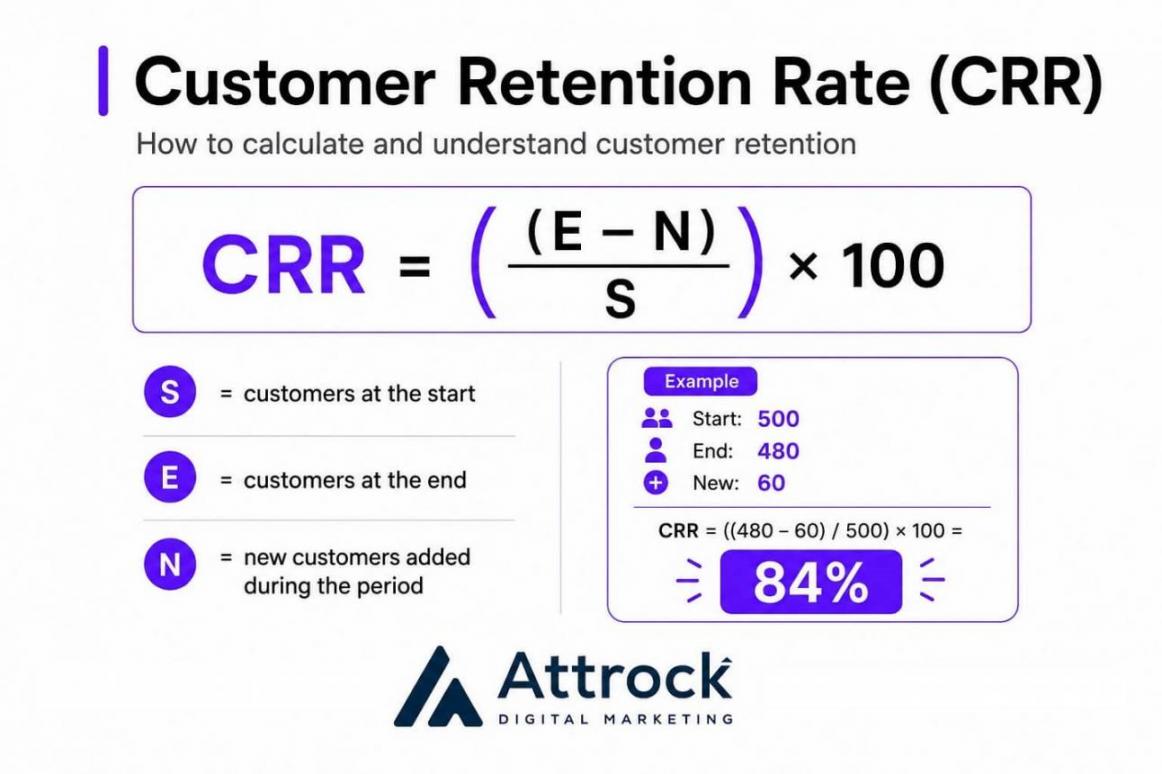
Image via Attrock
Alongside CRR, track metrics like churn rate, repeat purchase rate, and customer lifetime value (CLV). You should also track net revenue retention (NRR) and net promoter score (NPS). This gives you a complete view of customer loyalty, purchasing behavior, and revenue impact.
Here’s a table explaining these metrics before you apply customer retention strategies:
| Metric | What it Measures | How to Read it |
|---|---|---|
| Churn rate | Share of customers lost over a period | Lower is better. A rising churn rate means you're losing more customers over time. |
| Repeat Purchase Rate | Share of customers who buy more than once | A higher rate shows more customers are returning to make additional purchases |
| CLV | Total profit per customer before they churn | An increasing CLV means retained customers are generating more revenue over time |
| NRR | Percentage of recurring revenue retained from existing customers over a period | 100% means you kept all recurring revenue from existing customers. Above 100% means existing customers generated even more revenue through upgrades. |
| NPS | Customer loyalty and brand recommendation intent | A higher NPS indicates stronger customer loyalty and a lower risk of churn |
Benchmarks are different depending on whether your business is B2B or B2C. Here’s what to aim for while implementing customer retention strategies:
- CRR: According to Customer Gauge, the average CRR across industries is 72.5%
- Churn Rate: The average B2B churn rate, according to Customer Gauge, is 11%–40%
- Repeat Purchase Rate: BS&Co reports the average ecommerce repeat purchase rate is 18.8%
- CLV: The average CLV across B2B sectors falls between $164,000 and $385,000, per Customer Gauge research
- NRR: According to Optif.ai, a good NRR is between 100% and 120%
- NPS: The average NPS for B2C is 47, while B2B is 29, per Survicate’s data
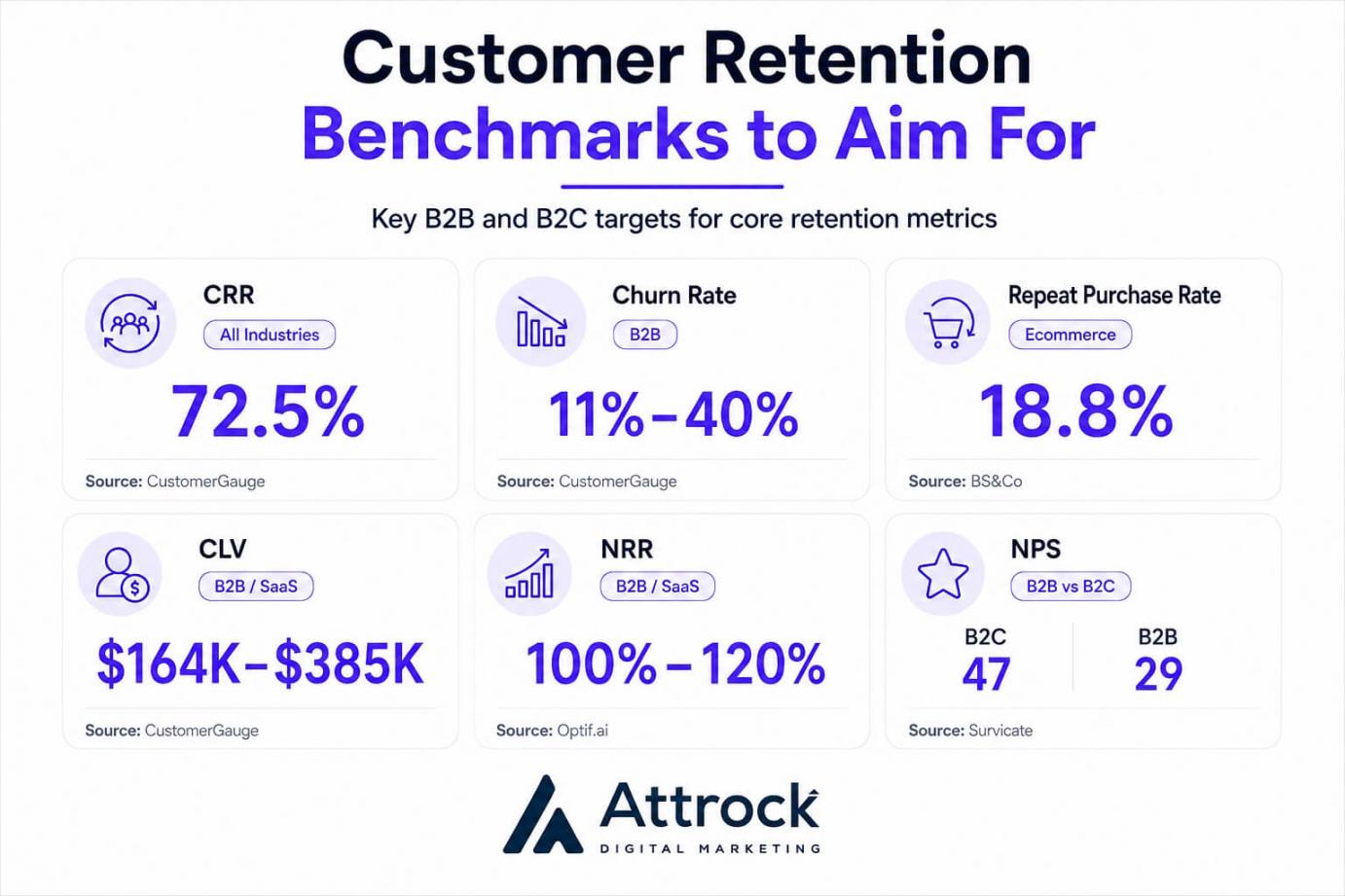
Image via Attrock
The average CRR is around 72.5% (Customer Gauge, 2026). Measure your own retention rate. Then compare it to benchmarks for your specific industry.
What Are the 11 Best Customer Retention Strategies? (With Examples)
The 11 best customer retention strategies include improving onboarding, providing omnichannel support, personalizing interactions, and rewarding loyalty.
They also include encouraging customer advocacy, re-engaging inactive customers, building a community, and collecting feedback.
You should also prevent churn, improve the post-purchase experience, and make renewals easier.
I’ll explain how these customer retention strategies work and provide examples. I’ll also explain how you can use marketing tools such as HubSpot to create and automate campaigns.
1. Improve Onboarding and Time-to-Value
Customer onboarding is the process of helping your new customers set up and start using your product. The goal is to reduce time-to-value. This is the time it takes for a customer to experience their first meaningful result.
In fact, OnRamp reports that 48% of customers abandon onboarding when they don't see value quickly. 54% of companies that cut onboarding investment see an increase in churn rate.
Here are four ways to improve customer onboarding and reduce time-to-value:
- Identify the First Win: Define the first meaningful outcome a customer should achieve. Then design your onboarding to help them reach it quickly.
- Remove Unnecessary Steps: Only ask for the information customers need to get started. A shorter setup process helps reduce friction.
- Guide Customers Through Onboarding: Provide in-app walkthroughs for using features. Don’t overwhelm users with too much information at once.
- Offer Proactive Support Early: Check in with customers during the first few days or weeks. Answer questions and resolve any issues before they lead to churn.
For example, Product Fruits found that users who created a product tour within 24 hours were 3.5× more likely to convert. The brand identified this as the “aha moment.” This was the first meaningful action in which users experienced the product's value.
It redesigned onboarding to guide users toward that one goal, using a simple checklist rather than a generic feature tour. Here’s an example of the onboarding flow:

Image via Product fruits
2. Deliver Proactive, Omnichannel Customer Support
Providing omnichannel customer support means helping customers across multiple channels. This includes live chat, email, phone, and social media.
Proactive support means identifying and resolving issues before customers ask for help. This helps reduce frustration and improves the overall customer experience.
Here are four ways to deliver such customer retention strategies:
- Support Customers on Preferred Channels: Live chat, email, phone, or social media. Keep records of conversations so customers don't repeat themselves to different agents. Tools like HubSpot Service Hub help with this.
- Offer Self-Service for Common Issues: Create a knowledge base or customer portal. This helps customers find answers to common queries, such as password resets, on their own.
- Set Clear Response and Resolution Targets: Define how quickly your support team should reply to and resolve requests. Fast, reliable support can build trust and increase customer retention.
- Address Issues Early: Reach out to customers when an issue arises, such as a failed payment. Resolving it quickly helps prevent customer churn.
For example, Sticos used this customer retention strategy to identify at-risk customers earlier. By using tools like HubSpot Service Hub, it automated around 41% of incoming queries. This gave support agents more time to proactively reach customers before they churned.
3. Personalize Customer Interactions Using Data
Personalization means using customer data to make each interaction more relevant. This data can include purchase history, browsing behavior, location, or preferences.
For example, you might recommend products based on previous purchases. You'd also send different offers to first-time and repeat customers.
Customer retention strategies like this build trust and increase repeat purchases. Start by using CRM tools such as HubSpot to store customer data in one place. Everyone on your team sees the same data and can personalize messages.
Here’s how to start applying this:
- Keep Customer Data in One Place: Store purchase history, support conversations, and preferences in one CRM. This gives every team a complete view of each customer.
- Group Customers by Behavior: Segment customers based on products viewed or purchases made. Then send tailored offers to each group.
- Send Messages at the Right Time: Trigger emails after events, such as an abandoned cart. Timely messages feel helpful and increase engagement.
- Recommend Relevant Products or Content: Suggest products or resources that match previous interests. This helps increase conversions.
A good example is Netflix. It recommends content based on each member's viewing history, ratings, and search activity. As members watch more content, Netflix updates its recommendations to match their interests. This keeps viewers engaged:
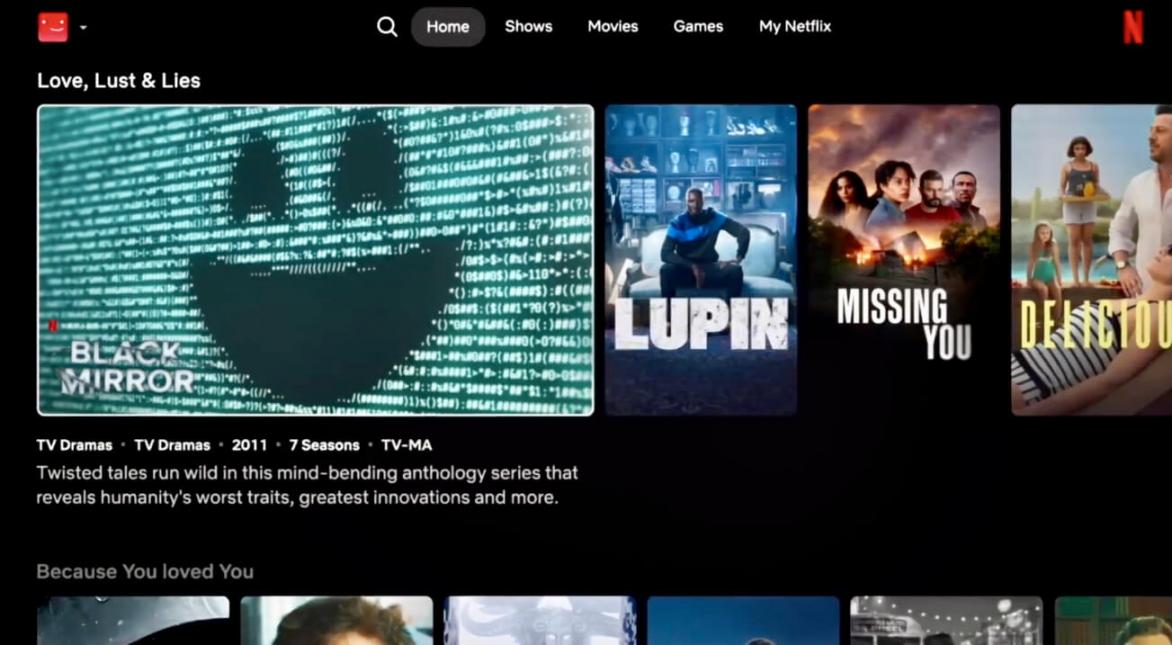
Image via Netflix
4. Build a Customer Loyalty Program
Customer loyalty programs encourage repeat purchases through points, exclusive discounts, and early access. According to Deloitte’s research, 56% of customers increase their spending with a brand that offers loyalty programs.
To build effective loyalty programs as part of your customer retention strategies, focus on these four areas:
- Reward More than Purchases: Reward customers for reviews, referrals, or social media engagement. This leads customers to interact with your brand more often.
- Create Membership Tiers: This includes levels such as Silver, Gold, and Platinum. This gives customers a reason to keep earning rewards and unlock better benefits.
- Make Rewards Easy to Understand: Show exactly how many points customers earn and what those points unlock. Clear value encourages people to sign up for your loyalty program.
- Improve the Program: Track point redemptions and repeat purchases. Identify which rewards drive the most loyalty.
For example, the Sephora Beauty Insider Program is free to join. Customers from the US and Canada get free shipping every time and a free birthday gift set. They also receive $10 off after redeeming 500 points:

Image via Sephora
5. Turn Customers Into Advocates
Customer advocacy is when satisfied customers promote your business. They might do this through referrals, reviews, testimonials, or social media. Publicly endorsing a brand means that customers trust it. They're less likely to switch to competitors.
Such customer retention strategies also help new customers trust your brand before they make a purchase.
Here's how to turn customers into brand advocates:
- Start a Referral Program: Reward both existing and new customers with discounts. Read more on how to start a referral program to increase sales.
- Ask for Reviews at the Right Time: For example, after a purchase or a customer support interaction. Customers will give accurate reviews when the experience is still fresh.
- Showcase Social Proof: Display reviews, testimonials, and ratings on your website. Take a look at social proof examples to understand what works.
- Recognize Your Best Customers: Feature customer stories on your website or email newsletters. Recognition makes customers feel valued and more likely to recommend your brand.
For example, Dropbox has a two-sided referral program. It rewards both the referrer and the new customer with extra storage space. Existing users have a reason to invite others. New users receive an immediate benefit for signing up:
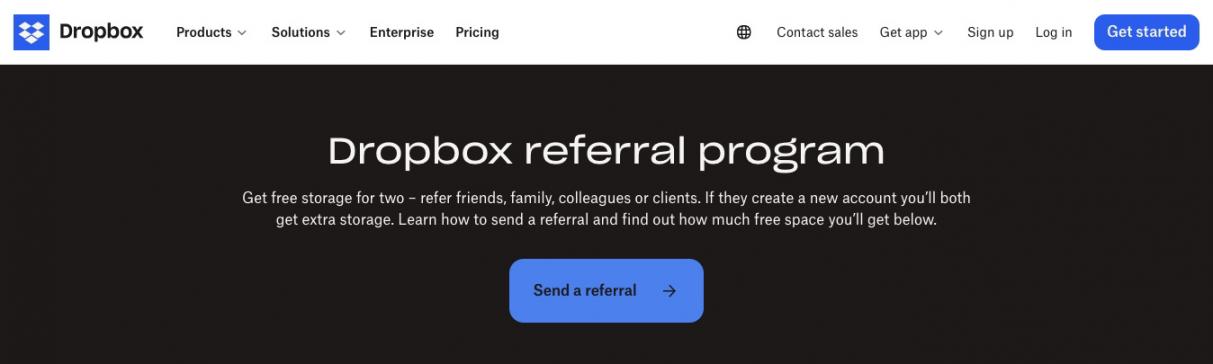
Image via Dropbox
6. Send Lifecycle Emails and Re-Engagement Campaigns
Lifecycle emails are automated messages sent at different stages of the customer journey. For example, you should send welcome emails to new customers. Or send abandoned cart reminders to customers who add items to their carts but don't complete purchases.
You can also send win-back campaigns to re-engage inactive customers. Here's how to apply such customer retention strategies:
- Match Emails to the Customer Journey: Create separate email flows for first-time customers and loyal ones
- Use Behavior-Based Triggers: Send emails after specific actions, such as a cart abandonment
- Personalize Emails: Use customer data, such as purchase history, to recommend specific products
- Win Back Inactive Customers: Send last-chance offers before customers switch to a competitor
Customer retention strategies like this work best when you use email marketing tools. Manual email campaigns can lead to lost revenue. Customers may not receive emails immediately after signing up or making a purchase. This is when interest is highest.
In practice, this means sending different emails to new, active, and inactive customers. You can generate personalized emails with tools such as HubSpot.
7. Educate Customers and Build a Community
Educate your customers so they can get more value from your product or service. You can do this with guides, video tutorials, webinars, and blog posts. Build a customer community so users can share ideas and ask each other questions. This keeps customers engaged over time.
Here’s how businesses apply such customer retention strategies:
- Answer Common Questions: Create content, such as how-to guides, around customer queries. Update this content whenever your product changes.
- Fill Knowledge Gaps: Use support ticket interactions and customer feedback to find where people get stuck. Turn those answers into blog posts or video content, such as tutorials.
- Encourage Peer Support: Let customers answer each other's questions in your community. They can help each other solve problems and share practical tips.
- Listen to Your Community: Look for repeated questions and feature requests. Use this feedback to improve your product over time.
For example, Notion’s community lets users join events and webinars. They can also download and share templates and become ambassadors:
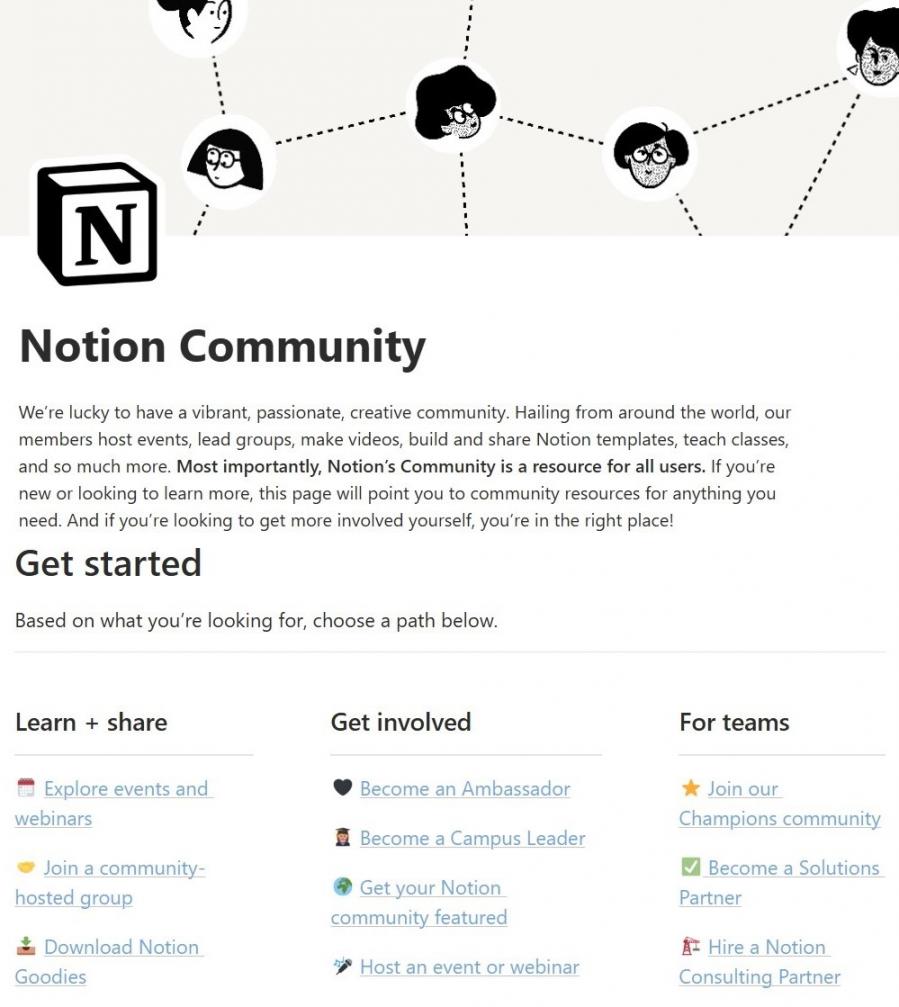
Image via Notion
8. Collect and Act on Voice-of-Customer Feedback
Voice-of-customer is a methodology used by businesses to collect, analyze, and act on customer feedback.
This is one of the customer retention strategies that helps you find problems before customers churn. Acting on that feedback also shows customers that their opinions matter. Here’s how to apply it:
- Collect Customer Feedback through Surveys: Ask “How likely are you to recommend us?” to measure NPS. Or, “How satisfied were you today?” to measure customer satisfaction (CSAT). Questions like “How easy was it to solve your problem?” measure customer effort score (CES).
- Identify Common Problems: Review customer complaints and churn data. Identify recurring issues and their causes, and fix the problems before customers leave.
- Close the Loop: Tell customers what changed as a result of their feedback. This shows you listened and took action.
- Share Feedback Internally: Share customer feedback with support teams. They can fix issues faster and improve the customer experience.
An effective voice-of-customer example is LEGO Ideas. Customers submit new set ideas and vote for their favorites. Ideas with 10,000 supporters are reviewed and can become official LEGO sets:
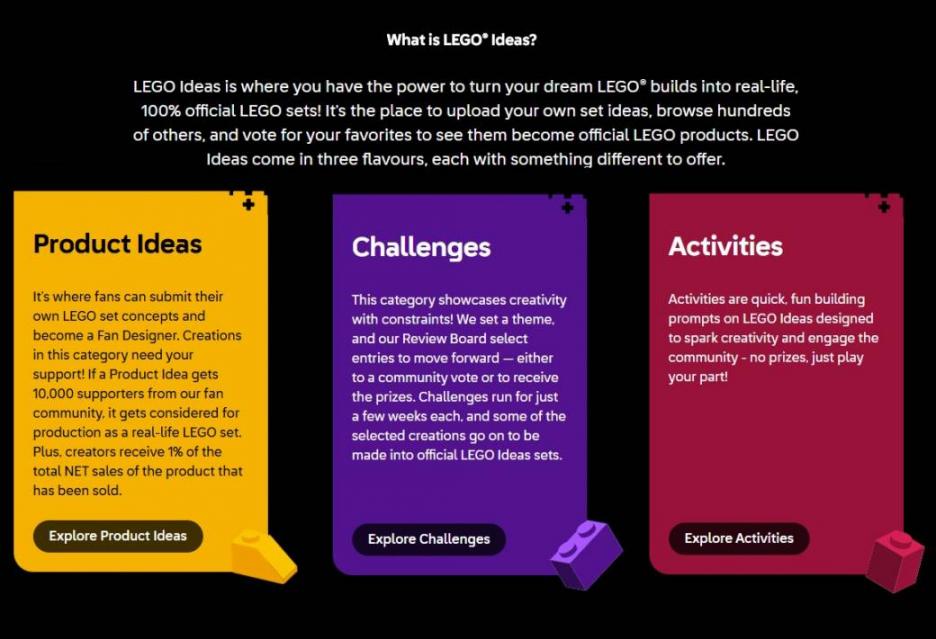
Image via LEGO
9. Predict and Prevent Churn
This is one of the customer retention strategies that helps identify at-risk customers. You can then resolve issues before customers churn. There are usually signs before a customer churns. This includes drops in product usage and an increase in support tickets.
Start with the following strategies to predict and prevent churn:
- Create a Customer Health Score: Track product usage, support tickets, and survey responses. Combine them into one score to spot at-risk customers.
- Monitor Warning Signs: Watch for fewer logins, lower usage, or unanswered emails. These often signal a customer may leave.
- Plan Your Response: Decide what happens when a customer's health score drops. This could include a check-in email, support call, or special offer.
- Win Back Lapsed Customers: Send retargeting campaigns with personalized offers and product updates. Read more on the benefits of retargeting.
For example, AirDNA used the Amplitude App for HubSpot to identify churn risks from customer usage data. They then sent more targeted campaigns and achieved a 45% drop in churn.
HubSpot’s Breeze AI can also spot at-risk customers. It then recommends talking points and outreach templates for customer support teams.
10. Make the Post-Purchase Experience Frictionless
The post-purchase experience is everything that happens after the sale. This includes delivery, returns, and support. It’s one of the marketing strategies for ecommerce brands that determines whether customers buy again.
A smooth experience builds trust and encourages repeat purchases. Here’s how to apply it:
- Make Returns Easy: Keep returns simple with clear instructions and fast refunds. Customers are more likely to buy again when returning a product is hassle-free.
- Back Your Product: Offer guarantees or warranties. This reduces buying risk and builds confidence in your brand.
- Set Clear Delivery Expectations: Share accurate shipping times and tracking updates. Meeting customer expectations builds trust.
- Follow Up After Delivery: Check that the order arrived safely and ask if customers need help. Small follow-ups show customers they matter.
For example, a customer should receive delivery updates and clear return instructions. You should also send a follow-up email to check if they need help using your product. This helps convert first-time buyers into loyal customers.
Here’s what to remember to improve the post-purchase experience:
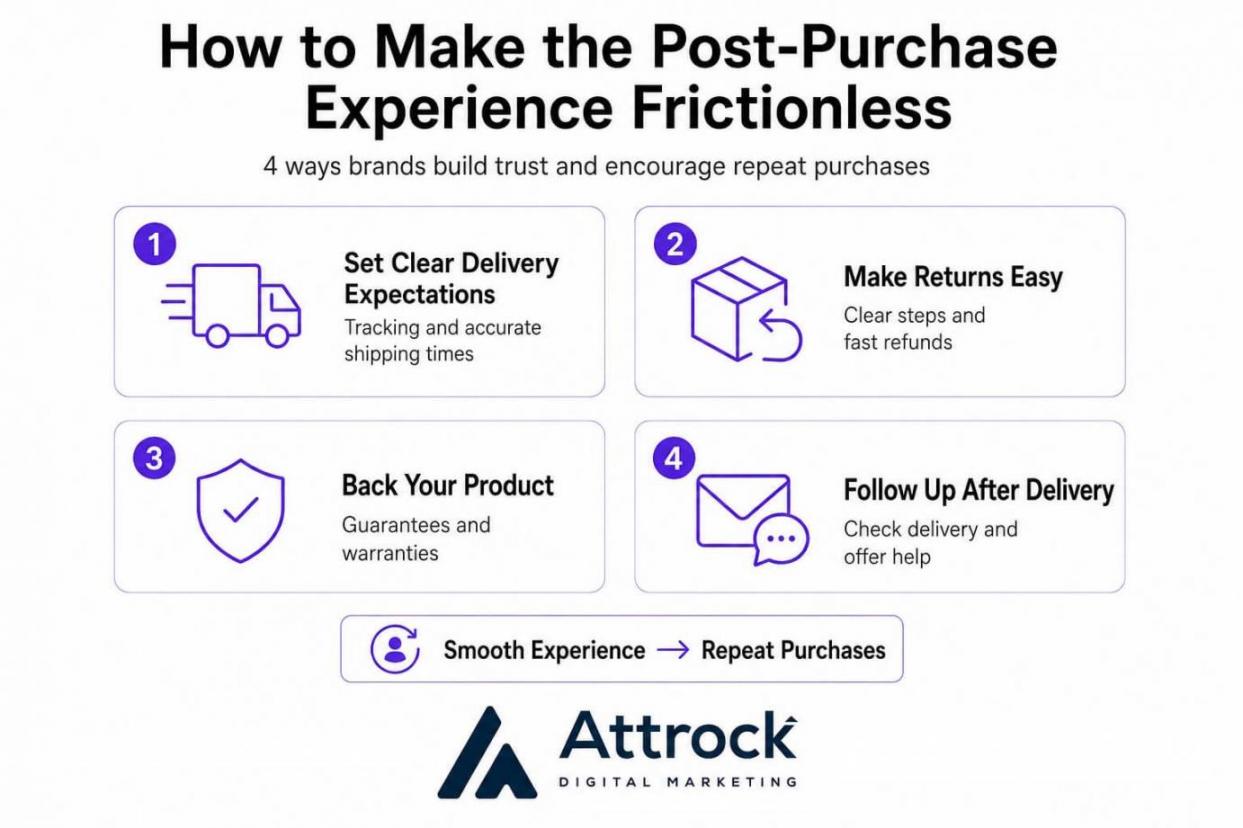
Image via Attrock
11. Provide a Smooth Renewal Process
A smooth renewal process ensures customers don't experience confusion around pricing or deadlines. You also need to ensure their renewal doesn't fail. This leads to a lack of trust.
For subscription and B2B businesses, retention depends on renewals and account growth. This means providing a smooth renewal process is one of the most important customer retention strategies.
The renewal process also affects revenue because customers may decide to upgrade their plans. Here’s how to provide a smooth renewal process:
- Make Renewals Simple: Send reminders before payment is due. Make sure customers don’t lose access just because they missed a payment or didn’t get notified. Subscription management software can help you handle this.
- Spot Upgrade Opportunities: If usage increases, present an upgrade as a helpful next step. Not a sales pitch.
- Review Value before Renewal: Provide a short “here is what you got this year” recap. Seeing the results helps increase renewals.
- Catch Failed Payments: If a customer’s payment fails, try the charge again first. Then, inform customers immediately so they can update their payment method.
For example, customers should get automated reminders before renewal. This should include billing and payment instructions, as well as any updates. This increases trust and strengthens customer relationships.
If usage increases, encourage customers to upgrade their plan and keep them active. Here’s an example of this process at a glance:
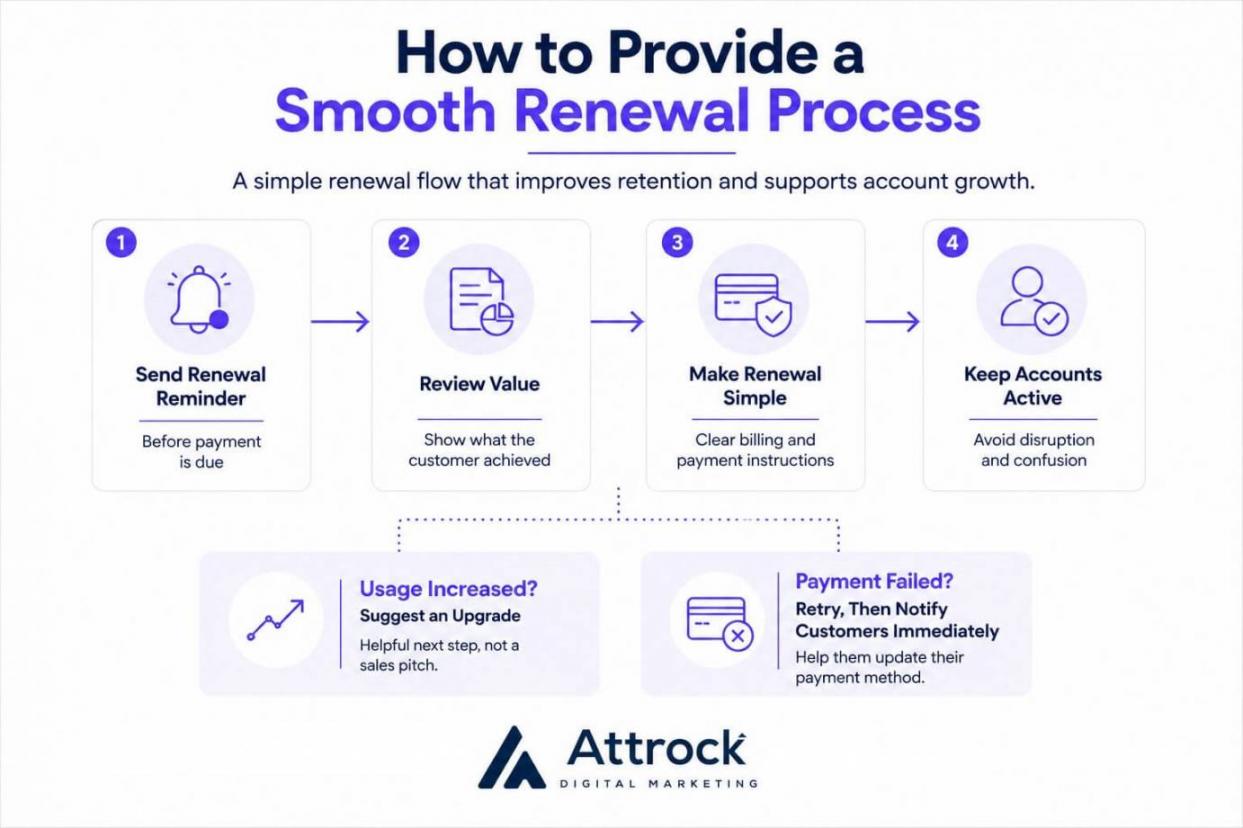
Image via Attrock
- Faster time-to-value increases long-term customer retention
- Customer retention strategies help with churn detection, which prevents revenue loss
- Stronger customer advocacy drives referrals and organic business growth
- Customers that feel valued throughout the journey are less likely to switch competitors
How Do You Build a Customer Retention Plan?
Building a strong customer retention plan starts with measuring your current performance. Then, choose the right customer retention strategies. You also need to track metrics and report what’s changed. Here is the five-step framework I use with clients:
- Measure Your Baseline: Start by measuring CRR, churn rate, repeat-purchase rate, and CLV. You need to know where you start before you improve them.
- Diagnose Where Customers Leave: Segment customers by cohort, such as those who joined one month ago vs. three months ago. Then check where churn is highest. This could be in the first 30 days, at renewal, or after a support issue.
- Prioritize Two or Three Customer Retention Strategies: Don’t run all 11 at once. For example, start with strategies one and six.
- Assign Owners Across the Team: Improving retention isn’t one department's job. Support teams own response times, while product teams can help improve onboarding. Marketing teams can own lifecycle emails.
- Track, Iterate, and Report: Set a goal to review the metrics monthly and report what changed. Continue implementing the customer retention strategies that work. Revisit your priorities each quarter.
Measure baseline metrics like CRR, CLV, and churn rate. Diagnose what leads to churn. Prioritize the two or three strategies at the start. Share data across all marketing, support, and product teams. Track progress and continue using the customer retention strategies that work.
FAQ
Q1. What are customer retention strategies?
A. Customer retention strategies are structured plans used by businesses to reduce churn. They're also used to keep existing customers engaged and increase repeat purchases. Businesses can maximize the value of current customers rather than constantly acquiring new ones.
Q2. Why is customer retention important?
A. Customer retention can be more cost-effective than acquiring new customers. Retained customers trust your brand. Meaning, they’re more likely to renew, upgrade, and recommend your business to others.
Q3. How do you calculate customer retention rate?
A. Customer retention rate (CRR) = ((E − N) / S) × 100. S is the number of customers at the start of a period. E is the number of customers at the end. N represents the new customers added during a period.
Q4. What is a good customer retention rate?
A. It depends on your industry. The average CRR across all industries is 72.5% (Customer Gauge, 2026). Track your CRR over several periods and increase it with customer retention strategies.
Q5. What are the four pillars of retention?
A. The four pillars of customer retention include delivering customer value. They also include providing a positive customer experience and building strong customer relationships. Finally, you must continue to support customers after their purchase.
Q6. What's the difference between customer retention and loyalty?
A. Retention measures whether customers continue buying from a business over time. Customer retention focuses on actions to prevent customer churn. Loyalty represents the preference and emotional connection customers have towards a brand. Loyalty focuses on trust and value.
Q7. How can SaaS or ecommerce businesses improve retention?
A. SaaS businesses should use customer retention strategies such as improving onboarding. Ecommerce brands should focus on the post-purchase experience, lifecycle emails, and loyalty programs. Both benefit from personalization and acting on feedback.
Q8. What are the four C’s of customer loyalty?
A. The four C's are Communication, Choice, Control, and Connection. They involve providing timely updates and offering flexible payment and delivery options. You should also let customers manage communication preferences. Make customers feel valued beyond the purchase.
Q9. How does AI help with customer retention?
A. AI tools like HubSpot’s Breeze AI can help predict churn by flagging at-risk customers before they leave. It can surface these accounts automatically and provide outreach templates and talking points, so support teams can act quickly — without having to manually review every customer health score.
Q10. How often should I measure customer retention?
A. Track CRR and other core metrics such as CLV and churn rate monthly so trends surface early. Then you can implement customer retention strategies and track results each quarter. Metrics such as NPS can be tracked continuously to see changes in brand sentiment.
Ready to Increase Customer Retention?
Follow the 11 customer retention strategies outlined in this article. You can improve onboarding, provide omnichannel support, personalize interactions, and build loyalty programs. You should also encourage customer advocacy. Build customer communities and send lifecycle emails to increase engagement.
Don't forget to collect and act on customer feedback and prevent churn. Provide a seamless post-purchase experience and renewal process as well.
Start by measuring key metrics such as CRR, repeat-purchase rate, CLV, NPS, and churn rate. Then pick the two strategies that fix your biggest leak. Use automation tools such as HubSpot to share customer data with your entire team. You can also use the Marketing Hub to automate emails and campaigns.
Disclaimer: This content contains some affiliate links for which we will earn a commission (at no additional cost to you). This is to ensure that we can keep creating free content for you.